Artwork
Breton Girl with a Red Umbrella
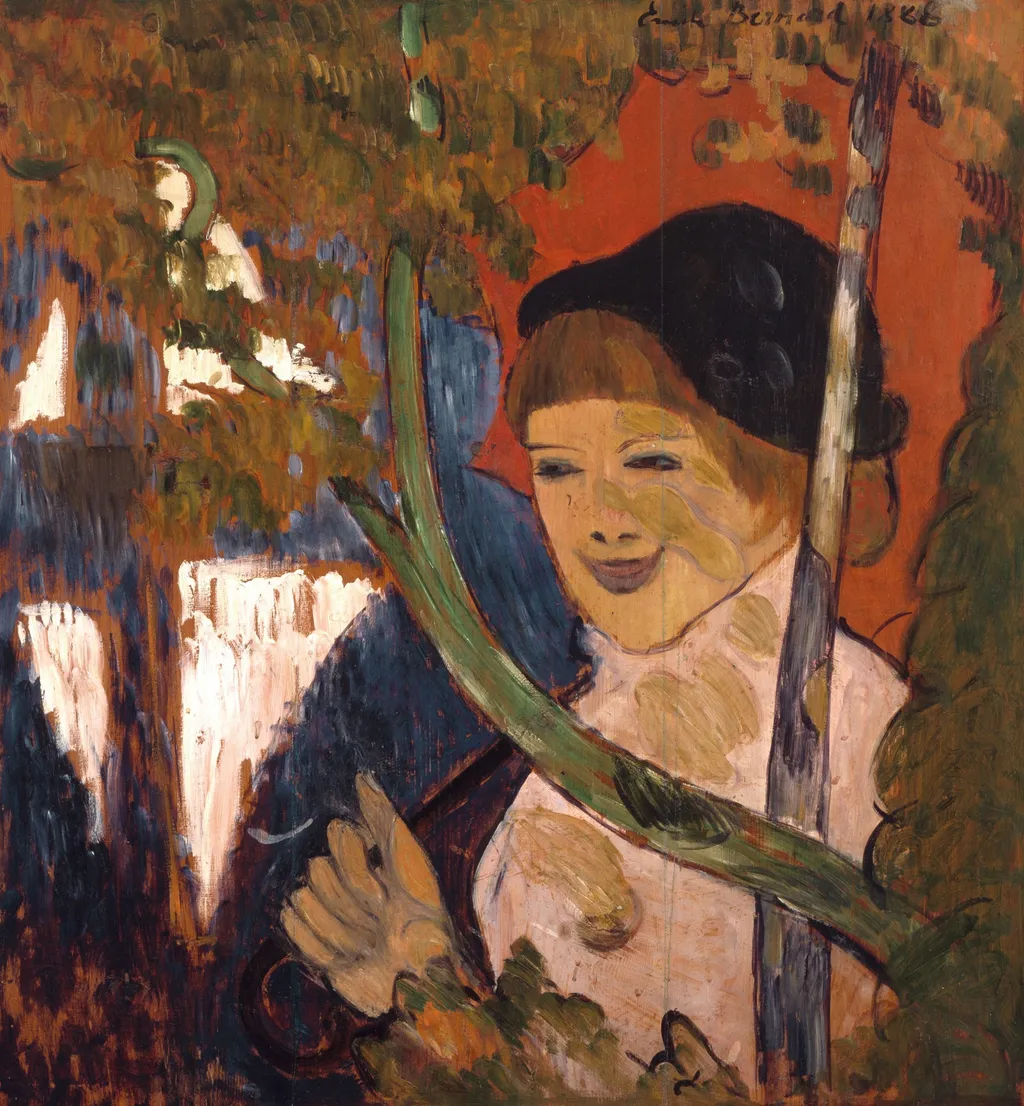
Breton Girl with a Red Umbrella is an oil painting by the Post-Impressionist artist Émile Bernard. It dates from 1894 and is held in the collection of the Museum of Fine Arts, Houston.
About this work
Overview
Painted in 1894 by French artist Émile Bernard, this oil on canvas depicts a young Breton woman standing in a rural landscape.
Painted in 1894 by French artist Émile Bernard, this oil on canvas depicts a young Breton woman standing in a rural landscape. The work belongs to Bernard’s mature period, shaped by his involvement with Synthetism and Cloisonnism. It is part of the permanent collection at the Museum of Fine Arts, Houston, where it exemplifies his move toward simplified forms and expressive color over naturalistic detail.
Subject & Meaning
The figure is a local woman from Brittany, dressed in traditional dark attire and holding a vivid red umbrella. Her face is softly rendered, avoiding individualized features in favor of a generalized, contemplative presence. The composition suggests quiet solitude, evoking the spiritual and cultural isolation of rural Breton life during a time of rapid modernization in France.
Technique & Style
Bernard employed bold, flat areas of color outlined with dark contours, characteristic of Cloisonnism. The landscape is reduced to broad strokes of green and brown, while the umbrella’s intense red creates a focal contrast. Brushwork is deliberate but not overly detailed; form is suggested rather than modeled, aligning with Synthetist principles that prioritize emotional resonance over optical accuracy.
History & Provenance
Created during Bernard’s time in Brittany, the painting reflects his engagement with regional culture after leaving Paris. It remained in private hands until acquired by the Museum of Fine Arts, Houston, where it entered the collection in the 20th century. Its provenance traces back to Bernard’s circle, though specific early ownership records are limited.
Context
Bernard painted this during a period when many French artists sought inspiration in rural communities, viewing them as repositories of authentic tradition. His work here aligns with broader Symbolist and anti-naturalist trends, rejecting academic realism in favor of symbolic form. The painting also responds to Gauguin’s influence, though Bernard’s approach remains more restrained and structurally precise.
Legacy
Though less widely known than his contemporaries, Bernard’s synthesis of color, form, and regional subject matter influenced early modernist developments in France. This painting stands as a quiet example of how Synthetism translated local identity into abstracted visual language, contributing to the broader shift away from Impressionism toward expressive, non-naturalistic representation in early 20th-century art.
Own this work as a print
Artist & collection
Artist
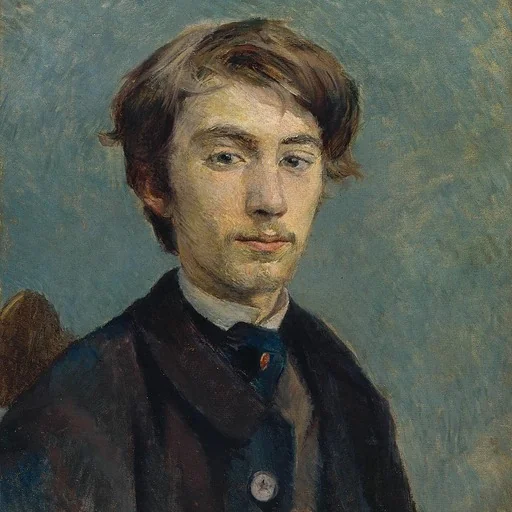
Émile Henri Bernard (French pronunciation: ; 28 April 1868 – 16 April 1941) was a French Post-Impressionist painter and writer, who had artistic friendships with Vincent van Gogh, Paul Gauguin and Eugène Boch, and at a later time, Paul…