Artwork
H Beard Print Collection
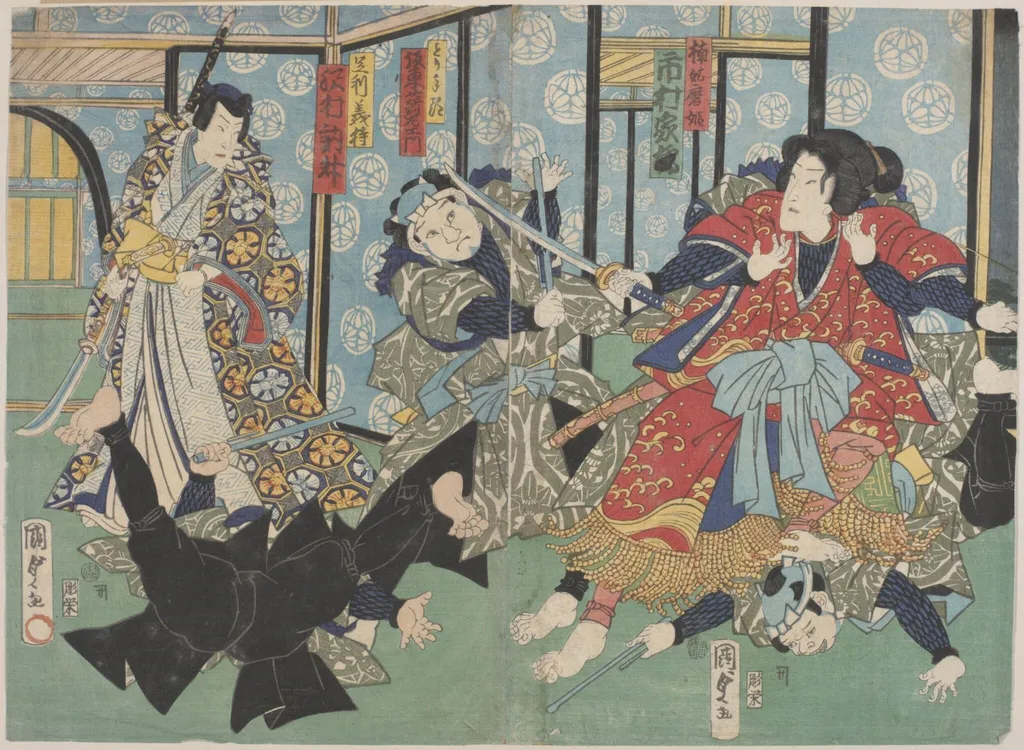
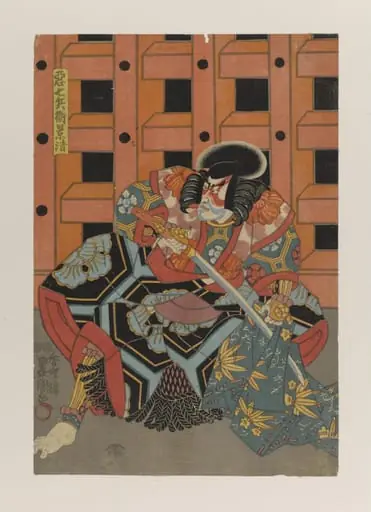
H Beard Print Collection is a print by Utagawa Kunisada II. It dates from 1850 and is held in the collection of the Victoria and Albert Museum.
About this work
Overview
This hand-coloured woodblock print depicts a dramatic moment from a Japanese theatrical performance, captured by Utagawa Kunisada II.
This hand-coloured woodblock print depicts a dramatic moment from a Japanese theatrical performance, captured by Utagawa Kunisada II. It portrays a woman in active resistance against members of a civic guard, several of whom are shown in tumbling, destabilized poses. The composition emphasizes motion and conflict, characteristic of kabuki stage imagery. The work originates from the Harry Beard Collection, a significant archive of Japanese theatrical prints.
Subject & Meaning
The scene illustrates a climactic moment from a kabuki play, likely one featuring a strong female protagonist confronting authority. The woman’s defiant stance contrasts with the chaotic collapse of the guards, symbolizing moral or physical triumph over institutional force. Such narratives were popular in Edo-period theatre, where personal courage often challenged social hierarchies, offering audiences both spectacle and subtle commentary.
Technique & Style
Executed in the ukiyo-e tradition, the print combines woodblock carving with meticulous hand-colouring to heighten emotional intensity. Bold outlines and dynamic angles convey movement, while the use of vivid pigments draws attention to key figures. Kunisada II’s style emphasizes theatrical expression over naturalism, aligning with kabuki’s exaggerated gestures and stylized costumes to enhance narrative clarity for viewers.
History & Provenance
The print was produced during the mid-19th century, a period when theatrical imagery was widely circulated as popular entertainment. It entered the Harry Beard Collection, assembled by a British enthusiast of Japanese theatre, and later became part of institutional holdings. Its survival reflects the growing Western interest in Japanese prints during the late 1800s, though its original performance context remains partially undocumented.
Context
Kabuki theatre flourished in Edo as a form of urban entertainment, often dramatizing historical or moral conflicts through stylized performance. Prints like this served as both souvenirs and promotional tools, allowing audiences to relive scenes at home. The depiction of a woman overcoming armed guards reflects recurring themes of justice and resilience, resonating with contemporary social tensions and the evolving role of women in popular culture.
Legacy
This print contributes to the broader archive of ukiyo-e that documented Japan’s theatrical world before modernization. While Kunisada II’s output was prolific, such works remain valuable for understanding how performance, gender, and authority were visually negotiated in 19th-century Japan. Its preservation in collections like the Victoria and Albert Museum ensures continued scholarly access to these cultural records.
Artist & collection

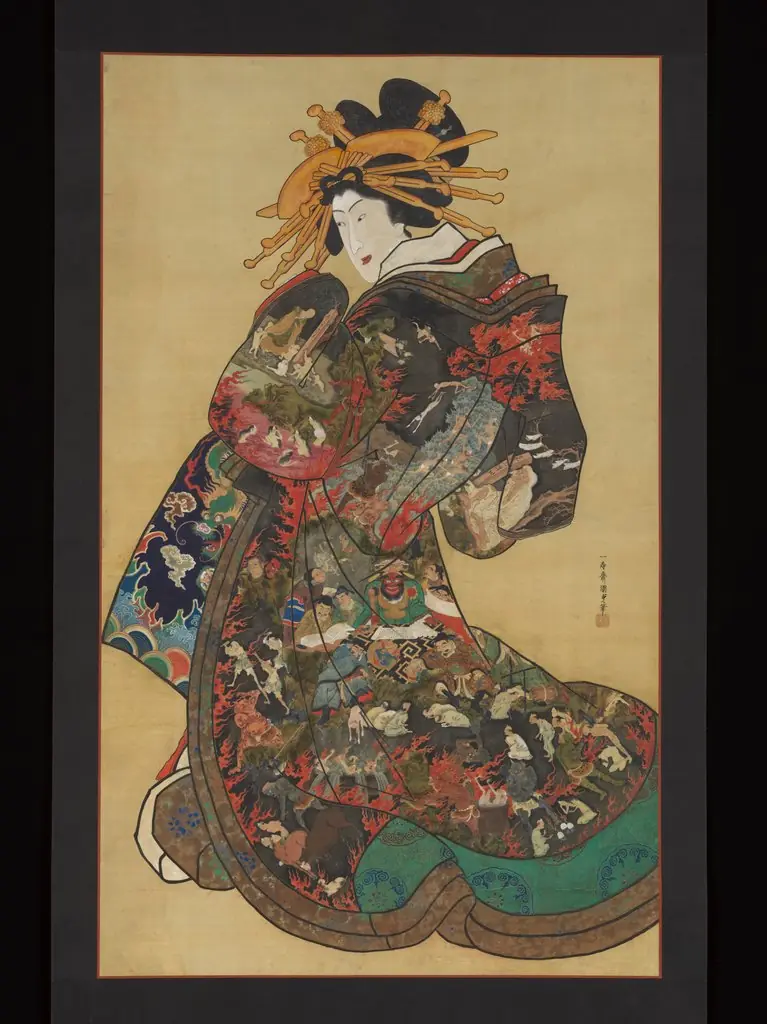 The Hell Courtesan
 Untitled
 Untitled
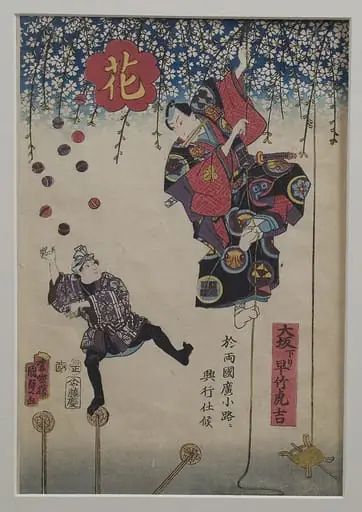 大坂下り早竹虎吉|Hayatake Torakichi from Osaka: Performance in Ryōgoku
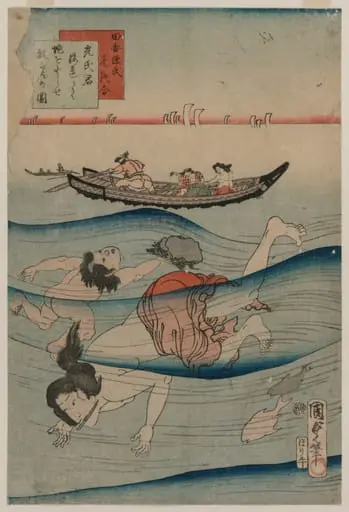 Rustic Genji's Poetry Contest: Mitsuuji's Excursion to the Seaside to See Abalone Diving (Inaka Genji shikishi awase, Mitsuuji umibe ni te awabi o torase yūran no zu)
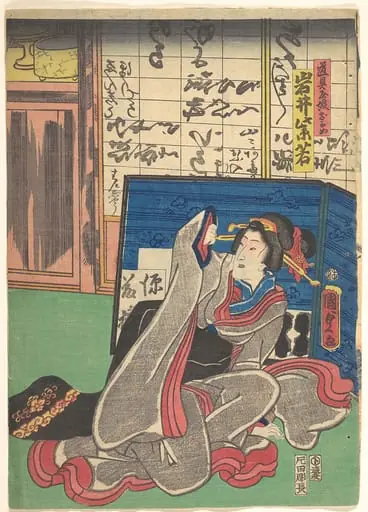 岩井紫若(二代目)の道具屋娘おかめ|Iwai Shijaku II as Okame, the Daughter of a Furniture Store
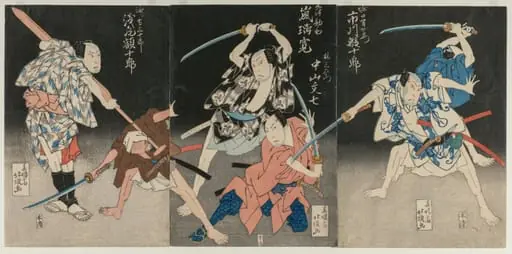 Ichikawa Ebijūrō II as Horiguchi Manzaemon (right), Arashi Rikan II as Kizu Kansuke, Nakayama Bunshichi III as Hayashi Sanzemon (center), and Asao Gakujurō as the Ferryman Sanjūrō (left) from the Kabuki Play "Eight Views of the Kizu River by Boating Song"
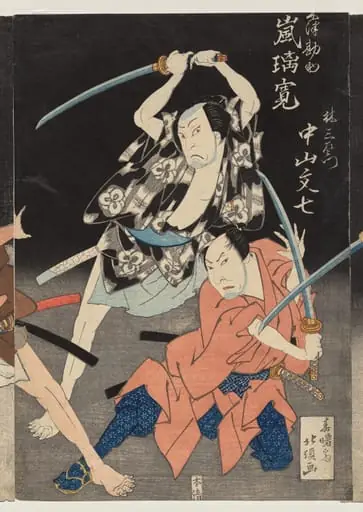 Arashi Rikan II as Kizu Kansuke and Nakayama Bunshichi III as Hayashi Sanzemon from the Kabuki Play "Eight Views of the Kizu River by Boating Song"
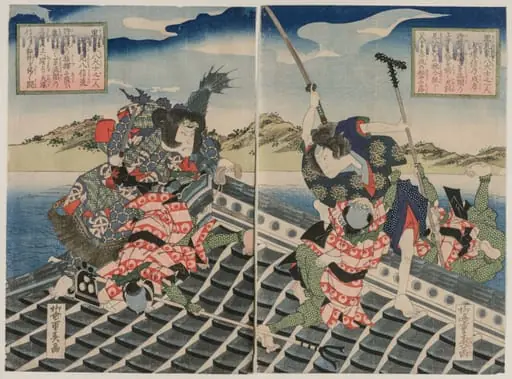 Arashi Rikan II as Inuzuka Shino Moritaka and Nakamura Utaemon III as Inukai Kenpachi Michinobu Battling (from the series The Eight Heroes of the Satomi Clan)
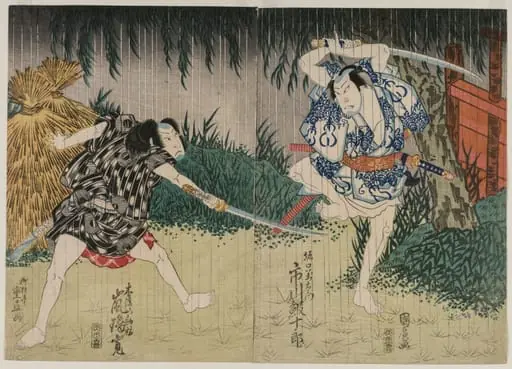 Arashi Rikan II as Kizu Kansuke; Ichikawa Ebijuro II as Horiguchi Manzaemon
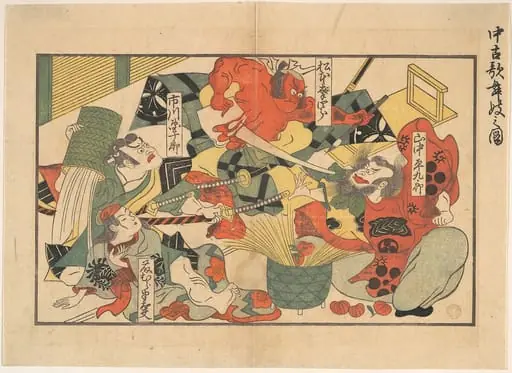 Untitled
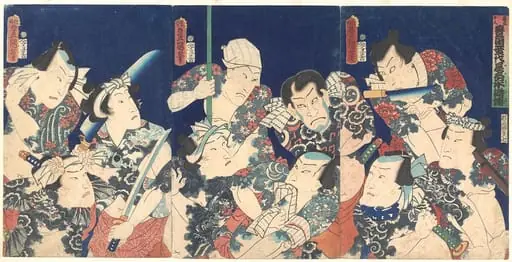 Untitled
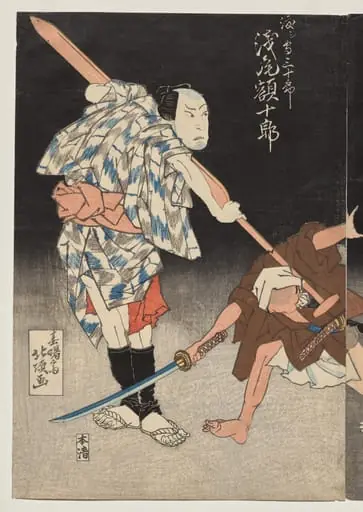 Asao Gakujurō as the Ferryman Sanjūrō from the Kabuki Play "Eight Views of the Kizu River by Boating Song"
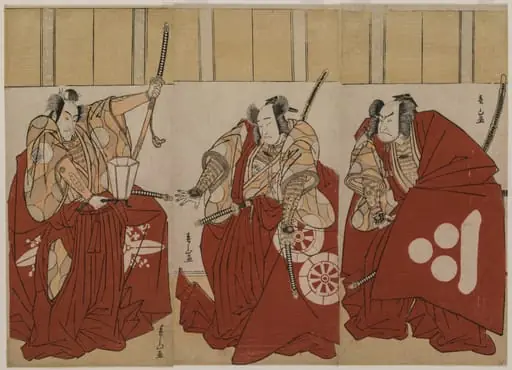 Ichikawa Monnosuke II as Urabe Suetake, Onoe Matsusuke I as Usui Sadamitsu, and Nakamura Nakazo I as Watanabe no Tsuna in “The Four Heavenly Kings Costumed as the Night Watch”
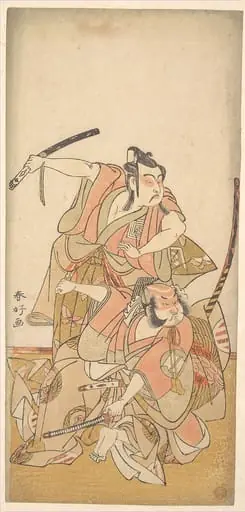 Untitled
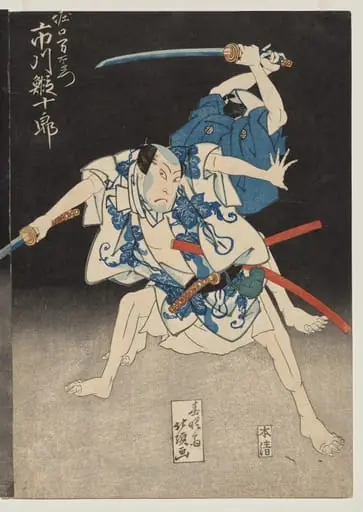 Ichikawa Ebijūrō II as Horiguchi Manzaemon from the Kabuki Play "Eight Views of the Kizu River by Boating Song"
 Untitled
 H Beard Print Collection