Artwork
An Antique Sacrifice
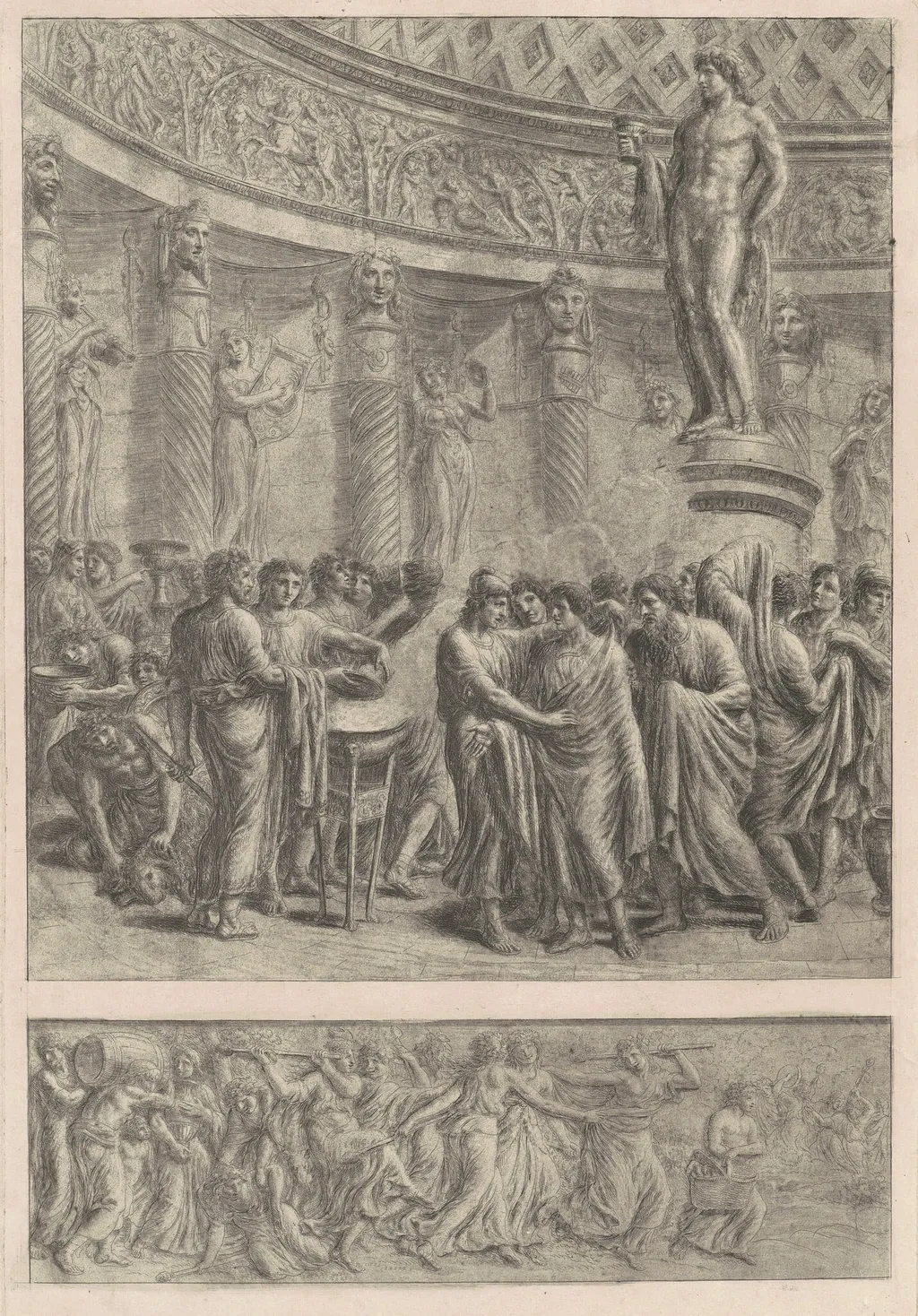
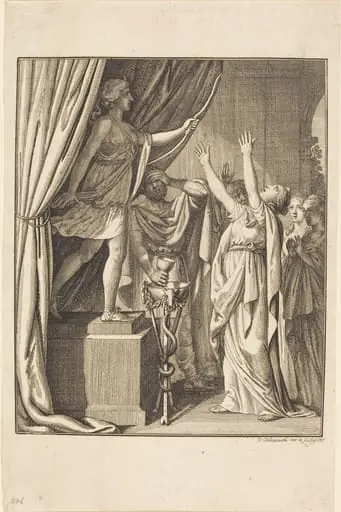
An Antique Sacrifice is an ink print by the Romanticist artist Luigi Ademollo. It dates from 1824 and is held in the collection of the National Gallery of Art.
About this work
Overview
A towering nude statue dominates the background, while floating figures above bear banners and implements, all set against a temple‑like architectural backdrop.
Luigi Ademondo’s print An Antique Sacrifice, executed around 1824, is an etching and aquatint on laid paper. The work presents a densely populated ritual scene rendered in monochrome, with figures in antiquated garments surrounding a central group of emotive characters. A towering nude statue dominates the background, while floating figures above bear banners and implements, all set against a temple‑like architectural backdrop.
Subject & Meaning
The composition depicts a ceremonial gathering in which a distressed central pair—one woman clasping another—suggests an emotional climax within the ritual. The presence of a monumental nude figure on a pedestal may allude to a classical deity or sacrificial victim, while the airborne participants holding banners could represent divine witnesses or officiants, underscoring the tension between human grief and ritual solemnity.
Technique & Style
Ademondo combined traditional line etching with aquatint washes to achieve a rich tonal range, allowing the heavy folds of the robes to appear three‑dimensional. The laid‑paper surface contributes a subtle texture that enhances the depth of shadows. Delicate hatching defines architectural details, while broader tonal blocks convey atmospheric space, balancing meticulous draftsmanship with a dramatic, almost theatrical ambience.
History & Provenance
Created in the early 1820s, An Antique Sacrifice reflects the period’s revival of classical themes in printmaking. The work entered several European collections during the 19th century, documented in auction records from the 1860s. It currently resides in a public institution that specializes in 19th‑century graphic arts, where it is displayed as part of a broader survey of neoclassical print production.
Artist & collection


 Moses and Aaron before Pharaoh, with the Rods Turned into Serpents
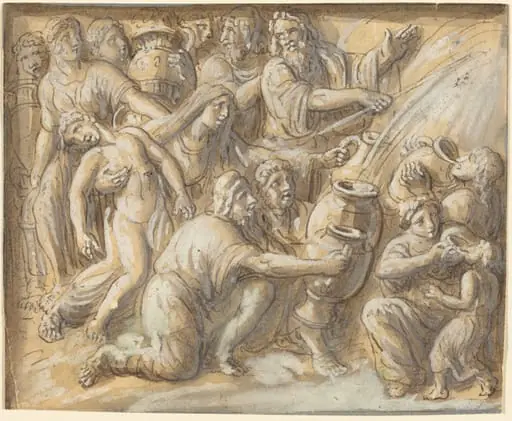 Moses Drawing Water From the Rock
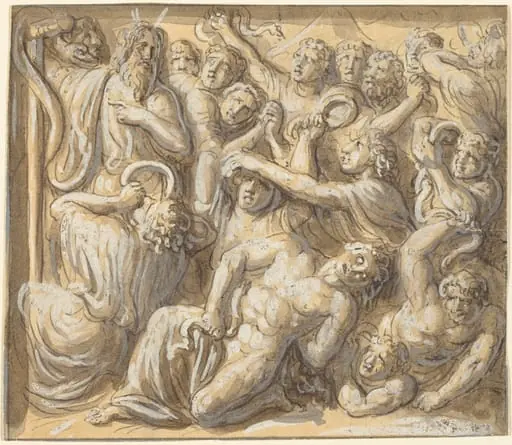 Moses and the Brazen Serpent
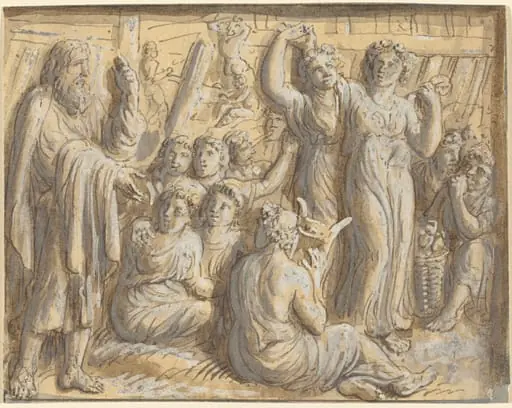 Noah's Warning about the Coming Flood Goes Unheeded
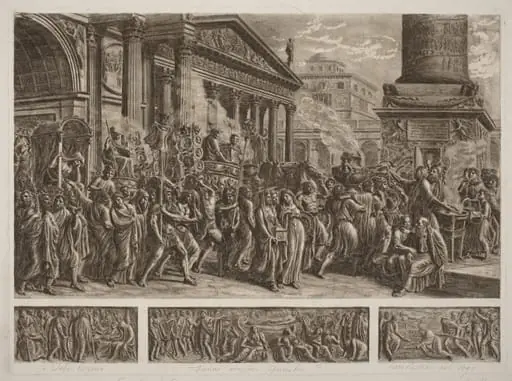 The Ashes of Trajan Carried in a Triumphal Procession
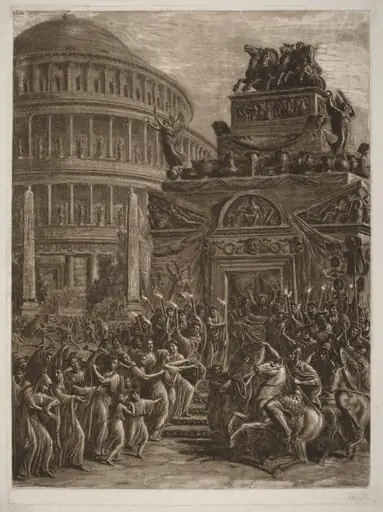 The Body of Hadrian Laying in State next to His Mausoleum
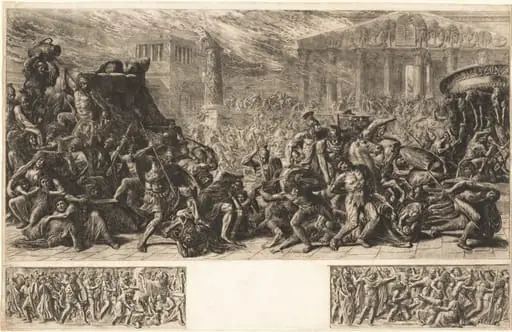 The Sack of the Temple at Jerusalem