Artwork
The Body of Hadrian Laying in State next to His Mausoleum
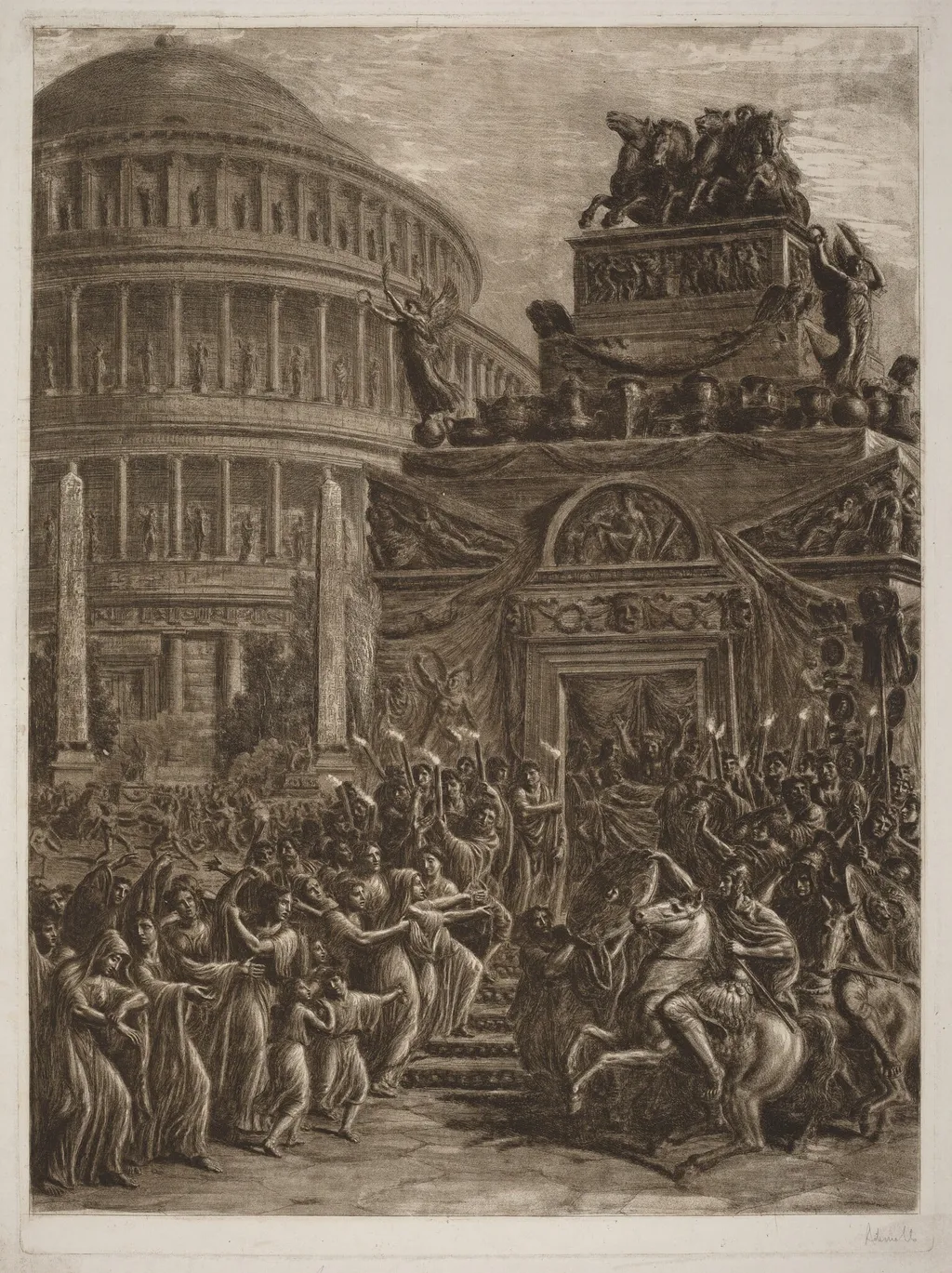
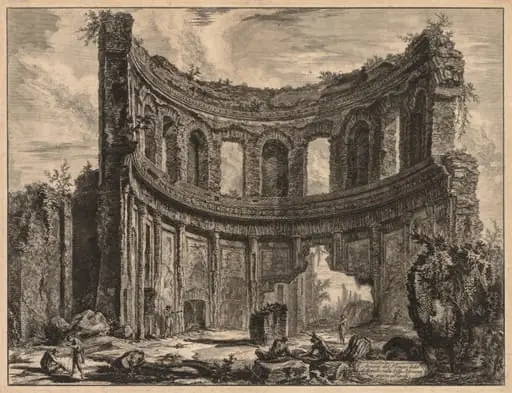
The Body of Hadrian Laying in State next to His Mausoleum is an ink print by the Romanticist artist Luigi Ademollo. It dates from 1764 and is held in the collection of the National Gallery of Art.
About this work
Overview
Luigi Ademollo’s 1764 print, titled *The Body of Hadrian Laying in State next to His Mausoleum*, presents a bustling crowd gathered before an elaborate domed structure. A lifeless figure rests on a raised platform while onlookers in period dress clutch torches, react with shock, or engage in scuffles, creating a scene that balances solemnity with kinetic tension.
Subject & Meaning
The composition depicts the public display of the Roman emperor Hadrian’s corpse beside his monumental tomb, a ritual that underscores the interplay between imperial authority and civic participation. The varied reactions of the crowd—mourning, curiosity, and conflict—suggest a commentary on the fragility of power and the collective emotional response to a ruler’s death.
Technique & Style
Executed as an etching combined with aquatint on laid paper, the work employs delicate line work for architectural details and broader tonal washes to model the massed figures. The contrast between crisp outlines and soft shading enhances depth, allowing the chaotic human activity to emerge distinctly against the structured backdrop of the mausoleum.
History & Provenance
Created in 1764, the print reflects the 18th‑century European fascination with classical antiquity and the revival of Roman themes in art. While specific ownership records are scarce, Ademollo’s print circulated among collectors interested in historical subjects, contributing to the broader dissemination of neoclassical imagery during the period.
Artist & collection


 The Continence of Scipio
 Il Greco in Troia: Plate 3
 Imagines Veteris ac Novi Testamenti a Raphaele
 Funeral Scene in Imaginary Architecture
 The Triumph of Julius Caesar: Soldiers Carrying the Pictures of War
 Ciel! ô ciel! qui vois-je à ses côtés?
 Agrippina Landing at Brindisi with the Ashes of Germanicus
 Merope
 Views of Rome: Remains of the Temple of Apollo near Hadrian's Villa