Artwork
View of the Acropolis
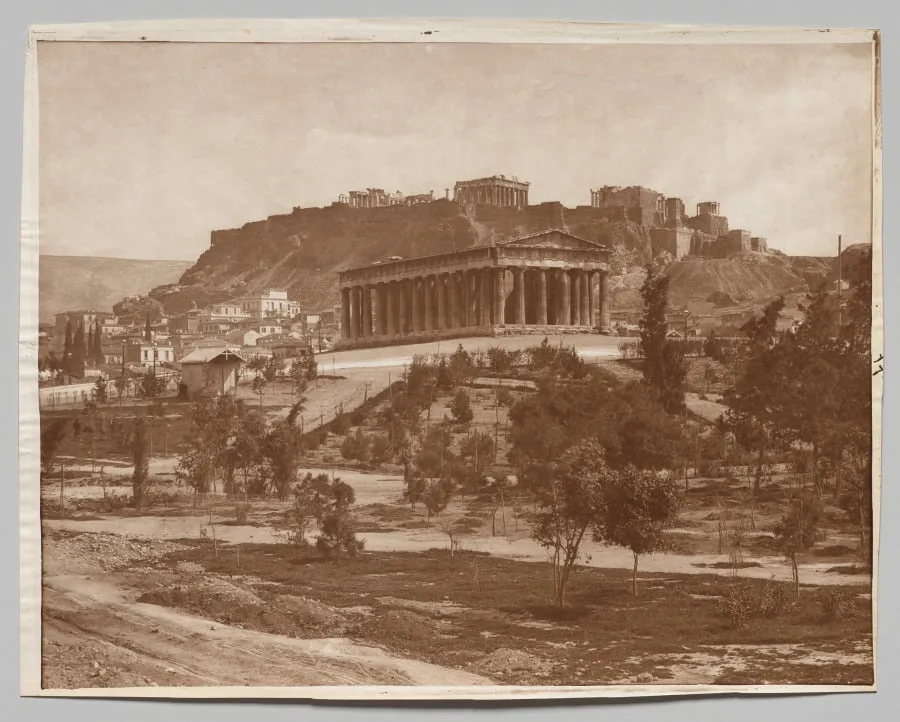
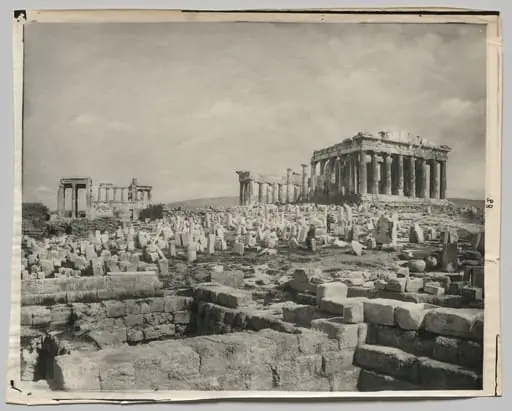
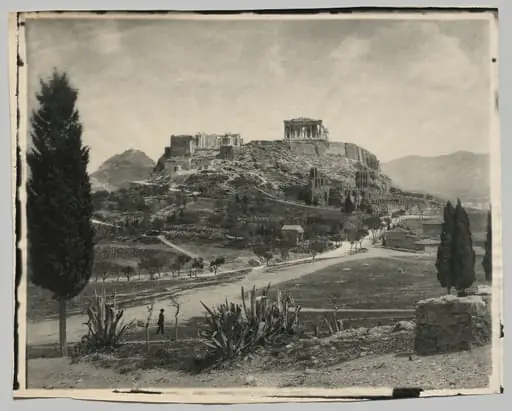
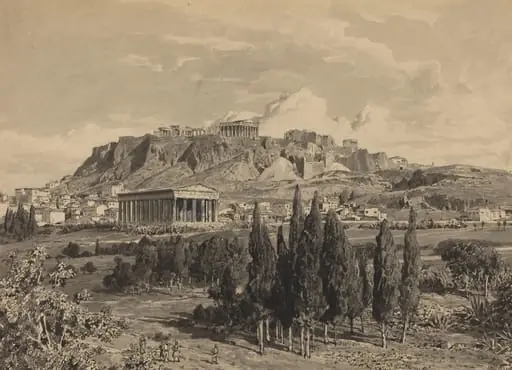
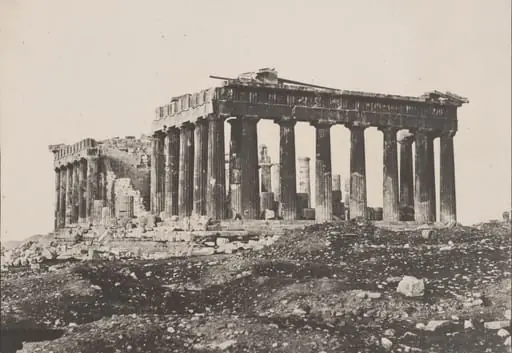
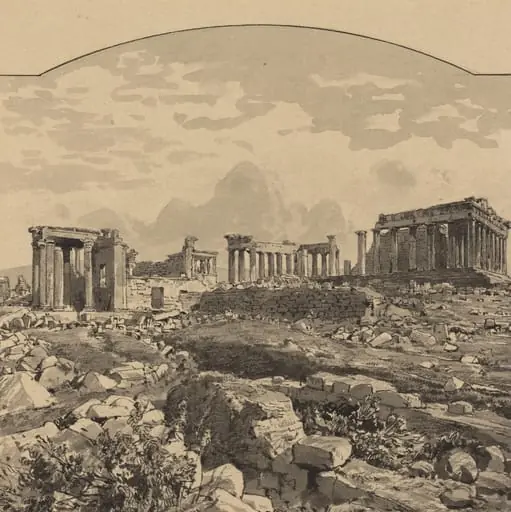
View of the Acropolis is a photography by the Impressionist artist Adolphe Braun & Co.. It dates from 1884 and is held in the collection of the Cleveland Museum of Art. This photograph captures the Acropolis of Athens as a stark, enduring silhouette against the sky.
About this work
You see a black-and-white photo of the Acropolis in Athens, its ancient stones sharp against the sky.
You see a black-and-white photo of the Acropolis in Athens, its ancient stones sharp against the sky.
This isn’t a painting—it’s an early photograph. Adolphe Braun sold these images across Europe and America. The process used pigmented gelatin, which keeps the image from fading like other old photos. It’s one of many views he made of famous landmarks.
If you like this, look up *Adolphe Braun & Co. (French, 1845–1894)*.
Overview
This photograph captures the Acropolis of Athens as a stark, enduring silhouette against the sky. Produced by Adolphe Braun & Co. in the mid-19th century, it belongs to a series of architectural views distributed widely across Europe and North America. Unlike painted reproductions, this image relies on photographic technology to record the monument’s form with precision, reflecting the era’s growing interest in documenting cultural heritage through mechanical means.
Subject & Meaning
The Acropolis, as the symbolic heart of ancient Athens, represented classical civilization to 19th-century audiences. Braun’s photograph presents it not as an idealized ruin but as a tangible relic, its weathered stones rendered in fine detail. The image served both as a record of antiquity and as a commodity for travelers and collectors seeking authentic glimpses of the classical world, reinforcing its cultural prestige through mass reproduction.
Technique & Style
The image is a carbon print, a process using pigmented gelatin to form the picture rather than light-sensitive silver salts. This method produced images with greater tonal stability and resistance to fading, making them more durable for long-term display. The result is a sharply defined, grayscale composition with subtle gradations of light and shadow, emphasizing the architectural mass of the ruins without decorative embellishment.
History & Provenance
Adolphe Braun & Co., based in France, became a leading producer of photographic reproductions of art and architecture between 1845 and 1894. This view of the Acropolis was one of several taken and marketed as part of a commercial catalog aimed at educated tourists and institutions. The firm’s distribution network ensured wide circulation, making Braun’s images among the most accessible visual records of European monuments in the 19th century.
Context
In the decades following Greek independence, European interest in ancient Greece surged, fueled by archaeology and Romantic idealism. Braun’s photographs responded to this demand, offering standardized, reproducible images of sites like the Acropolis that could be collected, studied, or displayed in homes and schools. His work bridged the gap between scholarly documentation and popular visual culture.
Legacy
Braun’s carbon prints of the Acropolis contributed to the standardization of how classical monuments were visually understood in the modern era. Their durability allowed them to survive in archives and collections long after more fragile photographic processes had deteriorated. Today, they remain valuable as both historical documents and early examples of photography’s role in shaping collective memory of antiquity.
Artist & collection