Artwork
View of the Acropolis (walking man in foreground)
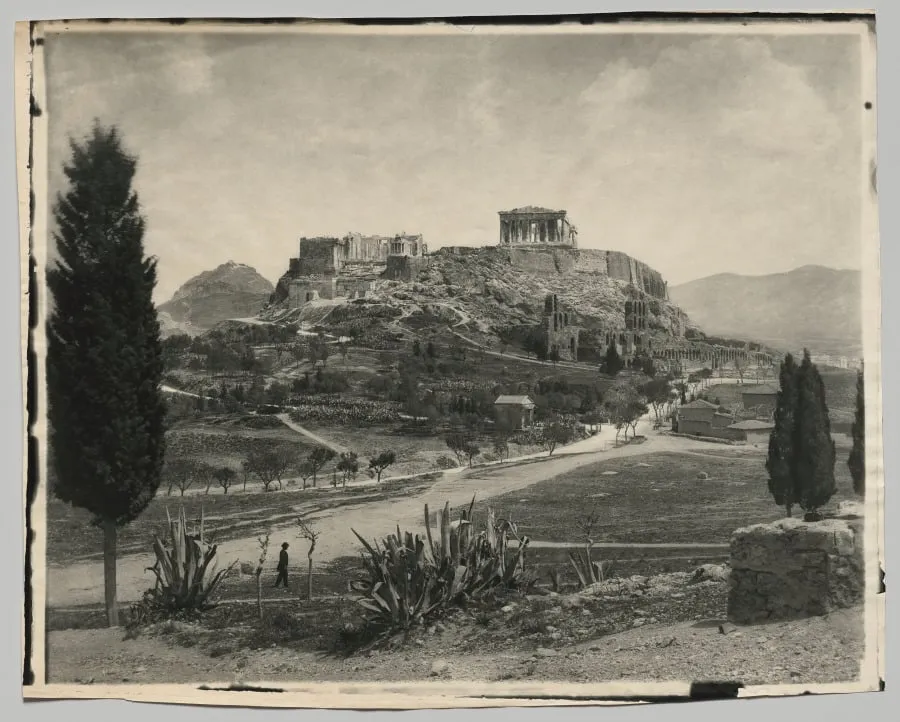
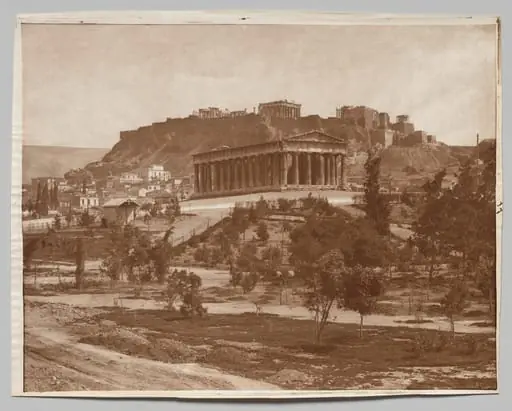
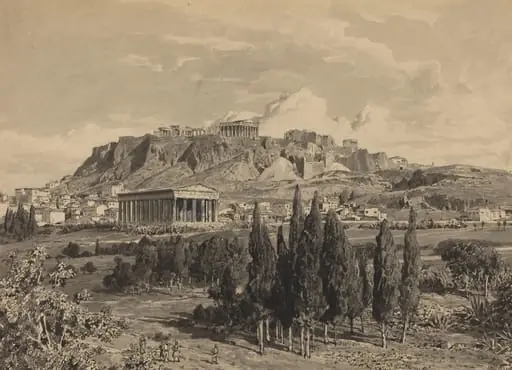
View of the Acropolis (walking man in foreground) is a photography by the Impressionist artist Adolphe Braun & Co.. It dates from 1884 and is held in the collection of the Cleveland Museum of Art. This photograph captures the Acropolis of Athens with a solitary figure walking along a dirt path in the foreground.
About this work
Overview
Produced by the firm Braun & Cie, it belongs to a series of architectural views sold as commercial souvenirs in the late 19th century.
This photograph captures the Acropolis of Athens with a solitary figure walking along a dirt path in the foreground. Produced by the firm Braun & Cie, it belongs to a series of architectural views sold as commercial souvenirs in the late 19th century. Unlike many contemporary photographs, it was printed using the carbon process, which preserved tonal detail and resisted fading over time, allowing its clarity to endure into the present.
Subject & Meaning
The image juxtaposes the enduring ruins of ancient Greece with the transient presence of a modern traveler. The figure, small and unremarkable, underscores the scale and timelessness of the monument. Rather than idealizing the site, the photograph presents it as a lived-in landscape, subtly acknowledging both its historical weight and its accessibility to ordinary visitors seeking connection with the classical past.
Technique & Style
The photograph was made using the carbon print process, which employed pigmented gelatin instead of light-sensitive silver salts. This method produced images with greater tonal range and durability, making them suitable for mass distribution. The lighting emphasizes the texture of the stone, with sunlight enhancing the contrast between the warm hues of the ruins and the pale sky, lending a quiet solemnity to the composition.
History & Provenance
Produced by the French publishing house Braun & Cie, this image was part of a broader commercial effort to document European monuments for a growing tourist market. The firm issued multiple views of the Acropolis, catering to collectors and travelers who sought tangible reminders of their journeys. These prints were widely distributed across Europe and North America, reflecting the 19th-century fascination with classical antiquity.
Context
In the decades following Greek independence, the Acropolis became a symbol of national identity and classical heritage. Photographers like those at Braun capitalized on this cultural resonance, offering accessible images to a public increasingly interested in archaeology and travel. The photograph reflects a broader trend of using new photographic technologies to preserve and disseminate images of ancient sites for educational and decorative purposes.
Legacy
The durability of the carbon print process has allowed this image to remain sharply defined long after many contemporary photographs have deteriorated. As one of many similar views produced by Braun, it contributes to a visual archive of 19th-century tourism and the commodification of heritage. Its survival offers insight into how early photography shaped public perception of historical monuments across generations.
Artist & collection