Artwork
Seconde Partie de Poissons d'eau douce (Several Fresh Water Fish Species. Part II): Epelanus, L' Esplan (The Smelt)
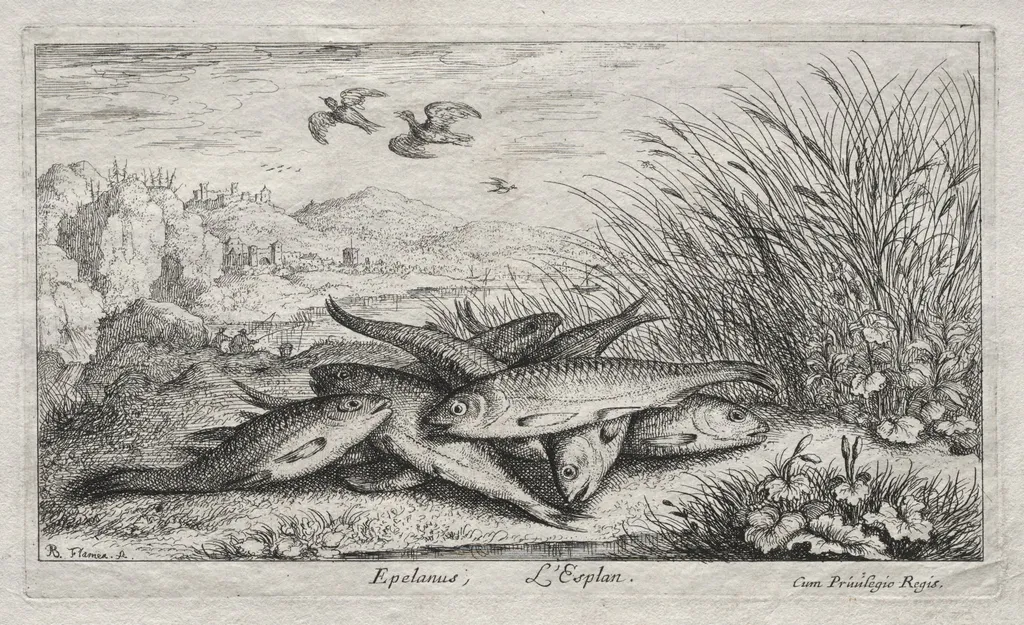
Seconde Partie de Poissons d'eau douce (Several Fresh Water Fish Species. Part II): Epelanus, L' Esplan (The Smelt) is a print by the Baroque artist Albert Flamen. It dates from 1652 and is held in the collection of the Cleveland Museum of Art.
About this work
Overview
Created in 1652 by the Flemish artist Albert Flamen, this print is the second part of a series documenting freshwater fish species. Flamen, based in Paris, produced detailed illustrations for natural history publications. The work is part of The Cleveland Museum of Art’s collection and exemplifies his precision in depicting aquatic life within broader ecological settings.
Subject & Meaning
The print centers on the smelt, a slender freshwater fish, shown alongside other species arranged in a naturalistic heap. Their varied orientations suggest movement and life, avoiding rigid symmetry. The inclusion of reeds, flowers, distant water, hills, and buildings frames the fish within a lived landscape, implying ecological harmony rather than mere scientific cataloging.
Technique & Style
Flamen employed fine-line engraving to render scales, fins, and vegetation with meticulous clarity. The composition balances detail with open space, using subtle tonal gradations to suggest depth. The background—hills, architecture, and flying birds—extends the scene beyond the specimen, reflecting a Baroque interest in integrating natural subjects into expansive, atmospheric environments.
History & Provenance
The print was produced during Flamen’s active years in Paris, where he contributed illustrations to scientific and ornamental publications. It entered The Cleveland Museum of Art’s collection through documented acquisitions, preserving its original state. No significant alterations or restorations are recorded, maintaining its 17th-century integrity.
Context
In mid-17th-century Europe, illustrated natural histories gained popularity among scholars and collectors. Flamen’s work aligned with this trend, offering both scientific accuracy and aesthetic appeal. His prints were likely used in educational or private collections, bridging the gap between empirical study and artistic representation of the natural world.
Legacy
Flamen’s fish series contributed to the visual documentation of European freshwater species before modern ichthyology. While not widely known today, his prints remain valuable for their blend of observation and artistry, offering insight into how natural subjects were perceived and represented in early modern Europe.
Artist & collection
Artist
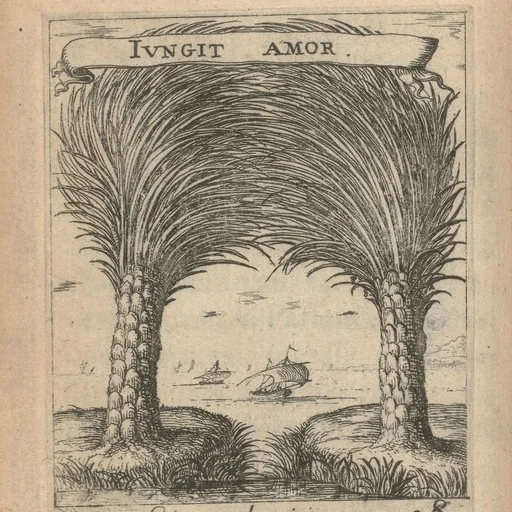
Albert Flamen (c. 1620 – after 1669) was a Flemish engraver, painter, and tapestry designer. He was active in Paris, where he worked mainly as an illustrator on numerous publications.