Artwork
Mayenne qui de loin voit leur folle Entreprise...
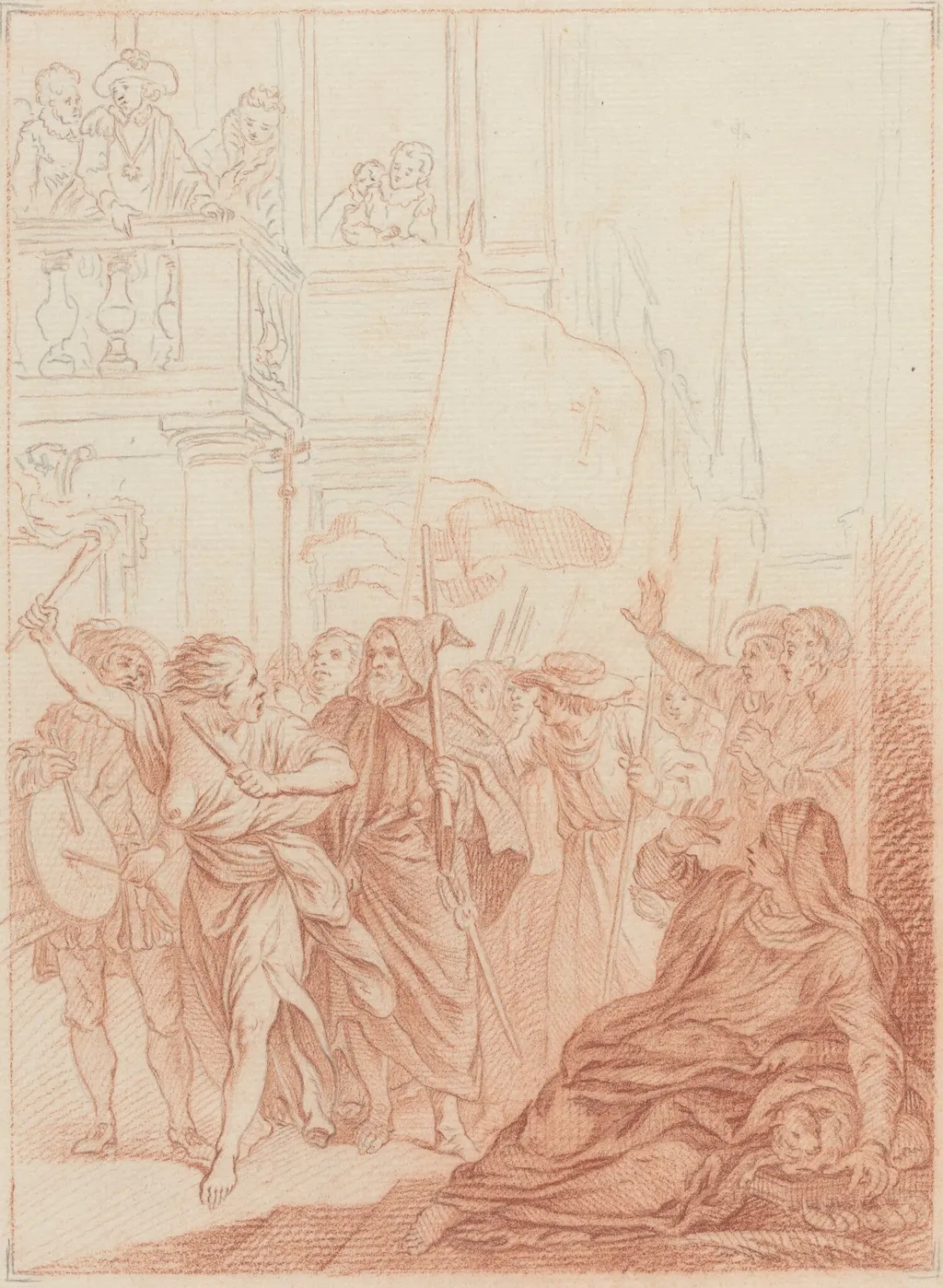
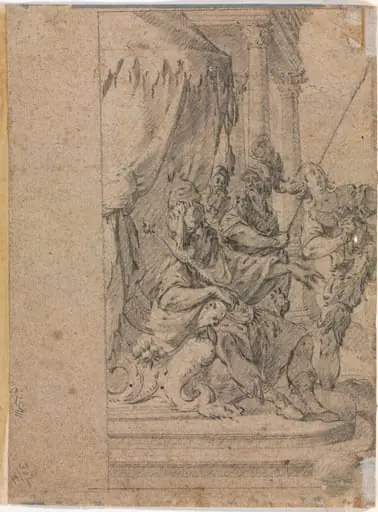
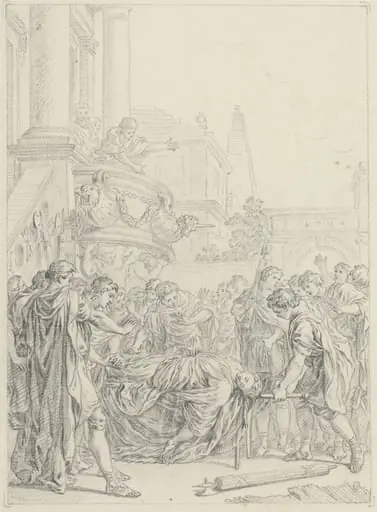
Mayenne qui de loin voit leur folle Entreprise... is a graphite drawing by the Baroque artist Hubert François Gravelot. It dates from 1736 and is held in the collection of the National Gallery of Art. Created in 1736, this drawing by Hubert-François Gravelot is executed in red chalk and graphite on laid paper.
About this work
Overview
It belongs to a series of preparatory sketches linked to theatrical or literary narratives, reflecting the artist’s dual role as a designer and illustrator.
Created in 1736, this drawing by Hubert-François Gravelot is executed in red chalk and graphite on laid paper. It belongs to a series of preparatory sketches linked to theatrical or literary narratives, reflecting the artist’s dual role as a designer and illustrator. Gravelot, trained in Paris and active in London after 1732, used such drawings to explore composition and gesture before committing to engraved prints for books and publications.
Subject & Meaning
The scene depicts a moment of heightened drama, likely drawn from a historical or mythological narrative. Figures are arranged in dynamic postures—some kneeling, others standing or falling—while onlookers observe from a raised platform. The inclusion of spears and banners suggests a moment of conflict or intervention. The title, referencing Mayenne’s distant observation, implies a narrative of surveillance or moral judgment, common in 18th-century illustrative traditions.
Technique & Style
Gravelot employed red chalk for its warm tonality and graphite for sharper definition, layering both to suggest depth and motion. The loose, fluid lines convey urgency, while varied shading models forms without rigid outlines. The sketchy quality emphasizes spontaneity, characteristic of preparatory drawings. The composition avoids symmetry, favoring diagonal groupings that enhance the sense of unfolding action, aligning with emerging Rococo sensibilities in movement and expression.
History & Provenance
The drawing was made during Gravelot’s early years in London, where he worked as a drawing master and illustrator for publishers. It likely served as a study for an engraved plate in a literary or historical volume, though the exact publication remains unconfirmed. Its survival as a standalone work suggests it was valued for its expressive power, even outside its original functional context.
Context
In the 1730s, European illustrators increasingly turned to dramatic, emotionally charged scenes for book illustration, influenced by Baroque theater and classical literature. Gravelot’s work bridged French draftsmanship and British publishing demands. His sketches, like this one, responded to a growing market for visually rich narratives, blending historical subject matter with contemporary graphic techniques to appeal to educated audiences.
Legacy
Gravelot’s drawings helped define the visual language of 18th-century book illustration in Britain. Though less known today than his engravings, this sketch exemplifies his ability to capture narrative tension with minimal means. His approach influenced later illustrators who prioritized expressive line and emotional immediacy over polished finish, leaving a quiet but lasting imprint on the evolution of graphic storytelling.
Artist & collection

Artist
Hubert-François Bourguignon, commonly known as Gravelot (26 March 1699 – 20 April 1773), was a French engraver, a famous book illustrator, designer and drawing-master.

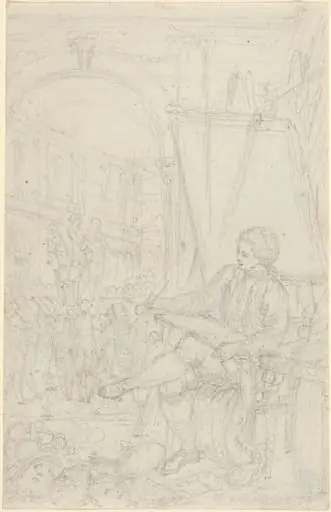 Self-Portrait
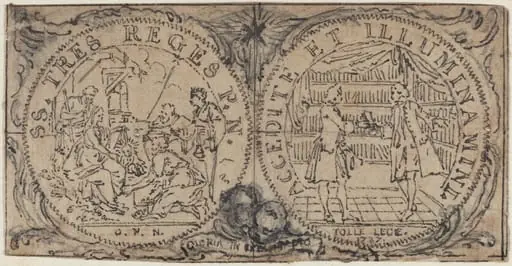 Ornamental Medallions with the Adoration of the Magi and Two Bibliophiles
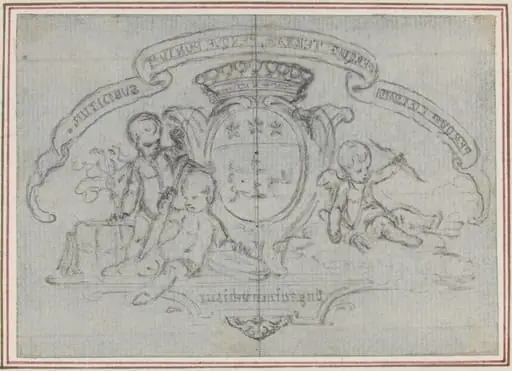 Coat of Arms with Three Putti
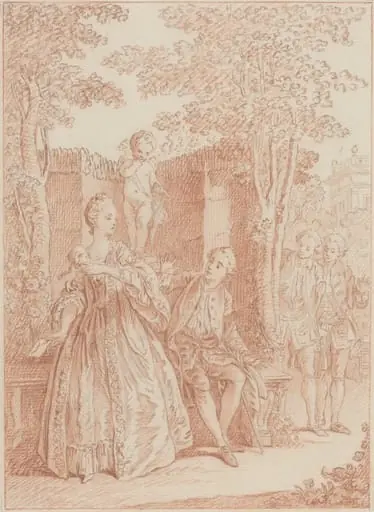 Oui, je la connais Traitre, et je connais ton Coeur
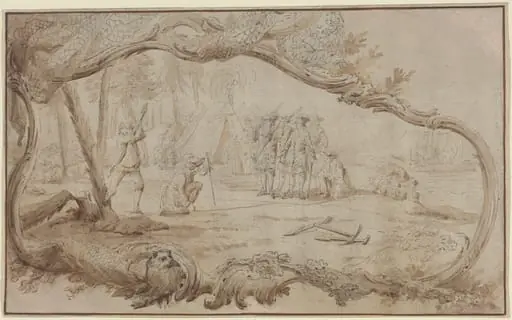 The Landing of the Dutch Expedition Party in New York
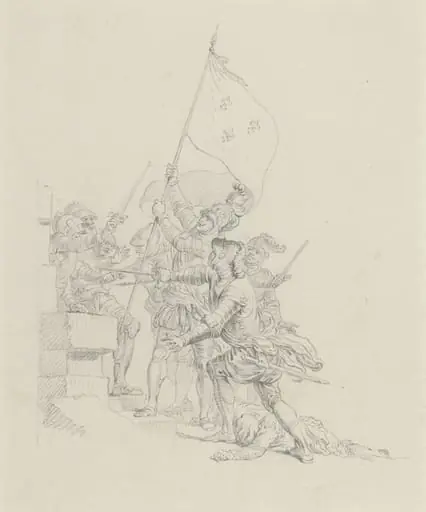 Il monte: il a déjà de ses mains triomphantes...
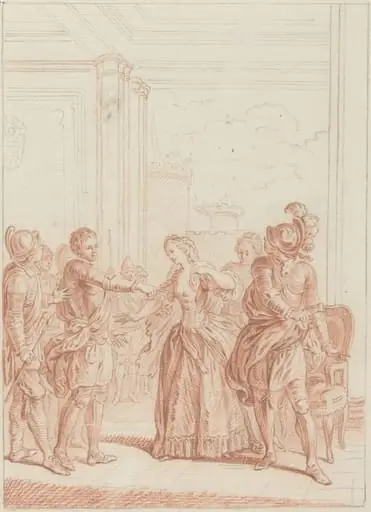 Je suis vengé de toi: l'on te hait, et l'on m'aime
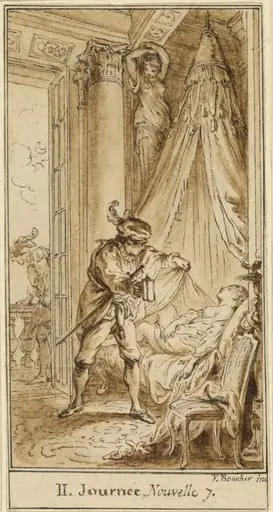 Second Day, Seventh Story: The Duke of Athens Contemplating the Sleeping Princess Alatiel
![The Challenge [right], by Gabriel de Saint-Aubin](https://artifactworldgallery.com/img/gabriel-de-saint-aubin--the-challenge-right--75162e00e6876b27-w320.webp)