Artwork
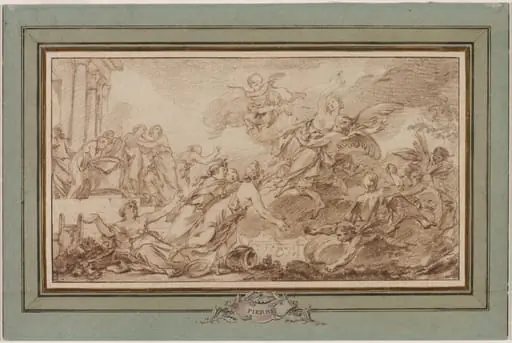
Allegory in Honor of Claude de Mesmes, Count d'Avaux (Allegorie en l'honneur de Claude de Mesmes, comte d'Avaux)
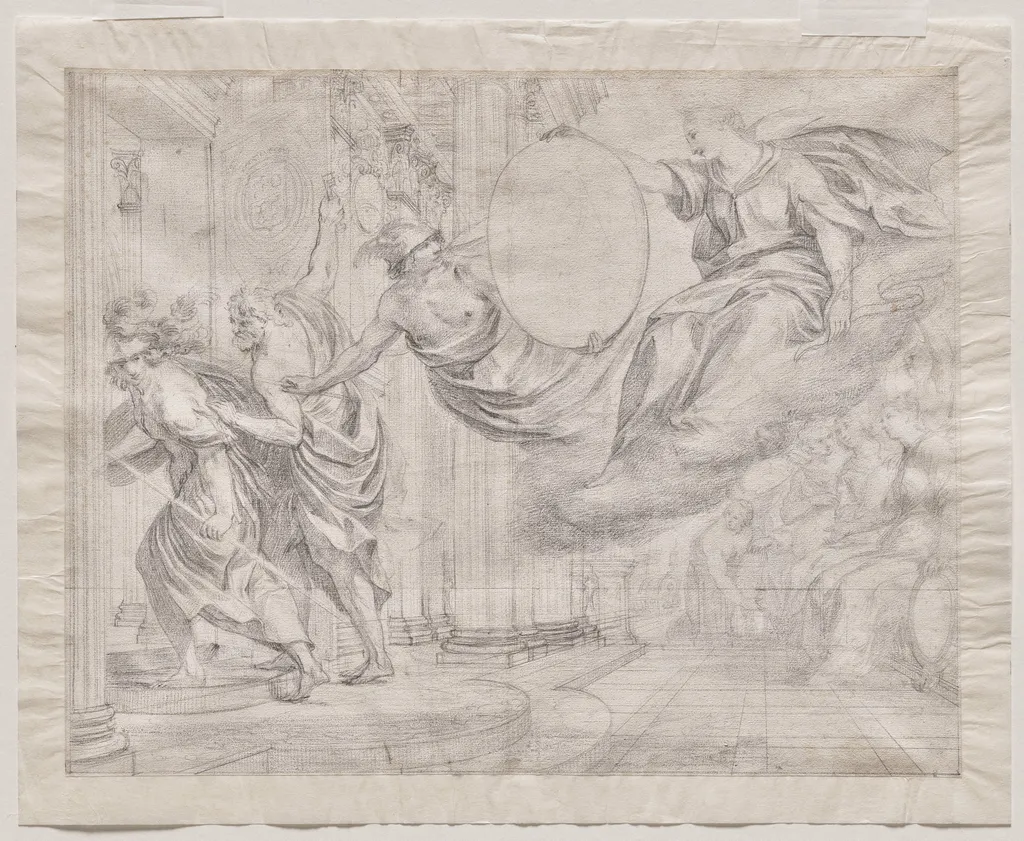
Allegory in Honor of Claude de Mesmes, Count d'Avaux (Allegorie en l'honneur de Claude de Mesmes, comte d'Avaux) is a drawing by the Baroque artist Grégoire Huret. It dates from 1648 and is held in the collection of the Cleveland Museum of Art.
About this work
Overview
Created around 1648 by French artist Grégoire Huret, this ink drawing honors Claude de Mesmes, Count d'Avaux, a diplomat and statesman. Executed in a rapid, expressive manner, the work combines formal portraiture with allegorical elements. It resides in The Cleveland Museum of Art, where it is valued as a refined example of 17th-century French draftsmanship and ceremonial tribute.
Subject & Meaning
The drawing depicts the Count seated in contemplation, while a standing figure holds a shield bearing a human face—likely symbolizing Fame or Virtue.
The drawing depicts the Count seated in contemplation, while a standing figure holds a shield bearing a human face—likely symbolizing Fame or Virtue. The composition suggests a tribute to the Count’s diplomatic achievements, with the shield representing the reflection of his reputation. The solemn expressions and elaborate robes reinforce the ceremonial tone, aligning the subject with ideals of honor and public service.
Technique & Style
Huret employed fluid, economical ink lines to suggest movement and texture, particularly in the flowing garments. Facial features and hands are rendered with precision, contrasting with the loose, sketchy treatment of the background architecture and foliage. This selective detail reflects Baroque sensibilities, emphasizing emotional presence over complete realism, and prioritizing expressive gesture over finished form.
History & Provenance
The drawing was likely produced shortly after the Count’s diplomatic missions in the 1640s, possibly as a private commemorative piece. It remained in French collections before entering the Cleveland Museum of Art’s holdings. Its survival as a single sheet, rather than part of a larger album, suggests it was valued as an independent work of artistic and personal significance.
Context
In mid-17th-century France, allegorical portraiture was a common means of celebrating political figures, especially those involved in international affairs. Huret’s work aligns with a tradition where classical motifs and symbolic objects conveyed moral and civic virtues. The drawing reflects the cultural emphasis on diplomacy as a noble pursuit, mirroring the values of Louis XIV’s early court.
Legacy
Though not widely known outside specialist circles, the drawing exemplifies the sophistication of French draftsmanship during the Baroque era. Its blend of personal tribute and allegorical language influenced later portrait studies and ceremonial illustrations. As a preserved sketch, it offers insight into how artists translated public honor into intimate, expressive forms.
Artist & collection

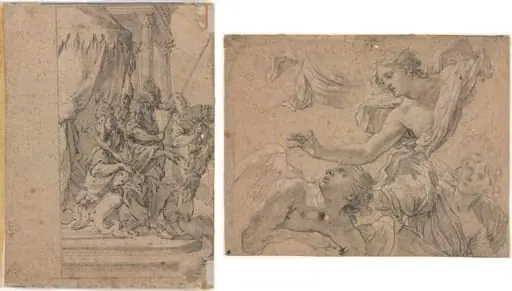 Studies of Angels (recto); Panthea before Cyrus? (verso)
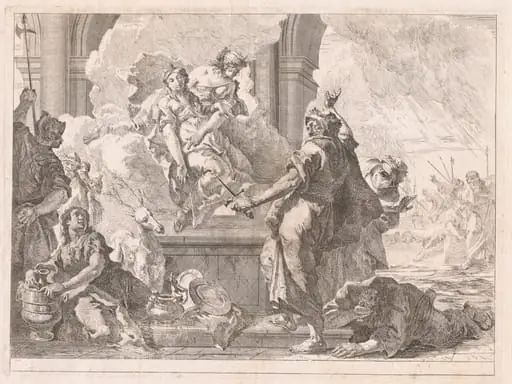 The Sacrifice of Iphigenia
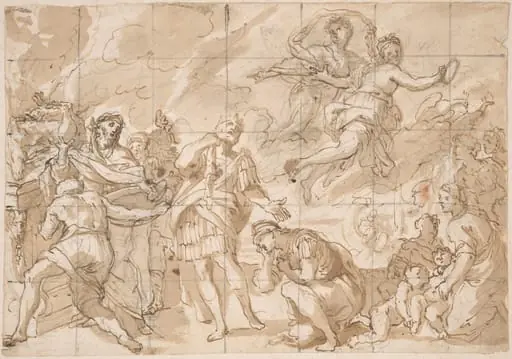 The Sacrifice of Iphigenia
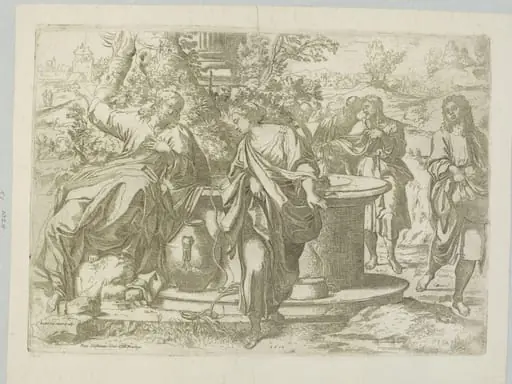 Christ and the Woman of Samaria
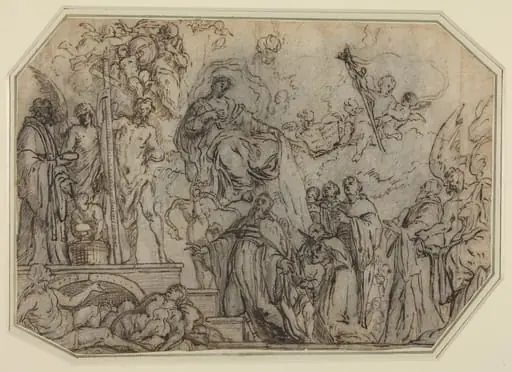 The Trinity and the Virgin Appearing to Ecclesiastics
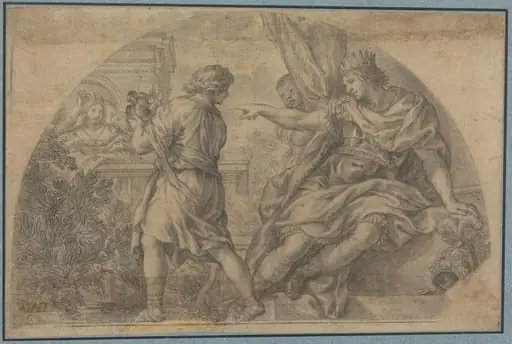 Masinissa and Sophonisba
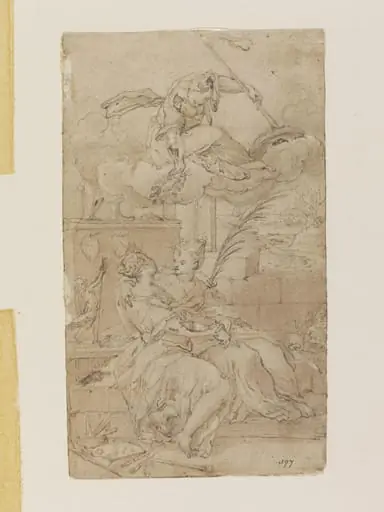 Allegory of the Union of Painting and Sculpture
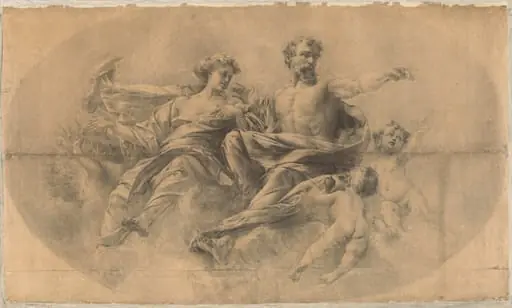 Zeus and Hera
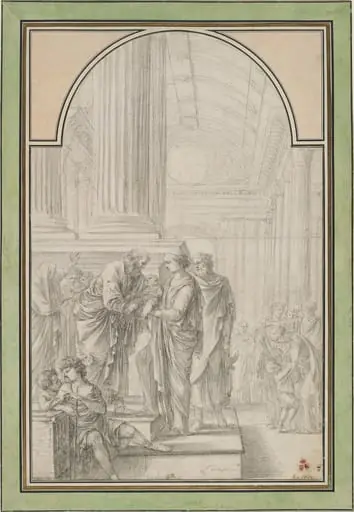 The Presentation in the Temple
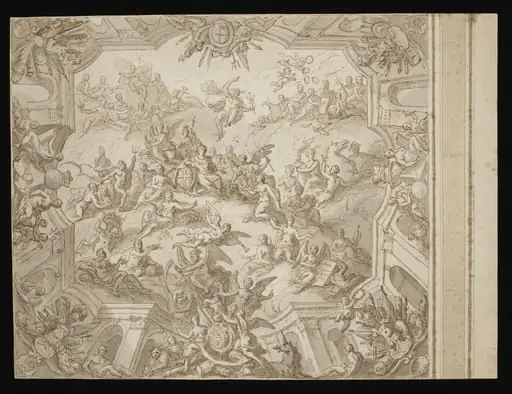 Preliminary design for the ceiling of the Upper Hall at Greenwich
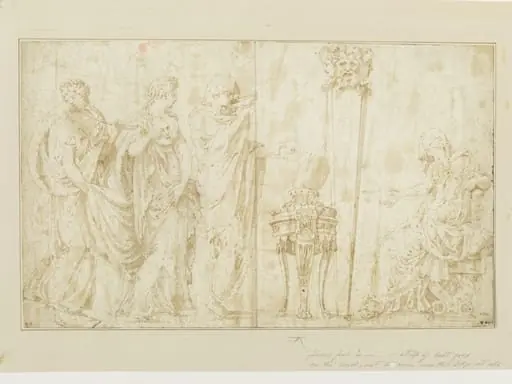 A sacrifice
 Boreas Abducting Oreithyia