Artwork
Orpheus Charming the Animals
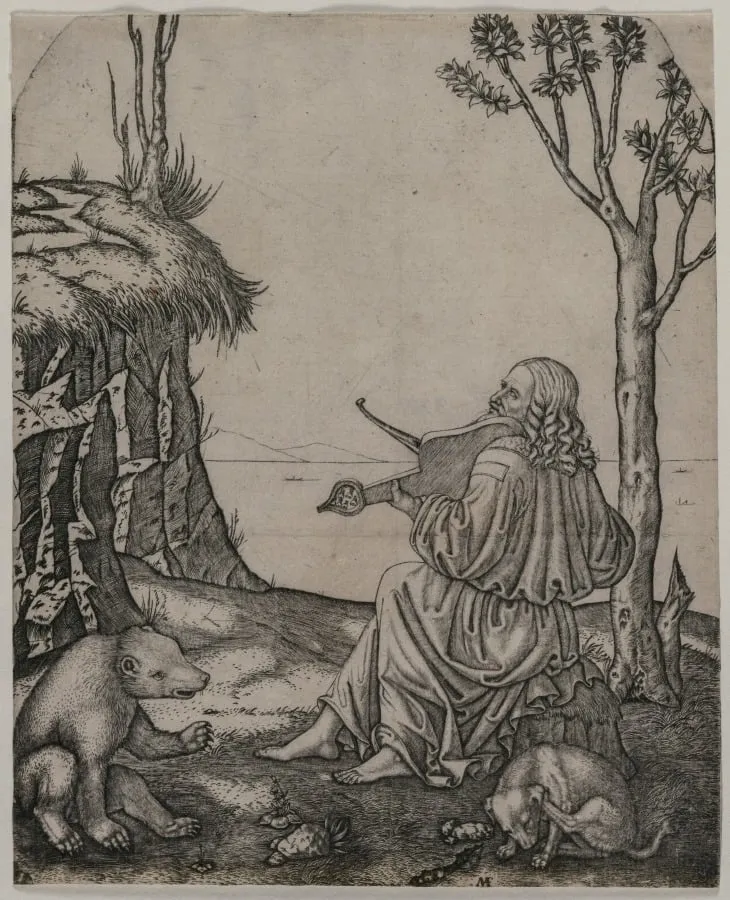
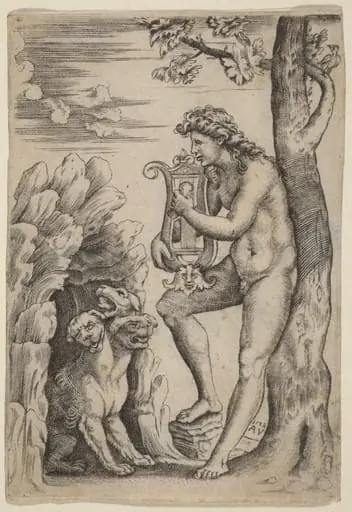
Orpheus Charming the Animals is a print by the Renaissance artist Marcantonio Raimondi. It dates from 1505 and is held in the collection of the Cleveland Museum of Art.
About this work
Overview
The print portrays the legendary musician Orpheus seated on a rock, playing a small stringed instrument while a bear, a dog and even stones appear to listen attentively. The composition emphasizes the mythic power of his music to calm and attract the natural world.
Subject & Meaning
Drawing on Greek mythology, the work illustrates the episode in which Orpheus’s song pacifies wild beasts. By gathering a bear and a dog around him, the image visualizes the ancient belief that his melodies could harmonize the animal kingdom and animate inanimate elements such as stones.
Technique & Style
Executed as an engraving, the artist rendered the scene with fine incised lines that delineate the texture of the dog’s fur and the folds of Orpheus’s robe. The linear approach creates a delicate surface, distinguishing it from painterly brushwork and highlighting the precision of metalcut printmaking.
Context
The instrument shown is a lira da braccio, a bowed string instrument popular in the late Renaissance and known to have been played by Leonardo da Vinci. Its inclusion dates the print to a period when such instruments were associated with learned music and artistic experimentation.
Legacy
The print belongs to a tradition of visualizing music’s transformative power, a theme revisited by later artists through techniques such as sfumato to convey atmospheric effects. Its survival in metal engraving form offers insight into how Renaissance artists translated mythic narratives into reproducible artworks.
Artist & collection

Artist
Marcantonio Raimondi, often called simply Marcantonio (c. 1470/82 – c. 1534), was an Italian engraver, known for being the first important printmaker whose body of work consists largely of prints copying paintings. He…

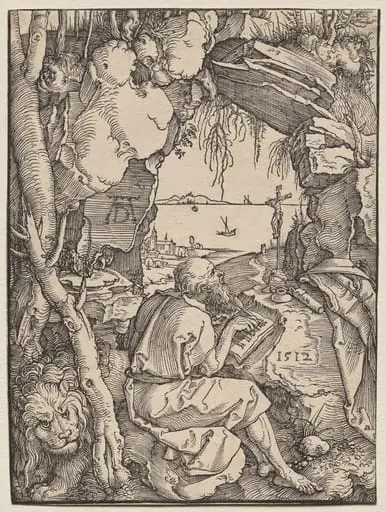 St. Jerome in a Cave
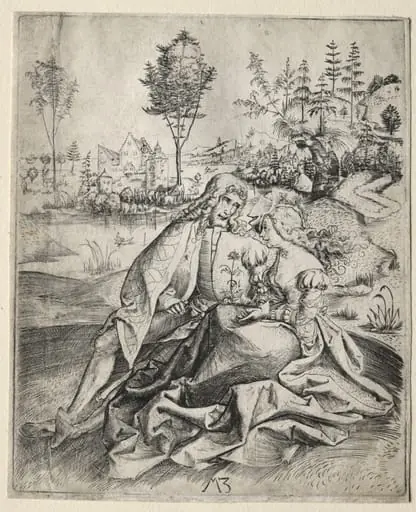 The Two Lovers
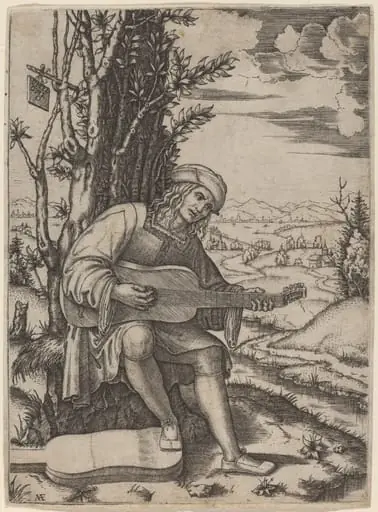 Giovanni Filoteo Achillini
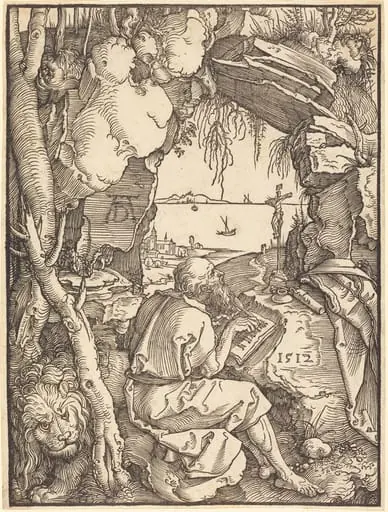 Saint Jerome in a Cave
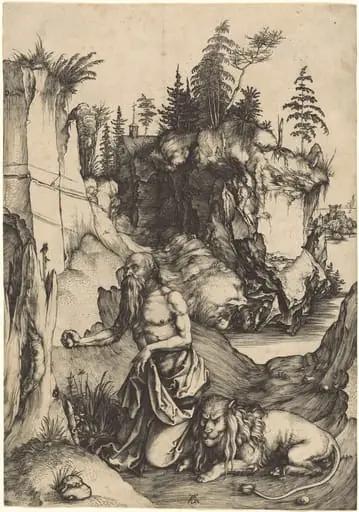 Saint Jerome Penitent in the Wilderness
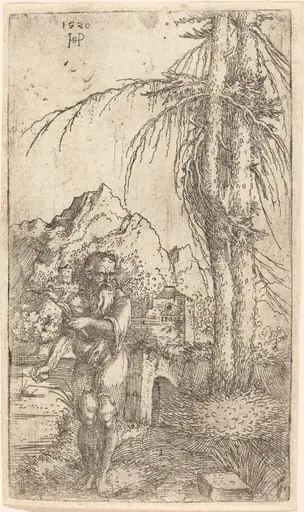 Saint Jerome in a Landscape
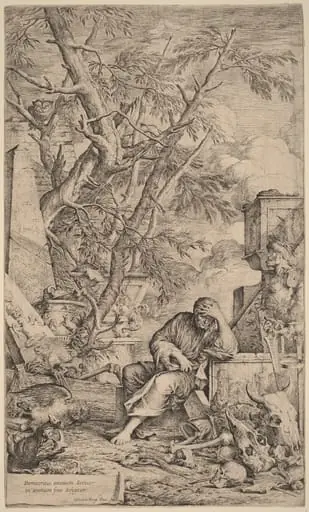 Democritus in Meditation
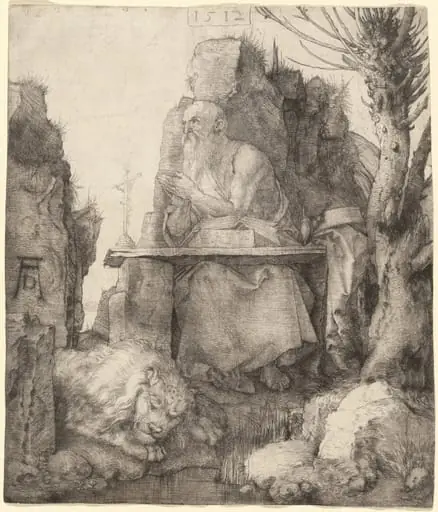 Saint Jerome by the Pollard Willow
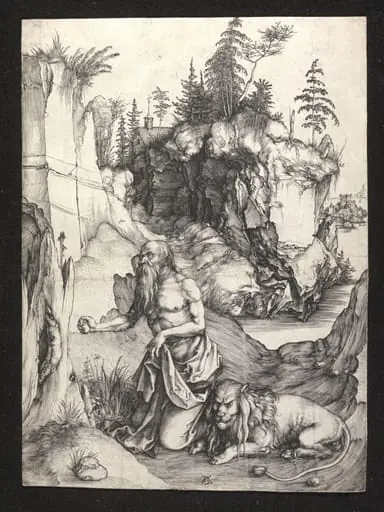 St Jerome in Penitence
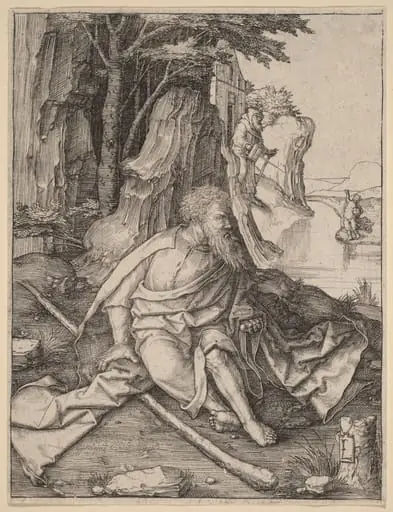 Saint Christopher at the Border of a River
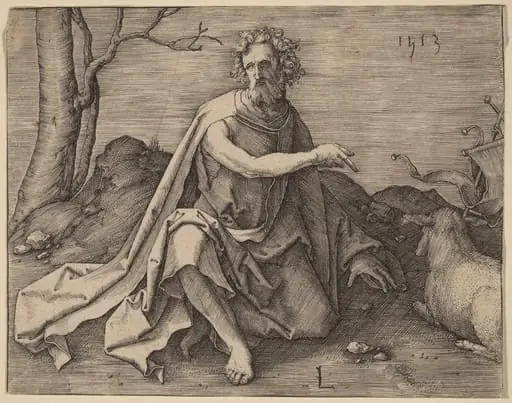 Saint John the Baptist in the Desert
 Orpheus