Artwork
Commemoration of the Dead
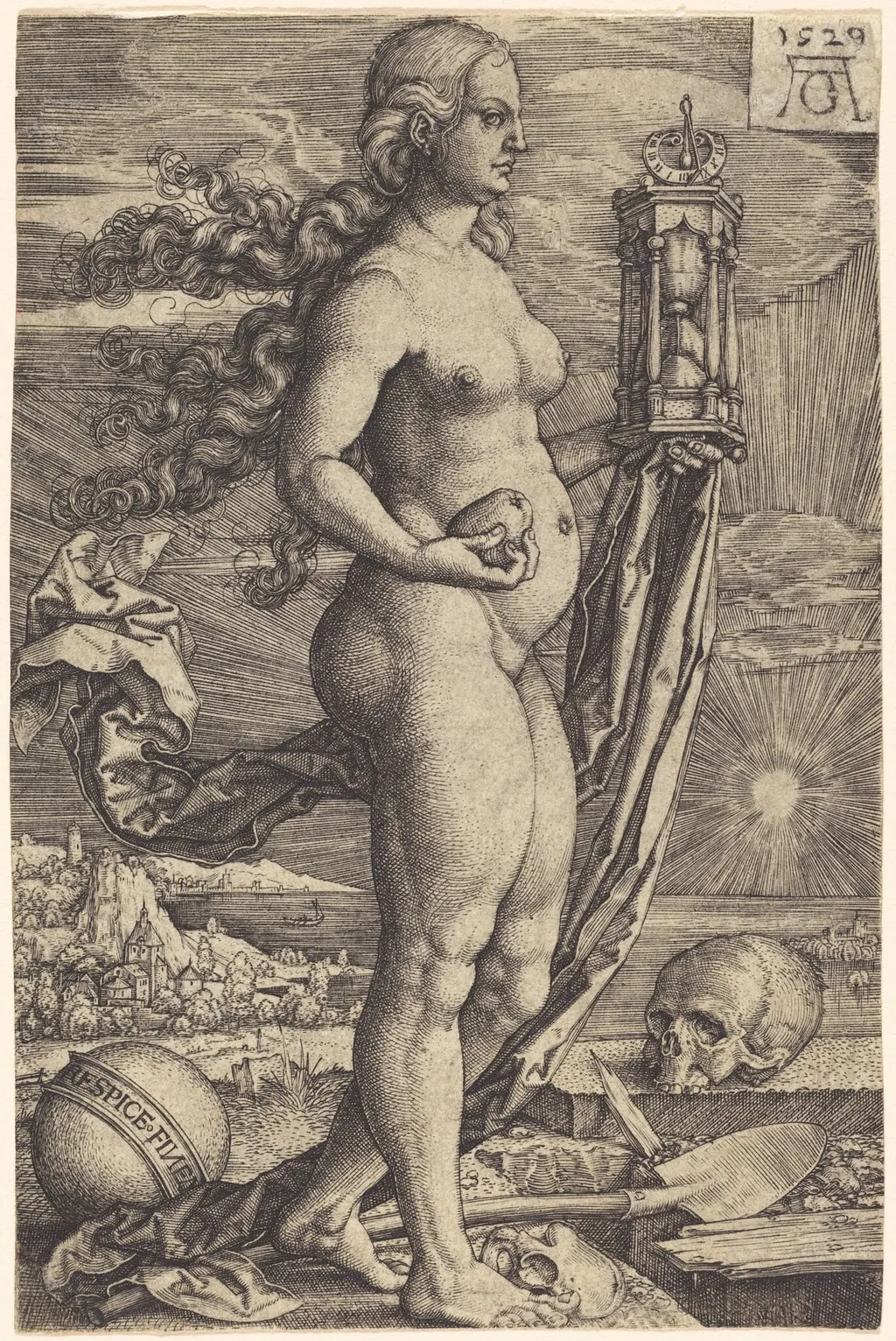
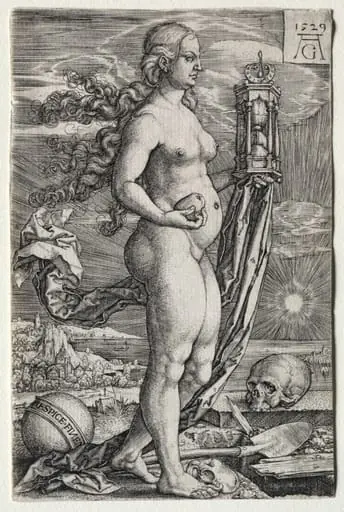
Commemoration of the Dead is an ink print by the Northern Renaissance artist Heinrich Aldegrever. It dates from 1529 and is held in the collection of the National Gallery of Art.
About this work
The mix of war and nature might symbolize something bigger—maybe how humans destroy their own world.
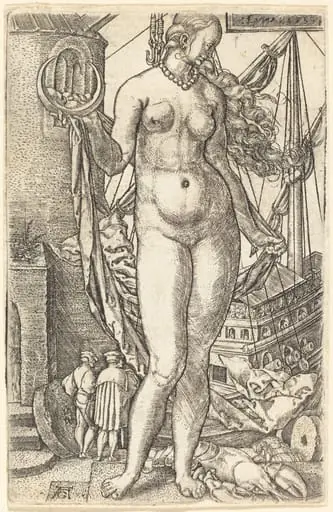
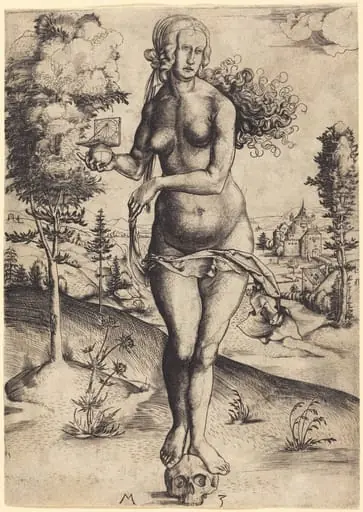
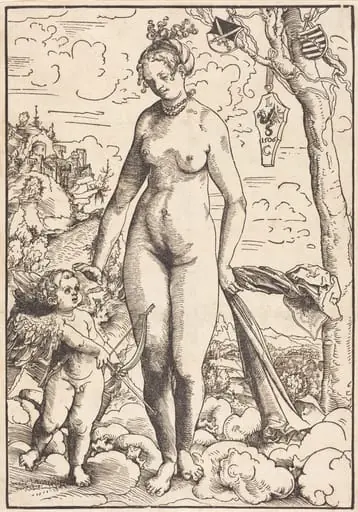
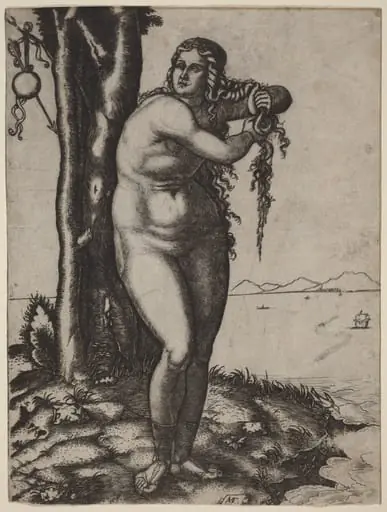
This engraving shows a bare-chested woman standing on a rocky shore. She holds a long sword in one hand and a small object in the other. Behind her, a town burns in the distance, with a ship sinking nearby. Her hair is wild, and she looks serious.
The date "1529" is stamped in the corner, marking this as an early Renaissance work. The mix of war and nature might symbolize something bigger—maybe how humans destroy their own world.
Want to know more? Try looking up engraving to see how artists carved these details.
Overview
Heinrich Aldegrever’s *Commemoration of the Dead* is an engraving dated 1529. Executed in the characteristic small format of the German “Little Masters,” the print presents a stark, narrative scene that combines elements of war, disaster and a solitary figure on a rocky coastline.
Subject & Meaning
The composition centers on a bare‑chested woman standing on a craggy shore, clutching a sword in one hand and a diminutive object in the other. Behind her a town smolders and a ship sinks, suggesting a catastrophic event. The woman’s wild hair and solemn expression convey mourning, while the juxtaposition of human conflict and natural landscape hints at a broader meditation on destruction and loss.
Technique & Style
Aldegrever employed the fine line work typical of early 16th‑century engraving, achieving intricate detail within a compact format. The crisp incisions render textures—from the turbulent sea to the flames of the distant town—while the controlled hatching creates depth and tonal contrast, reflecting the influence of Albrecht Dürer’s printmaking methods.
History & Provenance
Created in the early Renaissance, the print belongs to Aldegrever’s prolific output of small‑scale works that followed Dürer’s innovations. Although specific ownership records are scarce, the engraving has circulated among collections of Northern European prints since the 16th century, appearing in several catalogues of the “Little Masters” repertoire.
Context
The work emerges from a period of intense religious and political upheaval in Germany, where artists often used allegorical imagery to comment on contemporary turmoil. Aldegrever’s choice of a solitary, grieving figure amidst a burning town reflects the anxieties of a society confronting war, plague, and the Reformation’s social disruptions.
Artist & collection

Artist
Heinrich Aldegrever or Aldegraf was a German painter and engraver. He was one of the "Little Masters", the group of German artists making small old master prints in the generation after Albrecht Dürer.