Artwork
Diligence
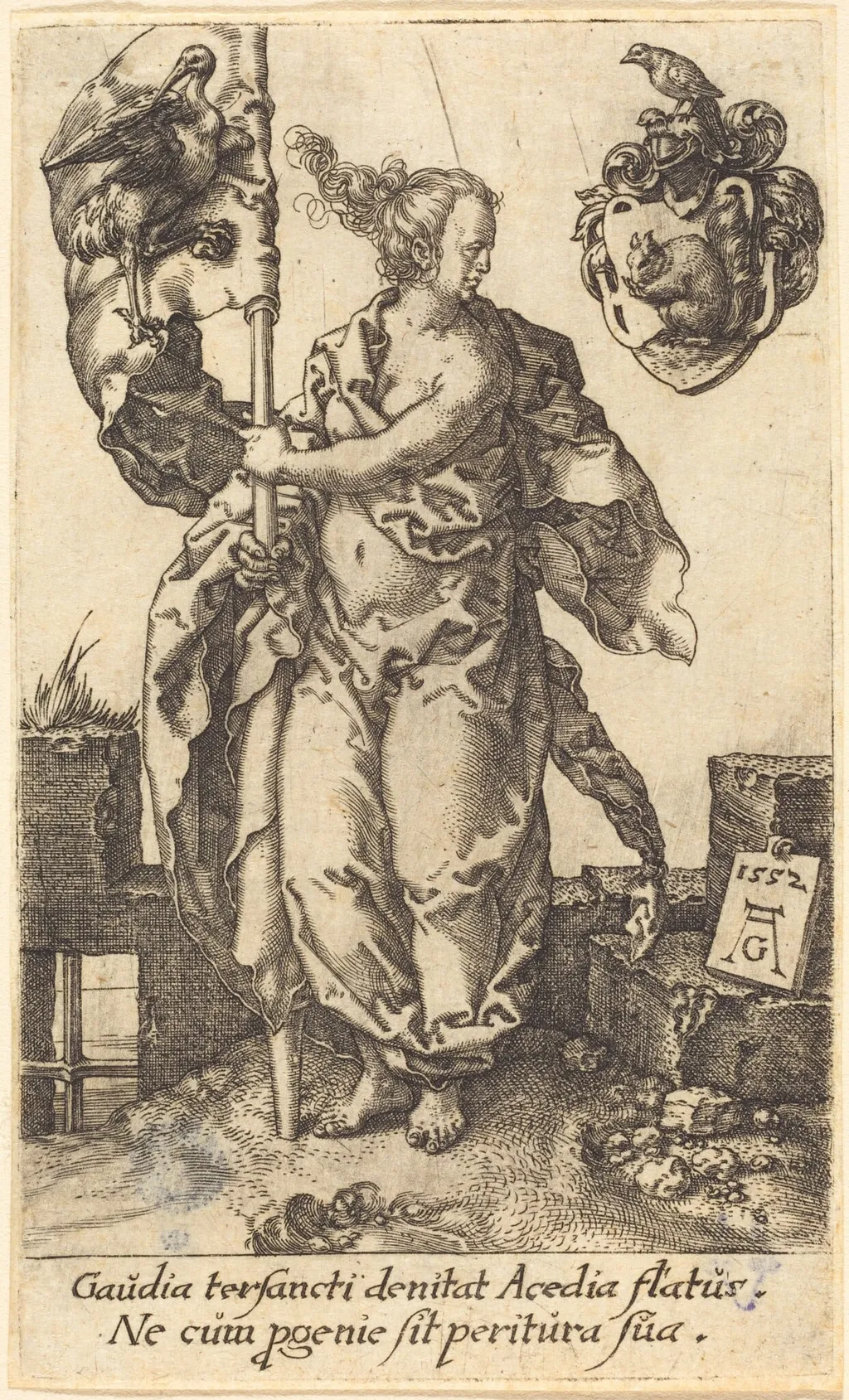
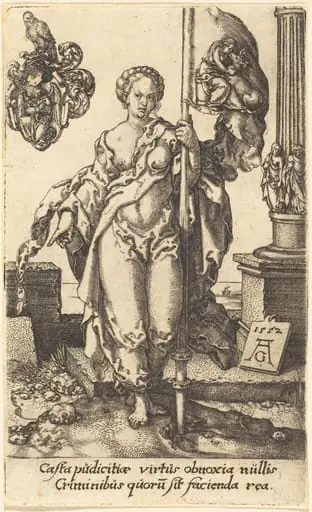
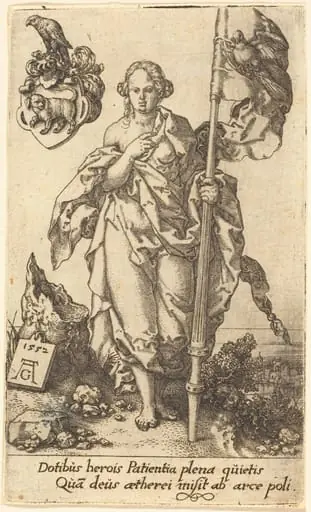
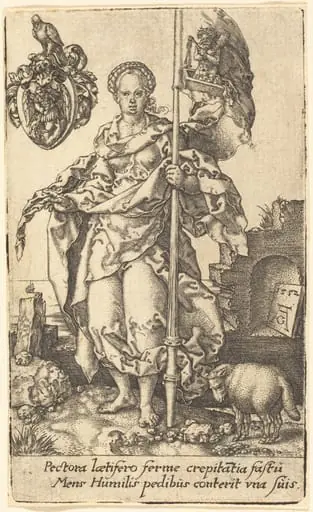
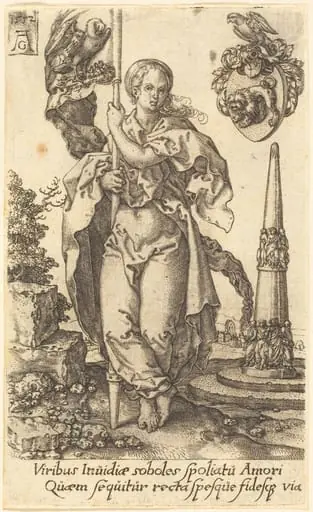
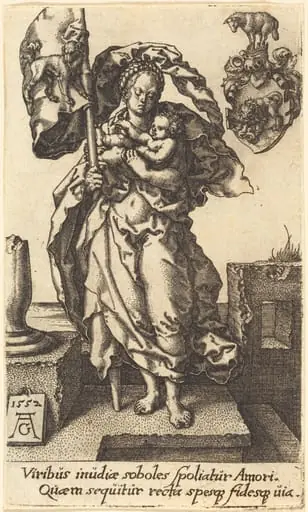
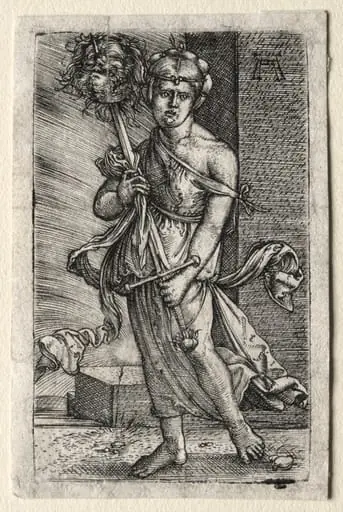
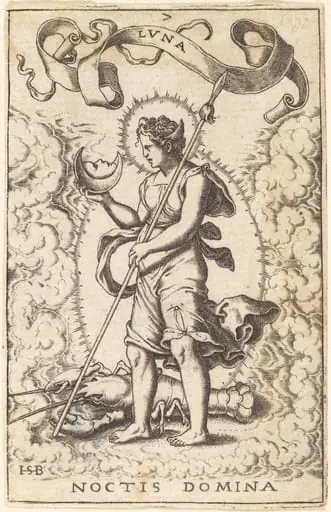
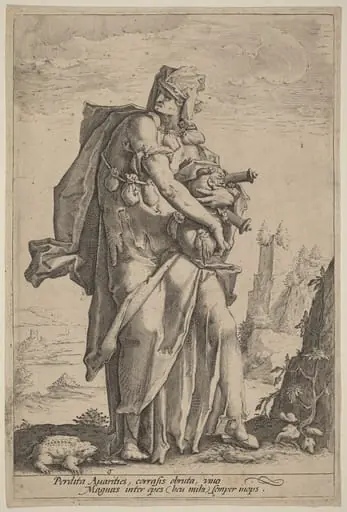
Diligence is a print by the Northern Renaissance artist Heinrich Aldegrever. It dates from 1552 and is held in the collection of the National Gallery of Art.
About this work
" The boy and the messy figure might stand for different ideas—like hard work and laziness—though the artist never explains it directly.
This etching shows a strange, tangled figure holding a stick and staring at a small, serious-looking boy. The boy sits on a rock, clutching a scroll, while a shield with a bird and a wreath floats nearby. The background has a few plants and a small box with the letters "TG" and the year "1552."
The boy and the messy figure might stand for different ideas—like hard work and laziness—though the artist never explains it directly. The year "1552" is carved into the box, which is a clue it’s from that time.
Next, look up Renaissance to see how artists used symbols like these to tell stories.
Overview
Heinrich Aldegrever, a German printmaker of the mid-16th century, produced *Diligence* in 1552 as part of a series of small-scale engravings aligned with the Little Masters tradition. Working in the wake of Albrecht Dürer, he specialized in finely detailed intaglio prints that often conveyed moral or allegorical messages. This work exemplifies his technical precision and interest in symbolic narratives, rendered at a scale suited for private contemplation rather than public display.
Subject & Meaning
The print juxtaposes two figures: a disheveled, entangled form holding a staff, and a composed boy seated on a rock, clutching a scroll. Nearby, a shield bears a bird and a wreath, while a small box inscribed 'TG' and '1552' anchors the scene. Though Aldegrever left no explicit interpretation, the contrast suggests a moral dichotomy—perhaps diligence versus idleness. The scroll implies learning, the wreath victory, and the bird may signify freedom or vigilance, inviting viewers to infer the allegory through Renaissance symbolic conventions.
Technique & Style
Aldegrever employed fine-line engraving to achieve intricate textures and delicate tonal gradations. The composition is tightly controlled, with minute details in the figures’ drapery, the foliage, and the box’s inscription. His style reflects the Northern Renaissance emphasis on precision and miniature detail, avoiding broad gestures in favor of intimate, labor-intensive mark-making. The small format, typical of the Little Masters, encouraged close viewing and intellectual engagement with layered symbolism.
History & Provenance
Created in 1552, the print bears the date and initials 'TG'—likely the artist’s mark or a patron’s identifier—carved into a small box within the scene. Aldegrever’s prints circulated among educated collectors in Germany and the Low Countries, valued for their craftsmanship and moral content. While no early ownership records are widely documented, the work survives in multiple institutional collections, indicating its continued recognition among connoisseurs of Northern Renaissance printmaking.
Context
In mid-16th-century Germany, printmaking flourished as a medium for disseminating humanist ideals and moral instruction. Aldegrever’s work emerged amid a cultural climate where allegory was a primary tool for conveying virtue and vice, especially in Protestant regions wary of overt religious imagery. His small engravings offered accessible, portable lessons in conduct, aligning with broader trends in devotional and didactic art that prioritized personal reflection over public spectacle.
Legacy
Aldegrever’s *Diligence* contributes to a broader tradition of Northern European moral prints that influenced later generations of engravers and illustrators. Though not widely known today, his precise technique and symbolic language helped sustain the legacy of Dürer’s legacy in intimate printmaking. The work remains a case study in how visual allegory functioned in early modern Europe, offering insight into the values and intellectual habits of its audience.
Artist & collection

Artist
Heinrich Aldegrever or Aldegraf was a German painter and engraver. He was one of the "Little Masters", the group of German artists making small old master prints in the generation after Albrecht Dürer.