Artwork
Charity
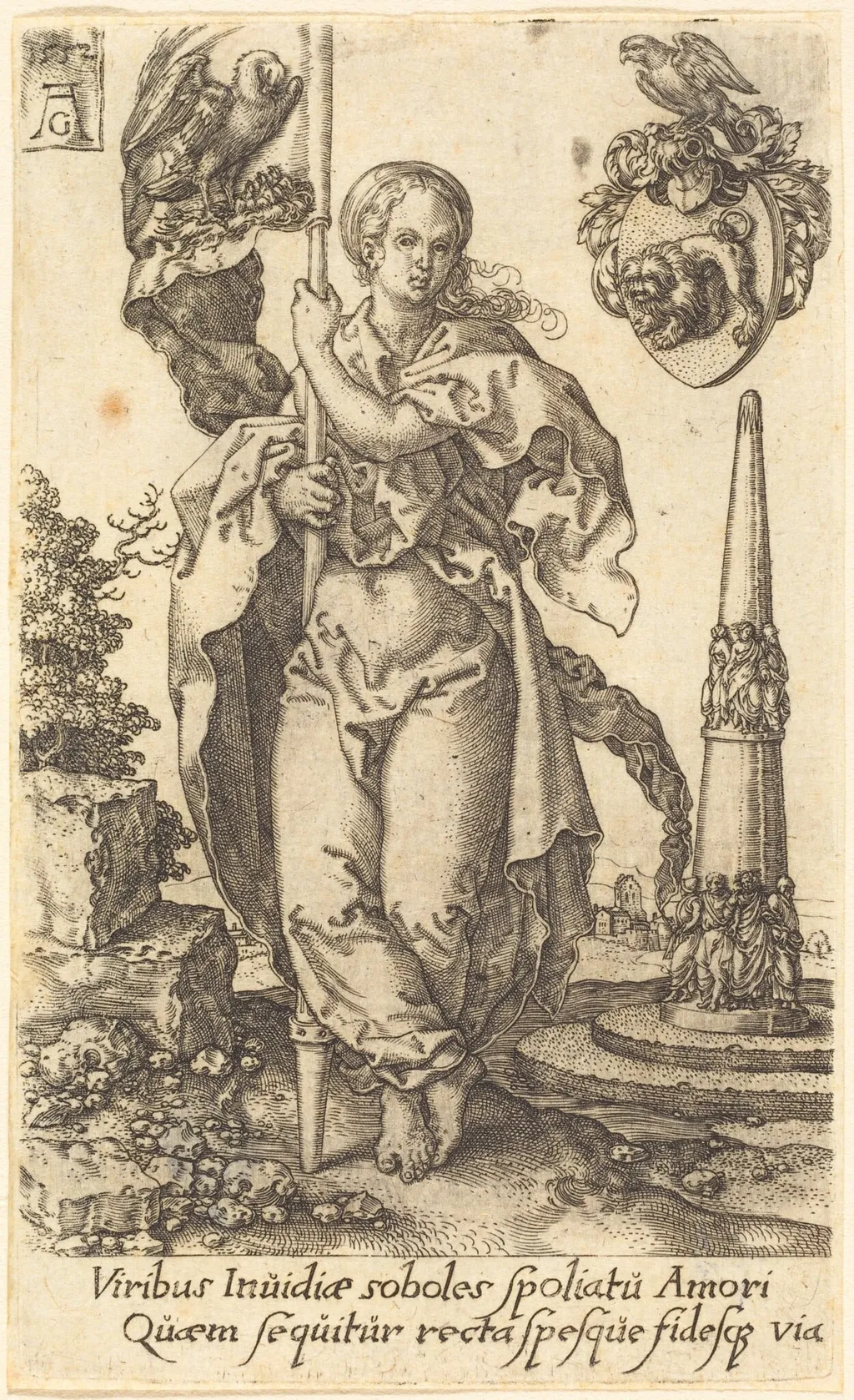
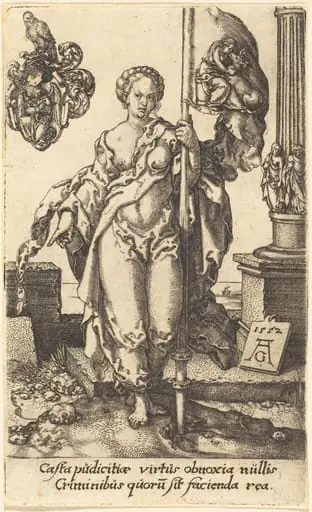
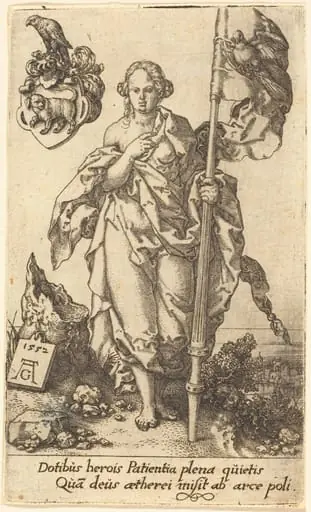
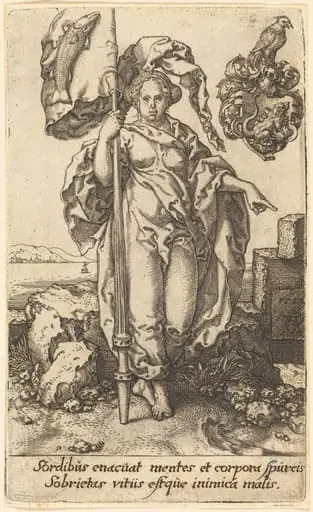
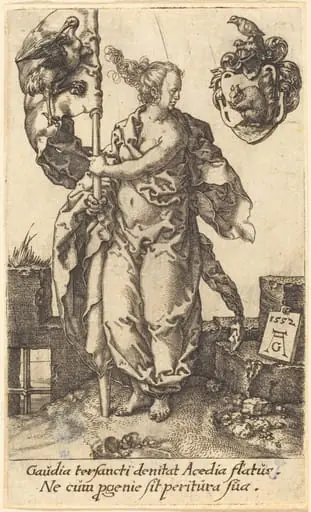
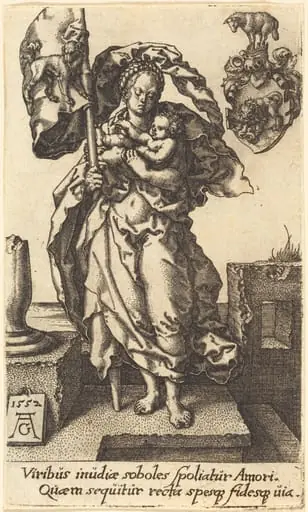
Charity is a print by the Northern Renaissance artist Heinrich Aldegrever. It dates from 1552 and is held in the collection of the National Gallery of Art.
About this work
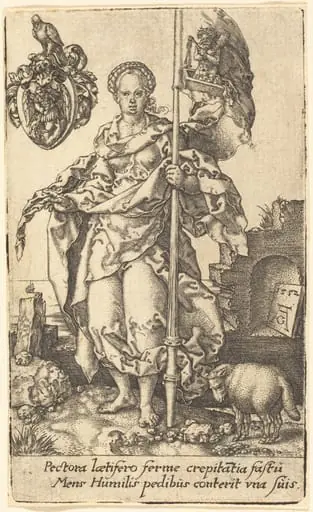
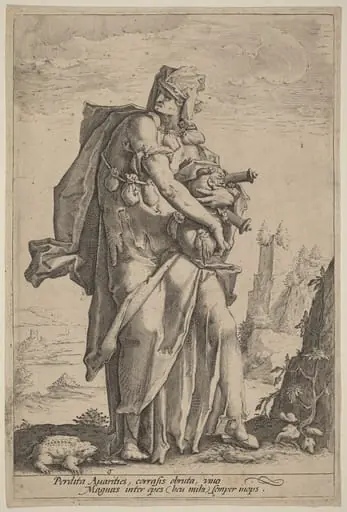
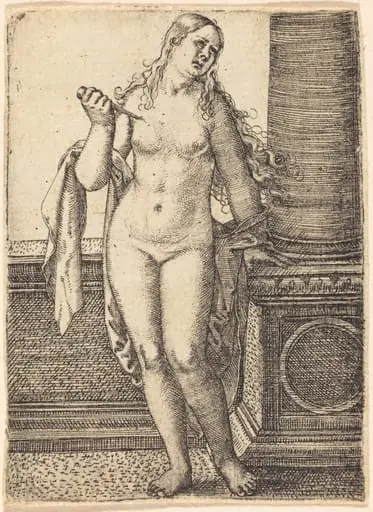
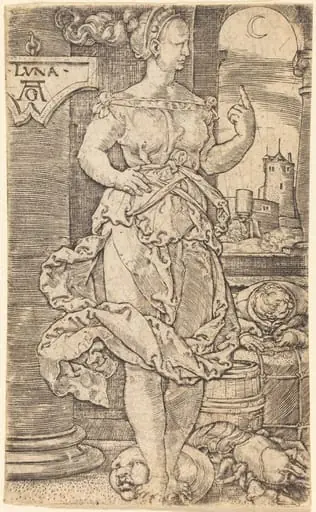
Three women stand close together, one holding a baby, another a basket of bread, the third pouring water from a jug.
Heinrich Aldegrever painted Charity as a tiny woodcut in 1552. Three women stand close together, one holding a baby, another a basket of bread, the third pouring water from a jug. Their long robes fold into sharp creases under the light.
This is one of four “cardinal virtues” Aldegrever made to show good behavior. The lines are crisp and the figures feel almost like sculpture.
Look up Henri Matisse to see how later artists cut shapes with the same bold edges.
Overview
Heinrich Aldegrever created the print 'Charity' in 1552. It is one of a series of engravings representing the cardinal virtues.
Subject & Meaning
The print depicts three women in long robes, engaged in acts of charity: one holds a baby, another a basket of bread, and the third pours water from a jug. The scene embodies the virtue of charity, a common moral and religious theme in Northern Renaissance art.
Technique & Style
Aldegrever's engraving is characterized by crisp lines and detailed craftsmanship, reflecting the style of the 'Little Masters,' a group of German artists known for their small-scale prints. The figures appear sculptural, with their robes folding into sharp creases under the light.
Artist & collection

Artist
Heinrich Aldegrever or Aldegraf was a German painter and engraver. He was one of the "Little Masters", the group of German artists making small old master prints in the generation after Albrecht Dürer.