Artwork
Chastity
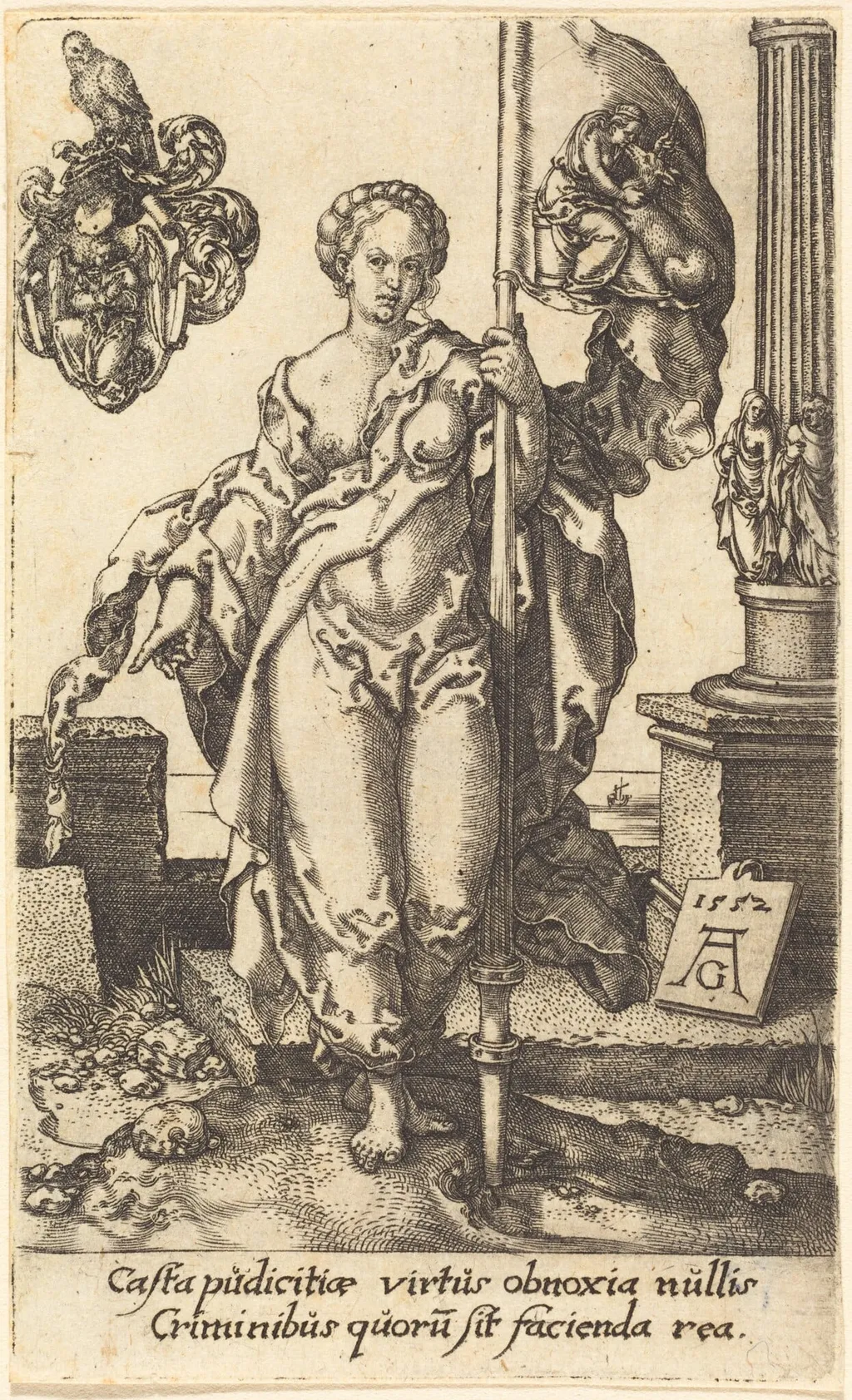
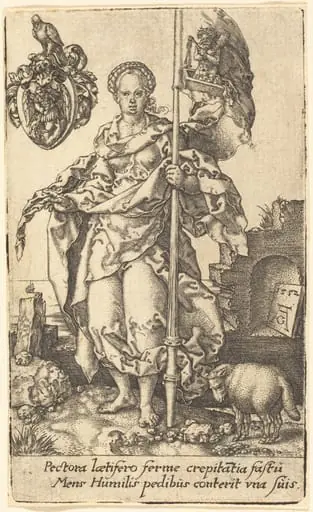
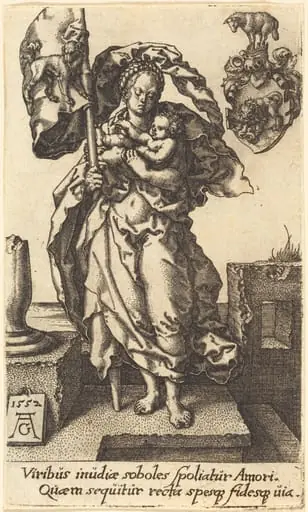
Chastity is a print by the Northern Renaissance artist Heinrich Aldegrever. It dates from 1552 and is held in the collection of the National Gallery of Art.
About this work
The woman’s pose and the Latin text below (*Chastity*) suggest she stands for an idea, not a real person.
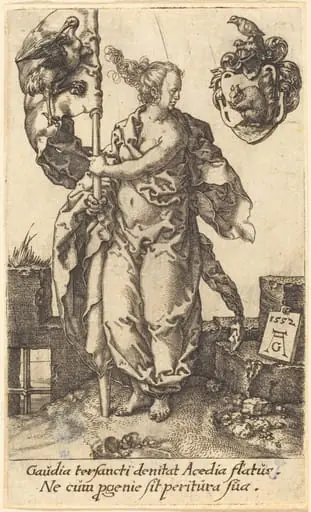
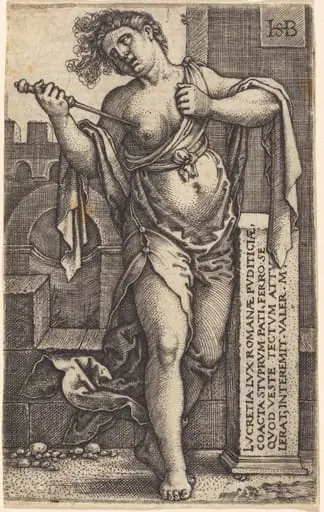
This print shows a woman standing in front of a draped altar. She’s holding a tall staff and a cloth over her shoulder. Behind her, a small scene of a man and woman is carved into the altar’s side, with a statue on top. The ground has rocks and waves, and the whole image looks like it was drawn with a pen.
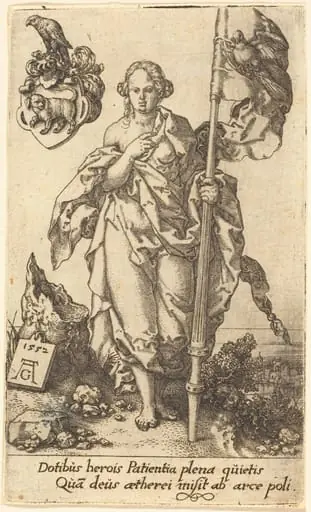
The woman’s pose and the Latin text below (*Chastity*) suggest she stands for an idea, not a real person. The year 1552 is marked on a small box near the altar.
Look up Renaissance next to see how artists used symbols like this.
Overview
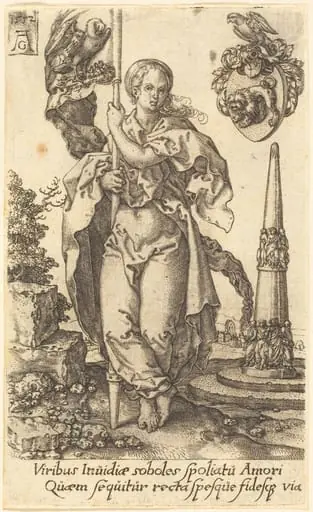
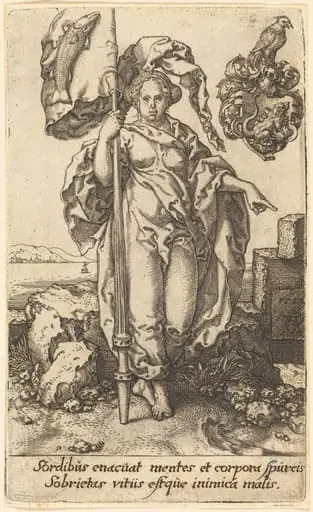
Heinrich Aldegrever's 1552 engraving, Chastity, is a small-scale print characteristic of the 'Little Masters,' a group of German artists known for detailed works.
Subject & Meaning
The print depicts an allegorical figure of Chastity, identified by symbolic attributes, standing before a draped altar with a carved scene and statue. The Latin inscription and the figure's pose indicate she represents an abstract concept rather than a specific individual.
Technique & Style
Aldegrever's refined linework and attention to detail reflect the influence of the Renaissance on Northern European art. The engraving's style is reminiscent of pen drawing, with intricate rendering of textures and forms.
History & Provenance
Created in 1552, the print is dated on a small box near the altar, situating it within Aldegrever's oeuvre as an engraver working in the tradition of Albrecht Dürer.
Artist & collection

Artist
Heinrich Aldegrever or Aldegraf was a German painter and engraver. He was one of the "Little Masters", the group of German artists making small old master prints in the generation after Albrecht Dürer.