Artwork
Compassion
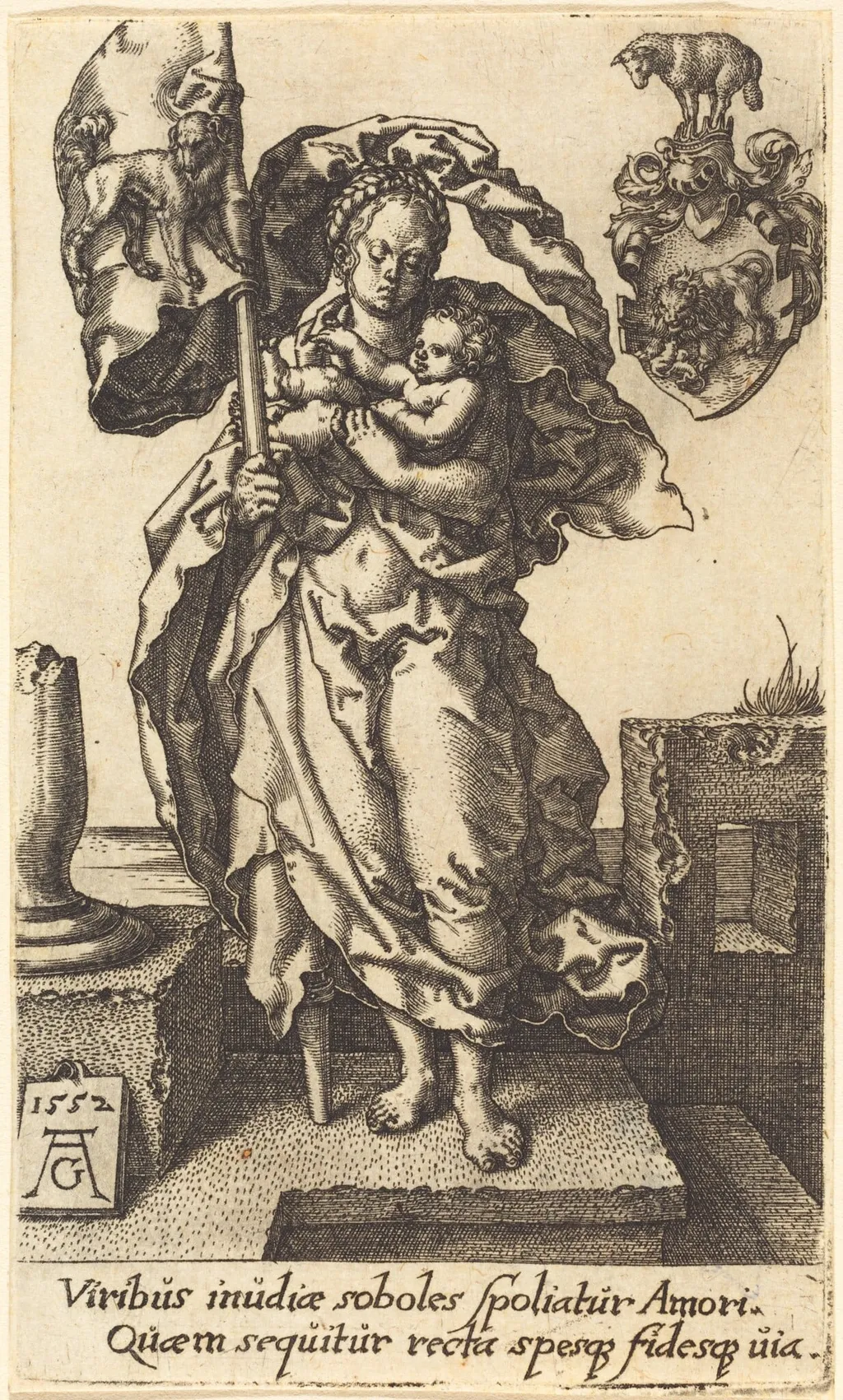
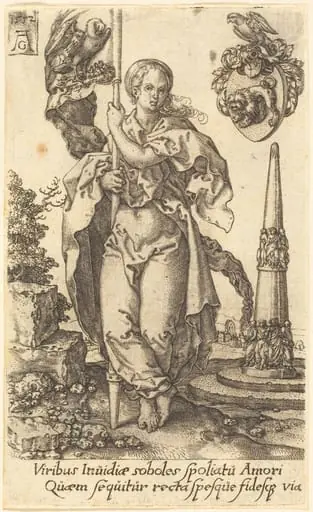
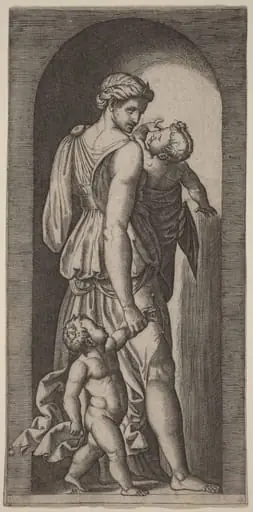
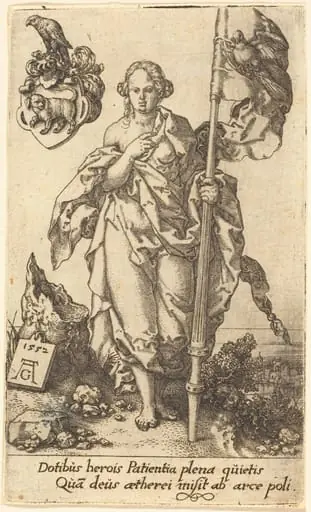
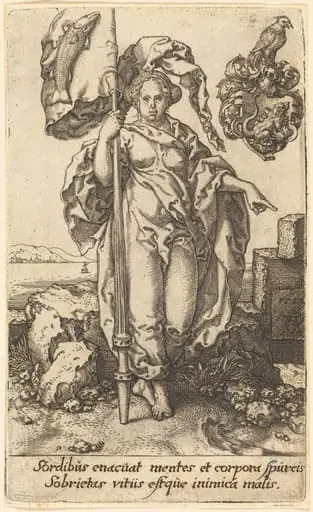
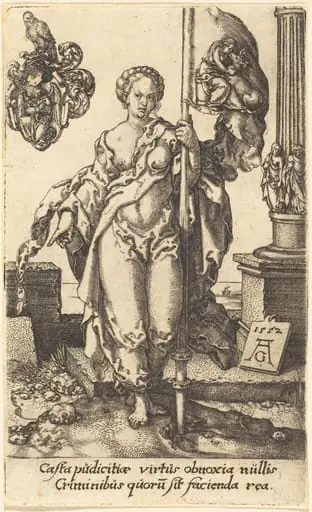
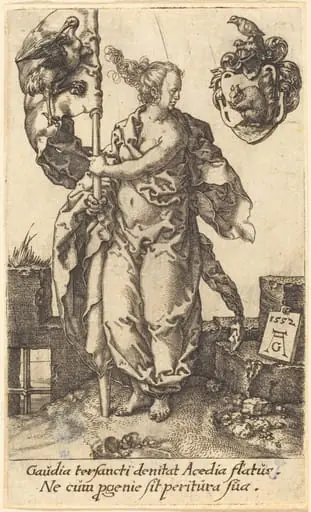
Compassion is a print by the Northern Renaissance artist Heinrich Aldegrever. It dates from 1552 and is held in the collection of the National Gallery of Art.
About this work
Overview
Heinrich Aldegrever produced this engraving in 1552 as part of a group of small, finely detailed prints known as the Little Masters' output.
Heinrich Aldegrever produced this engraving in 1552 as part of a group of small, finely detailed prints known as the Little Masters' output. Working in the tradition established by Albrecht Dürer, Aldegrever specialized in intricate compositions suited to intimate viewing. The work combines religious symbolism with a heightened sense of physical presence, using precise line work and tonal contrast to convey emotional weight within a compact format.
Subject & Meaning
The scene portrays a powerful male figure cradling a child, evoking themes of protection and tender care. A second hand extends toward them, suggesting intervention or offering. The Latin inscription below references love and guardianship, reinforcing the moral or spiritual dimension of compassion. The shield bearing an unusual crest may allude to identity or lineage, though its exact meaning remains ambiguous, leaving room for interpretive depth.
Technique & Style
Aldegrever employed fine, controlled engraving lines to render texture and form, particularly in the drapery and muscular anatomy. He used chiaroscuro through sharp contrasts between deep shadows and bright highlights to model the figures and create dramatic volume. The swirling contours of the fabric and the rocky base add movement, while the precise rendering of the shield’s emblem demonstrates his attention to minute detail characteristic of the Little Masters.
History & Provenance
Created during the mid-16th century in Westphalia, the print emerged from a regional network of artists producing small-scale engravings for private collectors. Aldegrever’s works circulated widely among educated elites who valued their technical precision and moral undertones. While specific early ownership records are sparse, the print’s survival in multiple museum collections indicates its enduring recognition within printmaking circles.
Context
This work reflects the Protestant Reformation’s influence on visual culture, where religious imagery shifted toward allegory and personal virtue rather than saintly veneration. Aldegrever’s focus on compassion aligns with emerging humanist values emphasizing moral action over ritual. His small format catered to domestic settings, making spiritual themes accessible in private spaces rather than public churches.
Legacy
Aldegrever’s *Compassion* exemplifies the Little Masters’ contribution to Northern Renaissance printmaking, preserving a tradition of technical refinement in an era of changing religious and artistic priorities. Though less celebrated than Dürer, his influence endured among collectors and engravers who valued clarity, emotional restraint, and meticulous execution. The print remains a reference point for studies of 16th-century German graphic art.
Artist & collection

Artist
Heinrich Aldegrever or Aldegraf was a German painter and engraver. He was one of the "Little Masters", the group of German artists making small old master prints in the generation after Albrecht Dürer.