Artwork
Three Buckles of Girdles Side by Side
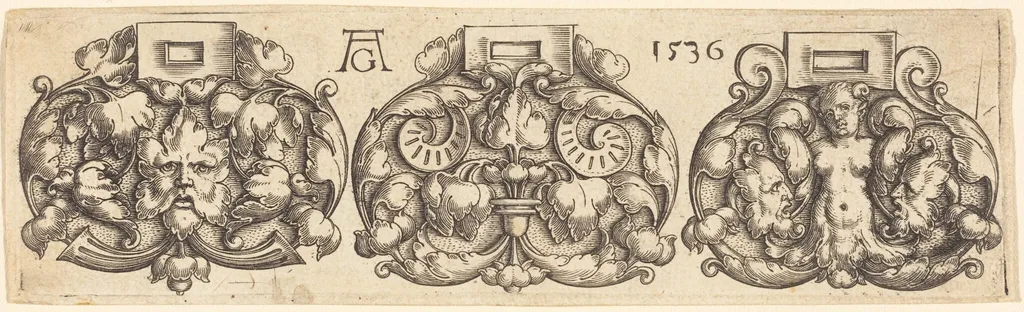
Three Buckles of Girdles Side by Side is an ink print by the Northern Renaissance artist Heinrich Aldegrever. It dates from 1536 and is held in the collection of the National Gallery of Art.
About this work
The year 1536 is written at the top, and the whole thing is drawn with fine lines—no color, just black and white.
This print shows three oval shapes side by side, each framed like a decorative buckle. Inside each oval, there’s a bearded face with curly hair, looking serious. Between the faces, there are swirling patterns with tiny scrolls, clocks, and what looks like a vase or urn.
The year 1536 is written at the top, and the whole thing is drawn with fine lines—no color, just black and white. The artist used a tool to carve the design into metal, then printed it.
Look up engraving to see how this kind of printmaking works.
Overview
Heinrich Aldegrever’s 1536 engraving, titled *Three Buckles of Girdles Side by Side*, presents a compact composition of three ornamental buckles arranged horizontally. Each buckle contains a stylized, bearded portrait framed by intricate scrollwork and decorative motifs, rendered entirely in fine black lines without colour.
Subject & Meaning
The central figures are solemn, bearded heads set within oval frames that mimic the shape of jeweled buckles. Between the portraits, delicate swirls incorporate miniature scrolls, clock‑like elements, and a vase‑shaped form, suggesting a study of ornamental design rather than a narrative scene.
Technique & Style
Aldegrever employed the traditional engraving process, incising the image onto a metal plate with a burin. The resulting prints display the precise, minute line work characteristic of the “Little Masters,” a group of German artists noted for their meticulous, small‑scale prints that followed Albrecht Dürer’s legacy.
History & Provenance
Created in the mid‑sixteenth century, the work reflects Aldegrever’s position within the German printmaking tradition. The date 1536 appears in the upper margin of the plate, confirming its production year. The print has circulated among collectors of early modern prints and is documented in several museum collections.
Context
The engraving belongs to a period when German artists produced highly detailed, decorative prints for a market of affluent patrons. Aldegrever’s focus on ornamental objects aligns with contemporary interests in fashion accessories and the technical virtuosity of printmaking as a portable art form.
Artist & collection

Artist
Heinrich Aldegrever or Aldegraf was a German painter and engraver. He was one of the "Little Masters", the group of German artists making small old master prints in the generation after Albrecht Dürer.

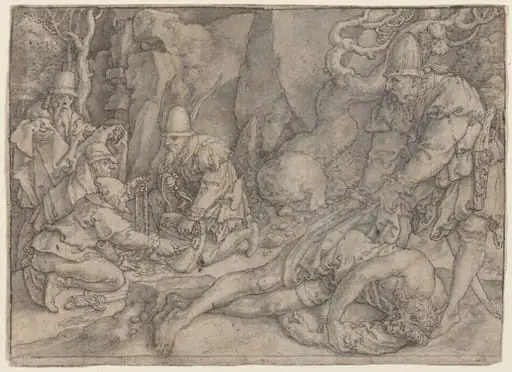
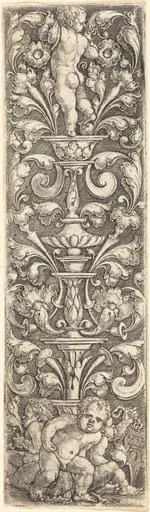 High Ornament
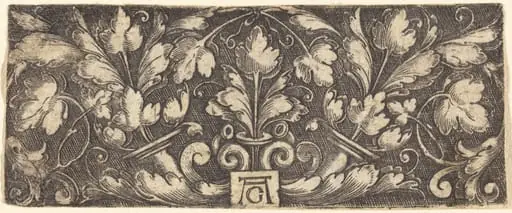 Ornament
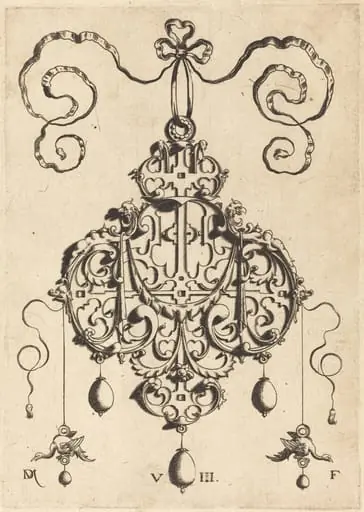 Strapwork Pendant with Two Eagles as Earringsat Left and Right
 Ascending Ornament
 Ornament
 Nereid Ridden by Two Children
 Ornament Panel: Triton Ridden by a Child
 Cherub
 Naked Infant Holding a Double Scroll of Leafy Ornament
 Three Children Blowing Horns
 Ornament Panel: Nereid Ridden by Two Children
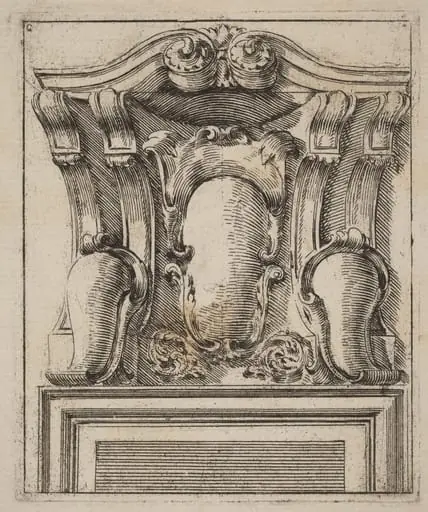 Architectural Motif with Three Shields