Artwork
Youth of Bolesław the Wry-Mouthed
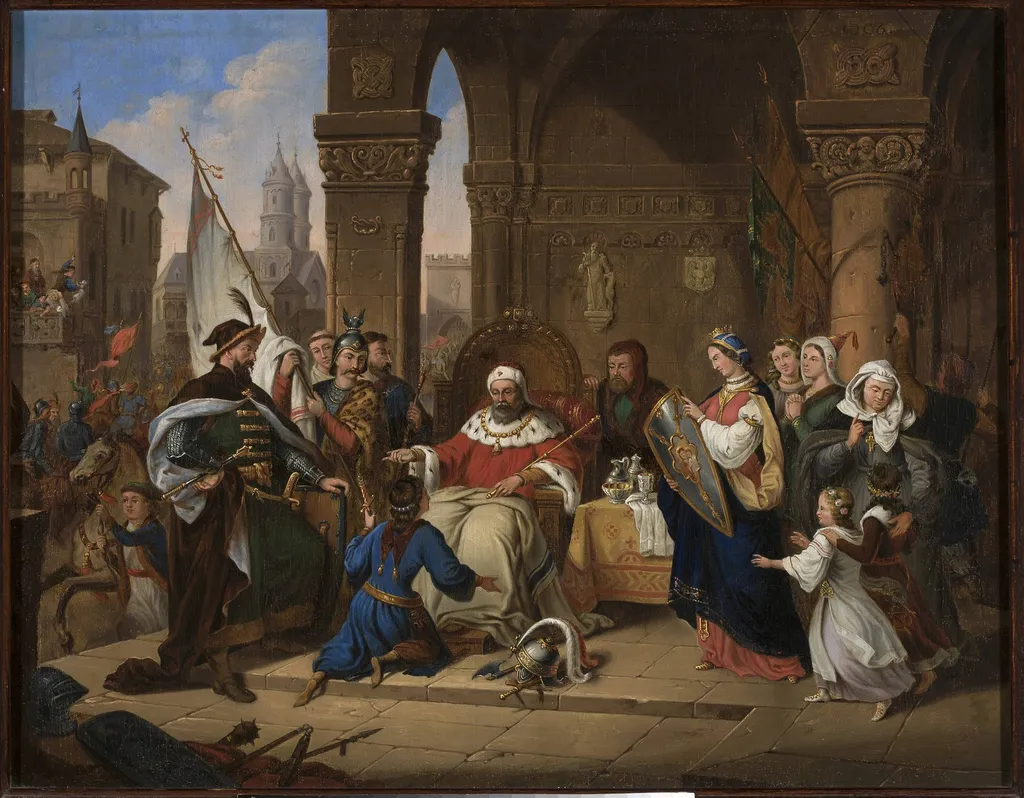
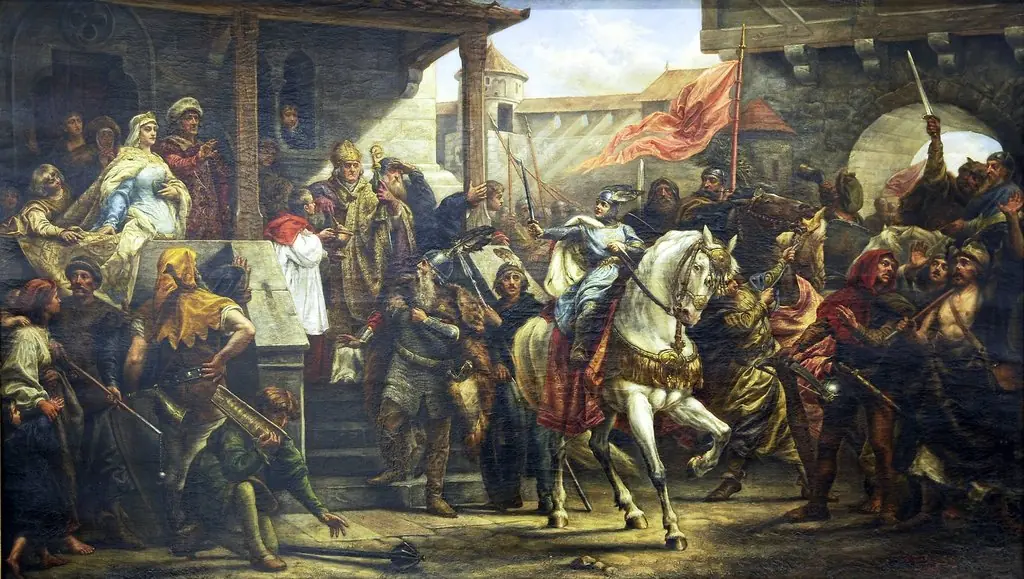
Youth of Bolesław the Wry-Mouthed is an oil painting by Aleksander Lesser. It dates from 1850 and is held in the collection of the National Museum in Warsaw.
About this work
Overview
The painting is part of the National Museum in Warsaw’s collection and reflects his broader engagement with Poland’s medieval past through visual storytelling.
Painted around 1850 by Aleksander Lesser, this oil-on-canvas work portrays a formative moment in the life of Bolesław I the Wry-Mouthed, a 10th-century Polish duke. Lesser, a Polish artist of Jewish heritage, specialized in historical narratives tied to national identity. The painting is part of the National Museum in Warsaw’s collection and reflects his broader engagement with Poland’s medieval past through visual storytelling.
Subject & Meaning
The scene captures Bolesław as a young ruler, crowned and holding a sword, surrounded by figures in period attire. A kneeling man and a standing woman suggest a ceremonial moment—possibly an act of homage or a rite of passage. The setting implies legitimacy and continuity of power, aligning with 19th-century Polish efforts to reclaim and romanticize pre-partition history as a source of cultural pride.
Technique & Style
Lesser employed traditional oil painting methods with attention to textile detail and atmospheric perspective. The composition is staged like a theatrical tableau, with figures arranged to emphasize hierarchy and ritual. The sky, rendered in soft blues and whites, provides a calm backdrop that contrasts with the grounded, solemn gestures of the figures, reinforcing the scene’s gravity without overt drama.
History & Provenance
Created during a period of heightened interest in Polish historical memory under foreign rule, the painting was likely intended for public display. It entered the National Museum in Warsaw’s collection in the 19th century, where it remains today. Lesser’s involvement with cultural institutions like Zachęta ensured such works were preserved as part of a national artistic canon.
Context
In mid-19th-century Poland, under partition, historical painting became a subtle form of resistance. Lesser, active in academic and cultural circles, contributed to reviving interest in medieval rulers as symbols of sovereignty. This work aligns with broader efforts to construct a visual history that affirmed Polish identity beyond political borders, drawing from chronicles and antiquarian research.
Legacy
Though not widely reproduced, the painting exemplifies Lesser’s role in shaping Poland’s 19th-century historical imagery. His integration of scholarly research into visual art influenced later generations of painters and curators. The work endures as a quiet testament to the use of art in preserving collective memory during times of national fragmentation.
Artist & collection
Artist
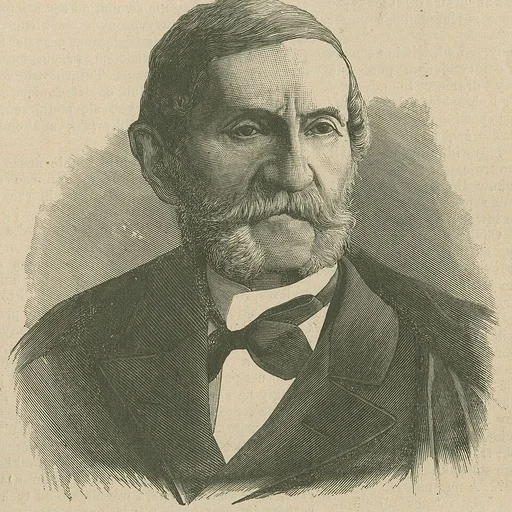
Aleksander Lesser (13 May 1814 – 13 March 1884) was a Polish painter, illustrator, sketch artist, art critic, and amateur researcher of antiquities.

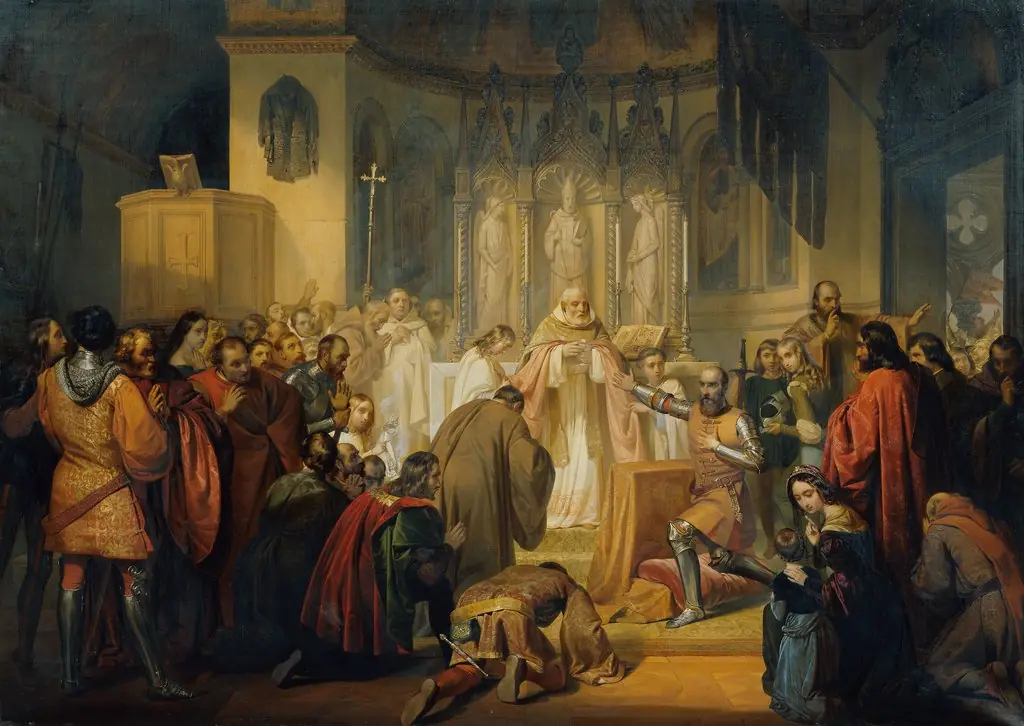 Vittore Pisani receives Holy Communion before taking command of an expedition against the Genoese
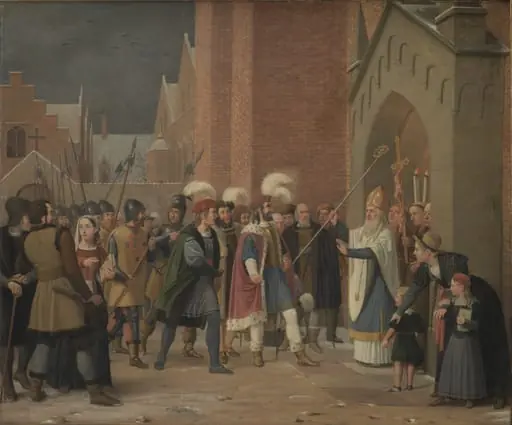 Svend Estridsen and Bishop Vilhelm
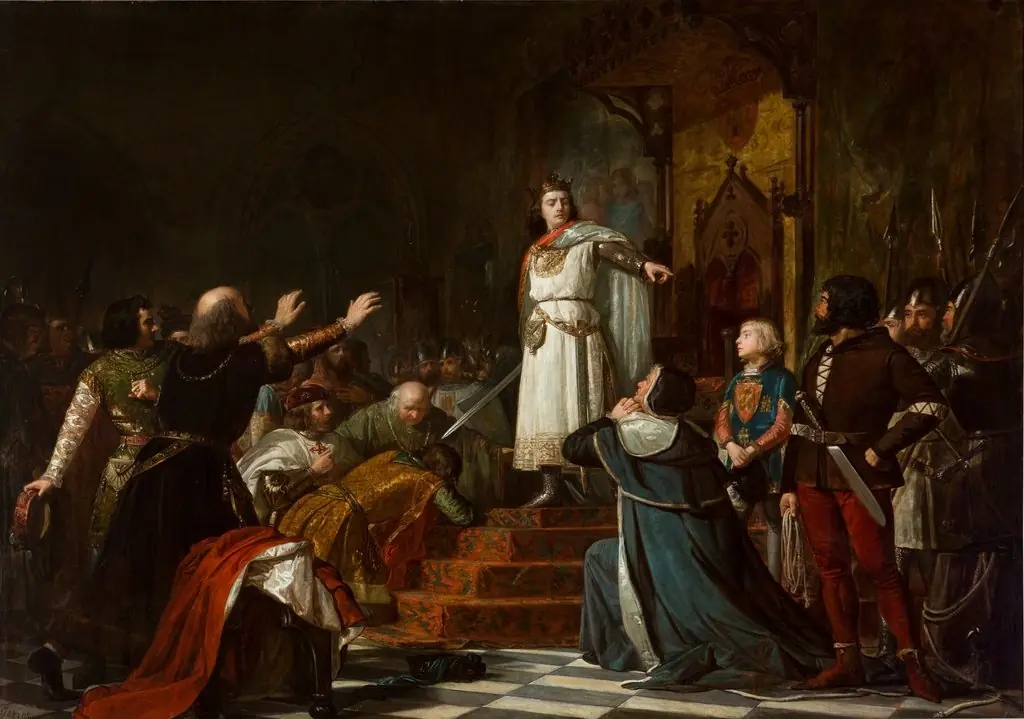 Episodio del reinado de don Enrique III de Castilla llamado el Doliente cuando al día siguiente de haber tenido que empeñar su gabán para comer corrige el orgullo y desmanes de los señores y ricoshomes de Castilla
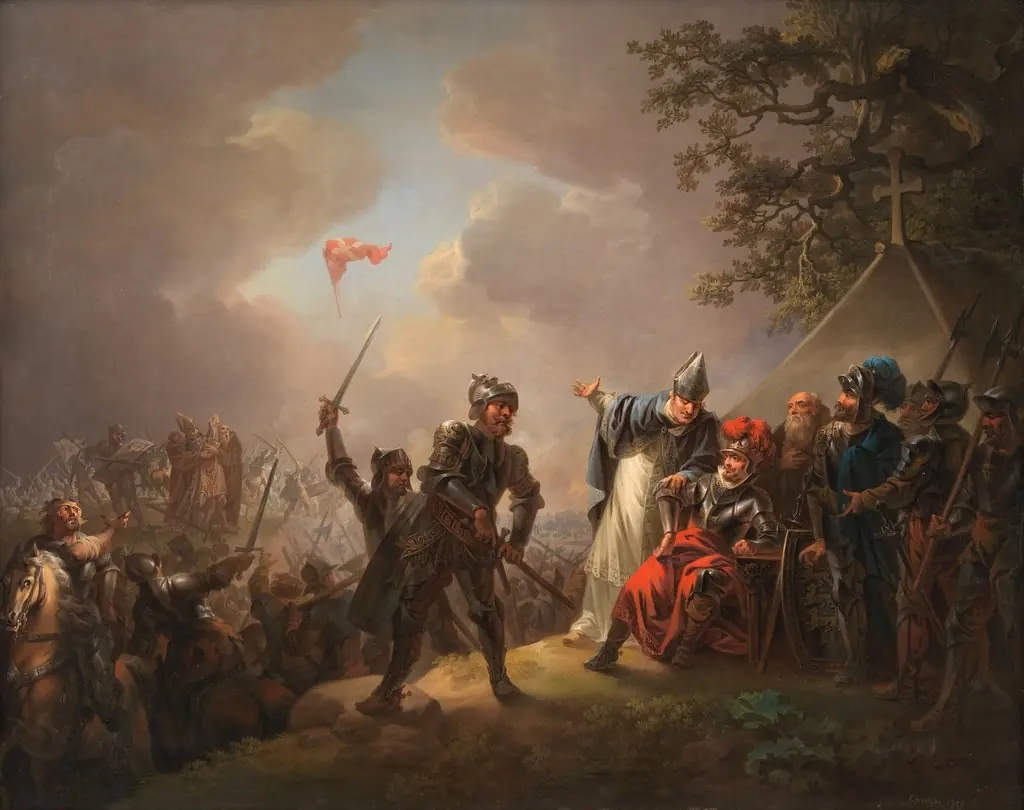 The Legend of the Danish Flag (the Dannebrog) Falling from the Heavens during the Battle of Lyndanise in Estonia in 1219
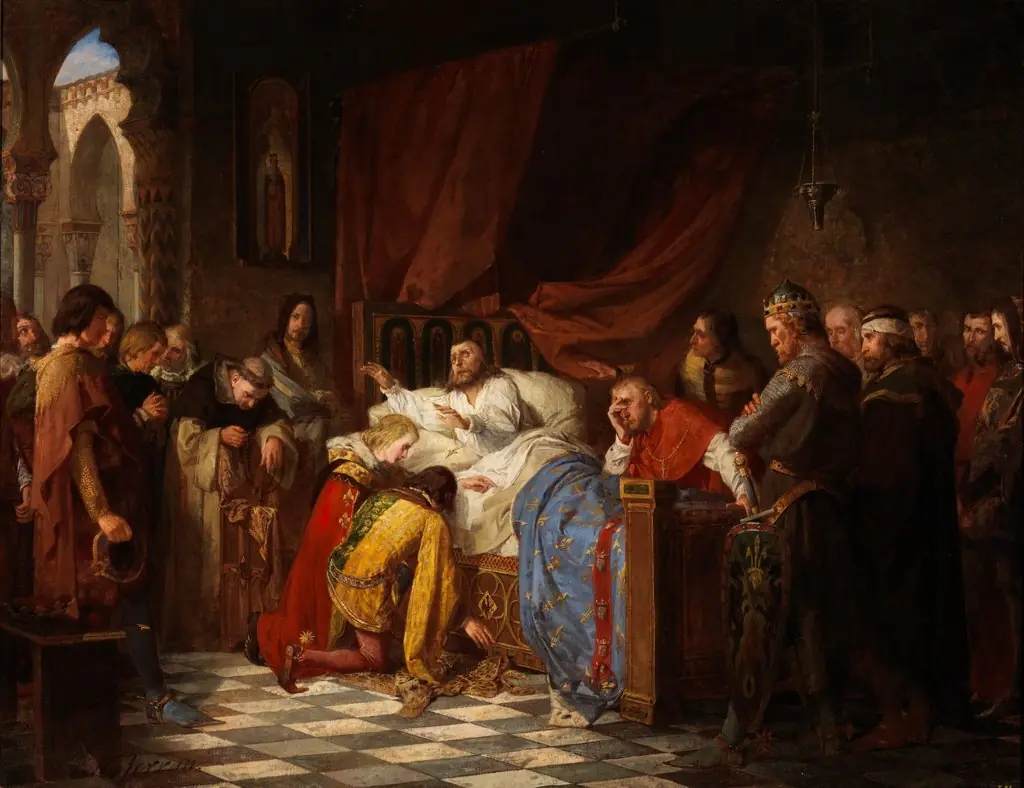 Felipe III de Francia moribundo bendiciendo a sus hijos
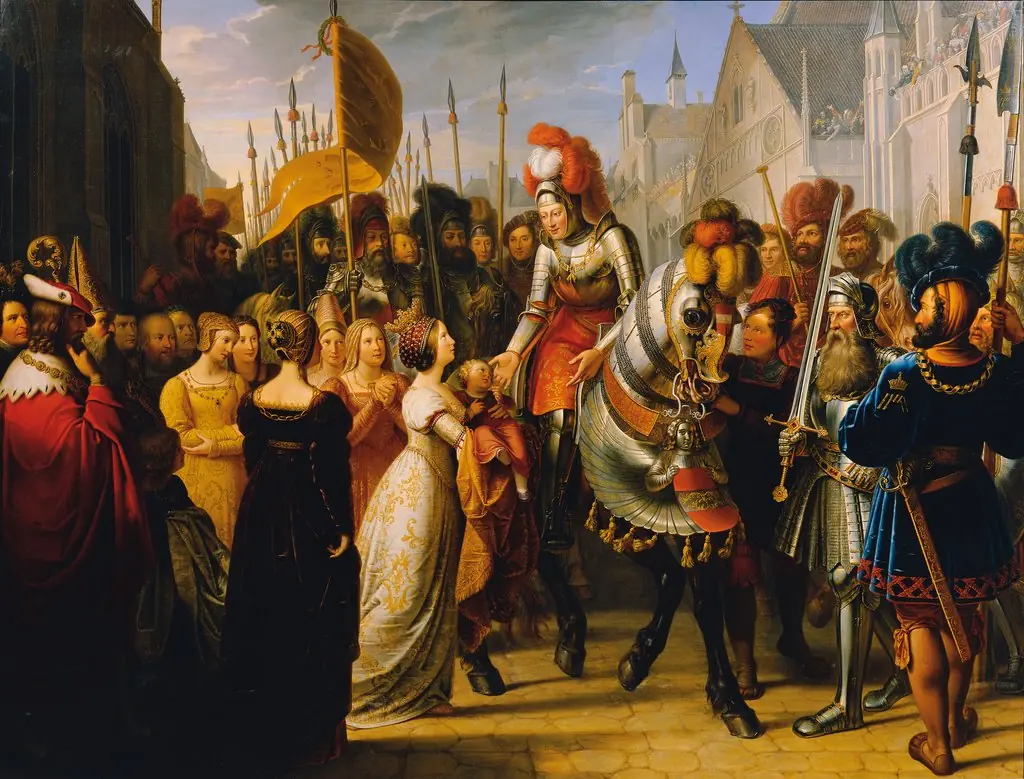 Der Einzug Kaiser Maximilians I. in Gent
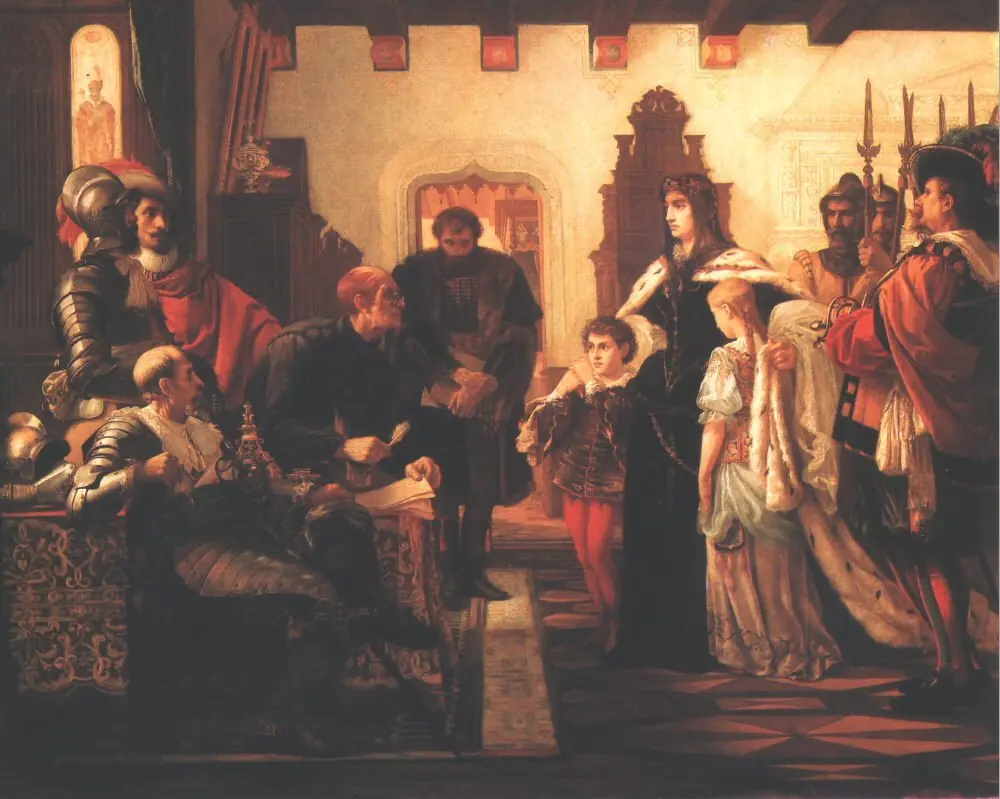 Ilona Zrínyi before the Investigating Judge
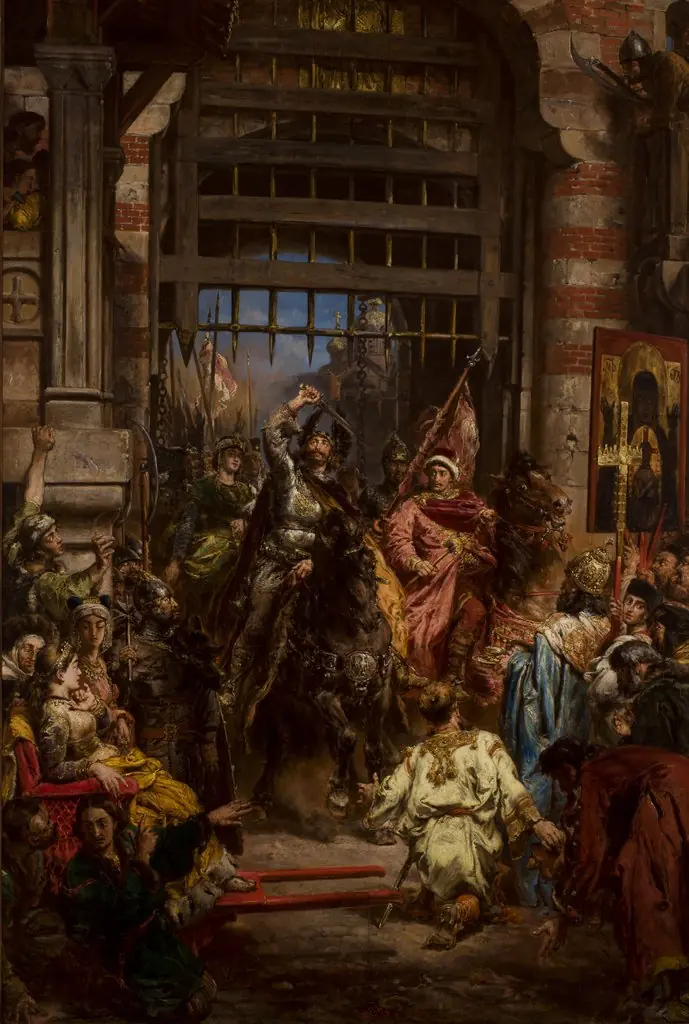 Boleslaw the Brave with Svyatopolk at the Golden Gate in Kiev
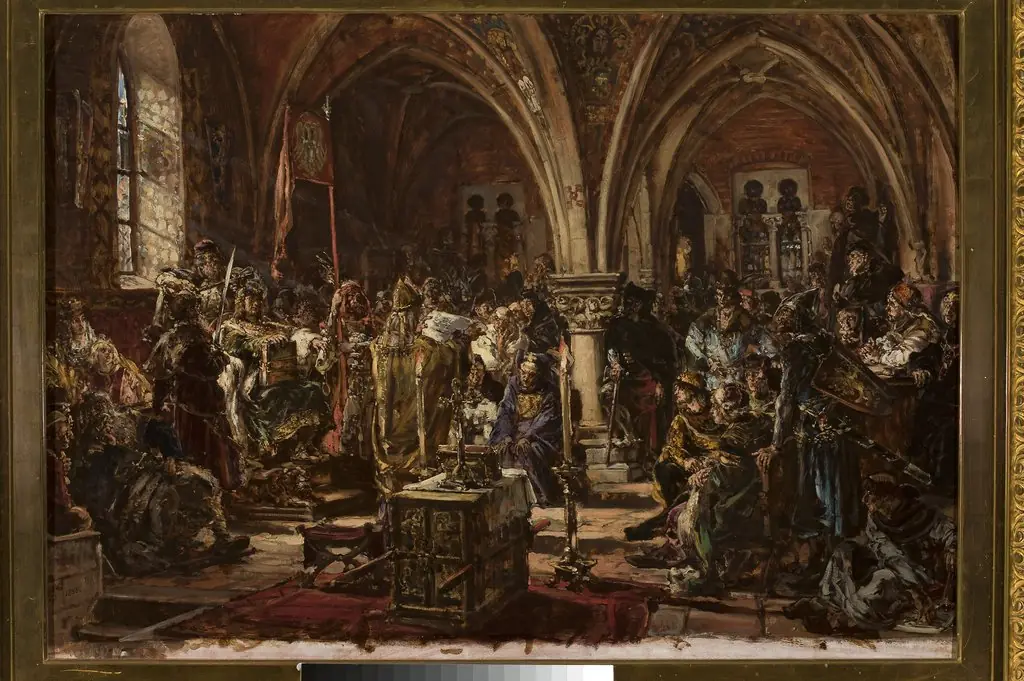 The First Parliament in Łęczyca, from the series “History of Civilization in Poland”
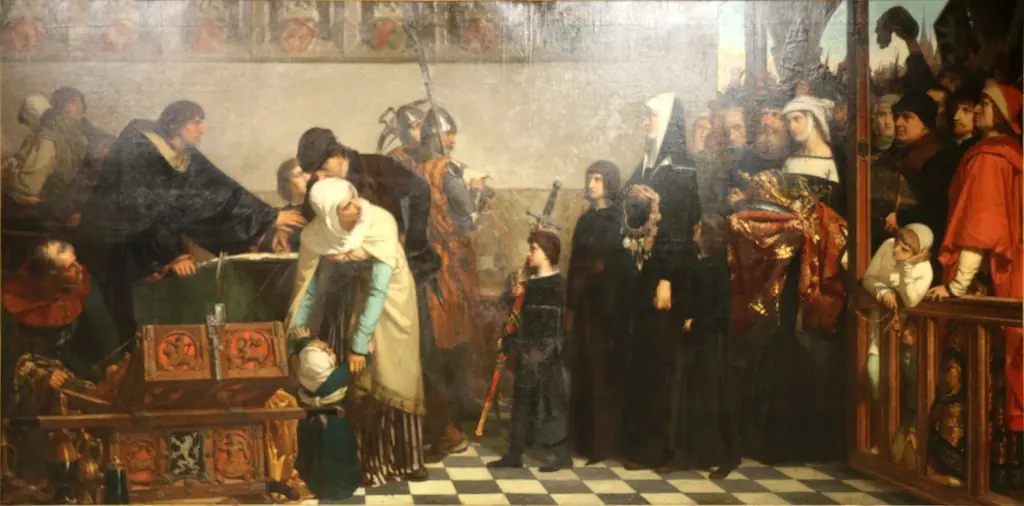 Offering to the fatherland by the Widow of Jacob van Artevelde
 Jan Hus at Constance
 Władysław Herman blesses Bolesław the Wry-Mouthed before a war campaign