Artwork
The Raising of Lazarus
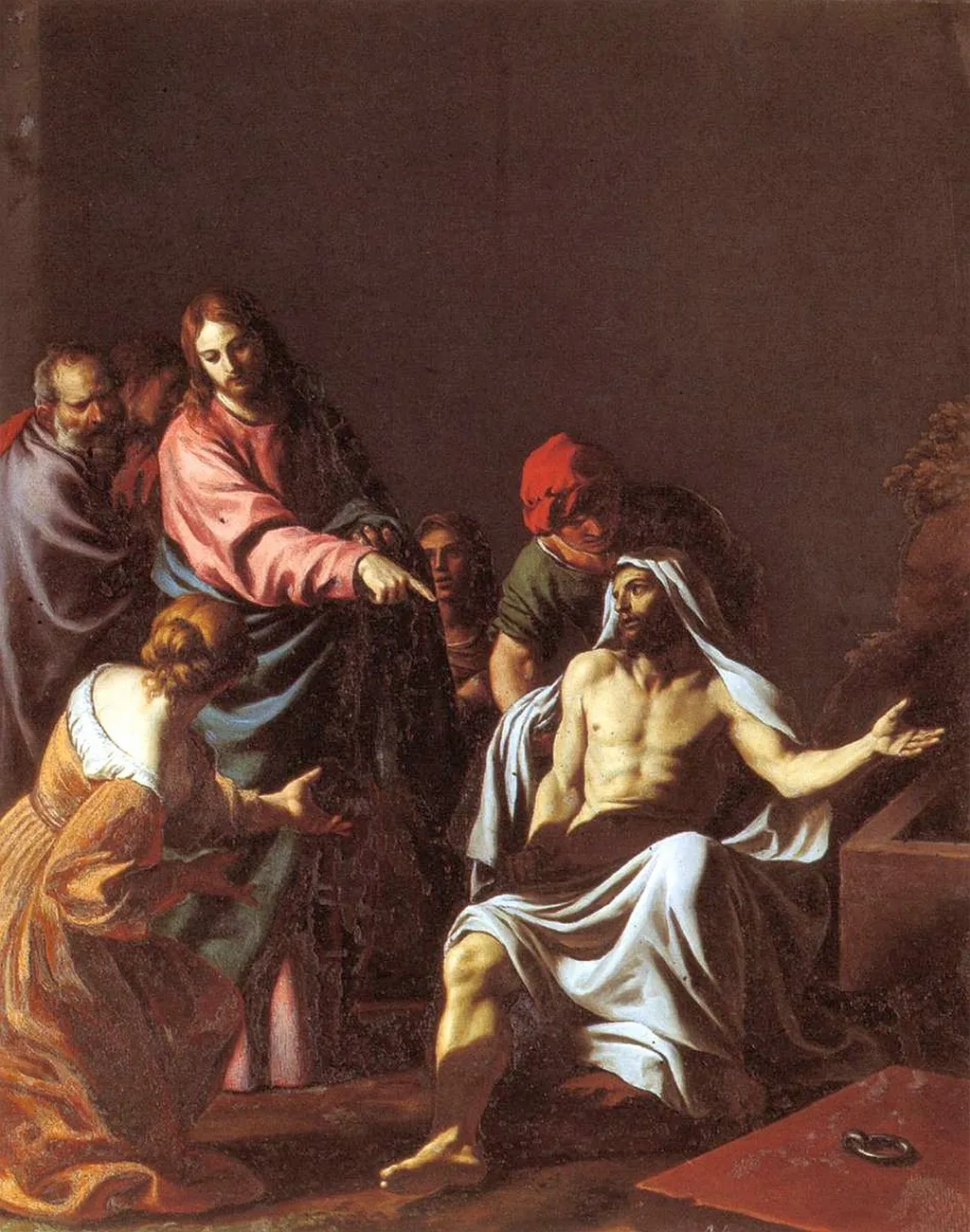
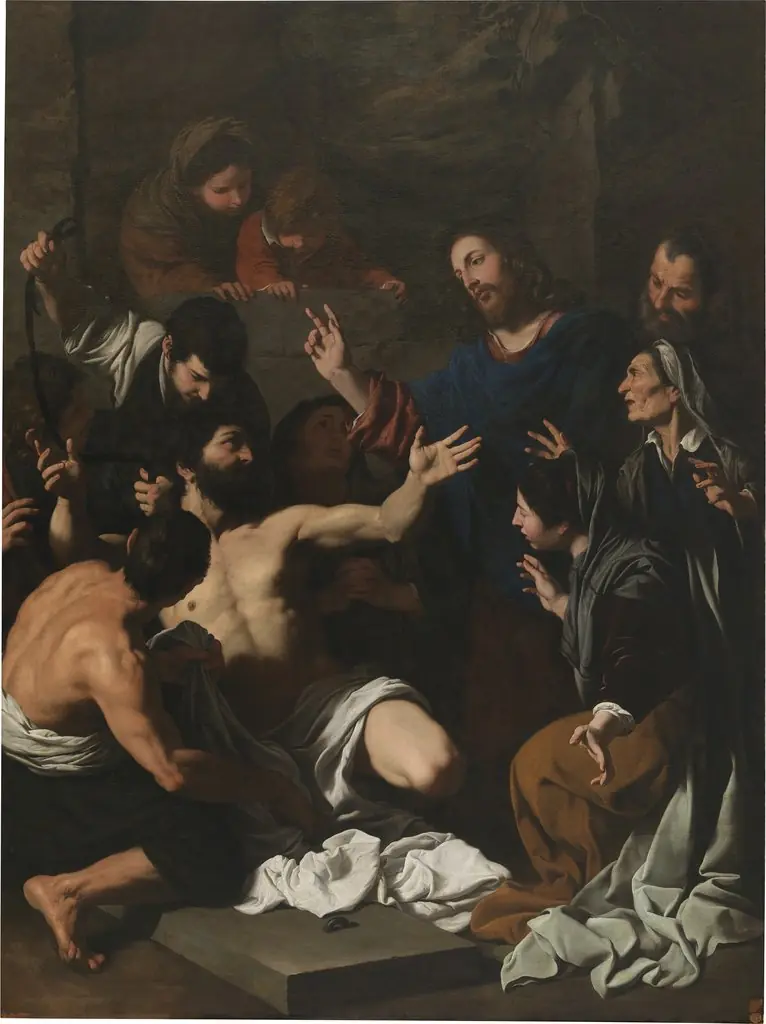
The Raising of Lazarus is an oil painting by the Early Baroque Italian artist Alessandro Turchi. It dates from 1617 and is held in the collection of the Galleria Borghese.
About this work
Overview
Alessandro Turchi’s *The Raising of Lazarus* (1617) is an oil painting executed on a slate support. Created during the early Baroque in Italy, the work is part of the collection of the Galleria Borghese in Rome. It presents a biblical miracle with a focus on dramatic illumination and a compact composition.
Subject & Meaning
The composition captures the moment Lazarus emerges from his tomb, his body swathed in white cloth and arms outstretched in a gesture of resurrection. Around him stand onlookers—a woman in a yellow dress and a man in red—whose expressions convey astonishment and reverence, underscoring the narrative’s themes of faith and divine power.
Technique & Style
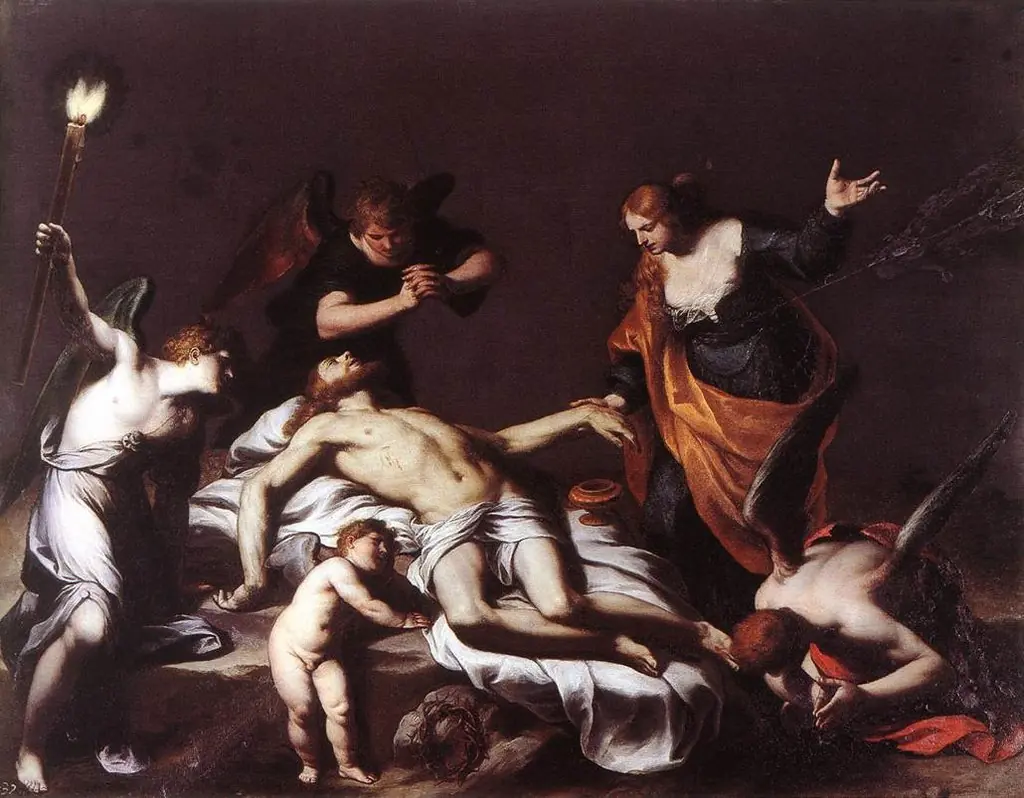
Turchi employs a pronounced chiaroscuro, juxtaposing a deep, almost black background with luminous, saturated colors on the figures. The contrast of light and shadow models the forms, giving them a three‑dimensional presence. The handling of paint shows a softened Caravaggesque influence, with delicate transitions that soften the dramatic intensity.
History & Provenance
Born in Verona in 1578, Turchi spent most of his early career in his native city before moving to Rome later in life, where he refined his style. *The Raising of Lazarus* was completed shortly after his relocation and entered the Borghese collection, where it remains on public display.
Context
The painting reflects the early Baroque fascination with theatricality and emotional engagement, aligning with contemporary religious commissions that sought to inspire devotion through vivid visual storytelling. Its use of slate as a support is unusual for the period, indicating an experimental approach to material and surface.
Own this work as a print
Artist & collection
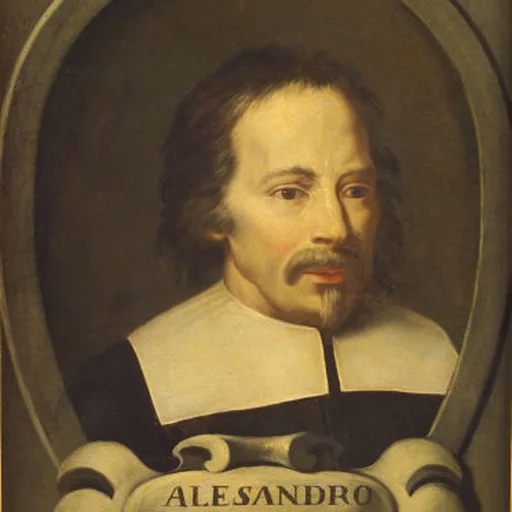
Artist
Alessandro Turchi (1578 – 22 January 1649) was an Italian painter of the early Baroque, born and active mainly in Verona, and moving late in life to Rome.