Artwork
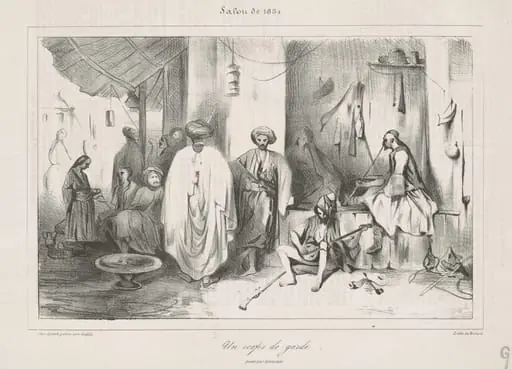
Le Corps de Garde
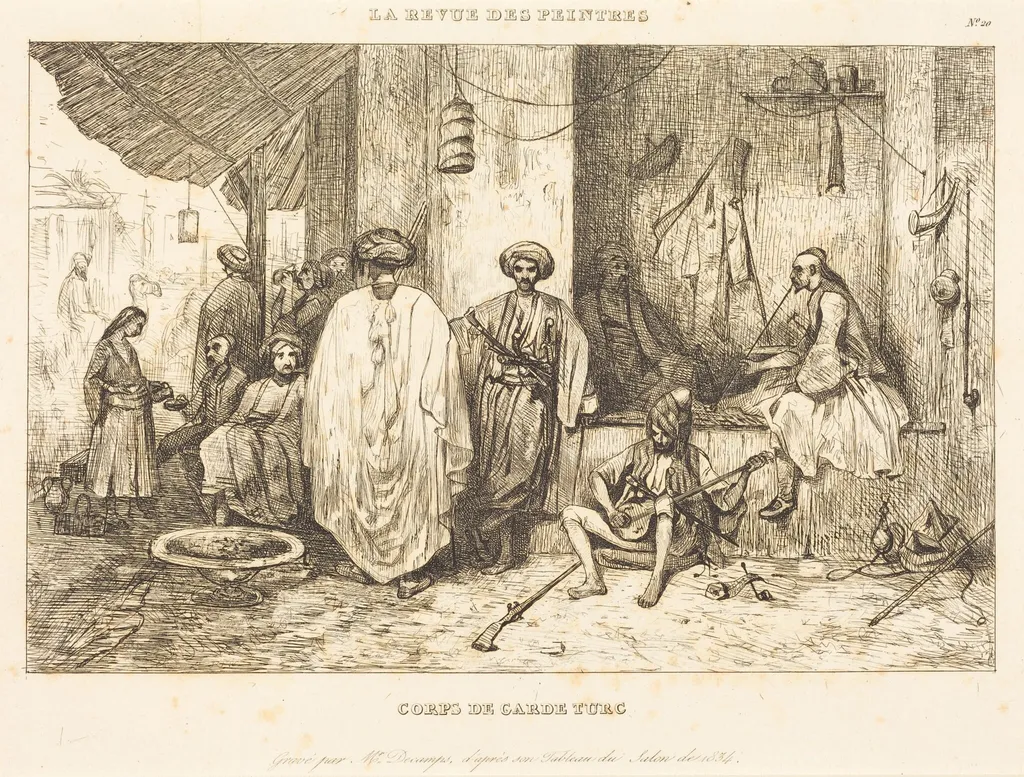
Le Corps de Garde is an ink print by the Romanticist artist Alexandre Gabriel Decamps. It dates from 1834 and is held in the collection of the National Gallery of Art.
About this work
Overview
The composition balances stillness with an undercurrent of unease, inviting the viewer to contemplate the quiet moments of military life.
Alexandre‑Gabriel Decamps produced the etching Le Corps de Garde in 1834. The work depicts a modest guardroom illuminated by a single torch, casting elongated shadows across the stone walls. A solitary soldier reclines in a chair, his posture suggesting a brief respite amid duty. The composition balances stillness with an undercurrent of unease, inviting the viewer to contemplate the quiet moments of military life.
Subject & Meaning
The scene concentrates on a lone guard, his nap interrupted only by the flickering torchlight. The contrast between the warm glow and the surrounding darkness emphasizes the isolation inherent in watch‑keeping. By highlighting the soldier’s vulnerable state, Decamps hints at the human fatigue behind the façade of discipline, offering a subtle commentary on the monotony and latent tension of guard duty.
Technique & Style
Decamps employed traditional etching, incising lines into a copper plate before printing, and supplemented the image with drypoint work. The drypoint technique produces a velvety, slightly blurred edge that enriches the shadows and softens the torch’s illumination. This combination creates a nuanced tonal range, allowing the delicate gradations of light to convey atmosphere while preserving the crisp detail of the soldier’s uniform.
History & Provenance
Created in the early 1830s, Le Corps de Garde belongs to Decamps’ series of military subjects that followed his travels in Spain and North Africa. The print was issued shortly after its completion and circulated among collectors of French Romantic prints. It has since appeared in several public and private collections, documenting Decamps’ interest in everyday military scenes during the post‑Napoleonic period.
Context
The work emerges from the Romantic era’s fascination with mood and the ordinary. While many contemporaries focused on grand battles, Decamps turned to the quieter aspects of soldiering, aligning with a broader 19th‑century trend toward depicting the personal experiences of individuals within larger historical narratives. The torch‑lit guardroom reflects the period’s preoccupation with chiaroscuro and emotional depth.
Artist & collection
Artist
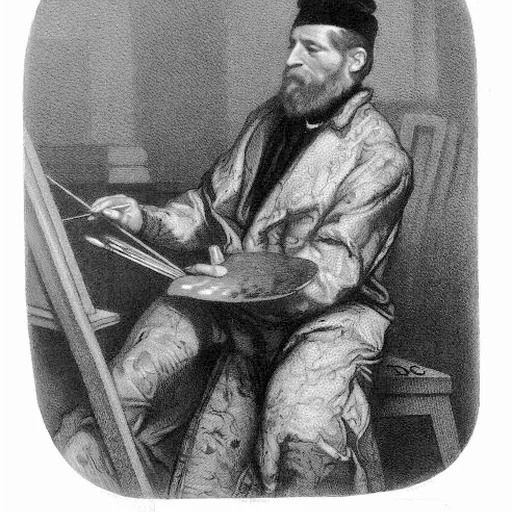
Alexandre-Gabriel Decamps was a French painter noted for his Orientalist works.