Artwork
Portrait of the Russian Ambassador, Prince Andrey Priklonskiy
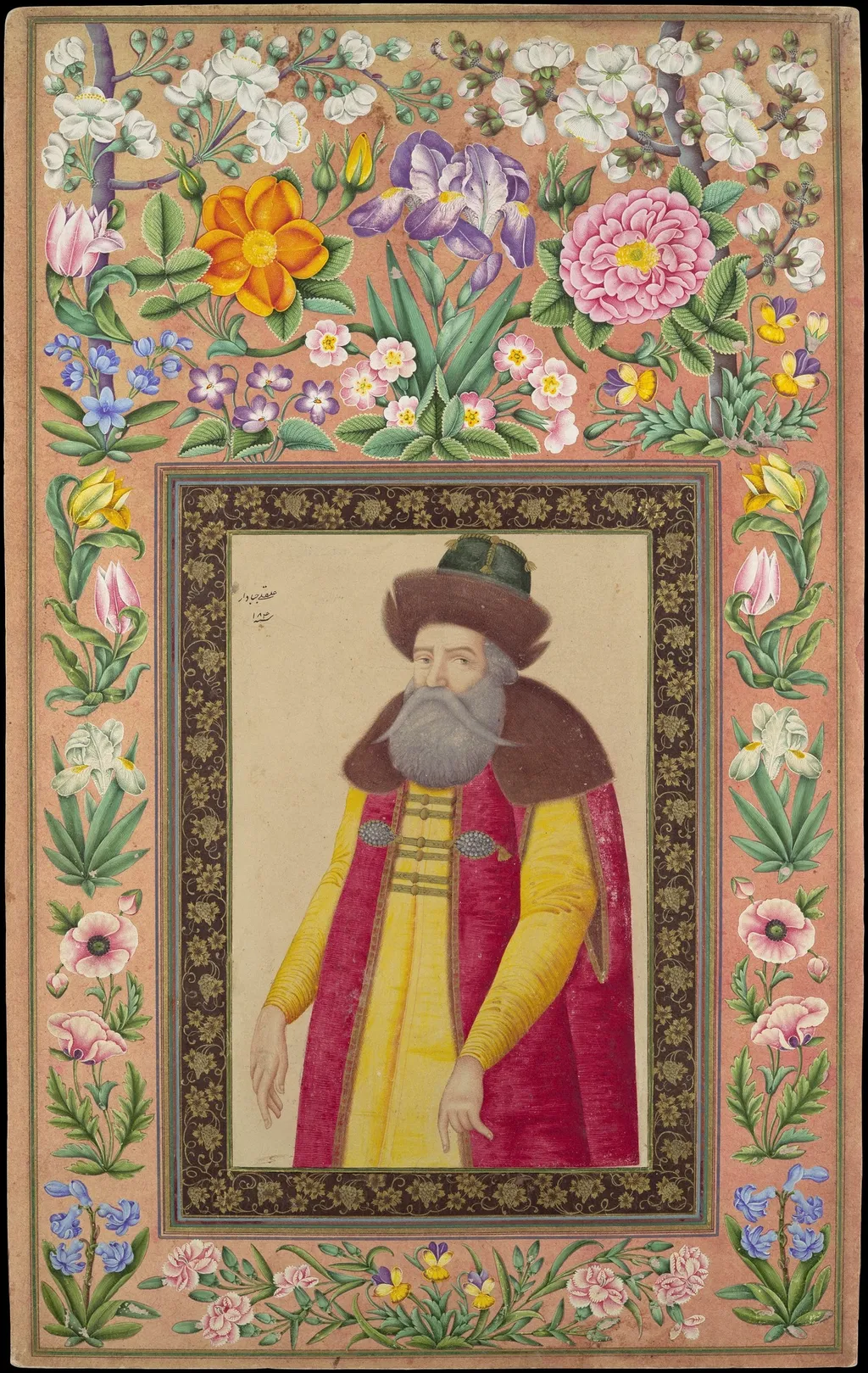
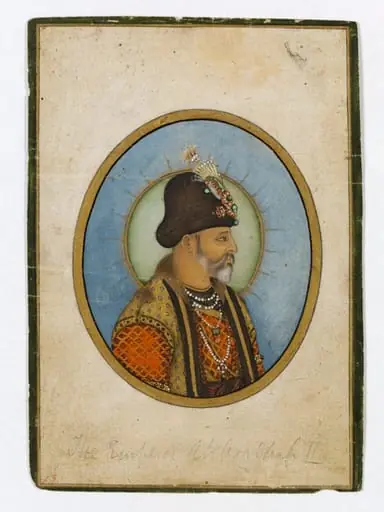
Portrait of the Russian Ambassador, Prince Andrey Priklonskiy is an unspecified painting by the Patna School of Painting artist 'Aliquli Jabbadar. It is held in the collection of the Metropolitan Museum of Art.
About this work
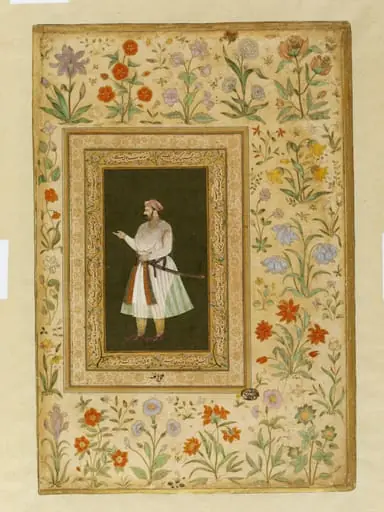
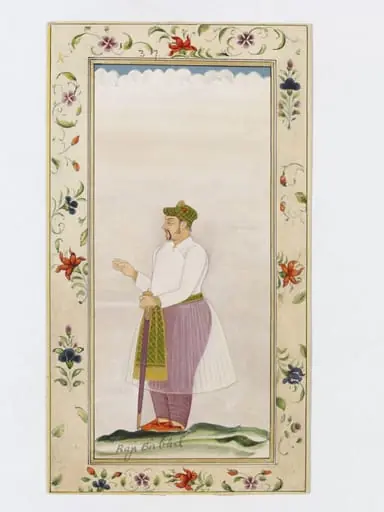
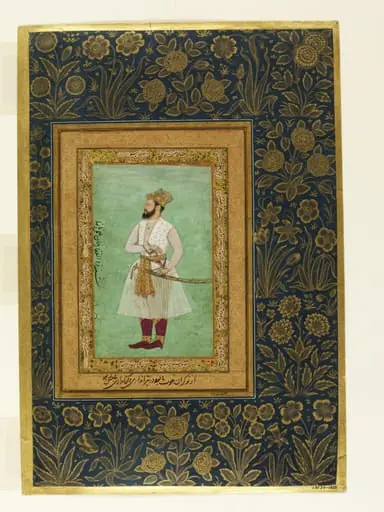
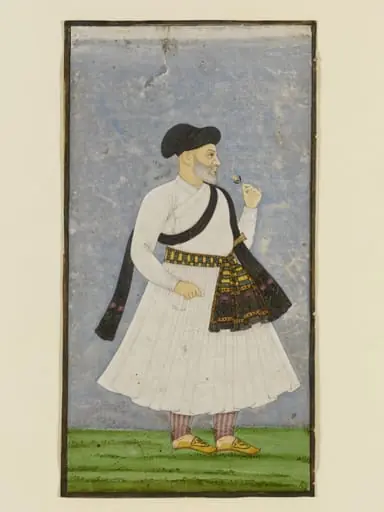
This painting shows a man with a long white beard and mustache, wearing a brown hat, a red cape with a brown collar, and a yellow shirt.
This painting shows a man with a long white beard and mustache, wearing a brown hat, a red cape with a brown collar, and a yellow shirt. He is standing in front of a plain background. The painting is surrounded by a border of flowers and leaves.
The man's clothing and the style of the painting suggest that it may be from the 18th or 19th century. The use of bright colors and intricate details is typical of paintings from this time period.
The painting is held at The Metropolitan Museum of Art.
Overview
This portrait depicts Prince Andrey Priklonskiy, the Russian ambassador to the Safavid court, painted by the Iranian artist Aliquli Jabbadar. Executed in the early 18th century, the work reflects the cultural exchange between Persia and Russia during a period of diplomatic engagement. It is currently held in the collection of The Metropolitan Museum of Art, where it serves as a rare visual record of a foreign diplomat in a Persian artistic context.
Subject & Meaning
Prince Priklonskiy is portrayed with dignity, his long white beard and mustache signaling age and authority. His attire—red cape, yellow shirt, and brown hat—combines Persian and European elements, suggesting his dual role as a representative of imperial Russia within a Safavid setting. The plain background focuses attention on his presence, emphasizing his status rather than his environment, aligning with courtly portraiture traditions of the time.
Technique & Style
The painting employs vivid pigments and fine brushwork characteristic of Safavid-era miniaturist traditions. Details in the fabric textures and the ornate floral border reflect a meticulous attention to surface decoration. While the figure is rendered with naturalistic proportions, the border’s stylized flora draws from Persian manuscript illumination, blending portraiture with decorative arts in a manner typical of court commissions.
History & Provenance
Commissioned during Priklonskiy’s tenure as ambassador to Isfahan around 1720, the portrait likely served as a diplomatic gift or personal commemoration. It remained in Persian collections before entering Western hands, eventually acquired by The Metropolitan Museum of Art. Its survival through centuries of political upheaval underscores its significance as a material artifact of cross-cultural diplomacy.
Context
In the early 18th century, Safavid Persia maintained diplomatic ties with European powers, including Russia, amid shifting alliances and trade interests. Portraits of foreign envoys were uncommon in Persian art, making this work an exception. Its creation reflects the Safavid court’s openness to depicting non-Iranian figures with the same formal gravitas reserved for royalty, signaling diplomatic respect.
Legacy
The portrait stands as one of the few surviving depictions of a Russian diplomat in Persian art, offering insight into how foreign dignitaries were visually integrated into Safavid culture. It contributes to broader scholarly understanding of early modern cross-cultural representation and the role of art in diplomatic relations between Eurasian empires.
Artist & collection
Artist
Persian artists in the late 1600s painted vivid tales of royal life on paper, bright with gold and watercolor.