Artwork
Christ Holding a Chalice and Cross (recto)
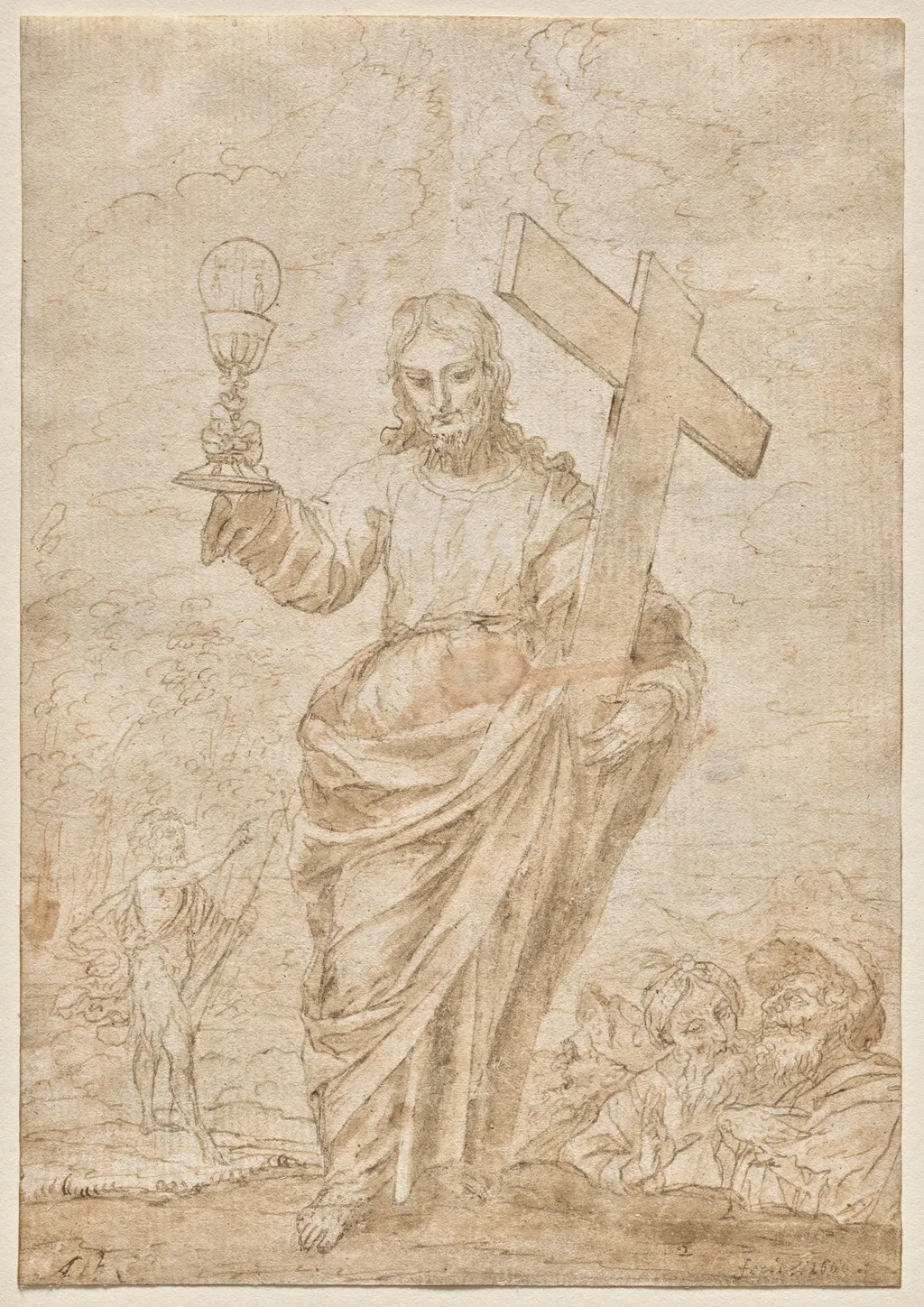
Christ Holding a Chalice and Cross (recto) is a drawing by the Baroque artist Alonso Cano. It dates from 1666 and is held in the collection of the Cleveland Museum of Art. This drawing depicts Christ in a triumphant pose, holding a cross and a chalice, symbolizing his resurrection and sacrifice.
About this work
The cup is the chalice used at Mass, and the pointing man is John the Baptist, calling Christ the “Lamb of God.
A man in a robe holds a cross in one hand and a golden cup in the other. Behind him, another figure points, like he’s making an introduction.
This is Christ after rising from the dead, showing the tools of his sacrifice. The cup is the chalice used at Mass, and the pointing man is John the Baptist, calling Christ the “Lamb of God.” Cano drew this as a study for an altarpiece—no finished painting of it exists. The sketch feels quick but sure, like a rehearsal for something bigger.
If you like this quiet, direct style, look up the work of Alonso Cano (Spanish, 1601–1667).
Overview
This drawing depicts Christ in a triumphant pose, holding a cross and a chalice, symbolizing his resurrection and sacrifice. Accompanied by Saint John the Baptist, who gestures to identify Christ as the Lamb of God, the composition conveys key Catholic themes.
Subject & Meaning
Christ is shown post-resurrection, holding the cross of his sacrifice and a chalice representing his blood. Saint John the Baptist's gesture reinforces Christ's role as the Lamb of God, directly linking the scene to the Catholic Mass's symbolism.
Technique & Style
The drawing exhibits a quick yet assured execution, characteristic of a preparatory study. The overall style aligns with the artist's known body of work, marked by directness and simplicity.
History & Provenance
Created by Alonso Cano, a prominent Baroque artist in 17th-century Spain, this drawing was likely a study for an intended altarpiece. No corresponding finished painting by the artist is known to exist.
Context
Alonso Cano's work, including this drawing, was primarily commissioned by the Catholic Church and Spanish monarchs, reflecting the dominant religious and patronage contexts of Baroque Spain.
Artist & collection

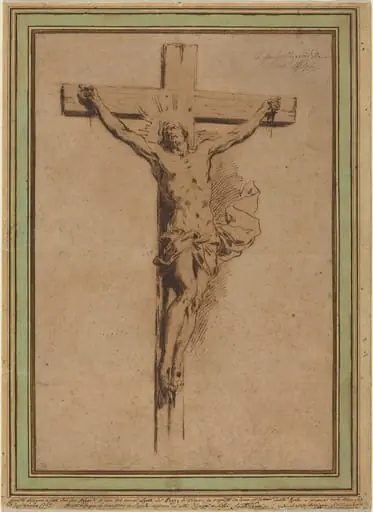 Christ on the Cross
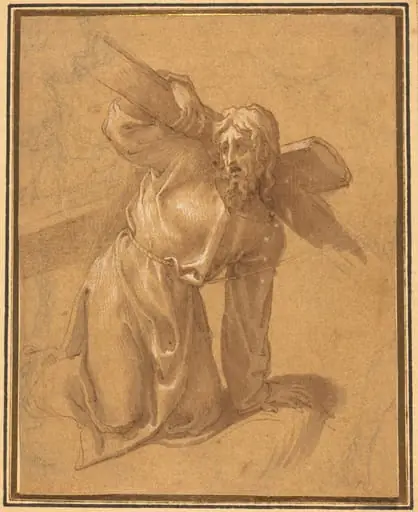 Christ Falling under the Cross
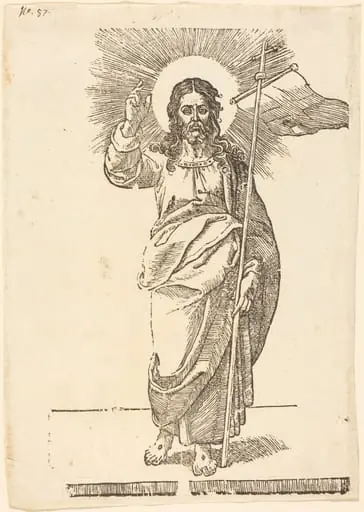 Christ
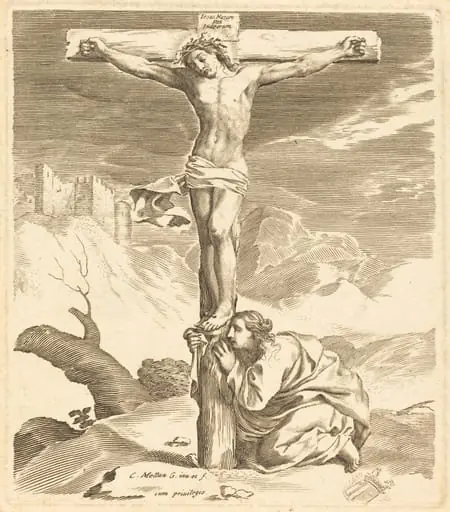 Christ on the Cross
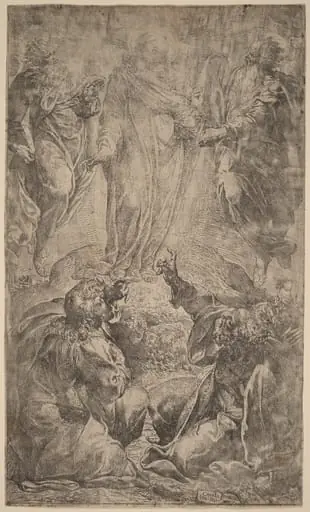 The Transfiguration
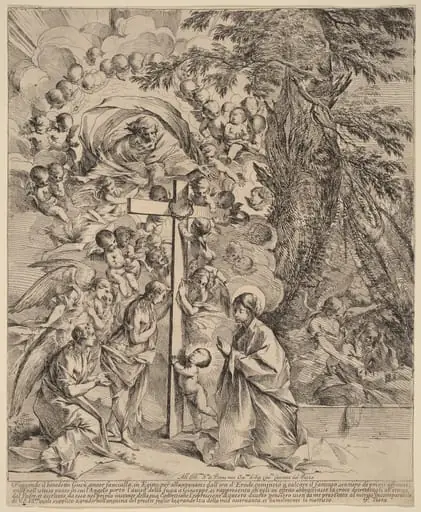 The Infant Christ Embracing the Cross (The Dream of Joseph)
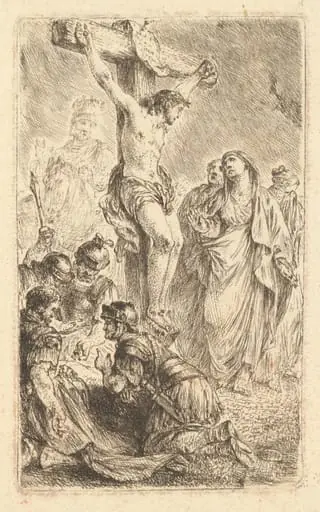 Christ on the Cross
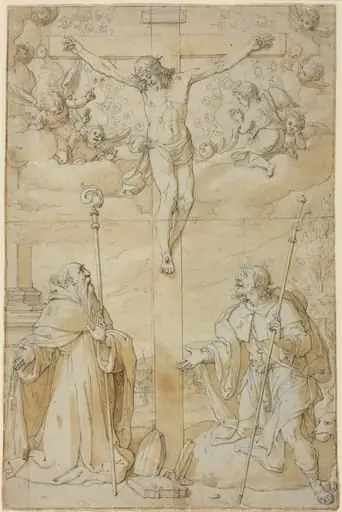 The Crucifixion with Saints Roch and Augustine
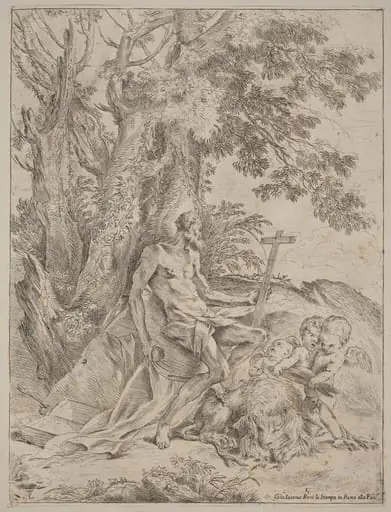 Saint Jerome
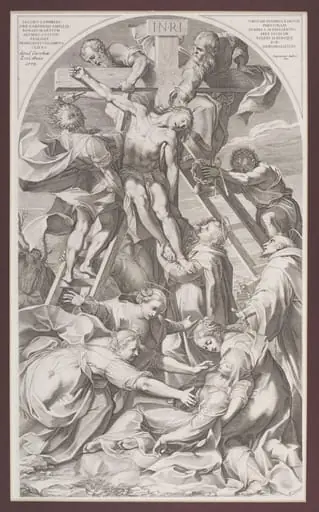 The Taking Down from the Cross
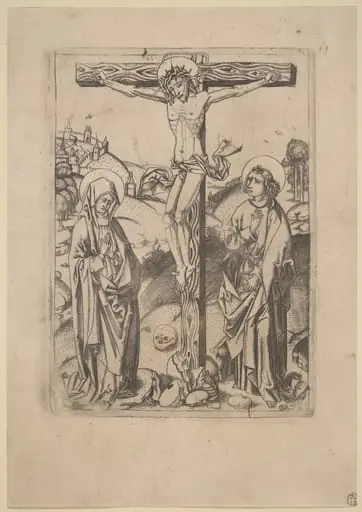 The Crucifixion
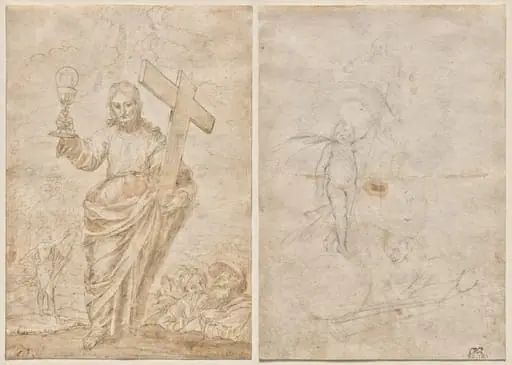 Christ Holding a Chalice and Cross (recto); Resurrected Christ and Lamb of God (verso)