Artwork
The Infant Christ Embracing the Cross (The Dream of Joseph)
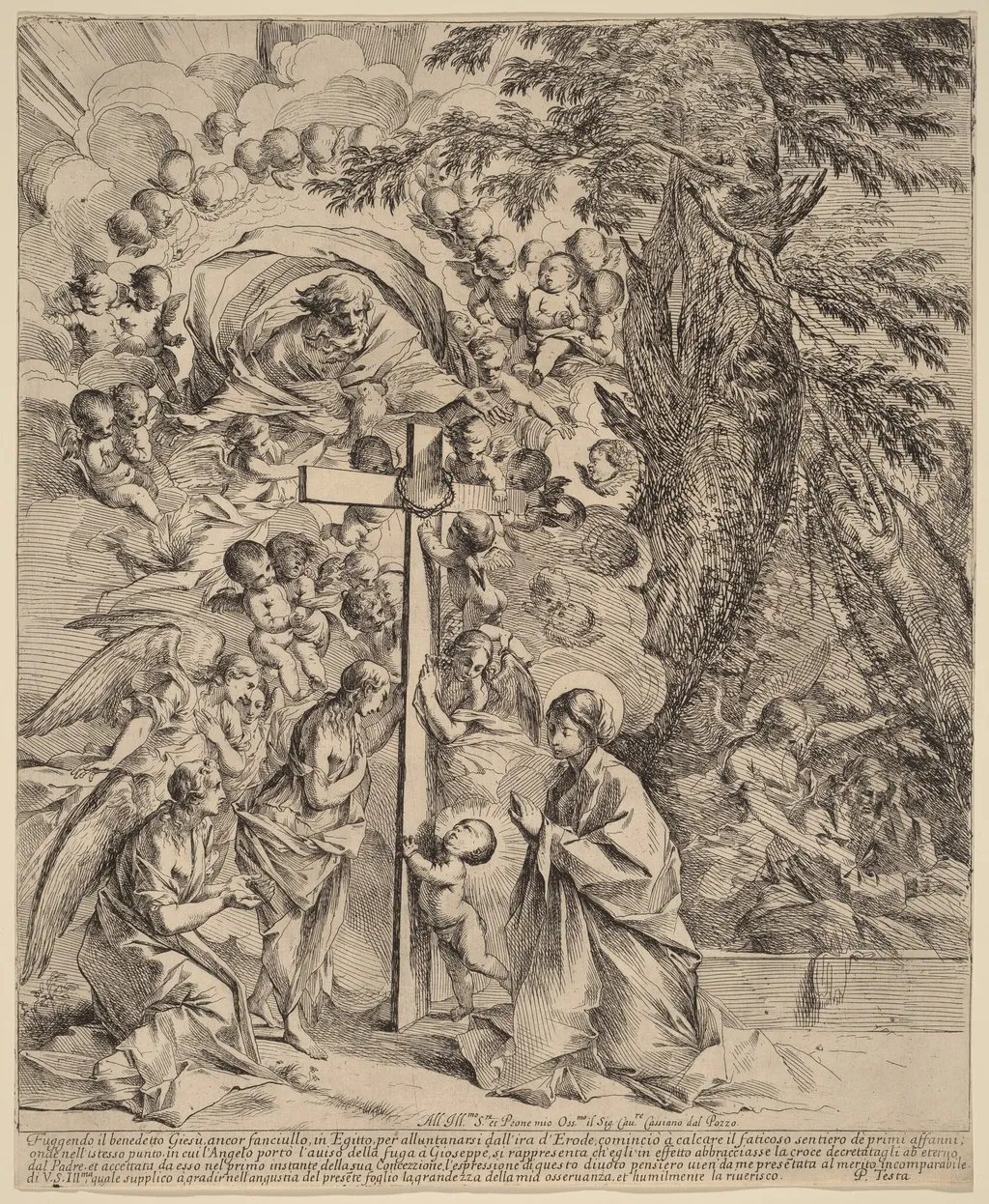
The Infant Christ Embracing the Cross (The Dream of Joseph) is an ink print by the Baroque artist Pietro Testa. It dates from 1636 and is held in the collection of the National Gallery of Art.
About this work
Overview
Pietro Testa, a 17th-century Italian High Baroque artist, created *The Infant Christ Embracing the Cross (The Dream of Joseph)*, an etching, in 1636. This work exemplifies his skill as a printmaker and draftsman within a Roman artistic circle.
Subject & Meaning
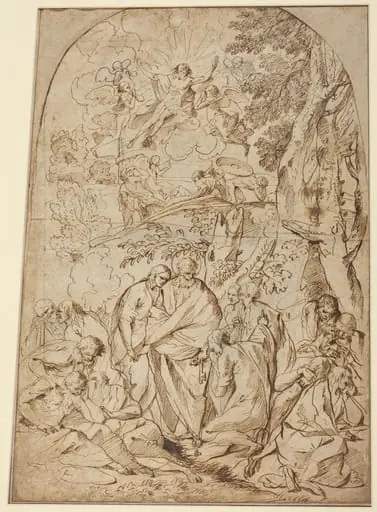
The print depicts a dense, dynamic scene centered on a woman holding the Infant Christ, who reaches for a small cross. Surrounding figures, including adults and babies, are entwined with vines and branches, gazing upward. The composition conveys a religious theme, possibly illustrating a visionary or dreamlike state, as suggested by the alternate title *The Dream of Joseph*.
Technique & Style
Testa employed a combination of fine lines and rough shading in the etching to achieve depth. The intricate, textured rendering of leaves and clothing, along with the twisting, overlapping figures, creates a sense of movement and visual energy.
History & Provenance
Created in 1636, the etching reflects Testa's involvement with printmaking techniques of the 17th century. It was produced within the artistic and scholarly circle influenced by Classical ideals, associated with Cassiano dal Pozzo in Rome.
Context
As part of the religious genre, *The Infant Christ Embracing the Cross* aligns with the artistic and thematic preoccupations of the High Baroque period in Rome. The use of etching as a medium allowed for the widespread dissemination of such religious imagery.
Legacy
While specific details on the direct legacy of this etching are not provided, it contributes to the broader understanding of Testa's oeuvre as a printmaker and his contribution to the High Baroque style in 17th-century Rome.
Artist & collection
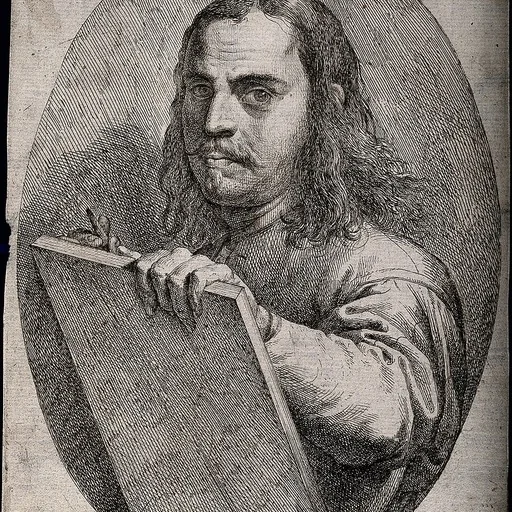
Artist
Pietro Testa (1612 – 1 March 1650) was an Italian High Baroque artist active in Rome.