Artwork
The Abduction of the Sabine Women
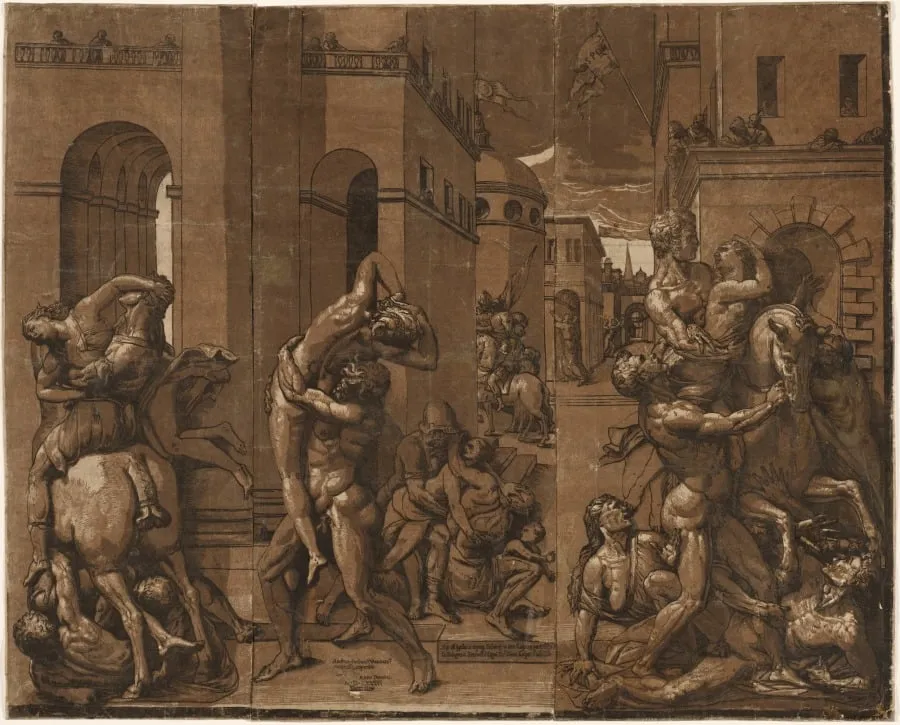
The Abduction of the Sabine Women is a print by the Renaissance artist Andrea Andreani. It dates from 1585 and is held in the collection of the Cleveland Museum of Art. This chiaroscuro woodcut by Ugo da Carpi, after Giambologna’s sculpture, depicts the legendary abduction of Sabine women by early Romans.
About this work
Overview
Rendered in warm brown-red tones with graded light and shadow, the print reproduces a relief originally designed for the base of Giambologna’s bronze group.
This chiaroscuro woodcut by Ugo da Carpi, after Giambologna’s sculpture, depicts the legendary abduction of Sabine women by early Romans. Rendered in warm brown-red tones with graded light and shadow, the print reproduces a relief originally designed for the base of Giambologna’s bronze group. Its technique allowed for affordable, wide circulation, making the myth accessible beyond elite collectors.
Subject & Meaning
The scene illustrates the foundational Roman myth in which Romulus, lacking women to populate the city, orchestrated the capture of unmarried Sabine women during a festival. The print captures the chaos of the abduction—men seizing women, families resisting—while subtly referencing the later intervention of the women themselves, who brokered peace between Romans and Sabines, symbolizing the union of two peoples.
Technique & Style
Executed as a chiaroscuro woodcut, the image uses multiple woodblocks to layer tones of brown-red ink, creating depth through subtle gradations of light and shadow. The technique mimics the modeling of sculpture, translating Giambologna’s three-dimensional composition into a two-dimensional format. The warm palette and controlled contrasts enhance the emotional intensity without overt dramatization.
History & Provenance
The print derives from a bronze relief by Giambologna, commissioned around 1580 for the pedestal of his larger sculpture of the same subject. Ugo da Carpi’s woodcut, produced in the late 16th century, served as a reproductive medium to disseminate the image widely. Its popularity reflects the Renaissance interest in classical myth and the commercial potential of printmaking.
Context
In late Renaissance Italy, mythological subjects were frequently adapted for decorative and educational purposes. The story of the Sabine women resonated as both a foundational Roman tale and a commentary on civic order emerging from conflict. Printmakers like Carpi helped bridge elite sculpture and public culture, making complex narratives available to broader audiences through affordable imagery.
Legacy
The woodcut preserved Giambologna’s composition for wider audiences and influenced later reproductive prints of the subject. Its use of chiaroscuro technique contributed to the development of tonal printmaking in Europe. Though rooted in ancient legend, the image’s enduring presence in print collections reflects its role as a visual anchor for Renaissance ideals of order, violence, and reconciliation.
Artist & collection

Artist
Andrea Andreani (1540–1623) was an Italian engraver on wood, who was among the first printmakers in Italy to use chiaroscuro, which required multiple colours.

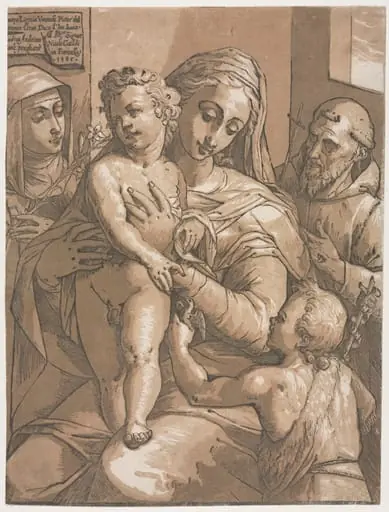 Virgin and Child with St. John, St. Catherine of Siena and St. Francis
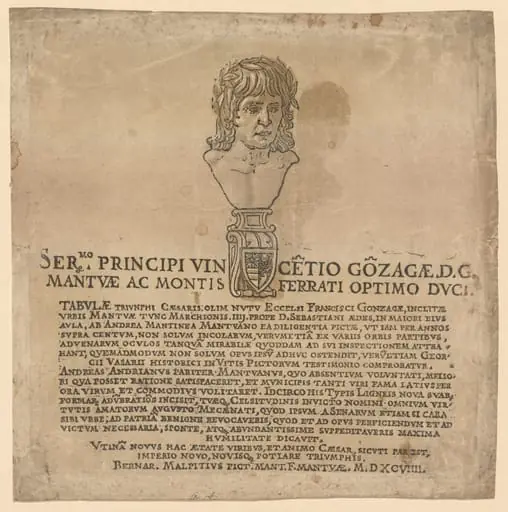 The Triumph of Julius Caesar
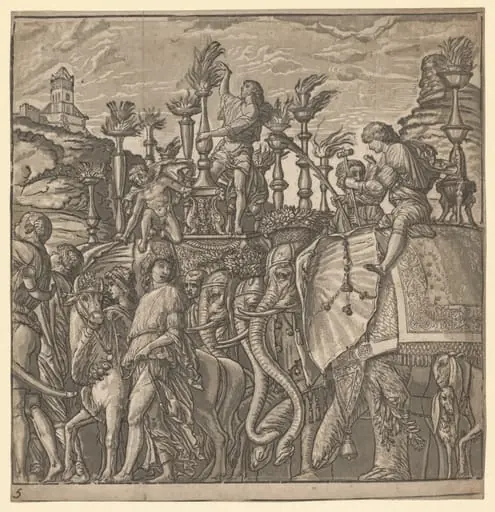 The Triumph of Julius Caesar: Elephants Carrying Torches
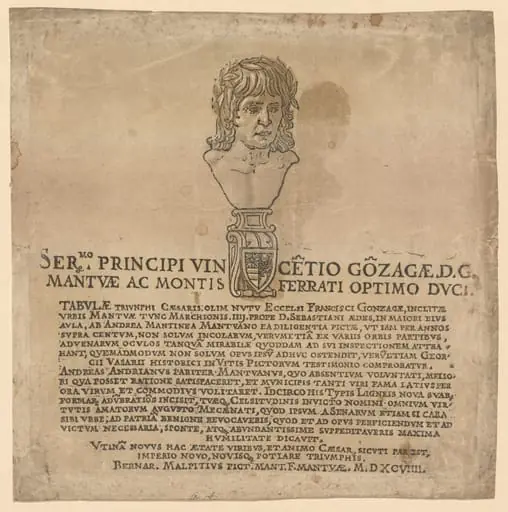 The Triumph of Julius Caesar: Frontispiece
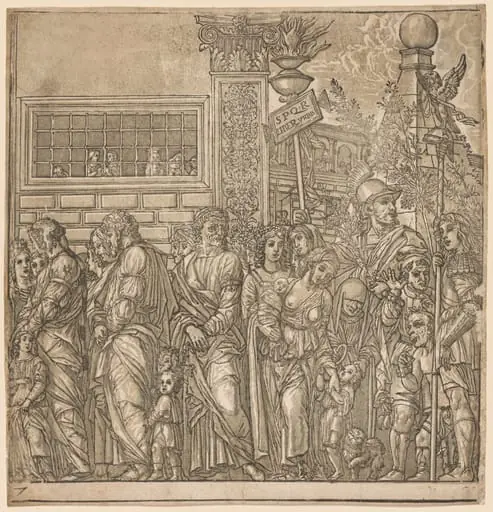 The Triumph of Julius Caesar: Procession of Men, Women and Children
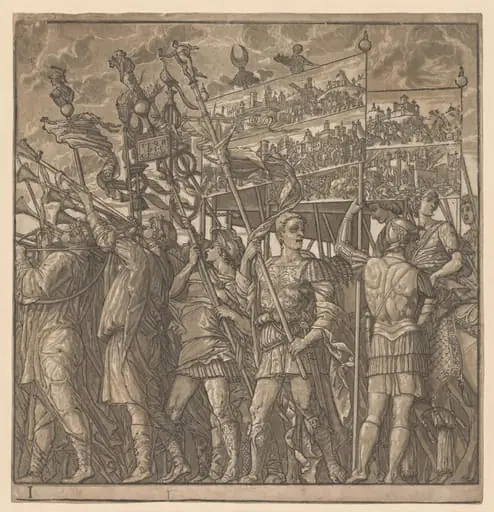 The Triumph of Julius Caesar: Soldiers Carrying the Pictures of War
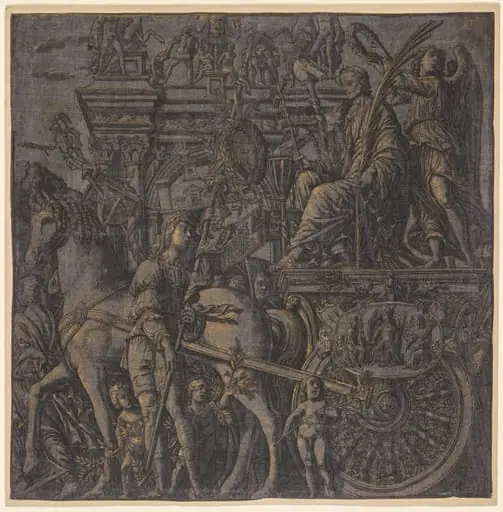 The Triumph of Julius Caesar: Caesar Triumphant
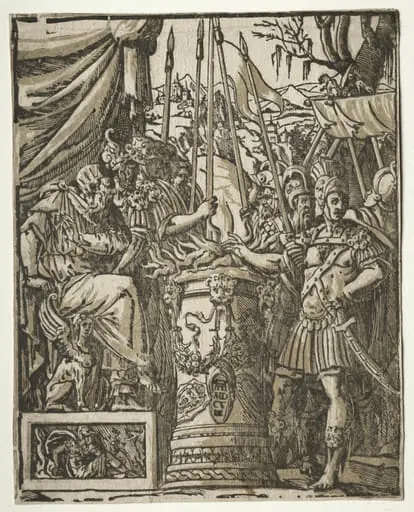 Mucius Scaevola
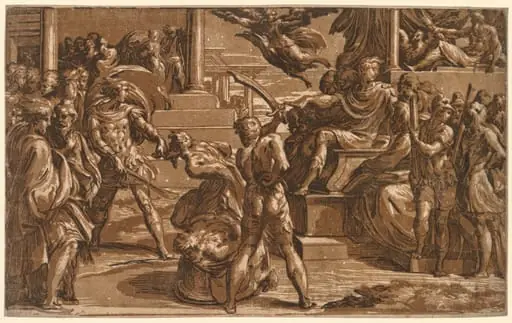 The Martyrdom of St. Peter and St. Paul
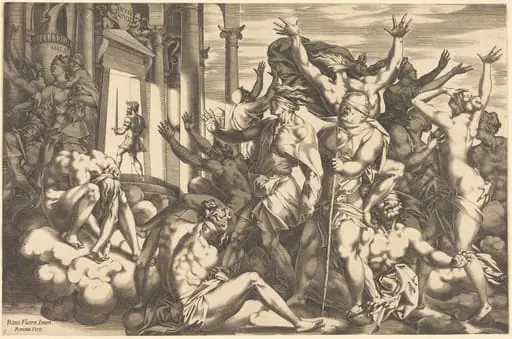 The Conquest of Ignorance
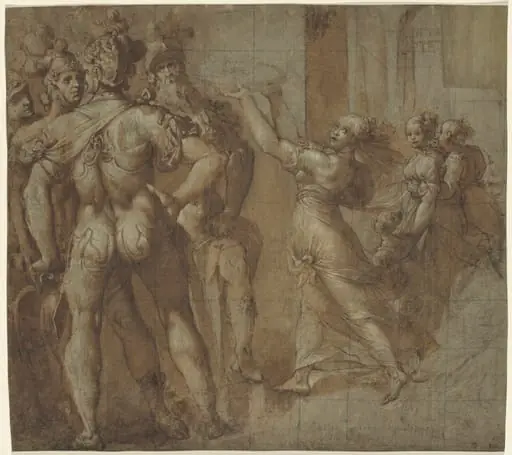 Salome with the Head of St. John the Baptist
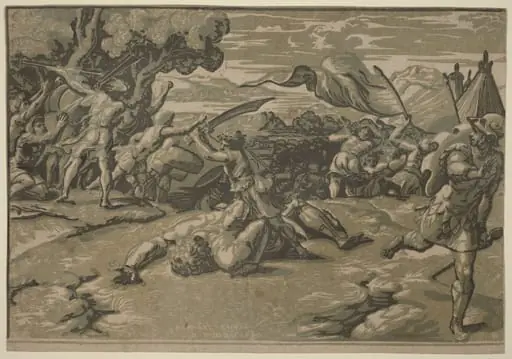 David Slaying Goliath
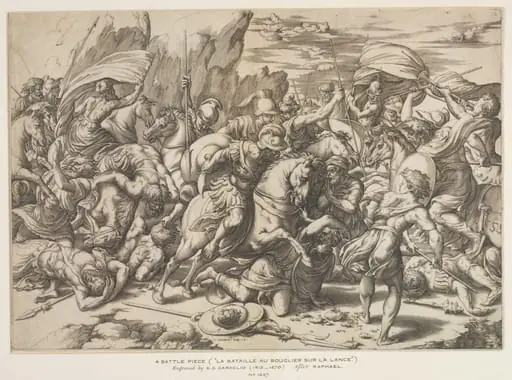 La bataille au bouclier sur la lance
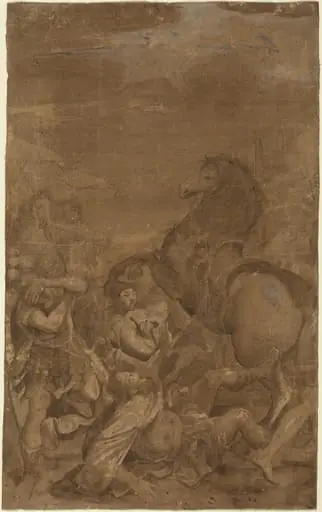 The Conversion of Saint Paul
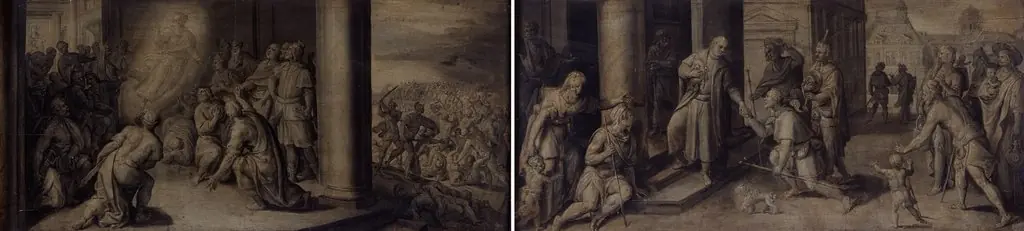 Heilige Lucas verschijnt in de kerk van Onze Lieve Vrouw van Tripoli
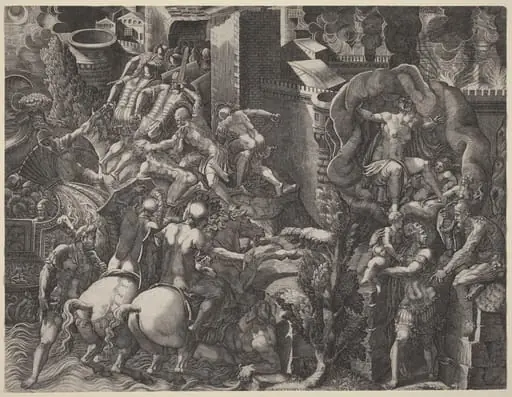 The Fall of Troy and the Escape of Aeneas
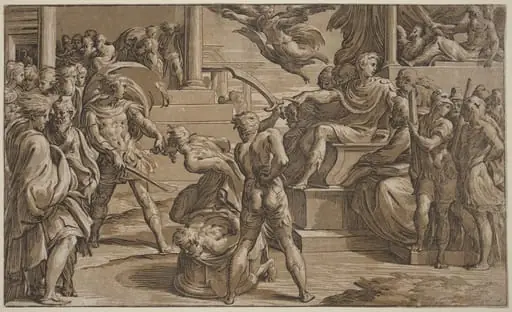 The Martyrdom of Saints Peter and Paul
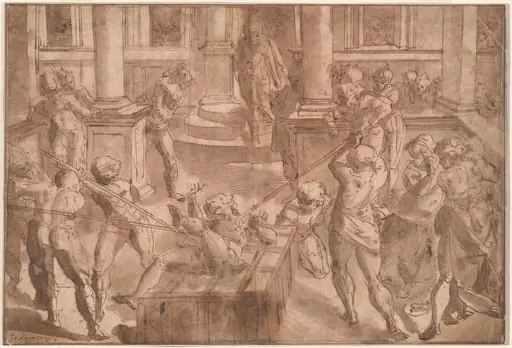 Martyrdom of Saint Lawrence
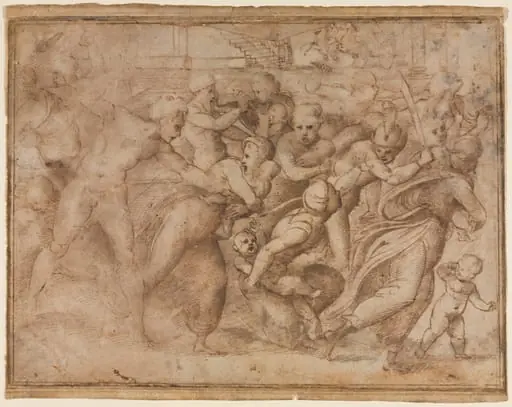 Copy of Raphael's Massacre of the Innocents
 Vulcan and Cyclops Forging Cupid's Arrows