Artwork
Sacrifice of Isaac
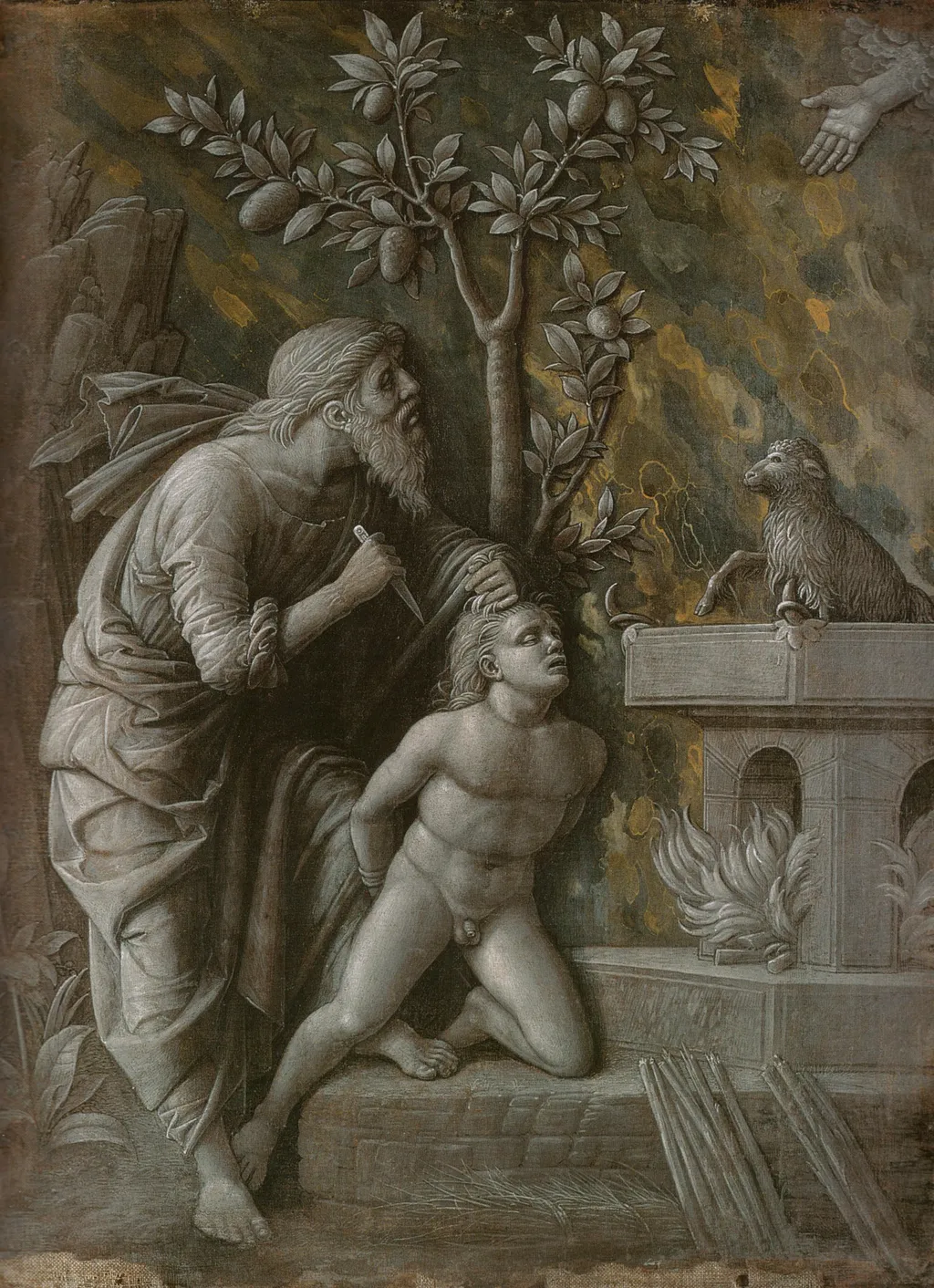
Sacrifice of Isaac is an unspecified painting by the Early Renaissance artist Andrea Mantegna. It dates from 1496 and is held in the collection of the Kunsthistorisches Museum.
About this work
Overview
Painted in 1496 by Andrea Mantegna, this work illustrates the biblical moment when Abraham is halted from sacrificing his son Isaac by a divine messenger.
Painted in 1496 by Andrea Mantegna, this work illustrates the biblical moment when Abraham is halted from sacrificing his son Isaac by a divine messenger. Executed in tempera on panel, it resides in the Kunsthistorisches Museum in Vienna. Mantegna, known for his architectural precision and classical influences, rendered the scene with restrained emotion and a focus on spatial depth, characteristic of his mature style.
Subject & Meaning
The painting captures the climactic instant of divine intervention in the story of Abraham and Isaac. Abraham, gripping his son’s shoulder, pauses mid-action as the angel descends. Isaac, kneeling with eyes closed, embodies passive submission. The sheep and distant fire hint at the intended sacrifice, while the barren landscape underscores the gravity of the moment. The scene conveys obedience, divine mercy, and the tension between human will and divine command.
Technique & Style
Mantegna employed sharp contours and sculptural modeling to give the figures a stone-like solidity. Chiaroscuro defines their forms through subtle gradations of light and shadow, enhancing volume without overt drama. The composition is tightly structured, with figures arranged along a receding plane that emphasizes perspective. The landscape, though minimal, is rendered with geological precision, reflecting Mantegna’s interest in antiquity and natural observation.
History & Provenance
Commissioned for a private devotional setting, the painting entered the Habsburg collection in the late 16th century and has remained in Vienna since. Its survival in good condition reflects its early recognition as a significant work. Though not widely exhibited during Mantegna’s lifetime, its inclusion in imperial collections ensured its preservation and scholarly attention in later centuries.
Context
Created near the end of Mantegna’s life, the painting reflects his lifelong engagement with classical antiquity and humanist ideals. While other Renaissance artists emphasized emotional expression, Mantegna favored restraint and formal harmony. The work aligns with contemporary devotional practices that valued contemplative, morally charged narratives over theatricality, resonating with the spiritual climate of late 15th-century northern Italy.
Legacy
Mantegna’s *Sacrifice of Isaac* influenced later artists through its disciplined composition and psychological restraint. Its emphasis on anatomical clarity and spatial logic contributed to the development of narrative painting in the High Renaissance. Though less celebrated than his mythological works, this piece remains a key example of how religious themes were rendered with intellectual rigor and formal economy in the late Quattrocento.
Own this work as a print
Artist & collection
Artist
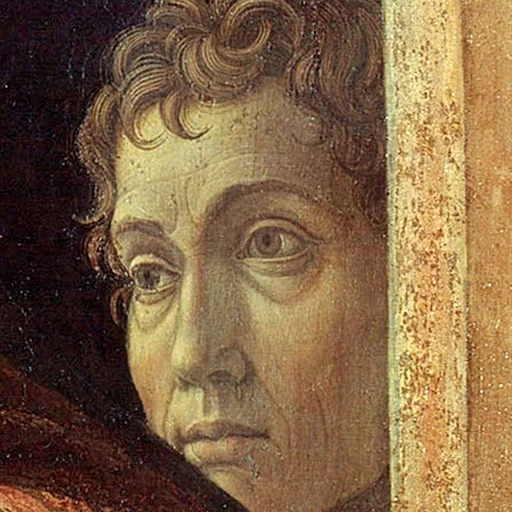
Andrea Mantegna (UK: , US: ; Italian: ; c. 1431 – September 13, 1506) was an Italian Renaissance painter, a student of Roman archaeology, and the son-in-law of Jacopo Bellini. Like other artists of the time, Mantegna…