Artwork
Gilet aux insectes, projets de broderies de gilet, XVIIIème siècle
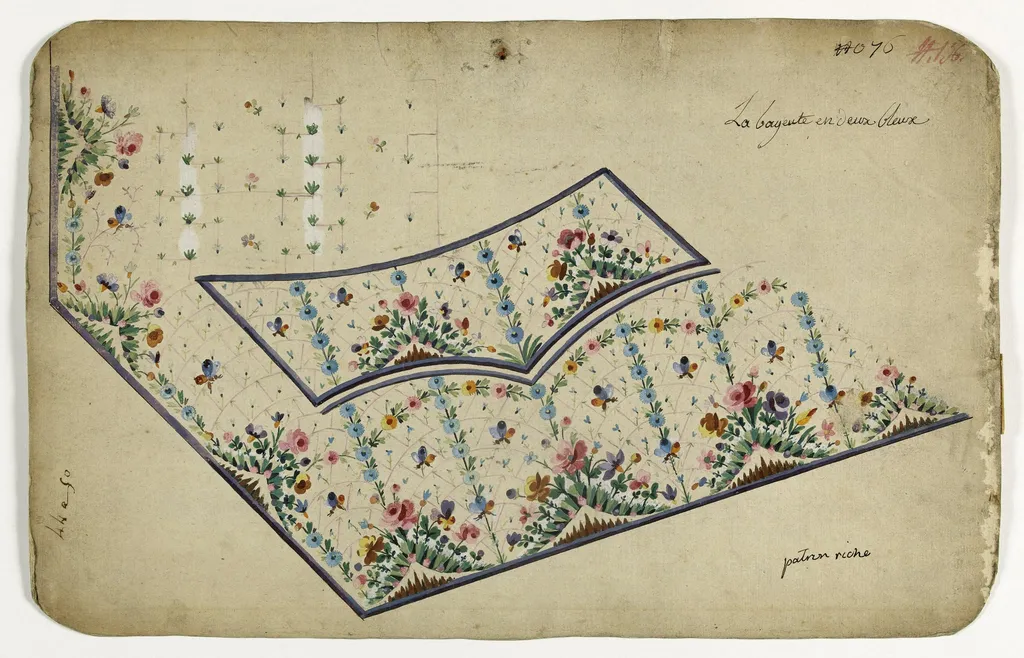
Gilet aux insectes, projets de broderies de gilet, XVIIIème siècle is a drawing by Anonyme. It dates from 1750 and is held in the collection of the Palais Galliera - Musée de la Mode de la Ville de Paris. Created around 1750, this anonymous drawing presents a decorative scheme for a men’s sleeveless vest, or gilet.
About this work
Overview
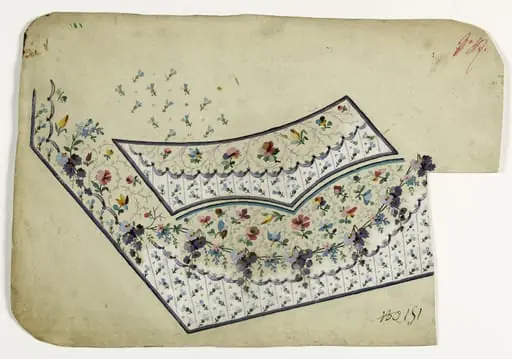
Created around 1750, this anonymous drawing presents a decorative scheme for a men’s sleeveless vest, or gilet. Rendered on a light, slightly aged sheet of paper, the composition consists of two folded fabric panels densely populated with stylised flowers and insects, each outlined by a dark margin that frames the overall design.
Subject & Meaning
The motif juxtaposes delicate blossoms with various insects, arranged in a tightly interlocking pattern that suggests both natural abundance and ornamental order. The placement of the creatures among the petals creates a visual rhythm, hinting at a harmonious relationship between flora and fauna within the context of eighteenth‑century decorative taste.
Technique & Style
Executed as a preparatory sketch, the drawing employs fine, linear strokes to delineate each element, while the dark borders emphasize individual motifs. The repetitive, puzzle‑like arrangement reflects the meticulous planning required for hand‑embroidery, a craft that demanded precise translation of paper designs onto textile surfaces.
History & Provenance
The work is part of the collection of the Museum of Ethnography, where it is catalogued under the title “Gilet aux insectes, projets de broderies de gilet, XVIIIème siècle.” Its anonymous authorship and the lack of accompanying documentation suggest it functioned as a commercial pattern rather than a singular artistic statement.
Context
During the mid‑eighteenth century, embroidered garments were a marker of status and taste across Europe. Designs featuring naturalistic elements such as flowers and insects were popular, reflecting the period’s fascination with the natural world and the burgeoning interest in scientific illustration.
Legacy
Although the original garment has not survived, the drawing offers insight into the design process behind period clothing embellishment. It serves as a reference for scholars studying the intersection of fashion, textile arts, and the visual representation of nature in pre‑industrial Europe.
Artist & collection
Artist
A French designer from the 1700s made delicate flower drawings meant to decorate vests.
Museum
Palais Galliera - Musée de la Mode de la Ville de Paris
Continue through works from the same source collection.
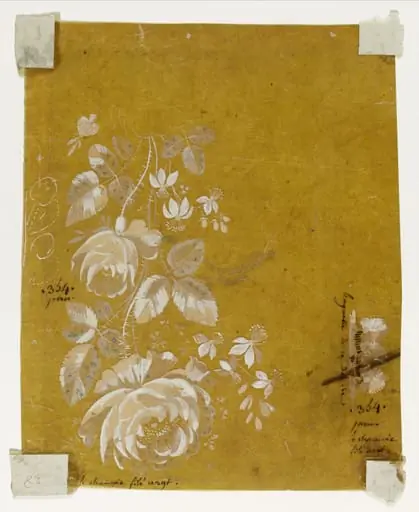 Bouquet de roses blanches pour étoffe, projets de broderies de gilet, XVIIIème siècle
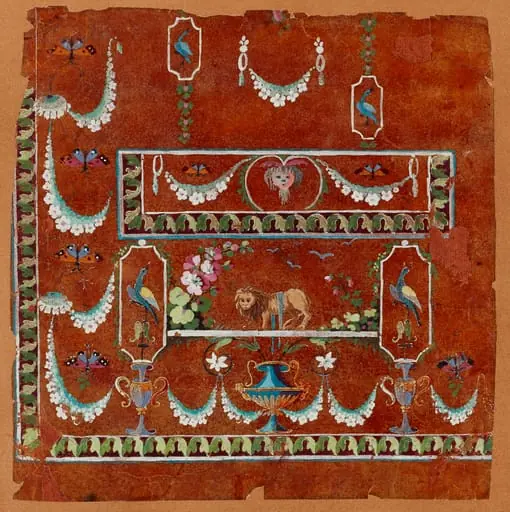 Gilet décor à grotesques, projets de broderies de gilet, XVIIIeme siècle
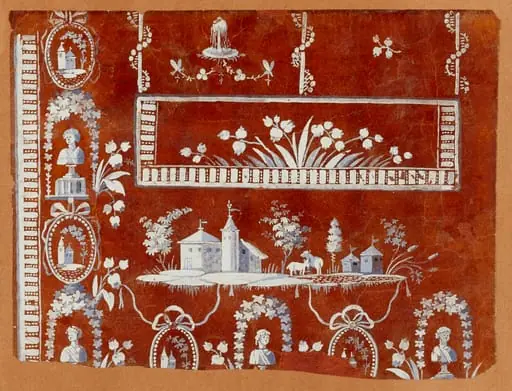 Gilet décor architectures rurales, projets de broderies de gilet, XVIIIème siècle
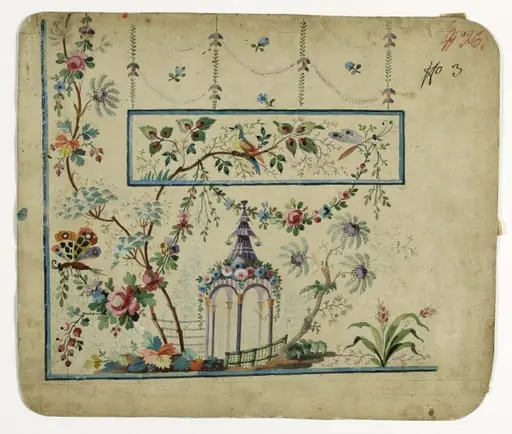 Gilet décor pagode, projets de broderies de gilet, XVIIIème siècle
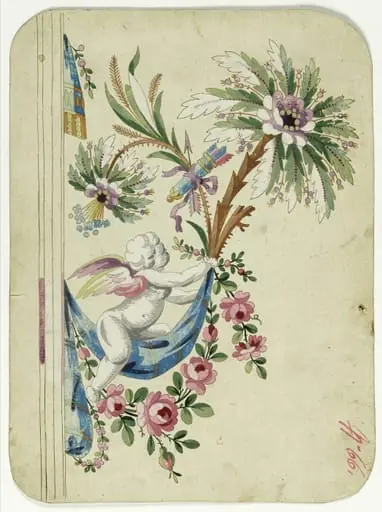 Décor de putti sur palmier, projets de broderies de gilet, XVIIIème siècle
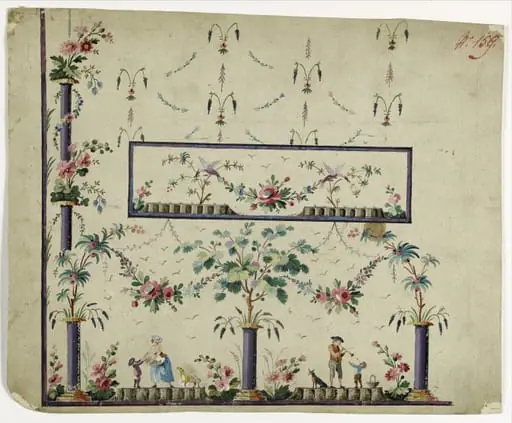 Gilet décor couple avec enfants, projets de broderies de gilet, XVIIIème siècle
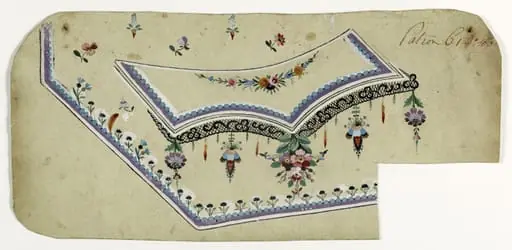 Gilet à la dentelle noire, projets de broderies de gilet, XVIIIème siècle
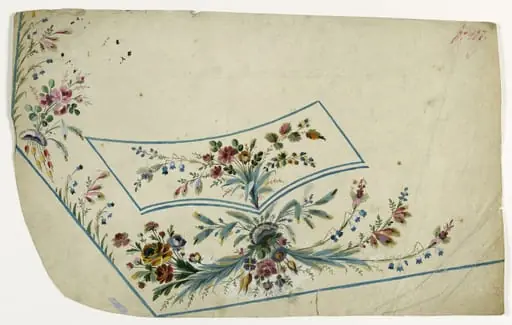 Gilet aux feuilles bleu-gris, projets de broderies de gilet, XVIIIème siècle
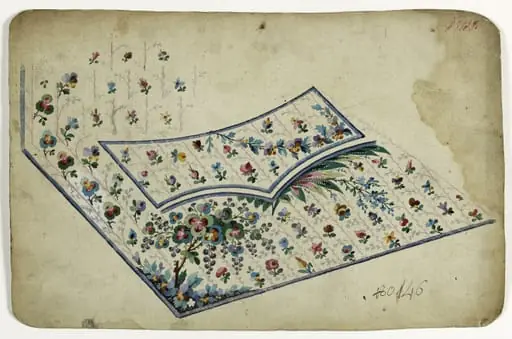 Gilet à l'arbre fleuri, projets de broderies de gilet, XVIIIème siècle
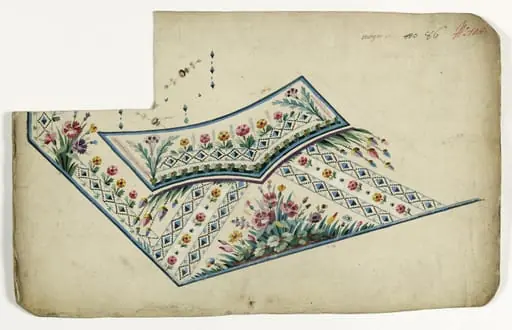 Gilet fleurs et losanges, projets de broderies de gilet, XVIIIème siècle
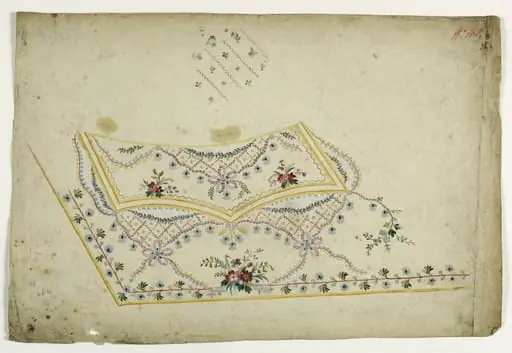 Gilet bouquets et noeuds, projets de broderies de gilet, XVIIIème siècle
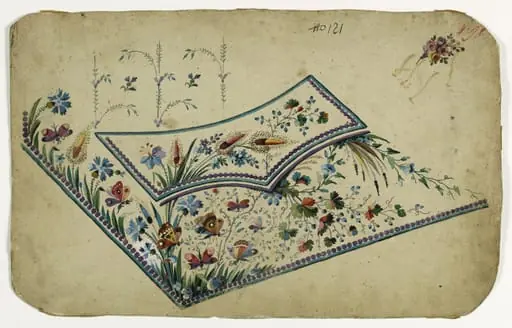 Gilet aux papillons multicolores, projets de broderies de gilet, XVIIIème siècle
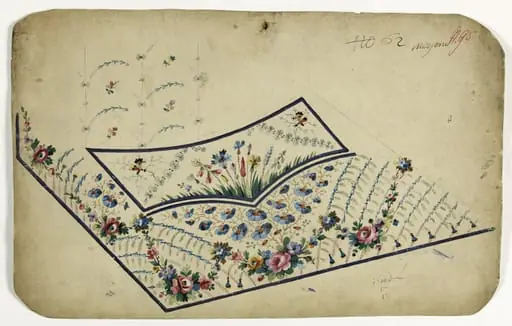 Gilet aux fleurs bleues et orange, projets de broderies de gilet, XVIIIème siècle
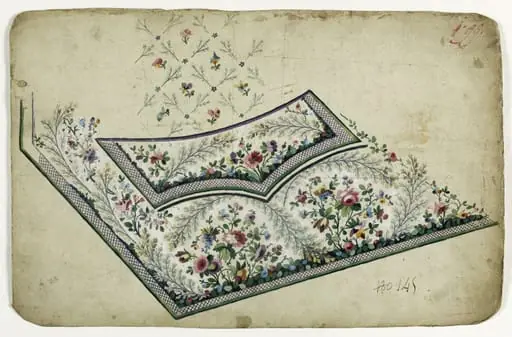 Gilet bordures de grillage, projets de broderies de gilet, XVIIIème siècle
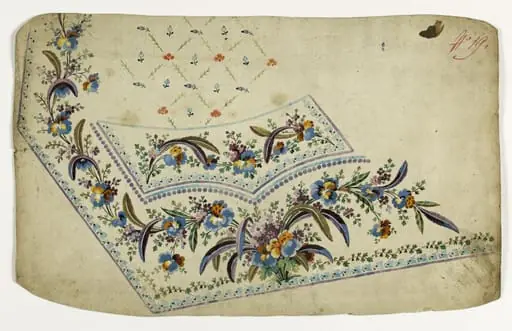 Gilet fleurs bleues et orange, projets de broderies de gilet, XVIIIème siècle
 Gilet au décor tapissant, projets de broderies de gilet, XVIIIème siècle
 Gilet perles et fleurs, projets de broderies de gilet, XVIIIème siècle