Artwork
Gilet bordures de grillage, projets de broderies de gilet, XVIIIème siècle
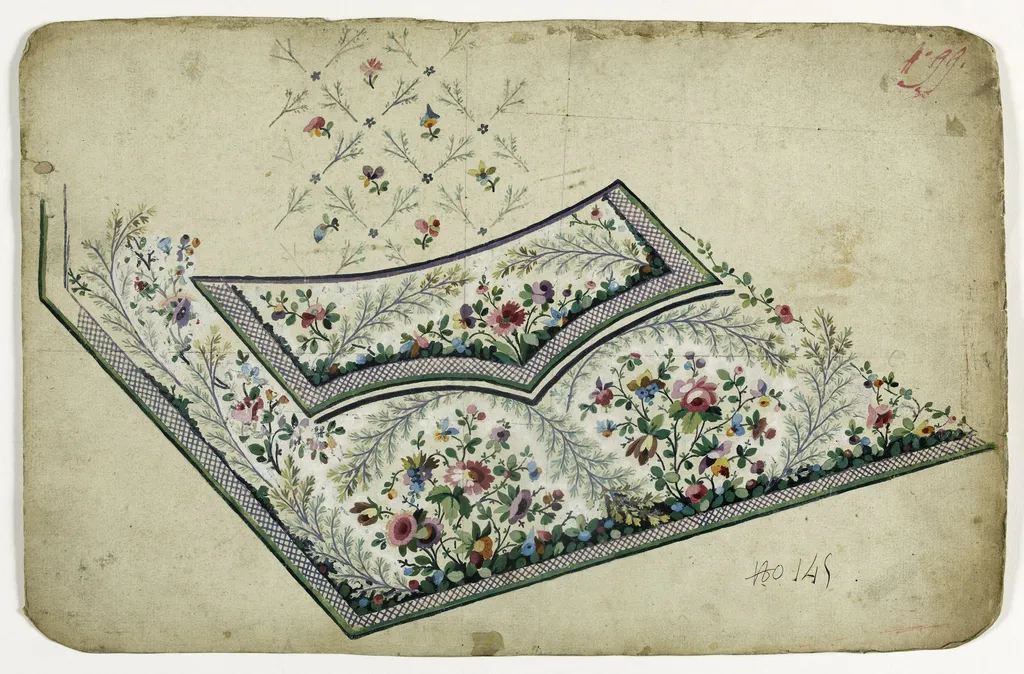
Gilet bordures de grillage, projets de broderies de gilet, XVIIIème siècle is a drawing by Anonyme. It dates from 1750 and is held in the collection of the Palais Galliera - Musée de la Mode de la Ville de Paris. This undated drawing from around 1750 presents textile design templates for a waistcoat, likely intended as a guide for embroiderers.
About this work
Overview
The work is unsigned, attributed to an anonymous artisan, and preserved in the Museum of Ethnography as part of a collection of historical dress patterns.
This undated drawing from around 1750 presents textile design templates for a waistcoat, likely intended as a guide for embroiderers. Executed on aged paper with a yellowed tone, it depicts three folded fabric sections adorned with floral motifs and a black-and-white checkered border. The work is unsigned, attributed to an anonymous artisan, and preserved in the Museum of Ethnography as part of a collection of historical dress patterns.
Subject & Meaning
The design features stylized blossoms in pink, blue, and yellow, set against green foliage, arranged in a rhythmic, repeatable pattern suitable for embroidery. The checkered edge suggests a decorative framing element, common in 18th-century garment embellishment. These motifs reflect contemporary tastes in ornamental textile art, where nature-inspired forms were adapted for personal adornment, signaling refinement and attention to detail in dress.
Technique & Style
Rendered in ink and wash, the drawing uses precise lines to outline floral forms and geometric borders, indicating it was made as a working template. The composition is structured for transfer onto fabric, with clear spatial divisions between each folded section. The restrained palette and symmetry reflect practical design principles, prioritizing clarity and reproducibility over artistic expression, typical of craft documentation of the period.
History & Provenance
The drawing entered the collection of the Museum of Ethnography as part of a group of 18th-century textile design sheets. Its origin is unrecorded, but its style aligns with French or northern European pattern books used by tailors and embroiderers. No maker or owner is documented, suggesting it was a utilitarian item, possibly produced in a workshop or passed among artisans rather than commissioned as a finished work.
Context
In mid-18th-century Europe, detailed textile patterns were essential for the production of embroidered garments, especially among the middle and upper classes. Such drawings were circulated among craftsmen to standardize designs and ensure consistency. This piece reflects the intersection of fashion, craft, and commerce, where visual templates enabled the replication of elaborate decoration across multiple garments.
Legacy
Though not signed or widely known, this drawing survives as a tangible link to the anonymous labor behind historical dressmaking. It contributes to scholarly understanding of how embroidery patterns were developed and transmitted before industrial printing. Its preservation underscores the value placed on craft documentation, even when the creators remained unacknowledged.
Artist & collection
Artist
A French designer from the 1700s made delicate flower drawings meant to decorate vests.
Museum
Palais Galliera - Musée de la Mode de la Ville de Paris
Continue through works from the same source collection.
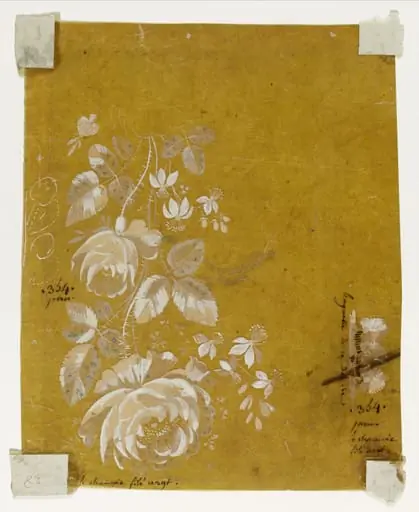 Bouquet de roses blanches pour étoffe, projets de broderies de gilet, XVIIIème siècle
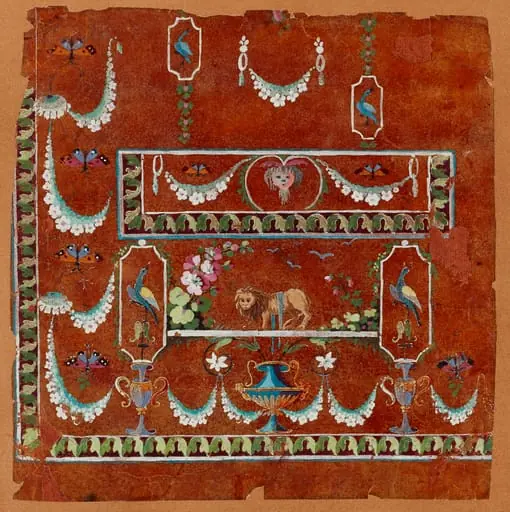 Gilet décor à grotesques, projets de broderies de gilet, XVIIIeme siècle
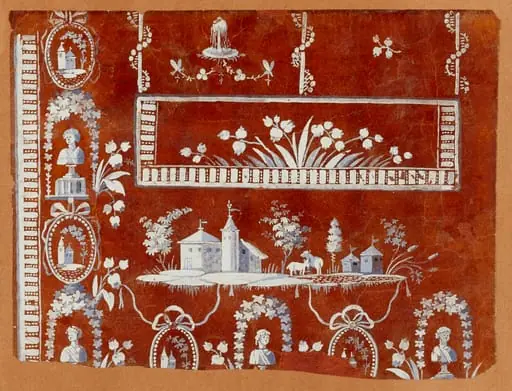 Gilet décor architectures rurales, projets de broderies de gilet, XVIIIème siècle
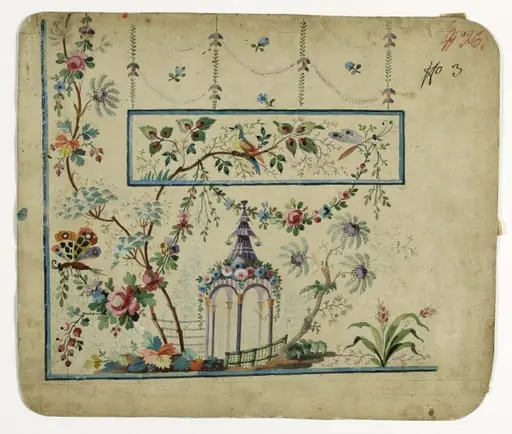 Gilet décor pagode, projets de broderies de gilet, XVIIIème siècle
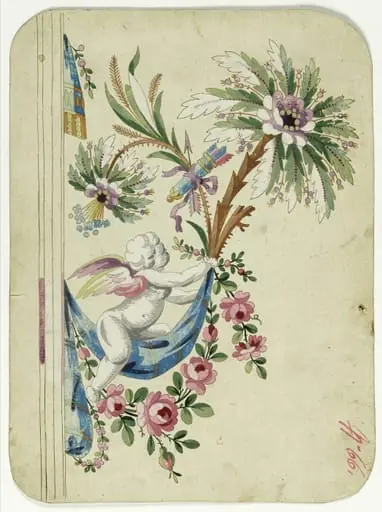 Décor de putti sur palmier, projets de broderies de gilet, XVIIIème siècle
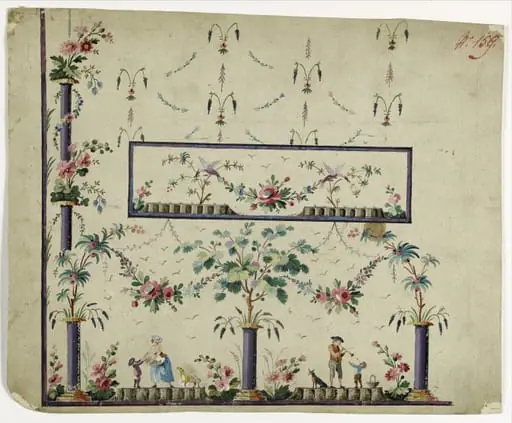 Gilet décor couple avec enfants, projets de broderies de gilet, XVIIIème siècle
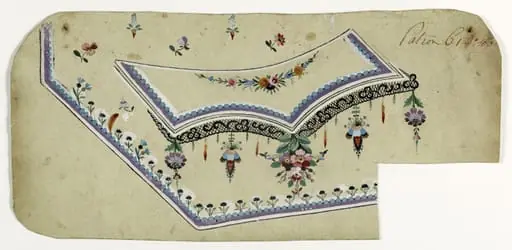 Gilet à la dentelle noire, projets de broderies de gilet, XVIIIème siècle
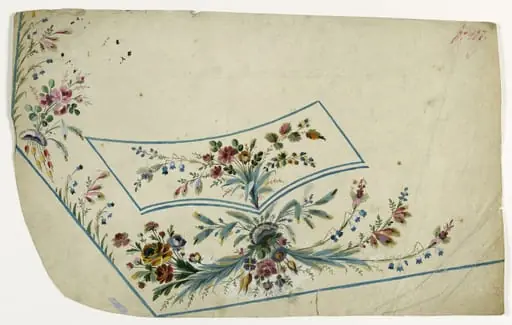 Gilet aux feuilles bleu-gris, projets de broderies de gilet, XVIIIème siècle
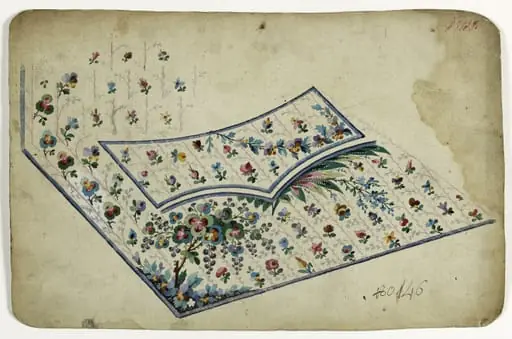 Gilet à l'arbre fleuri, projets de broderies de gilet, XVIIIème siècle
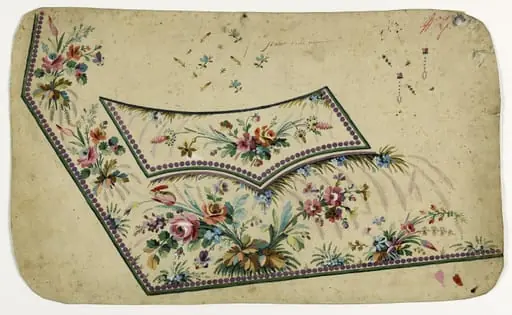 Gilet fleurs et perles mauves, projets de broderies de gilet, XVIIIème siècle
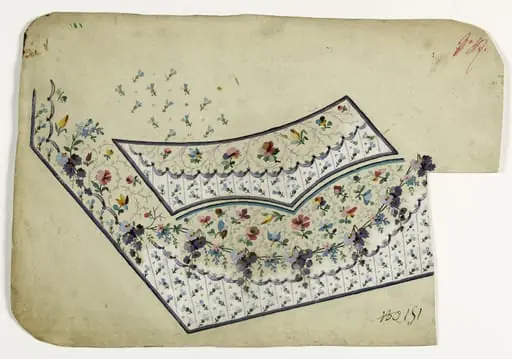 Gilet au décor tapissant, projets de broderies de gilet, XVIIIème siècle
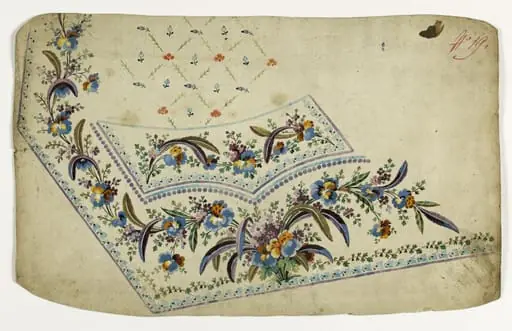 Gilet fleurs bleues et orange, projets de broderies de gilet, XVIIIème siècle
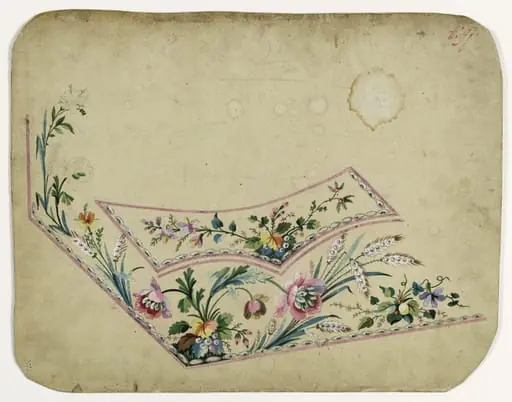 Gilet à la bordure rose, projets de broderies de gilet, XVIIIème siècle
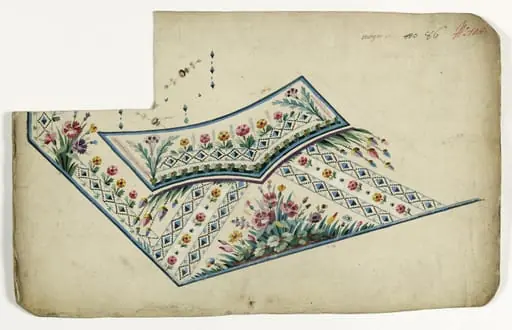 Gilet fleurs et losanges, projets de broderies de gilet, XVIIIème siècle
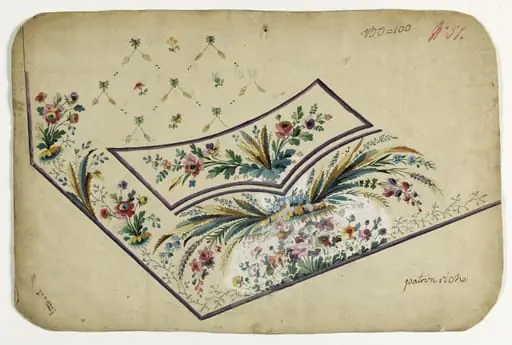 Gilet vasque de feuilles marron et vertes, projets de broderies de gilet, XVIIIème siècle
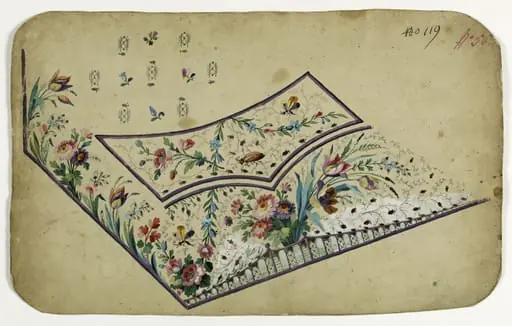 Gilet fleurs, papillons et scarabée, projets de broderies de gilet, XVIIIème siècle
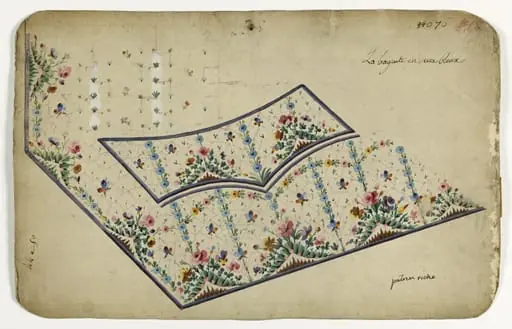 Gilet aux insectes, projets de broderies de gilet, XVIIIème siècle
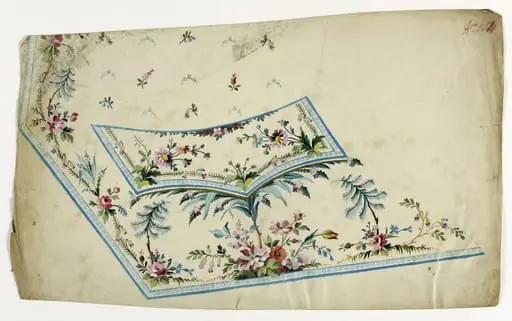 Gilet aux perles bleues, projets de broderies de gilet, XVIIIème siècle
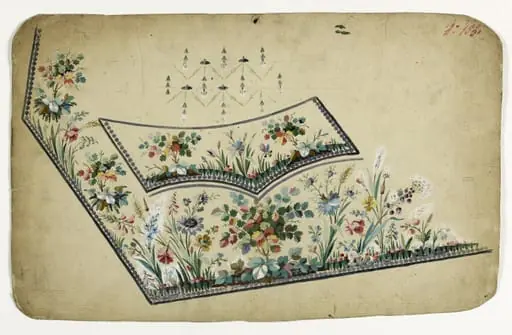 Gilet au buisson de feuilles colorées, projets de broderies de gilet, XVIIIème siècle