Artwork
An illustration showing the ancient columns and the Egyptian oblelisk
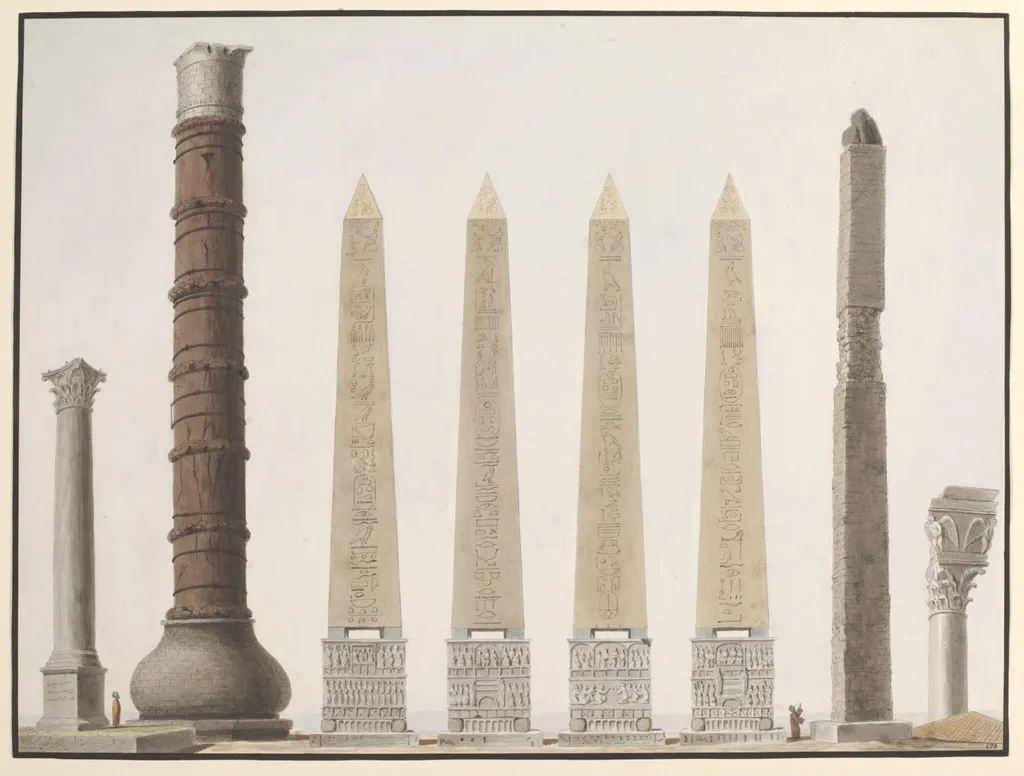
An illustration showing the ancient columns and the Egyptian oblelisk is a watercolor work on paper by the Romanticist artist Anonymous Greek artist. It dates from 1809 and is held in the collection of the Victoria and Albert Museum.
About this work
This watercolor shows ancient columns and an obelisk in Istanbul. The artist was Greek, but their name is lost. It was painted around 1809.
The picture was part of a series for a British diplomat. He wanted records of the buildings he saw in Turkey. The artist was hired locally and made many views.
If you like this, check out the Victoria and Albert Museum.
Overview
The watercolor depicts a comparative view of several surviving ancient columns in Istanbul, arranged from left to right: the Column of the Goths, the Burnt Column, the four faces of the Egyptian obelisk, the Column of Constantine Porphyrogenitus, and the Column of Marcian. Rendered in a single sheet, the work records the relative heights of these monuments.
Subject & Meaning
By placing the monuments side by side, the image emphasizes the continuity of Byzantine and earlier architectural heritage within the Ottoman capital. The inclusion of the Egyptian obelisk alongside local columns underscores Istanbul’s role as a crossroads of Mediterranean cultures and its accumulation of artifacts from diverse empires.
Technique & Style
Executed in watercolor and body‑color, the piece blends the vivid, dense pigments typical of Ottoman manuscript painting with European conventions of linear perspective and spatial ordering. The anonymous Greek artist employed a clear, measured approach to convey scale, while retaining the luminous coloration favored by local workshops.
History & Provenance
Canning engaged a local artist—believed by Turkish scholars to be linked to the studio of Konstantin Kapidagli—to document Ottoman monuments.
The work belongs to a series commissioned by British diplomat Stratford Canning, later Viscount Stratford de Redcliffe, during his early service in Istanbul after 1808. Canning engaged a local artist—believed by Turkish scholars to be linked to the studio of Konstantin Kapidagli—to document Ottoman monuments. The series remained in private hands until acquired by the Victoria and Albert Museum in the 20th century.
Context
The early 19th‑century diplomatic mission coincided with a surge of European interest in Ottoman antiquities. Canning’s systematic visual record complemented his official reports, providing a visual archive of structures that were then relatively intact but later altered or lost.
Artist & collection

![A Pasha travelling with his escort[?], by Anonymous Greek artist](https://artifactworldgallery.com/img/anonymous-greek-artist--a-pasha-travelling-with-his-escort--01de32b8fcf30843-w320.webp)
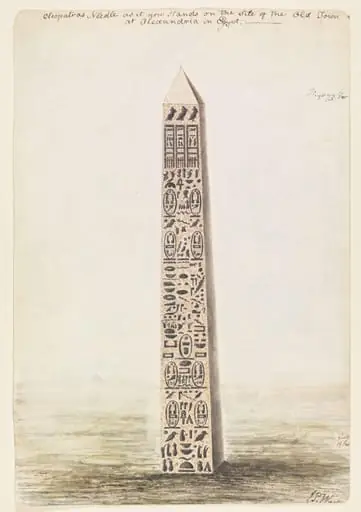 Cleopatras Needle as it now Stands on the Site of the Old Town at Alexandria in Egypt
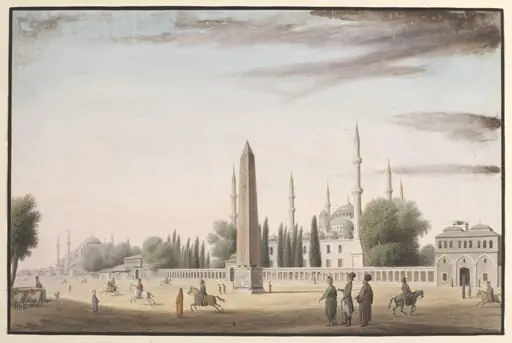 At Meydani, or the Hippodrome, Istanbul
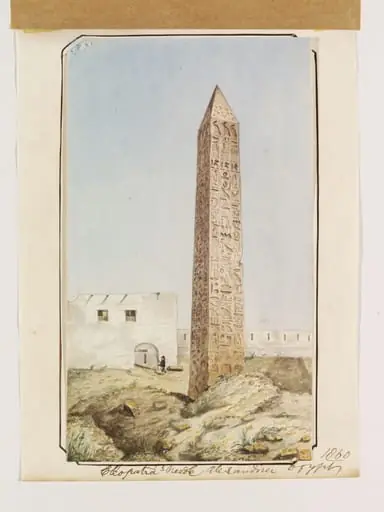 Cleopatra's Needle, Alexandria, Egypt
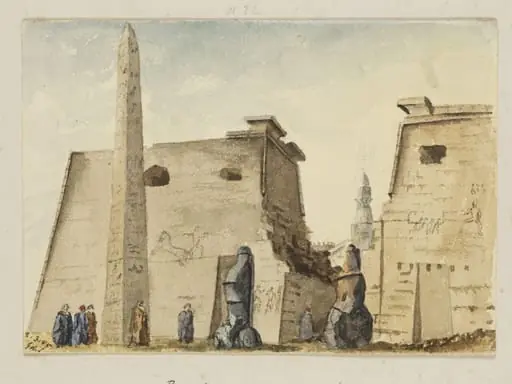 `Propyla of Great Temple. Luxor, Thebaid'
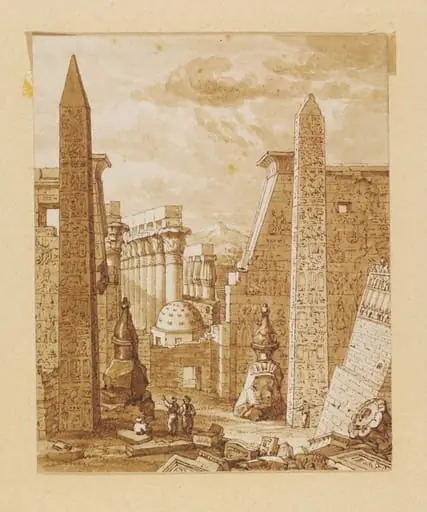 Entry of Palace of Luxor, formerly Thebes
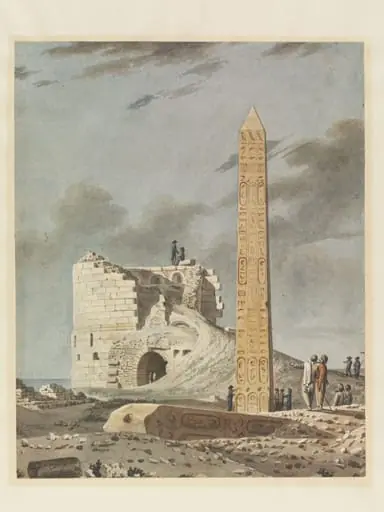 Vue de Obélisque dite de Cléopatre à Alexandrie
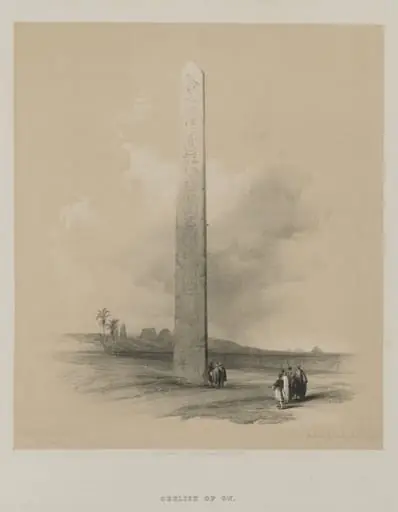 Egypt and Nubia, Volume II: Obelisk of Heliopolis
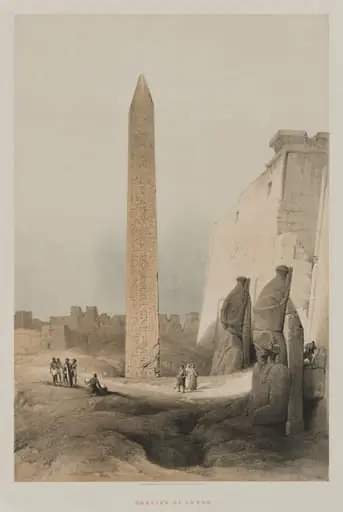 Egypt and Nubia, Volume I: Luxor