Artwork
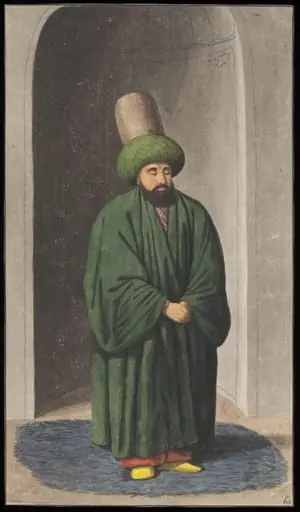
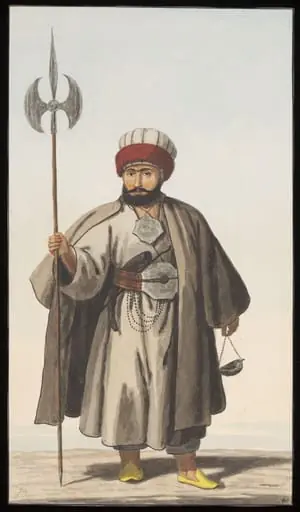
Seyh-ül-Islâm, or Grand Mufti
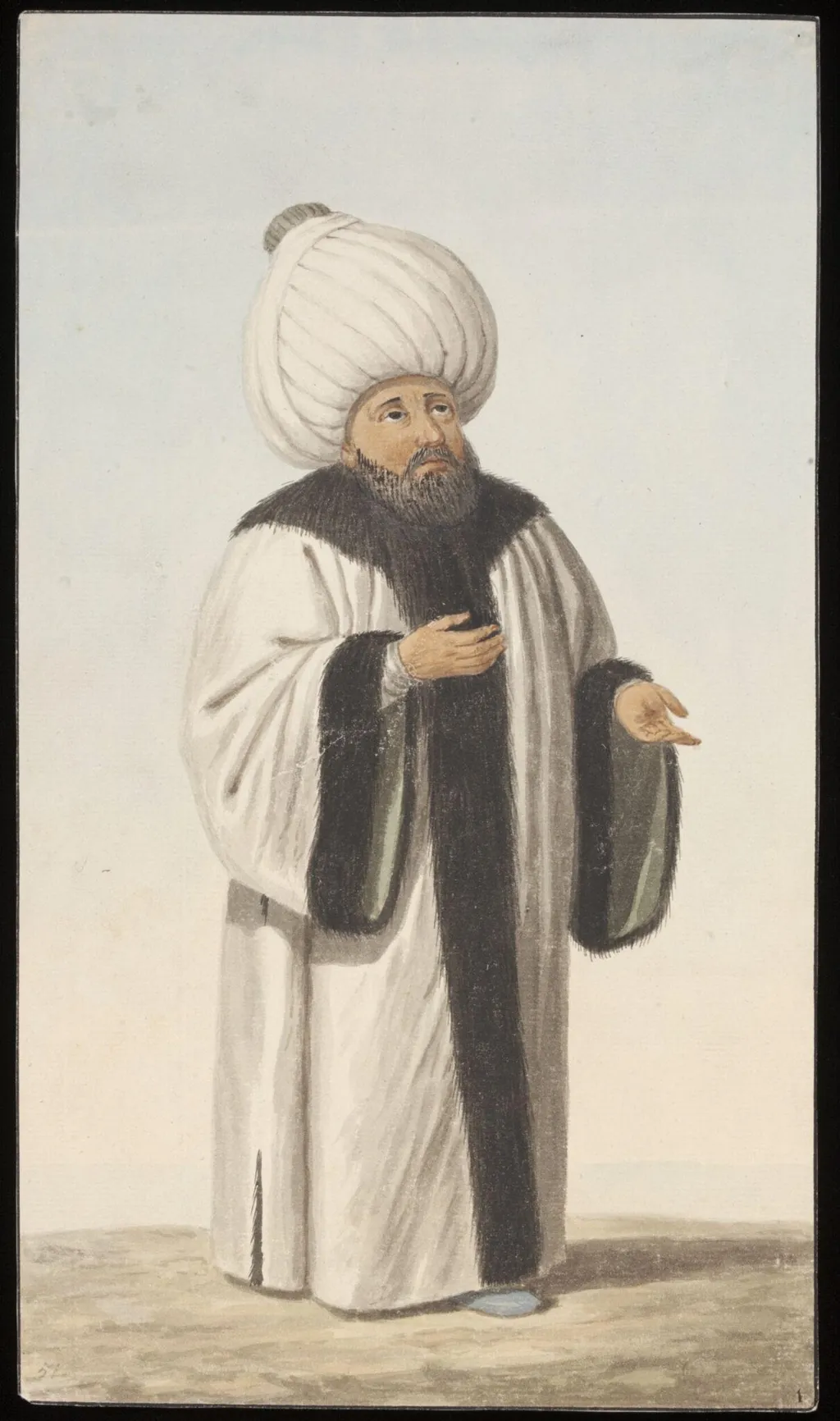
Seyh-ül-Islâm, or Grand Mufti is a watercolor work on paper by the Romanticist artist Anonymous Greek artist. It dates from 1809 and is held in the collection of the Victoria and Albert Museum.
About this work
He arrived in Istanbul in 1808 and quickly asked a local painter to record what he saw.
This watercolor shows a high-ranking religious official from the Ottoman Empire. The title points to the Grand Mufti, who handled religious law in Sunni countries. An anonymous Greek artist made it around 1809 as part of a series.
A British diplomat named Stratford Canning ordered the whole set. He arrived in Istanbul in 1808 and quickly asked a local painter to record what he saw. Only the artist stayed unknown.
Look up the Victoria and Albert Museum next.
Overview
The watercolour depicts a senior religious figure of the Ottoman Empire, identified as the Grand Mufti, the chief authority on Sunni Islamic law. Executed around 1809, the work belongs to a larger series of Ottoman studies commissioned by British diplomat Stratford Canning during his early years in Istanbul.
Subject & Meaning
The portrait emphasizes the official status of the Grand Mufti, whose role encompassed interpreting Sharia and advising the state on religious matters. By presenting the mufti in formal attire, the image conveys the intertwining of religious and governmental authority within the Ottoman administrative hierarchy.
Technique & Style
The anonymous Greek artist employed a hybrid approach, merging the luminous, layered washes typical of Ottoman water‑and‑body colour with European conventions of linear perspective and spatial organization. This synthesis creates a vivid yet structured representation that reflects cross‑cultural artistic exchange in early‑19th‑century Istanbul.
History & Provenance
Stratford Canning, later Viscount Stratford de Redcliffe, commissioned the series shortly after his arrival in Istanbul in 1808, seeking visual records of the city’s institutions and customs. The original drawings remained in his possession until they entered the Victoria and Albert Museum’s collection, where they are now held as part of the museum’s Ottoman holdings.
Context
The series was produced at a time when European diplomats increasingly documented Ottoman society, often employing local artists to capture architectural and ceremonial subjects. The unknown painter is thought by Turkish scholars to have been associated with the workshop of Konstantin Kapidagli, a prominent figure in the Ottoman artistic scene.
Artist & collection

![A Pasha travelling with his escort[?], by Anonymous Greek artist](https://artifactworldgallery.com/img/anonymous-greek-artist--a-pasha-travelling-with-his-escort--01de32b8fcf30843-w320.webp)
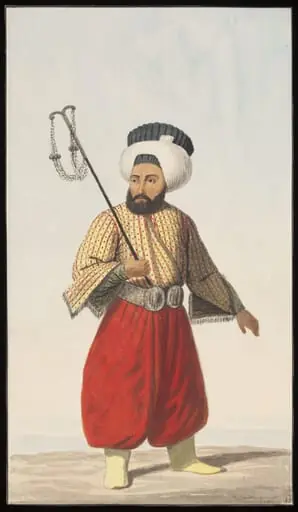
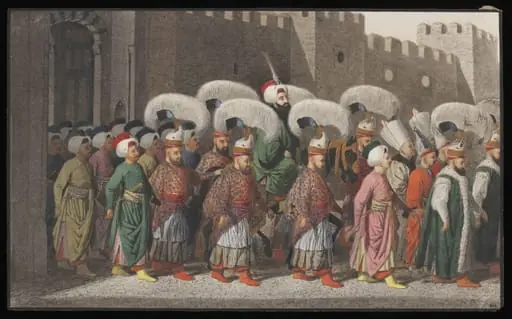
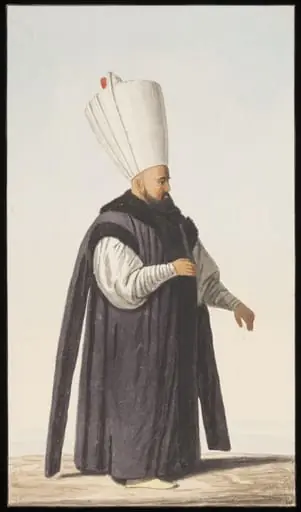
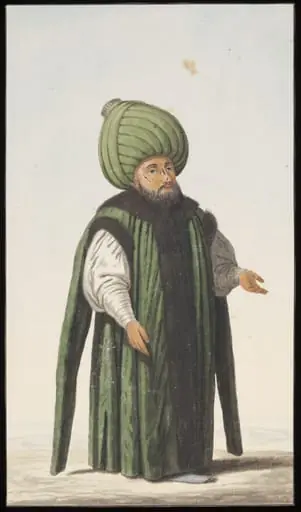 A senior Ottoman official
![A Dervish[?], by Anonymous Greek artist](https://artifactworldgallery.com/img/anonymous-greek-artist--a-dervish--3c8916f5a95abb6a-w320.webp) A Dervish[?]
A Dervish[?]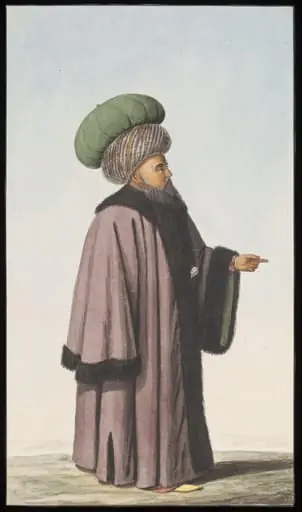 The Reis Efendi, or Minister for Foreign Affairs
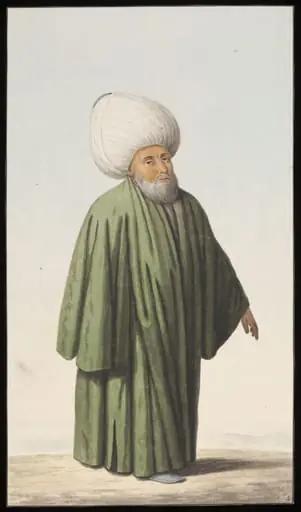 An Ottoman cleric, possibly the Nakibulesraf, or the representative at Istanbul of the Sherif of Mecca
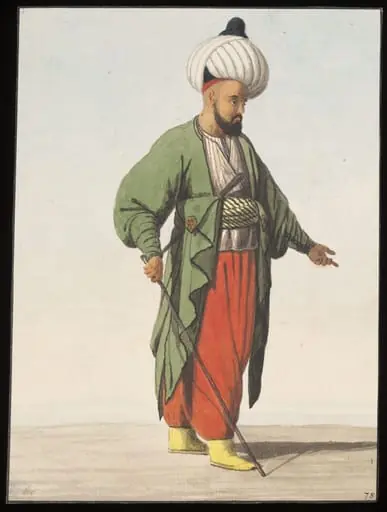 A Turkish official
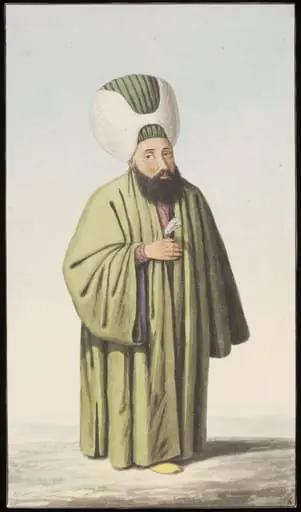 An Ottoman Military officer, possibly the Yeniçeriagasi, or Commander-in-chief of the Janissaries
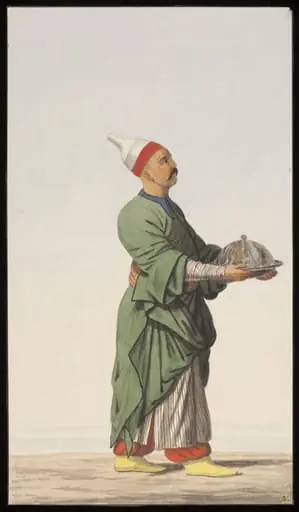 Saray Ekmekcisi, or Palace confectioner
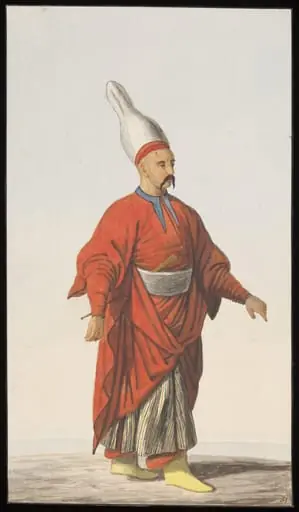 Kozbekçisi, or Steward of the Sultan's Wardrobe
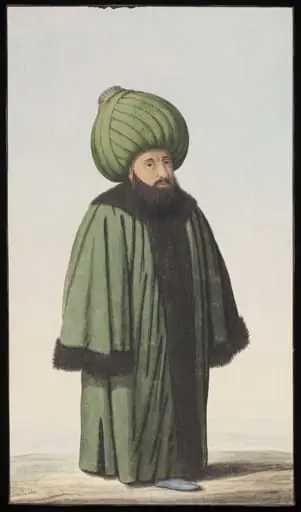 A Müftü or Mufti
 Bektasi, or Wandering Dervish