Artwork
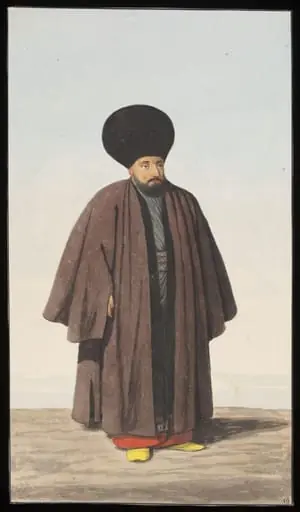
The Reis Efendi, or Minister for Foreign Affairs
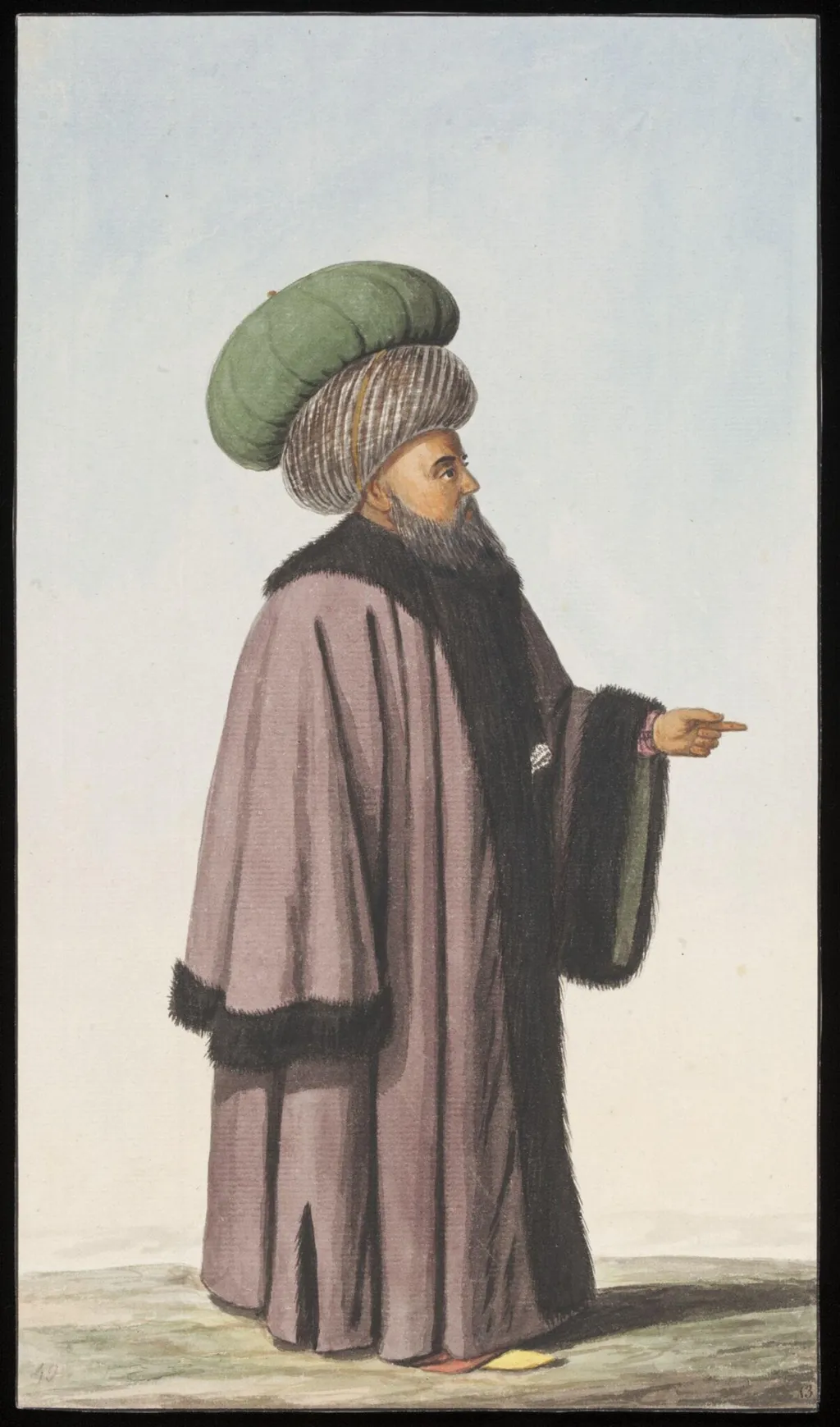
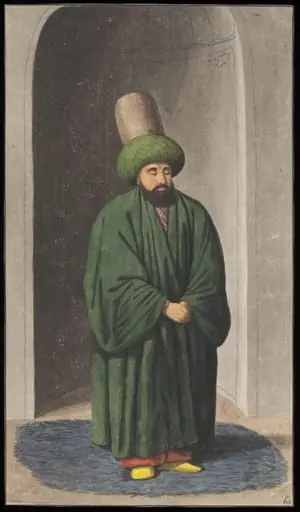
The Reis Efendi, or Minister for Foreign Affairs is a watercolor work on paper by the Romanticist artist Anonymous Greek artist. It dates from 1809 and is held in the collection of the Victoria and Albert Museum. This watercolour depicts a high-ranking Ottoman official, likely the Reis Efendi or Minister for Foreign Affairs, painted in 1809.
About this work
The artist stays unknown, but Turkish experts link him to Konstantin Kapidagli’s circle.
This watercolour shows a high-ranking Ottoman official from 1809. The artist stays unknown, but Turkish experts link him to Konstantin Kapidagli’s circle. The work was part of a long series Stratford Canning paid for.
Canning arrived in Istanbul as a young diplomat and hired locals to record what he saw. His orders led to dozens of views and portraits, now a rare snapshot of Ottoman life.
Check out the Victoria and Albert Museum.
Overview
This watercolour depicts a high-ranking Ottoman official, likely the Reis Efendi or Minister for Foreign Affairs, painted in 1809. It formed part of a larger series commissioned by British diplomat Stratford Canning during his early years in Istanbul. The works were created by an anonymous local artist, possibly associated with Konstantin Kapidagli’s studio, and reflect a fusion of Ottoman visual traditions with emerging European techniques in perspective and detail.
Subject & Meaning
The figure represents a senior administrator in the Ottoman state, dressed in formal attire that signals rank and authority. Rather than idealized portraiture, the image functions as a documentary record, capturing the visual culture of Ottoman governance at a time of reform. Canning’s interest in these figures was not ceremonial but analytical—he sought to understand the machinery of a state central to British geopolitical interests.
Technique & Style
The watercolour employs opaque bodycolour with fine, precise brushwork, characteristic of Ottoman manuscript illumination traditions. At the same time, the spatial arrangement and shading reflect European conventions of realism and depth. The result is a hybrid style: richly detailed yet structurally ordered, bridging two artistic systems without fully assimilating one into the other.
History & Provenance
Stratford Canning commissioned the series during his tenure in Istanbul from 1809 onward. After his return to Britain, the drawings remained in his family. In 1895, his daughter Charlotte donated the complete collection to the Victoria and Albert Museum. The artist’s identity remains unconfirmed, though stylistic analysis suggests ties to the Greek-speaking artistic community in Istanbul, possibly linked to Kapidagli’s workshop.
Context
Canning’s project emerged during a period of intense diplomatic engagement between Britain and the Ottoman Empire. As Western interest in Ottoman institutions grew, so did the demand for accurate visual documentation. Local artists, often from Christian or Greek communities, became intermediaries—translating imperial life for foreign patrons through images that balanced authenticity with aesthetic familiarity.
Legacy
The series stands as one of the most comprehensive visual records of early 19th-century Ottoman administration. Though the artist remains anonymous, the works influenced British perceptions of the empire and informed later scholarly studies. Copies made by Charles Cockerell, now in the British Museum, attest to the drawings’ impact on Western artists and architects engaged with Ottoman architecture and culture.
Artist & collection

![A Pasha travelling with his escort[?], by Anonymous Greek artist](https://artifactworldgallery.com/img/anonymous-greek-artist--a-pasha-travelling-with-his-escort--01de32b8fcf30843-w320.webp)
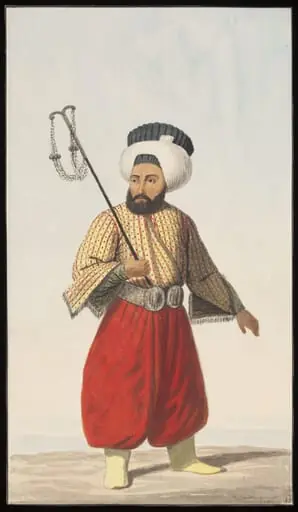
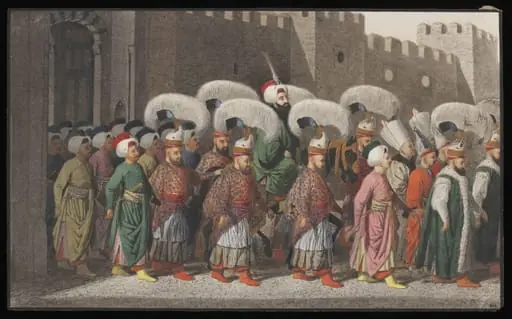
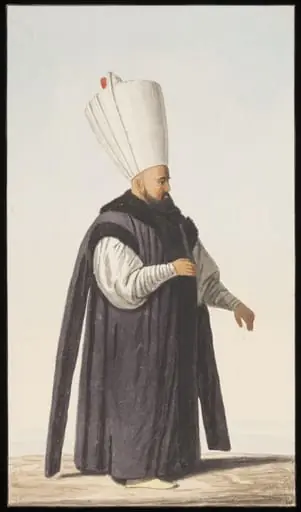
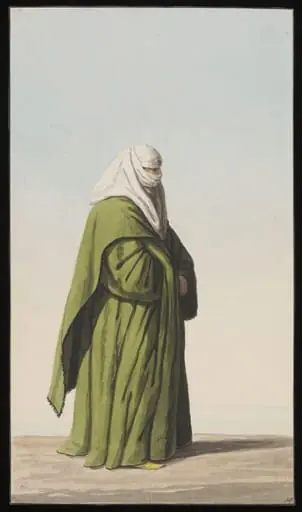
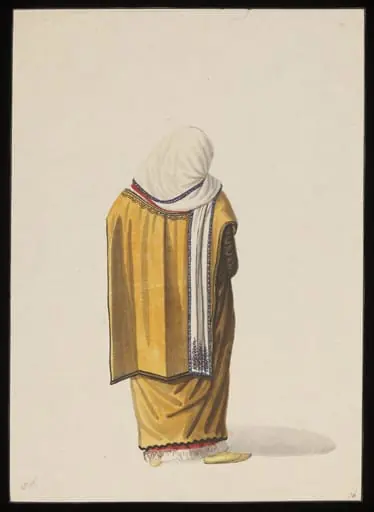
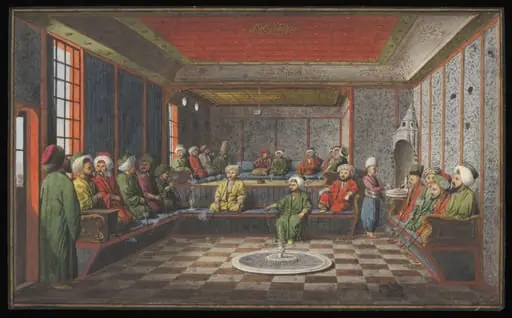
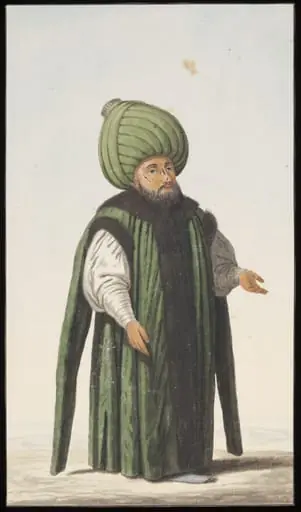 A senior Ottoman official
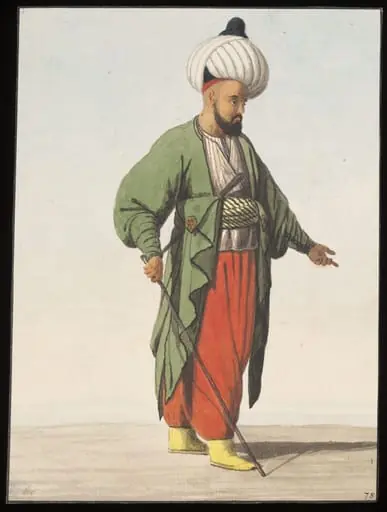 A Turkish official
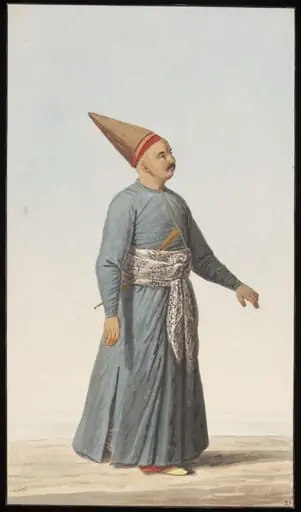 An official in the Sultan's palace
![A Dervish[?], by Anonymous Greek artist](https://artifactworldgallery.com/img/anonymous-greek-artist--a-dervish--3c8916f5a95abb6a-w320.webp) A Dervish[?]
A Dervish[?]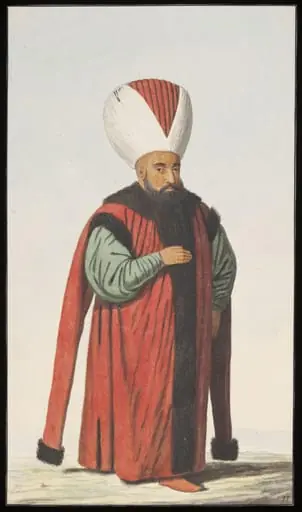 Reis Efendi or Minister
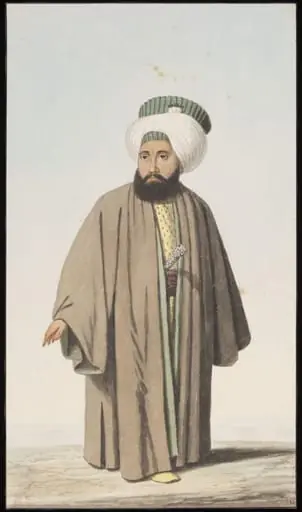 Defterdar, or Minister of Finance
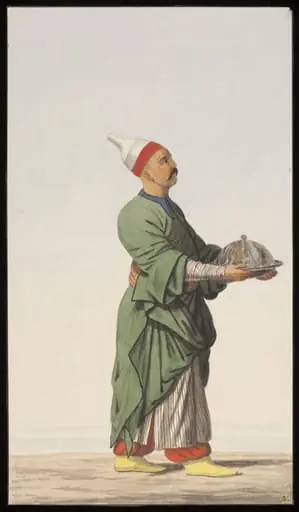 Saray Ekmekcisi, or Palace confectioner
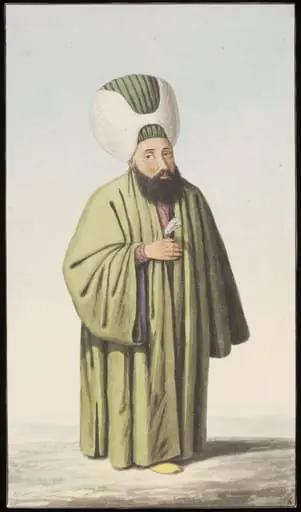 An Ottoman Military officer, possibly the Yeniçeriagasi, or Commander-in-chief of the Janissaries
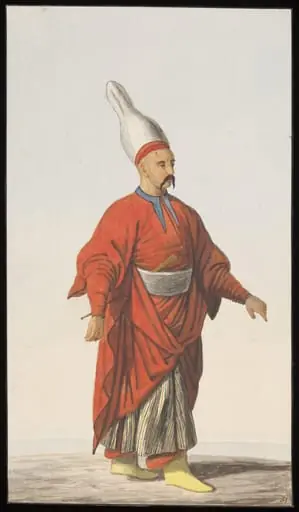 Kozbekçisi, or Steward of the Sultan's Wardrobe
 An Armenian official