Artwork
La Aparición de la Virgen a San Francisco
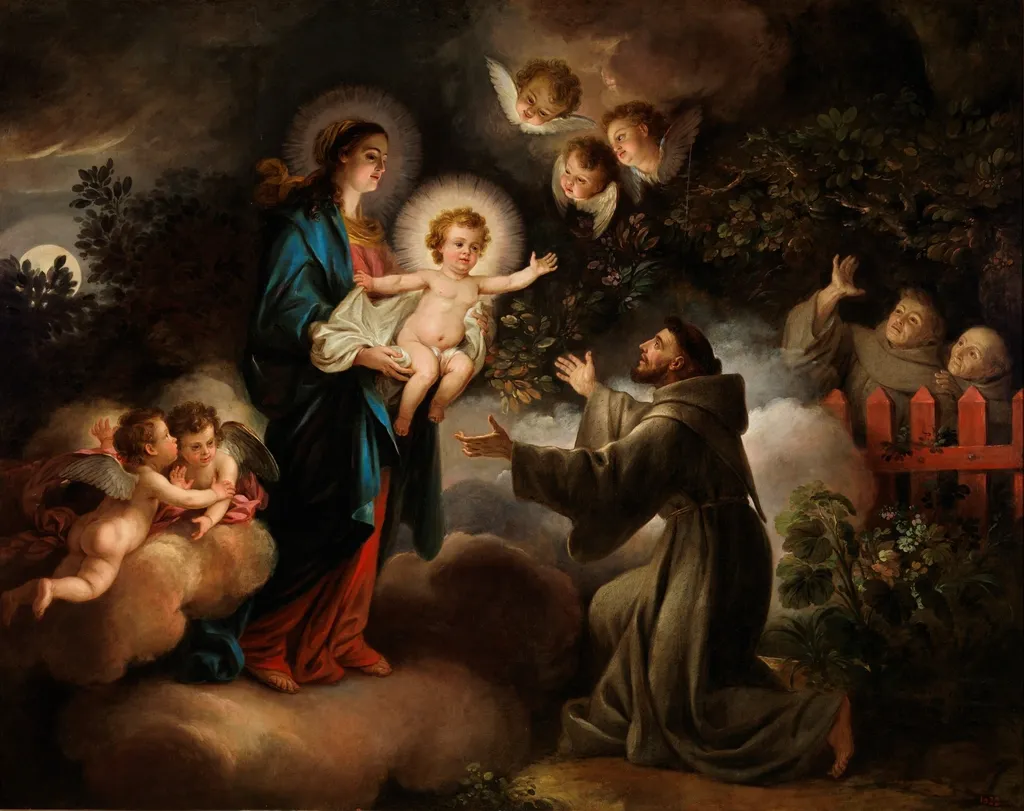
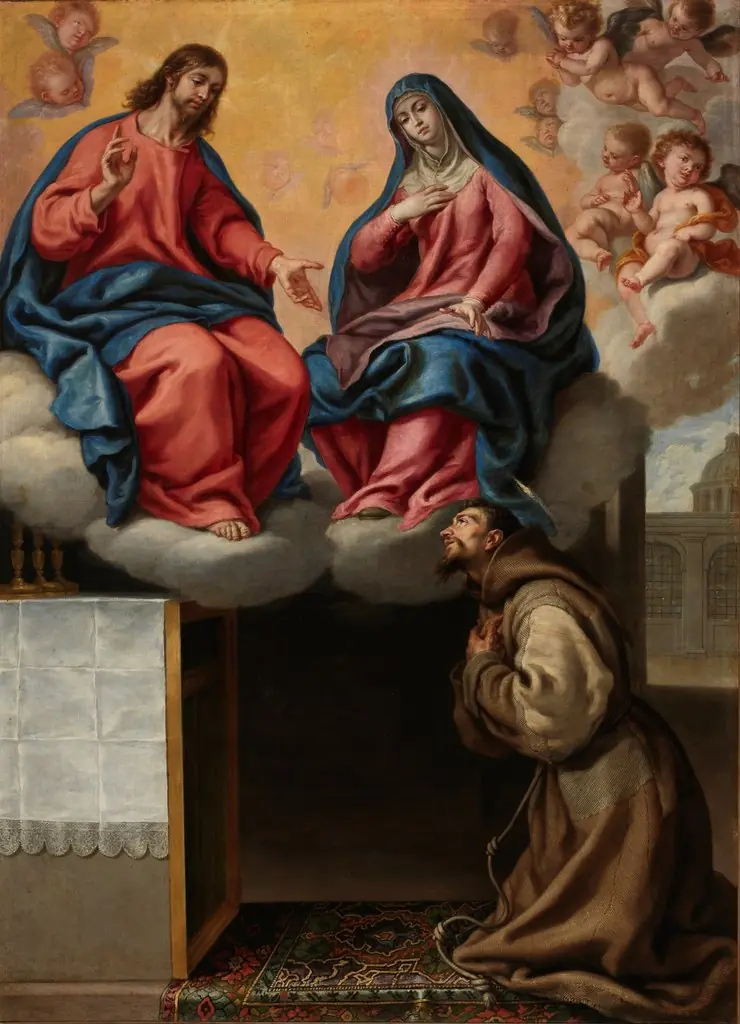
La Aparición de la Virgen a San Francisco is an oil painting by Antonio Carnicero. It dates from 1794 and is held in the collection of the Museo del Prado.
About this work
Overview
Carnicero, known for his precision and classical discipline, rendered the scene with restrained emotion and clear compositional structure.
Painted in 1794 by Spanish artist Antonio Carnicero, this oil on canvas work depicts a moment of divine revelation. Carnicero, known for his precision and classical discipline, rendered the scene with restrained emotion and clear compositional structure. The painting belongs to the collection of the Museo del Prado in Madrid, where it stands as an example of late 18th-century Spanish religious art shaped by Neoclassical ideals.
Subject & Meaning
The scene illustrates the Virgin Mary appearing to Saint Francis of Assisi, a traditional subject in Christian iconography symbolizing divine favor and spiritual awakening. Mary, holding the Christ Child, is surrounded by angels, while Francis kneels in humble adoration. The moment captures quiet reverence rather than dramatic spectacle, emphasizing inner devotion over theatrical display, consistent with the spiritual tone of Franciscan piety.
Technique & Style
Carnicero employed chiaroscuro to model forms with subtle gradations of light and shadow, drawing focus to the central figures. The Virgin’s blue mantle and red undergarment contrast against the dark, clouded sky, while the infant’s white swaddling enhances their luminosity. The composition is balanced and orderly, with figures arranged along a vertical axis, reflecting Neoclassical principles of harmony and restraint over Baroque dynamism.
History & Provenance
Commissioned during Carnicero’s tenure as a court painter, the work entered the Spanish royal collection before being transferred to the Museo del Prado in the 19th century. Its preservation reflects its status as a significant religious work within the state’s artistic patronage. No major alterations or reattributions are recorded, and it has remained in public custody since its acquisition by the museum.
Context
Created during Spain’s late Enlightenment, the painting aligns with state-sponsored efforts to promote religious imagery grounded in rational clarity. While religious themes persisted, the style moved away from emotional excess toward controlled elegance. Carnicero’s background in theatrical design informed his use of staged lighting and spatial depth, adapting stagecraft principles to sacred narrative without theatricality.
Legacy
Though not widely reproduced or celebrated outside academic circles, the painting exemplifies the transition in Spanish religious art from Baroque intensity to Neoclassical sobriety. Carnicero’s disciplined approach influenced lesser-known contemporaries and remains a reference for understanding how institutional taste shaped devotional imagery in late 18th-century Spain.
Own this work as a print
Artist & collection
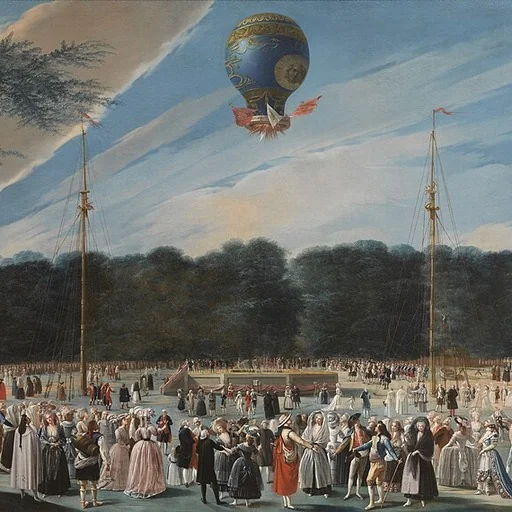
Artist
Antonio Carnicero (1748–1814) was a Spanish painter of the Neoclassical style. In addition to his paintings, over the course of his career he also produced prints and engravings as well as creating theatrical decorations.

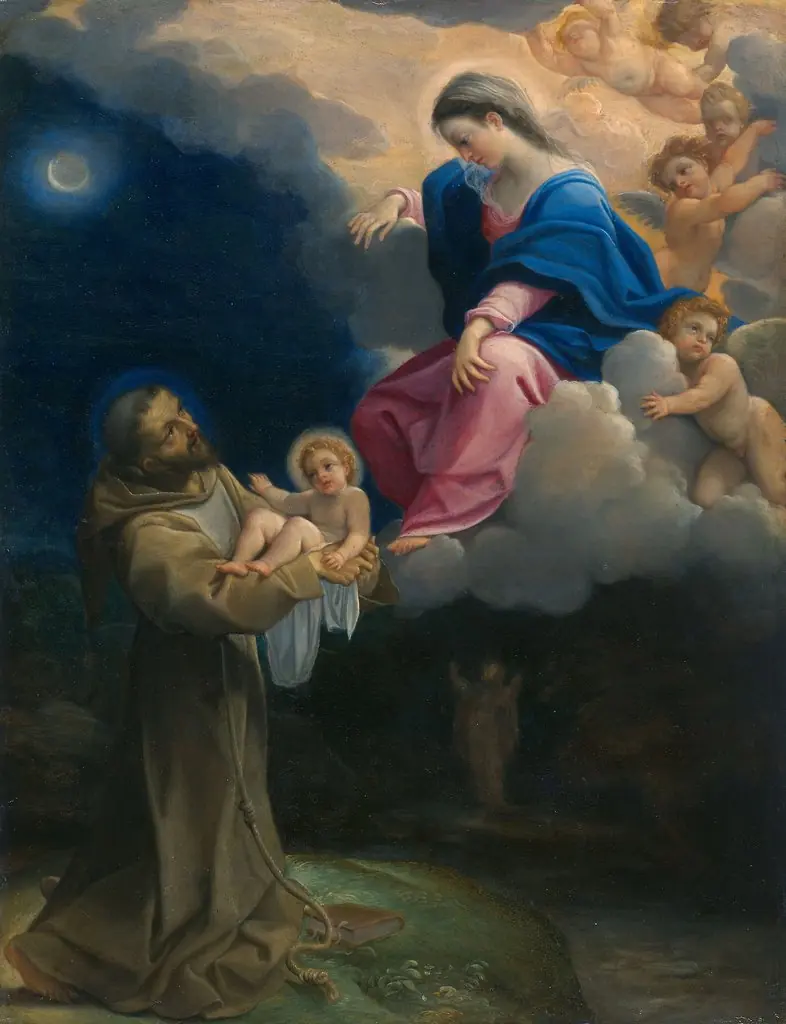 The Vision of Saint Francis
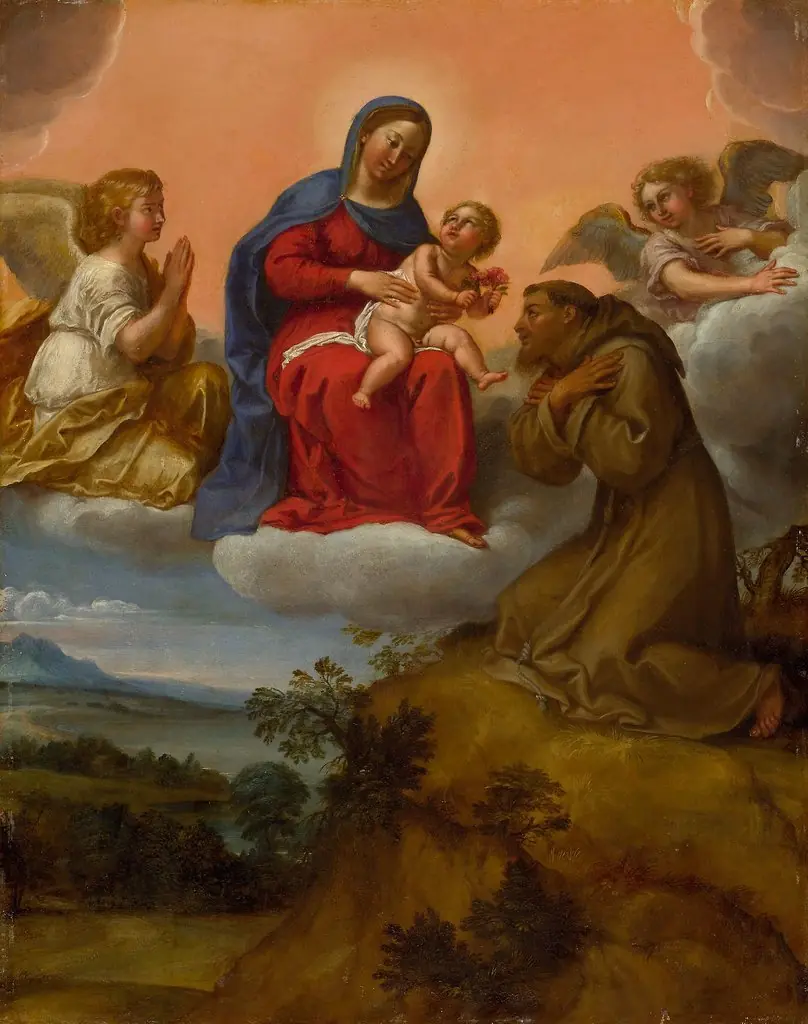 Virgin and Child Adored by Saint Francis
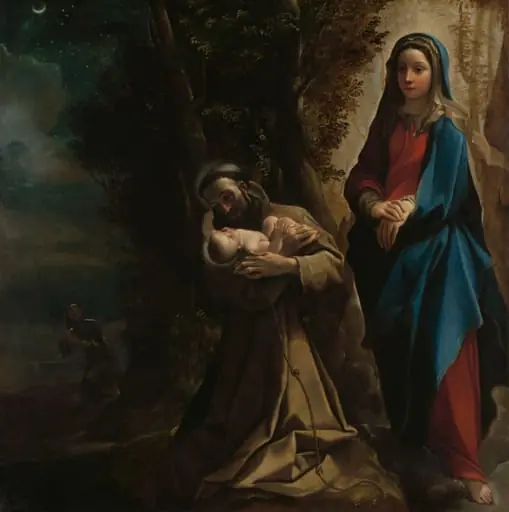 Het visioen van de heilige Franciscus van Assisi
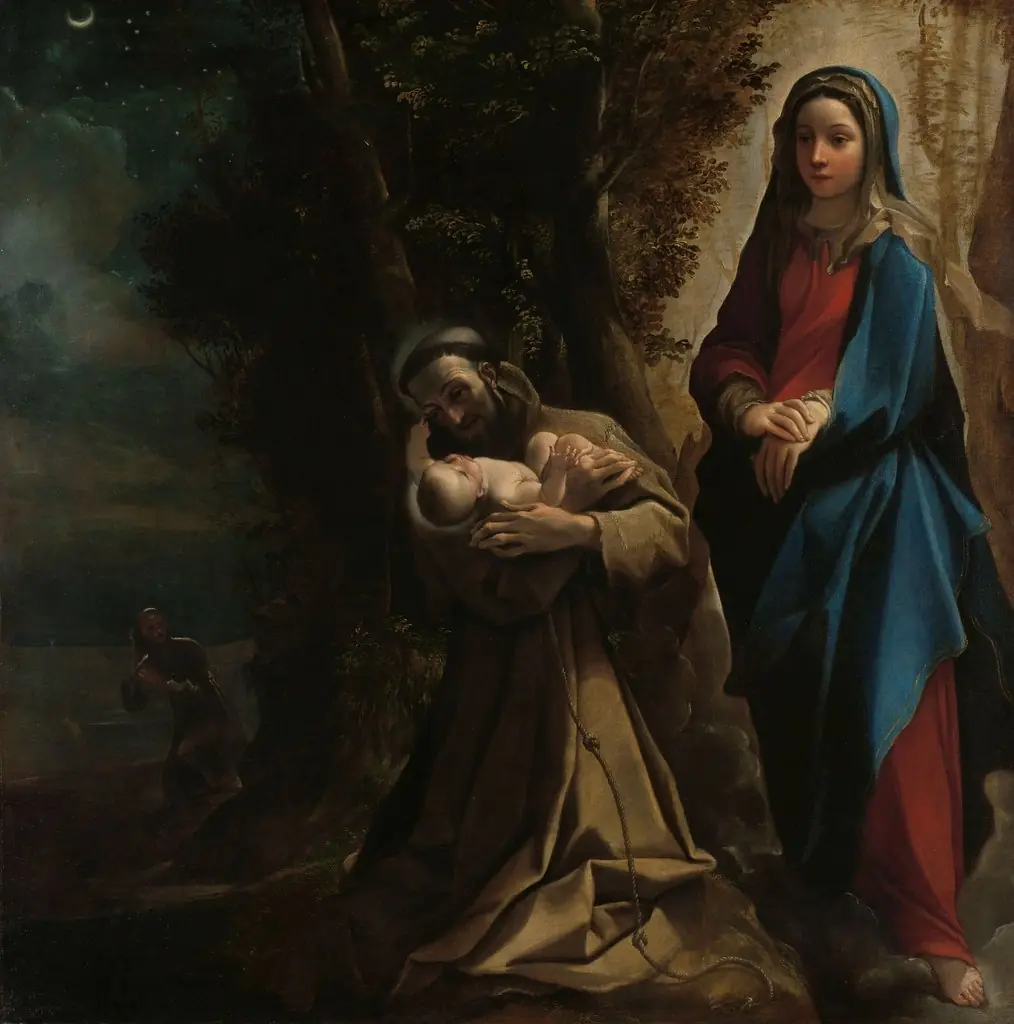 The Vision of Saint Francis of Assisi
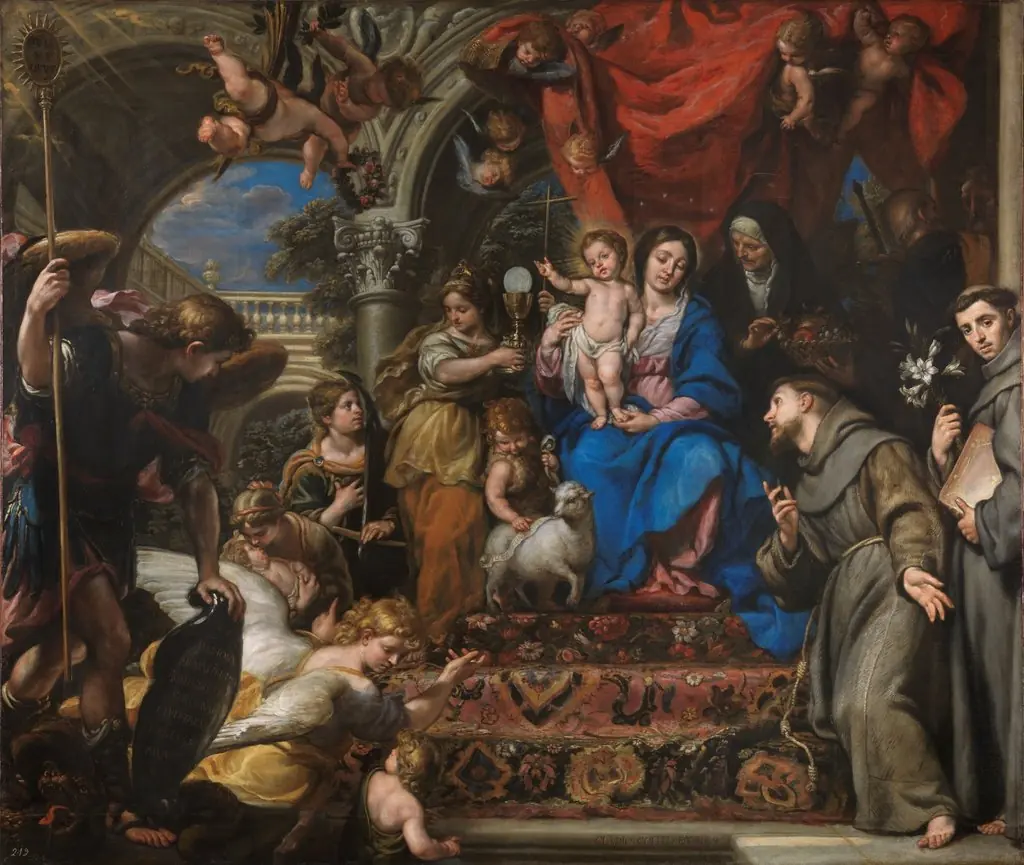 The Virgin and Child between the Theological Virtues and Saints
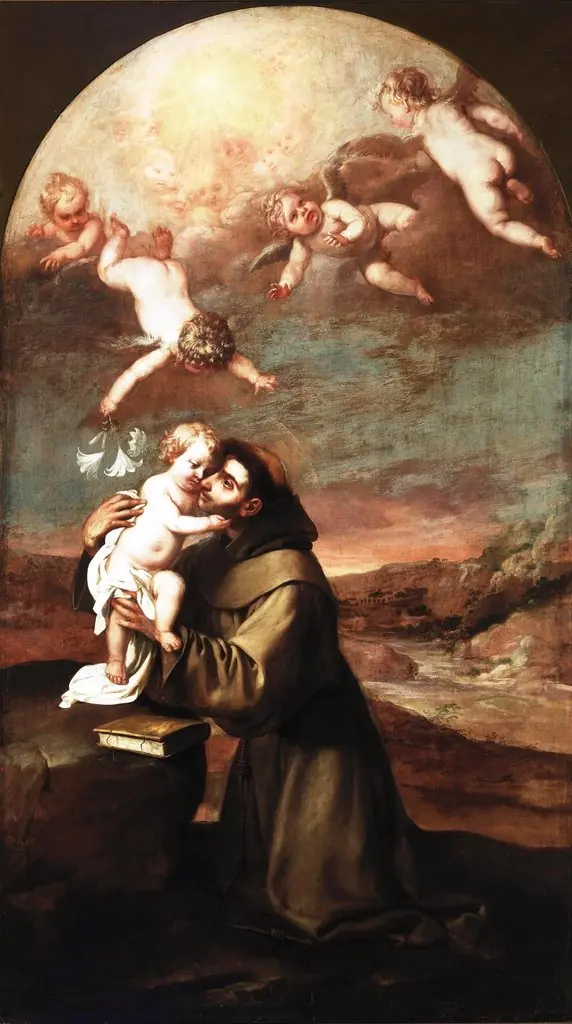 Saint Anthony of Padua
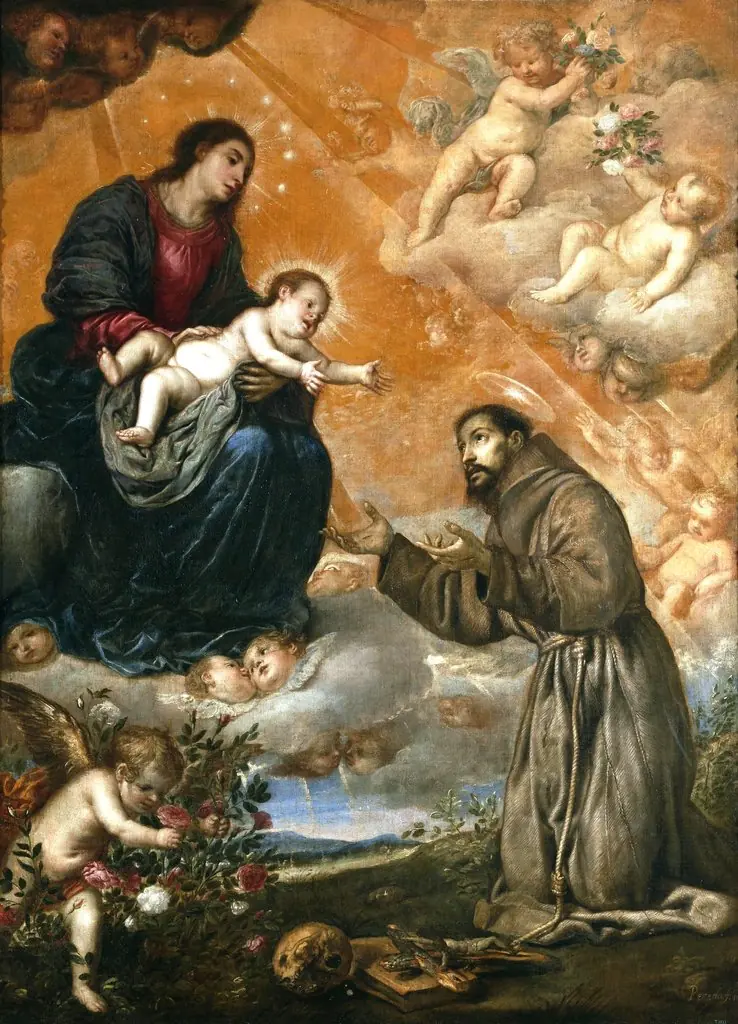 Saint Francis of Assisi in the Portiuncula
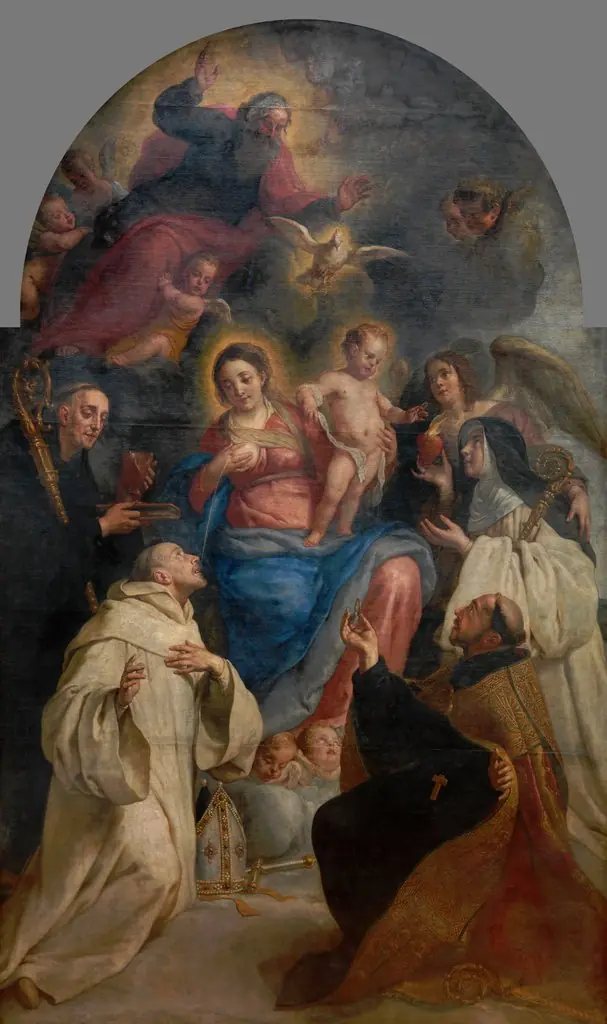 Lactatio of Saint Bernard of Clairvaux
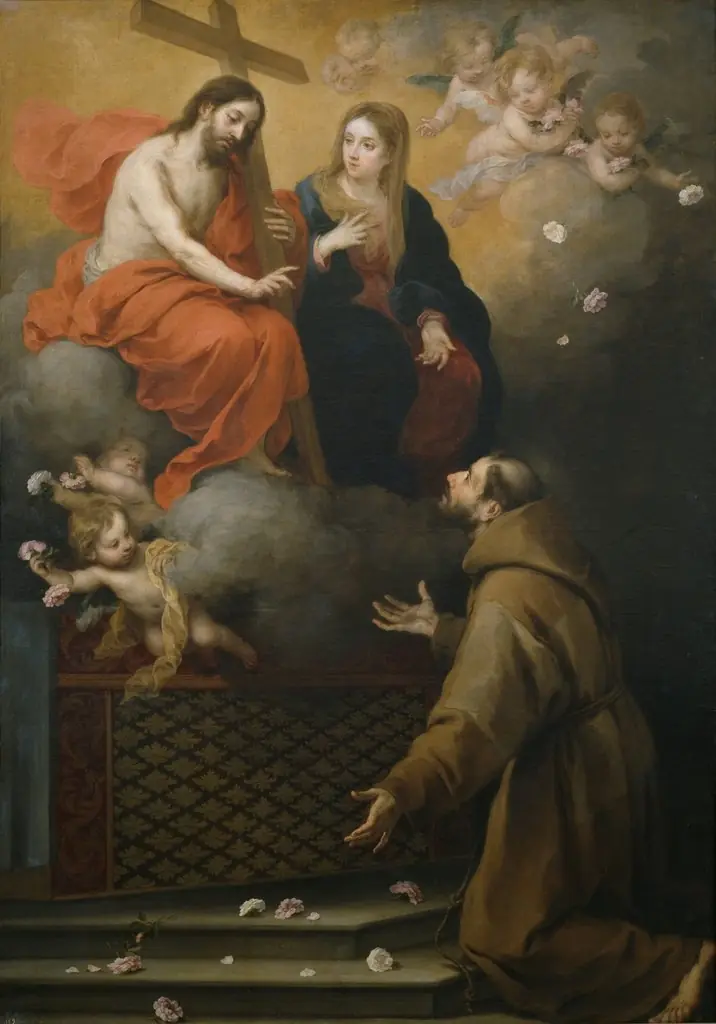 The Vision of Saint Francis in the Portiuncula
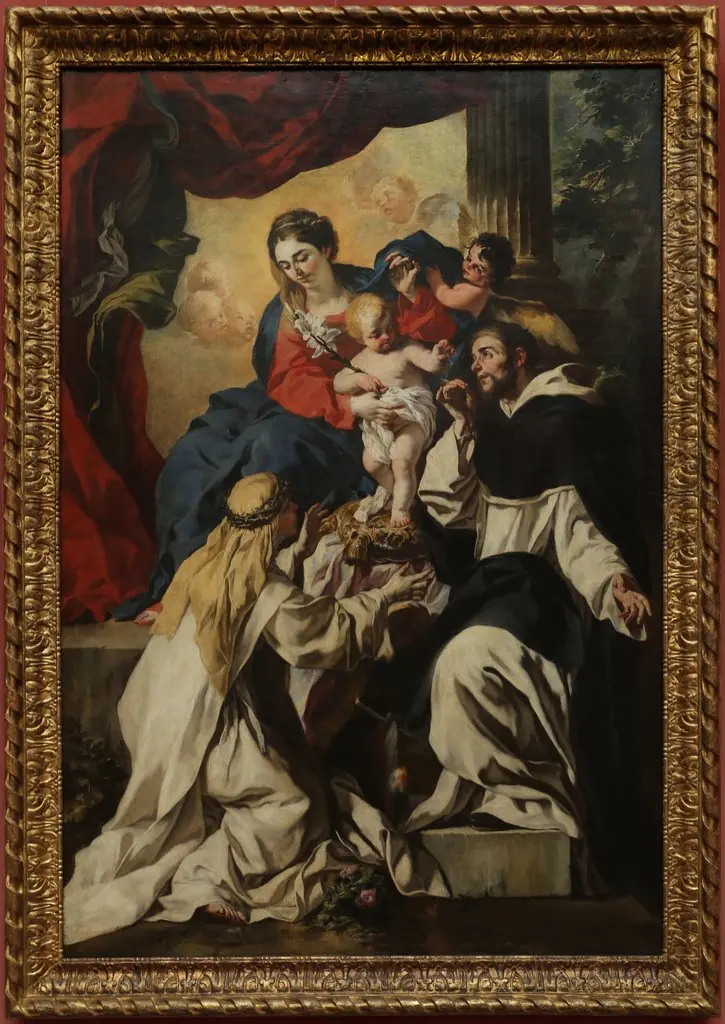 Die thronende Maria mit dem Kind, dem Heiligen Dominikus und der Heiligen Katharina von Siena (Rosenkranzmadonna)
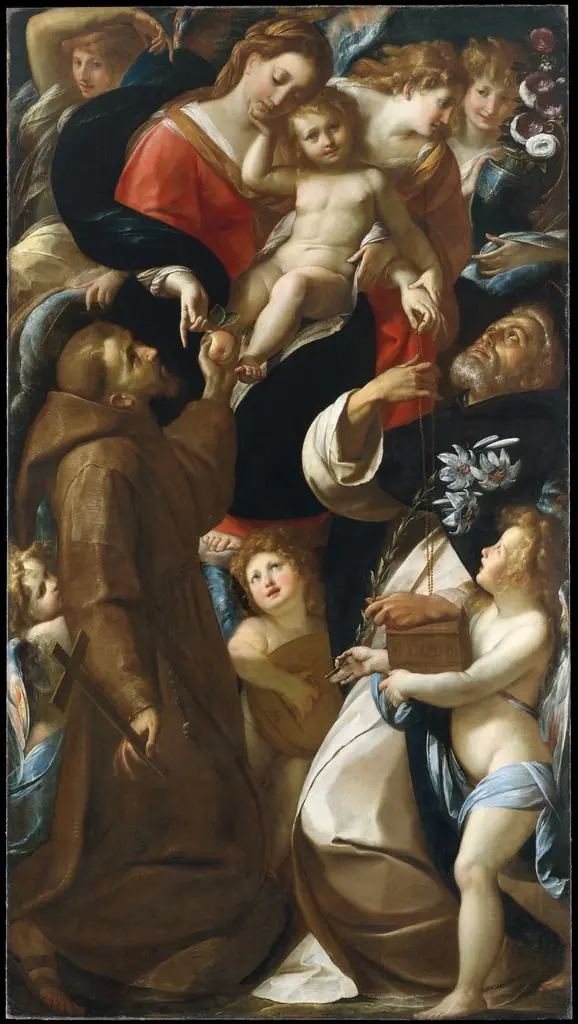 Madonna and Child with Saints Francis and Dominic and Angels
 Saint Francis of Assisi in la Porziuncola