Artwork
Allegory of Vanity
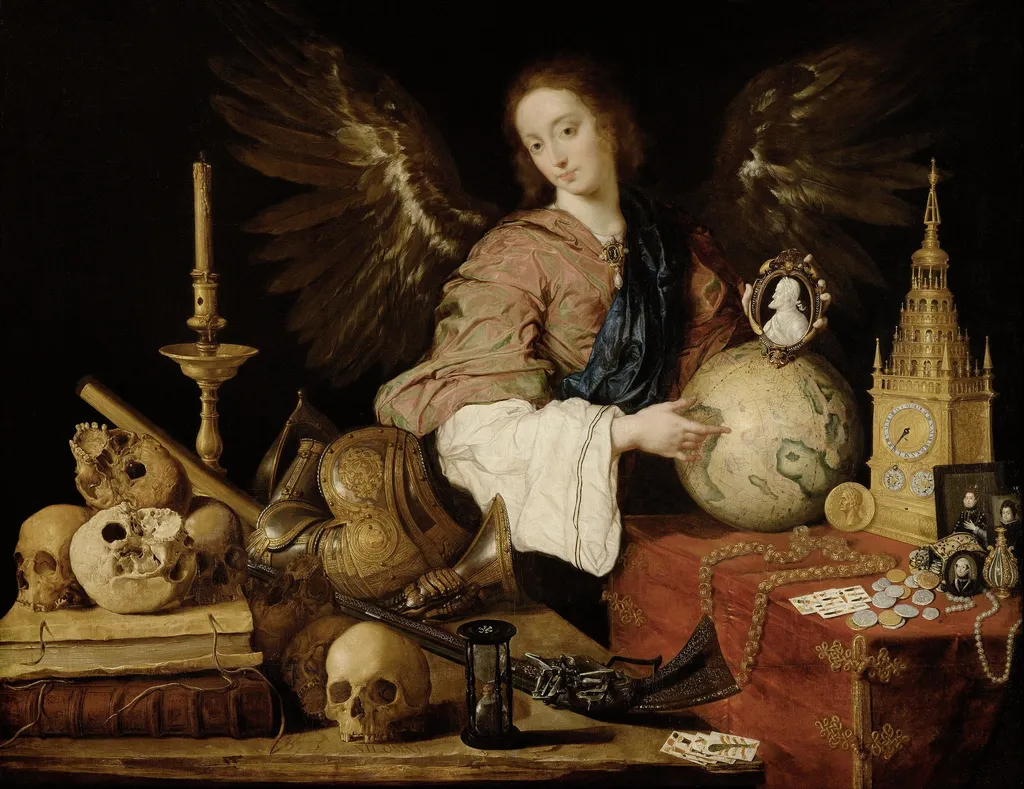
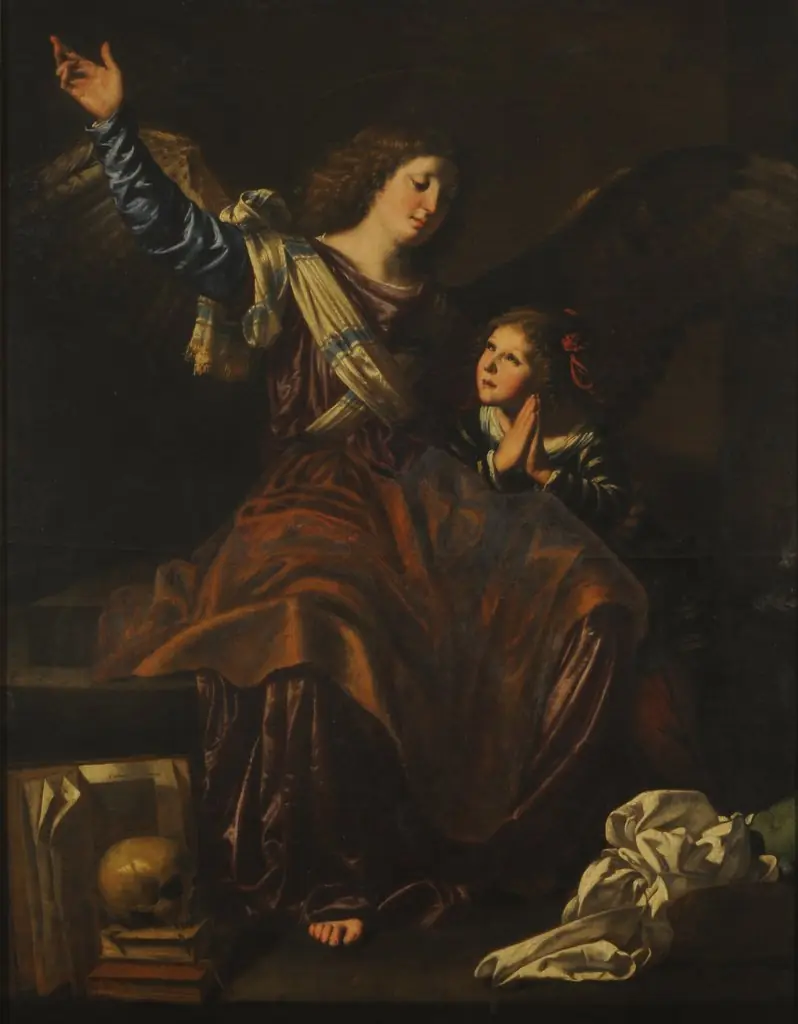
Allegory of Vanity is an oil painting by the Early Baroque Italian artist Antonio de Pereda. It dates from 1654 and is held in the collection of the Kunsthistorisches Museum.
About this work
Overview
Antonio de Pereda’s *Allegory of Vanity*, executed in oil in 1654, belongs to the Kunsthistorisches Museum’s holdings. The composition centers on a winged figure seated before a red‑draped table laden with a globe, a clock, a skull and a mirror. The angel, dressed in pink and green with a blue sash, gazes neutrally, while a dark background heightens the sense of contemplation.
Subject & Meaning
The work assembles traditional vanitas symbols—time, mortality, worldly knowledge and self‑reflection—to comment on the transitory nature of earthly pleasures. The angel’s calm demeanor invites viewers to consider the futility of material pursuits, suggesting that even celestial beings must acknowledge the fleeting scope of human ambition.
Technique & Style
Rendered in a Baroque idiom, the painting employs chiaroscuro to model forms through stark light‑dark contrasts, giving the objects a three‑dimensional presence. The careful rendering of textures—metallic clock, polished mirror, and the soft folds of the angel’s robes—demonstrates Pereda’s skill in oil manipulation and his affinity for the dramatic visual language of early Italian Baroque.
History & Provenance
Created during Pereda’s mature period, when he was chiefly known for still‑life compositions, the canvas entered the Austrian imperial collection in the 18th century before being transferred to the Kunsthistorisches Museum. Its presence in a major European museum reflects the work’s historical value as an example of Spanish Baroque engagement with moralizing allegory.
Own this work as a print
Artist & collection
Artist
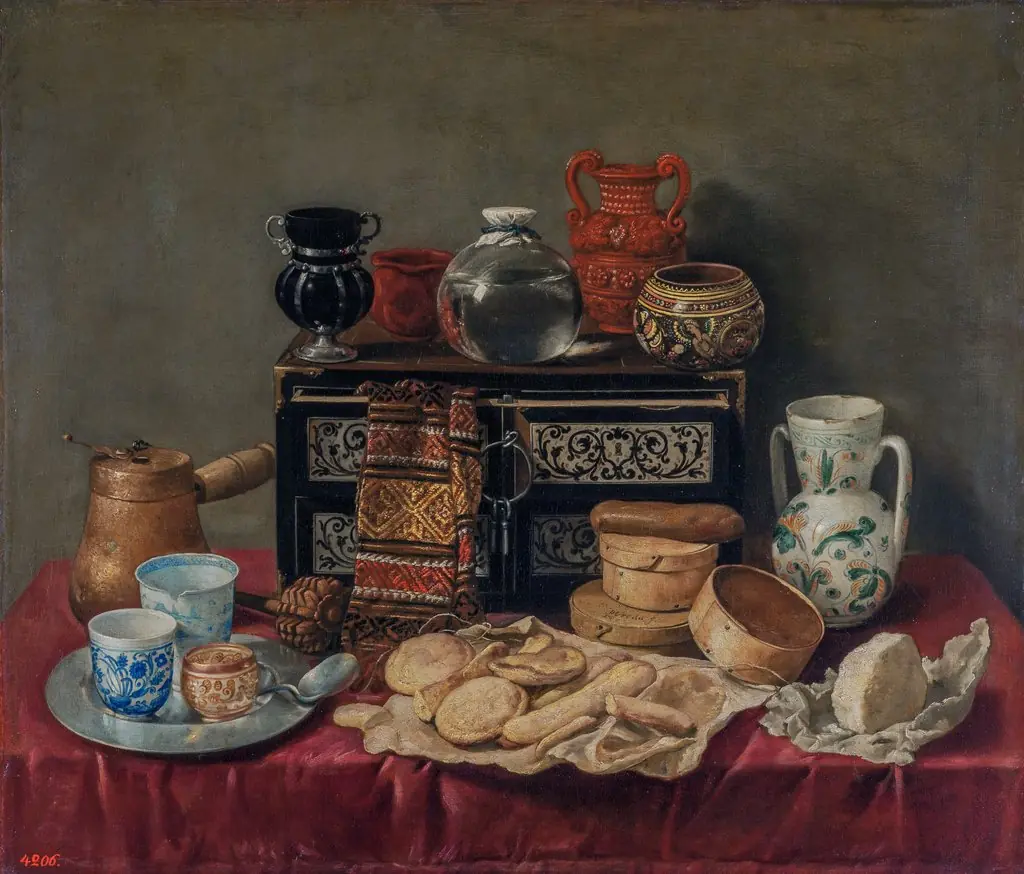
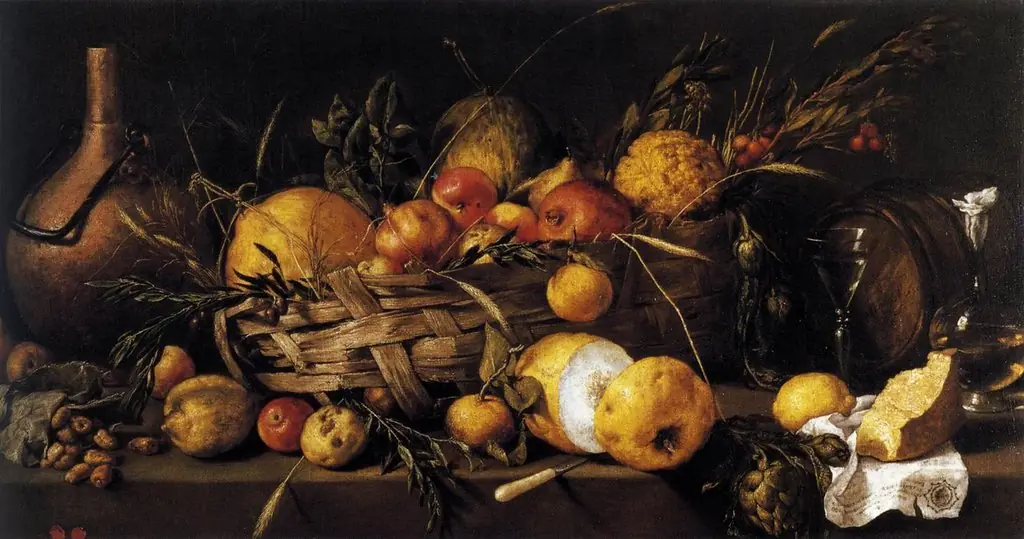
Antonio de Pereda y Salgado (c. 1611 – January 30, 1678) was a Spanish Baroque-era painter, best known for his still lifes.