Artwork
Reverberations of Taiga, Volume 2 (leaf 22)
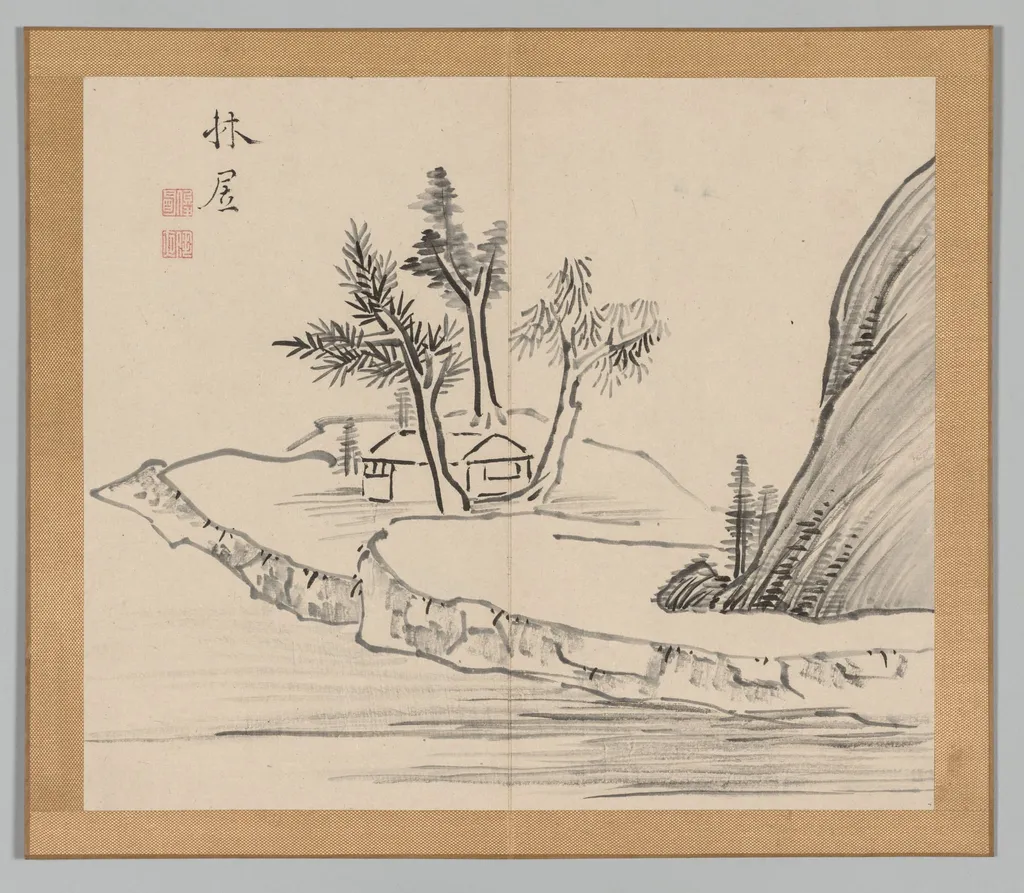
Reverberations of Taiga, Volume 2 (leaf 22) is a work on paper by the Baroque artist Aoki Shukuya. It dates from 1704 and is held in the collection of the Cleveland Museum of Art.
About this work
Overview
Reverberations of Taiga, Volume 2 (leaf 22) is a modest ink drawing that depicts a landscape of rocks, trees and distant mountains.
Reverberations of Taiga, Volume 2 (leaf 22) is a modest ink drawing that depicts a landscape of rocks, trees and distant mountains. Executed by the early‑19th‑century Japanese painter Aoki Shukuya, the work forms part of a larger portfolio of studies. Its composition is straightforward, emphasizing line and tonal contrast rather than elaborate detail, and it serves as a visual record of the artist’s formative training.
Subject & Meaning
The image presents a stylized natural scene, where rugged stone formations rise amid sparse foliage and a faint horizon of peaks. While the drawing does not convey a narrative, it reflects the traditional Japanese aesthetic of capturing the essence of nature through simplified forms, inviting the viewer to contemplate the quiet strength of the landscape.
Technique & Style
Shukuya employed brushwork characteristic of the Kyoto school, using varied ink densities to suggest depth and texture. The strokes are economical yet expressive, echoing the methods taught by his mentor, Ikeno Taiga. By reproducing his master’s compositional motifs, the artist demonstrates the apprenticeship practice of copying to internalize brush technique and spatial arrangement.
History & Provenance
Aoki Shukuya was a disciple of Ikeno Taiga, a prominent figure in Kyoto’s painting circles during the Edo period. This leaf is one of several study sheets compiled in a portfolio that documented the pupil’s progress. The work has remained within private collections before being acquired by the museum for its illustration of the master‑apprentice tradition.
Context
In Edo‑era Japan, aspiring painters typically entered a studio under an established master, learning by replicating model compositions. Such exercises were essential for mastering ink handling, line control, and the philosophical approach to nature that defined the school. Shukuya’s drawing exemplifies this educational system, showing how the visual language of a celebrated teacher was transmitted to the next generation.
Artist & collection

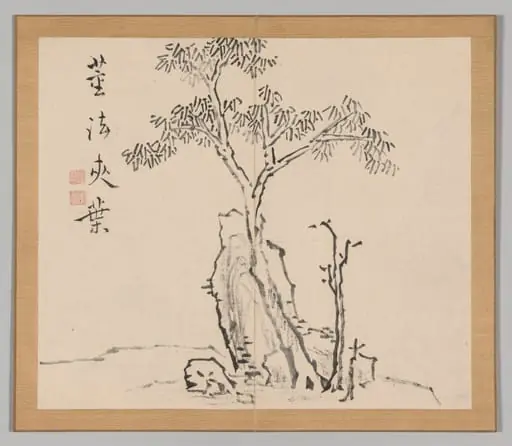 Reverberations of Taiga, Volume 1 (leaf 4)
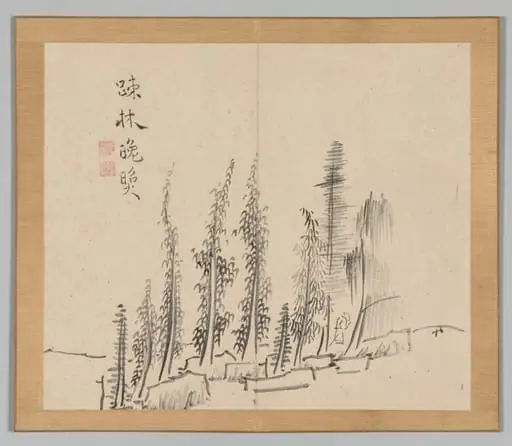 Reverberations of Taiga, Volume 2 (leaf 30)
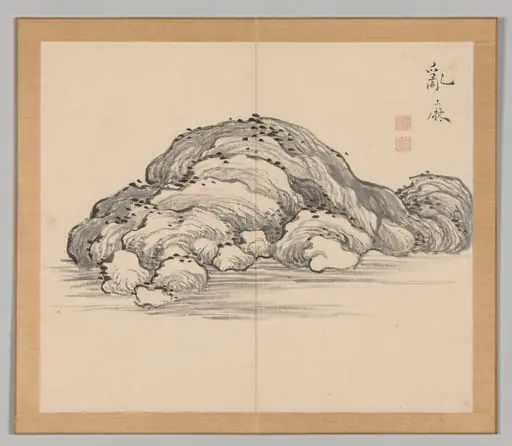 Reverberations of Taiga, Volume 1 (leaf 12)
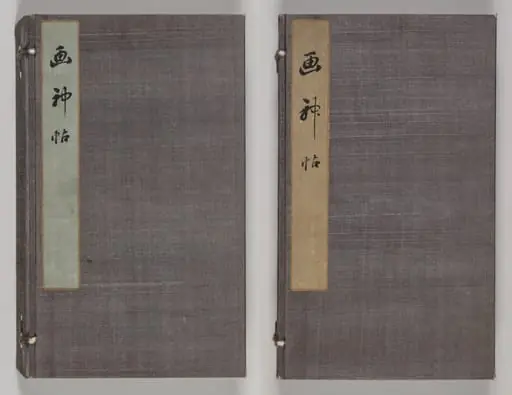 Reverberations of Taiga
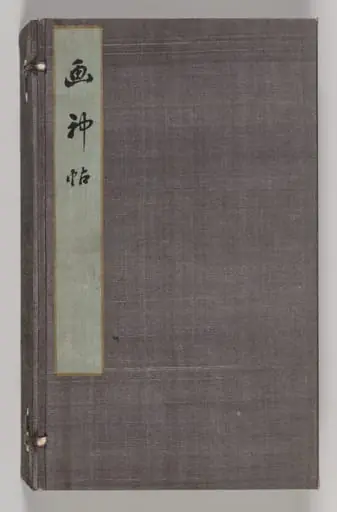 Reverberations of Taiga (Volume 1)
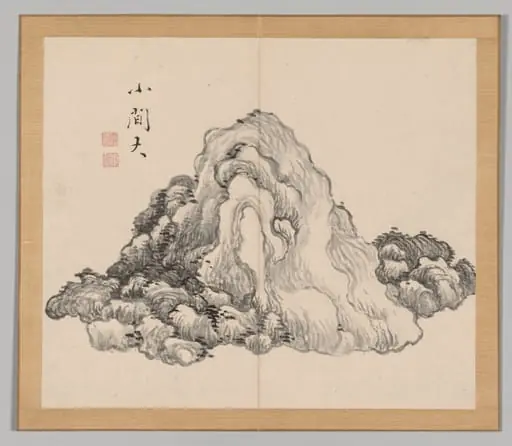 Reverberations of Taiga, Volume 1 (leaf 7)
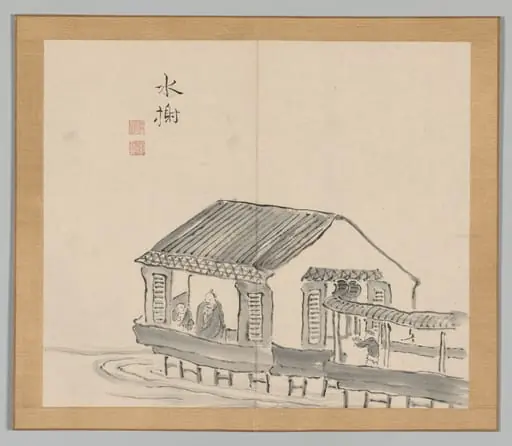 Reverberations of Taiga, Volume 2 (leaf 29)
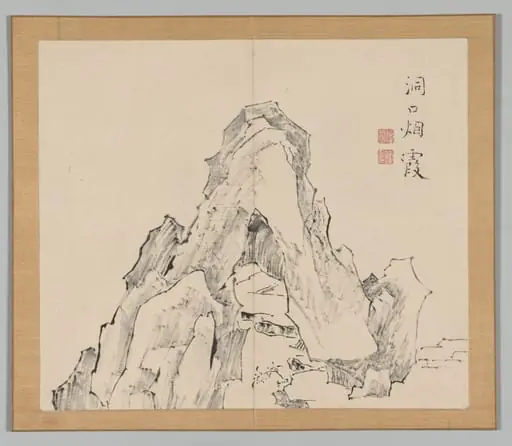 Reverberations of Taiga, Volume 2 (leaf 20)
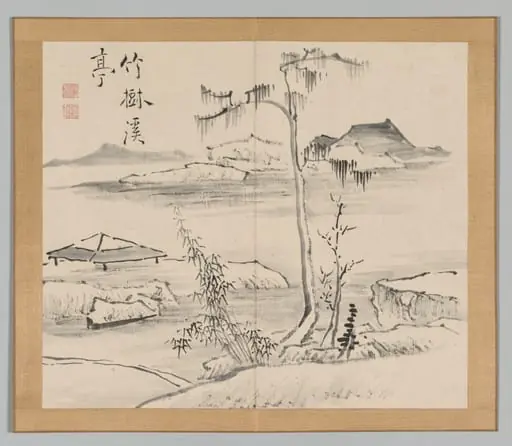 Reverberations of Taiga, Volume 2 (leaf 24)
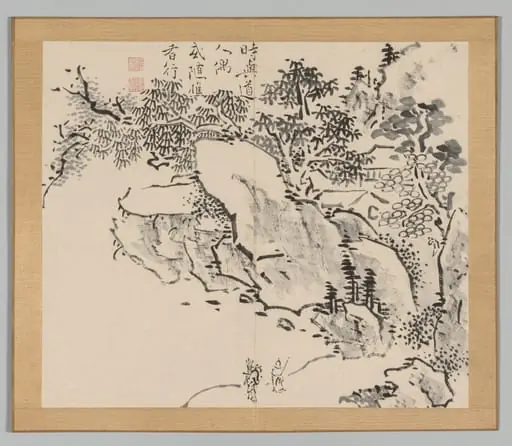 Reverberations of Taiga, Volume 2 (leaf 34)
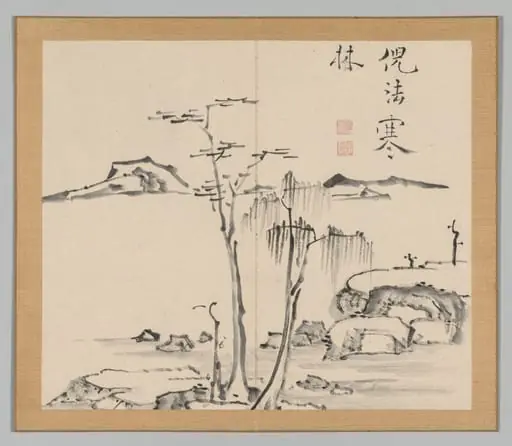 Reverberations of Taiga, Volume 2 (leaf 15)
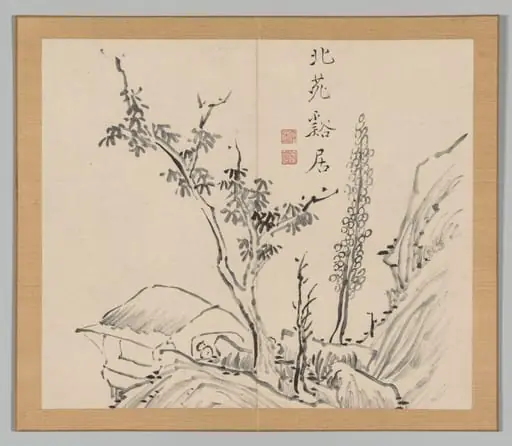 Reverberations of Taiga, Volume 2 (leaf 13)
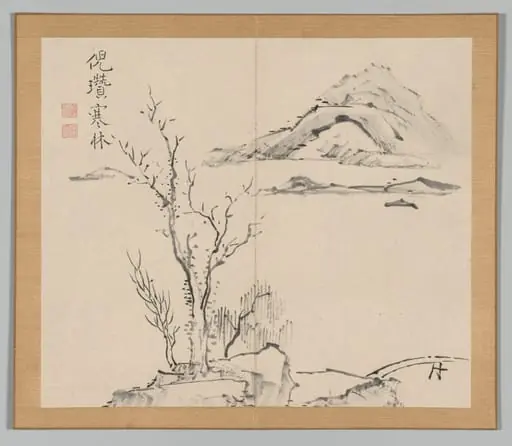 Reverberations of Taiga, Volume 2 (leaf 11)
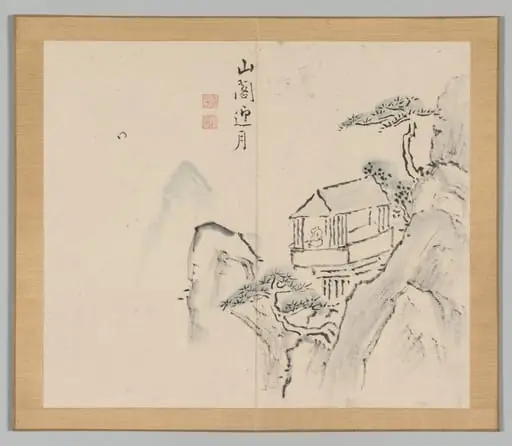 Reverberations of Taiga, Volume 2 (leaf 31)
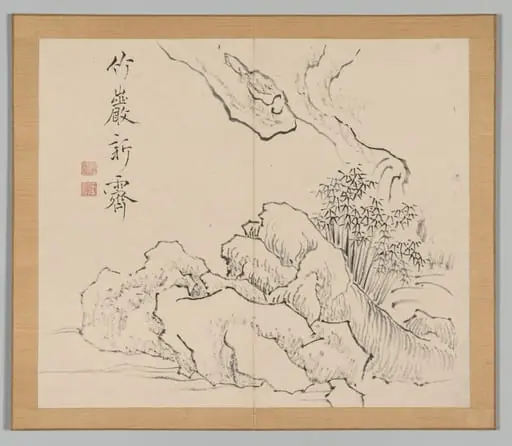 Reverberations of Taiga, Volume 2 (leaf 19)