Artwork
Reverberations of Taiga, Volume 2 (leaf 24)
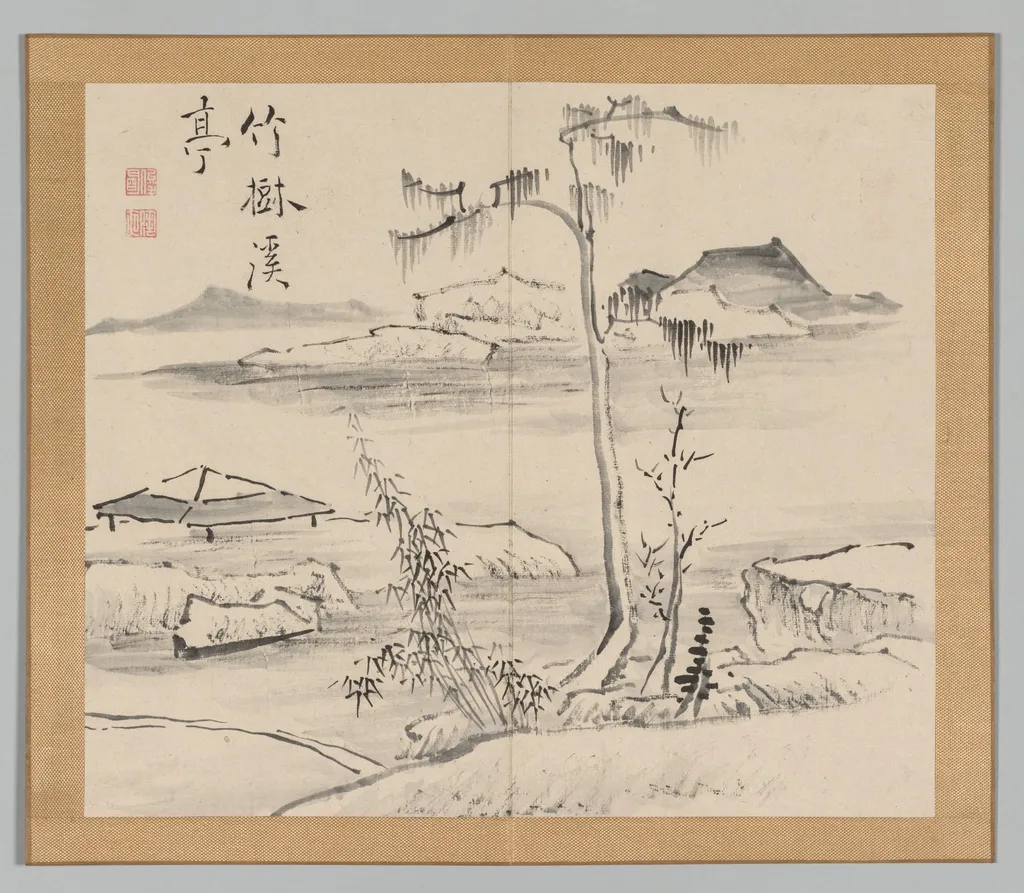
Reverberations of Taiga, Volume 2 (leaf 24) is a work on paper by the Baroque artist Aoki Shukuya. It dates from 1704 and is held in the collection of the Cleveland Museum of Art.
About this work
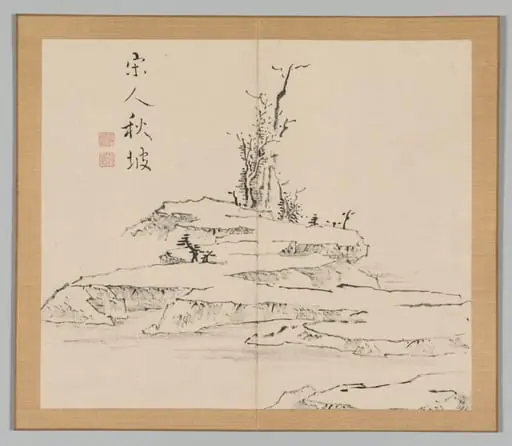
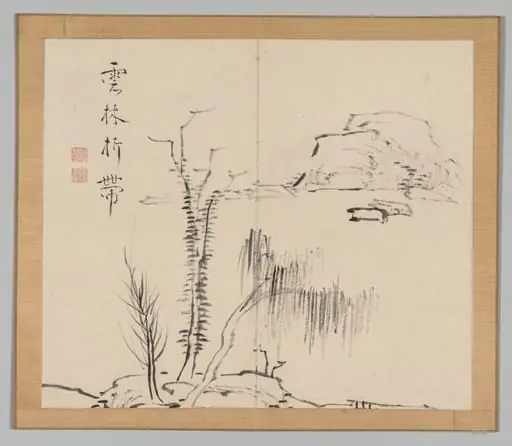
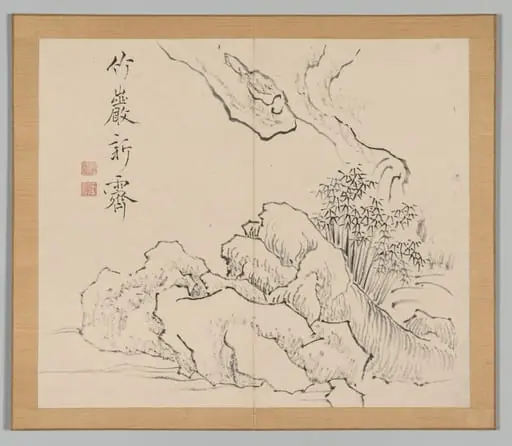
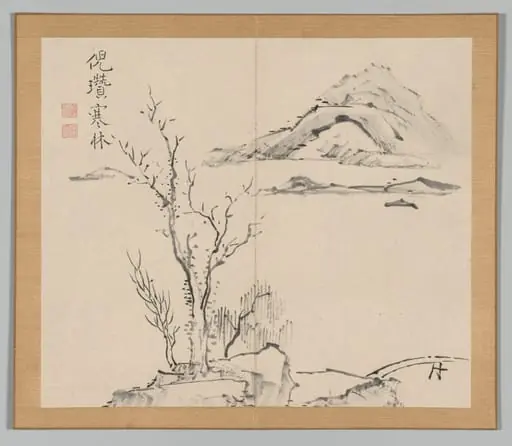
This painting shows simple rocks, trees, and mountains.
It was created by a student of a famous artist. The student, Aoki Shukuya, learned by copying his teacher's work, which is how many young painters started their careers in Japan.
You can learn more about the style of his teacher by looking at the work of artist: Aoki Shukuya (Japanese, d. 1802)
Overview
It belongs to a series of studies that reflect the pedagogical tradition in which apprentices reproduced the work of their masters to internalize technique.
This leaf is part of a portfolio titled Reverberations of Taiga, Volume 2, created by Aoki Shukuya, a Japanese painter active until 1802. It belongs to a series of studies that reflect the pedagogical tradition in which apprentices reproduced the work of their masters to internalize technique. The composition presents minimalistic depictions of rocks, trees, and mountains, executed in ink on paper.
Subject & Meaning
The subject consists of elemental landscape forms—rock formations, gnarled trees, and distant peaks—rendered without narrative or symbolic embellishment. These were not intended as finished works but as exercises in observation and brush control, designed to cultivate the apprentice’s sensitivity to natural structure and ink modulation, core values in ink painting traditions.
Technique & Style
Shukuya employed monochrome ink washes with controlled brushstrokes, emulating the restrained aesthetic of his teacher, Ikeno Taiga. The forms are suggested rather than detailed, relying on tonal variation and line weight to convey volume and texture. This approach reflects the Kyoto school’s emphasis on understated expression and technical discipline over ornamental flourish.
History & Provenance
The portfolio was compiled as part of Shukuya’s training under Ikeno Taiga, a leading Kyoto-based painter of the 18th century. Such student portfolios were often preserved as records of artistic development and sometimes circulated among peers or collectors. This leaf, as the 24th in its series, suggests a systematic, cumulative learning process rather than isolated creation.
Context
In Edo-period Japan, artistic training was deeply hierarchical. Apprentices spent years copying their master’s compositions before developing individual styles. Shukuya’s work exemplifies this system, where mastery was measured not by originality but by fidelity to the teacher’s methods and the ability to internalize their visual language.
Legacy
Shukuya’s studies, though derivative in origin, contribute to the broader understanding of how ink painting traditions were transmitted across generations. His portfolio preserves the pedagogical framework of Kyoto’s artistic circles and offers insight into the quiet, disciplined process behind the emergence of later, more distinctive styles in Japanese ink art.
Artist & collection

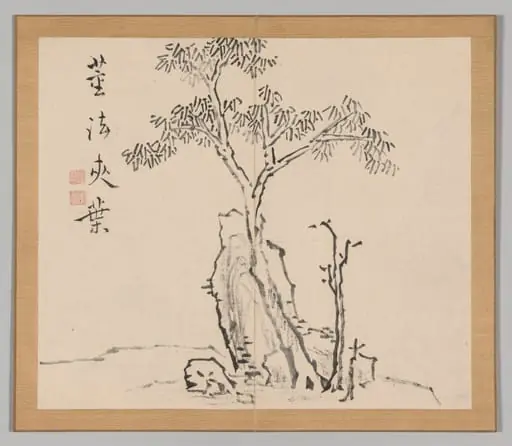 Reverberations of Taiga, Volume 1 (leaf 4)
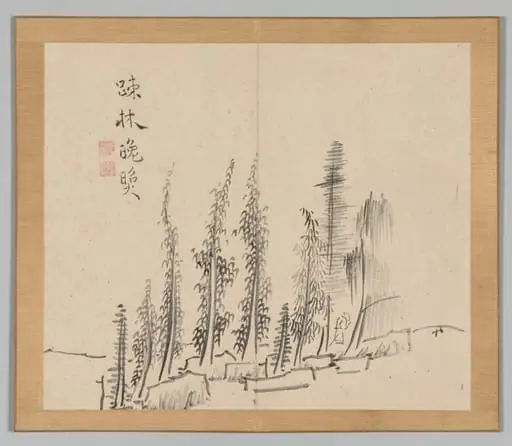 Reverberations of Taiga, Volume 2 (leaf 30)
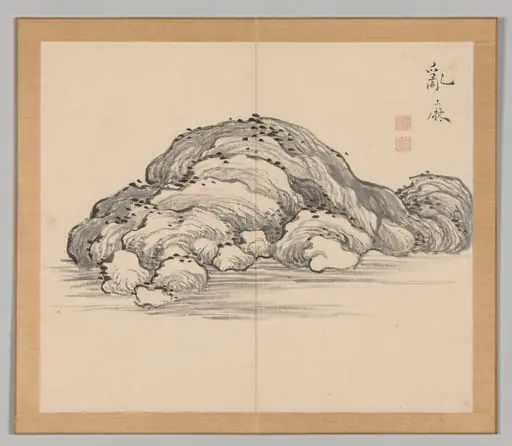 Reverberations of Taiga, Volume 1 (leaf 12)
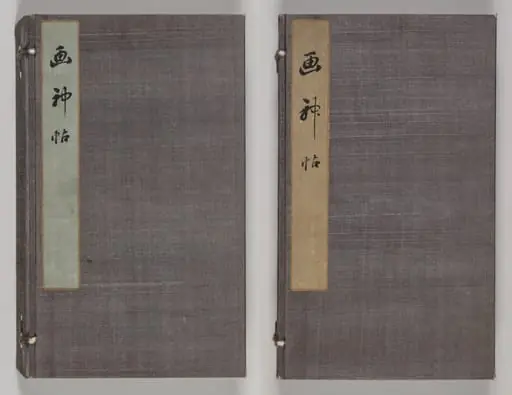 Reverberations of Taiga
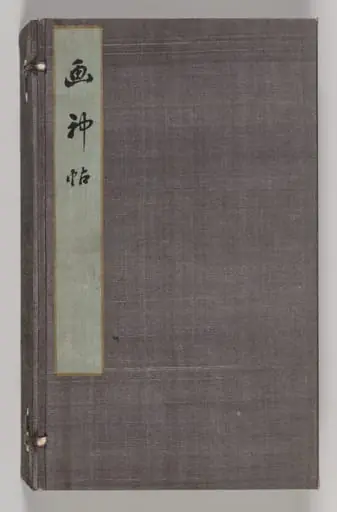 Reverberations of Taiga (Volume 1)
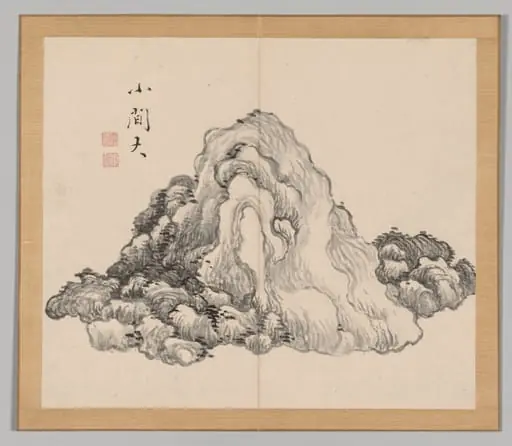 Reverberations of Taiga, Volume 1 (leaf 7)
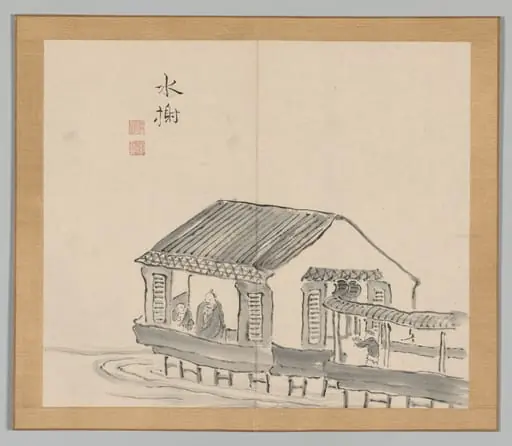 Reverberations of Taiga, Volume 2 (leaf 29)
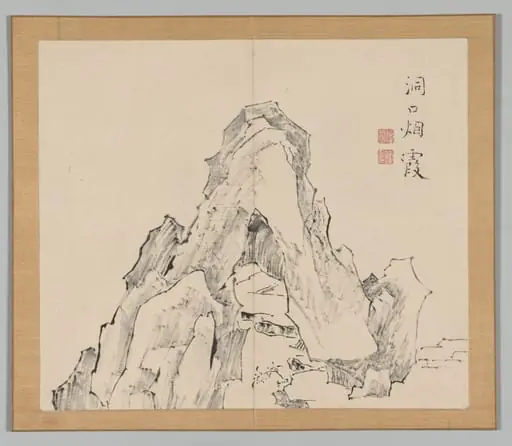 Reverberations of Taiga, Volume 2 (leaf 20)
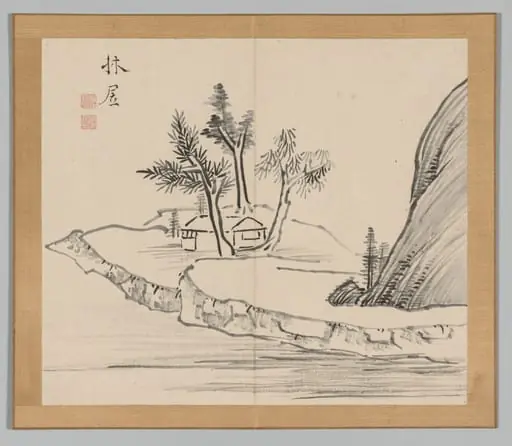 Reverberations of Taiga, Volume 2 (leaf 22)
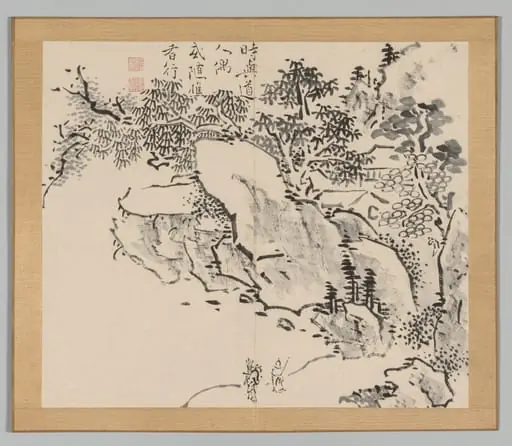 Reverberations of Taiga, Volume 2 (leaf 34)
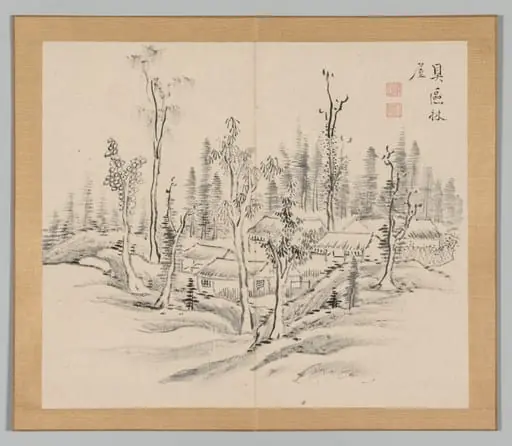 Reverberations of Taiga, Volume 2 (leaf 23)
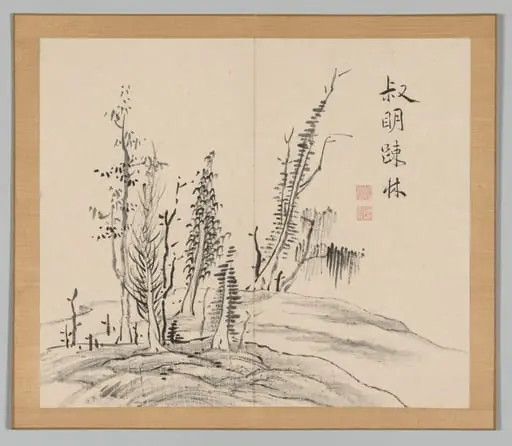 Reverberations of Taiga, Volume 2 (leaf 17)
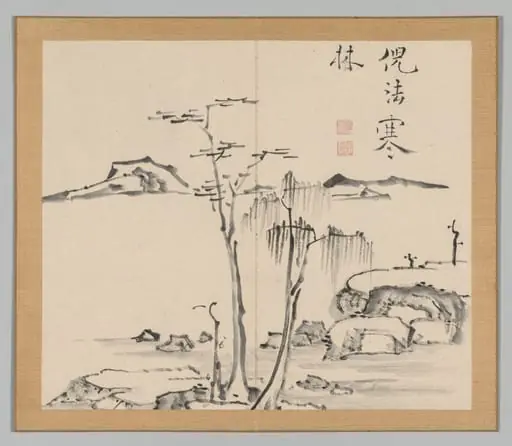 Reverberations of Taiga, Volume 2 (leaf 15)
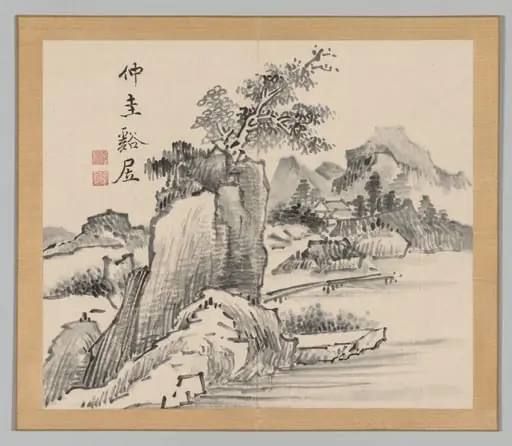 Reverberations of Taiga, Volume 2 (leaf 14)
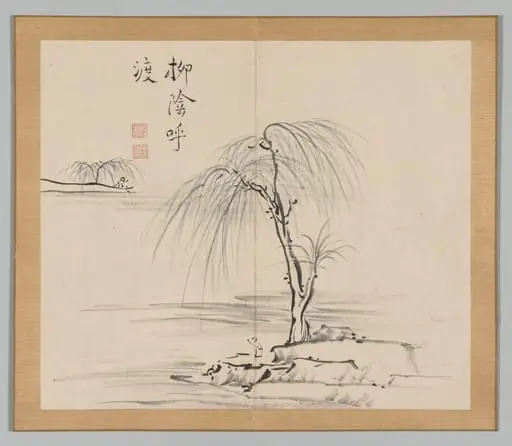 Reverberations of Taiga, Volume 2 (leaf 18)
 Reverberations of Taiga, Volume 2 (leaf 12)
 Reverberations of Taiga, Volume 2 (leaf 16)
 Reverberations of Taiga, Volume 2 (leaf 19)
 Reverberations of Taiga, Volume 2 (leaf 11)