Artwork
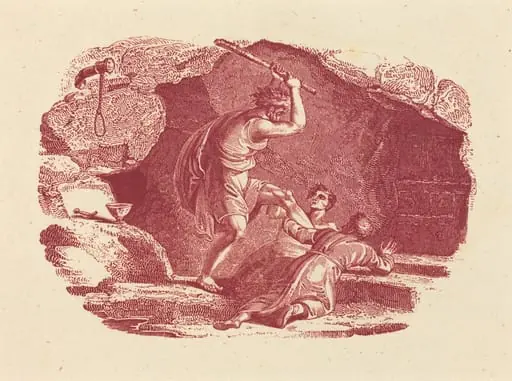
Moses Striking a Shepherd
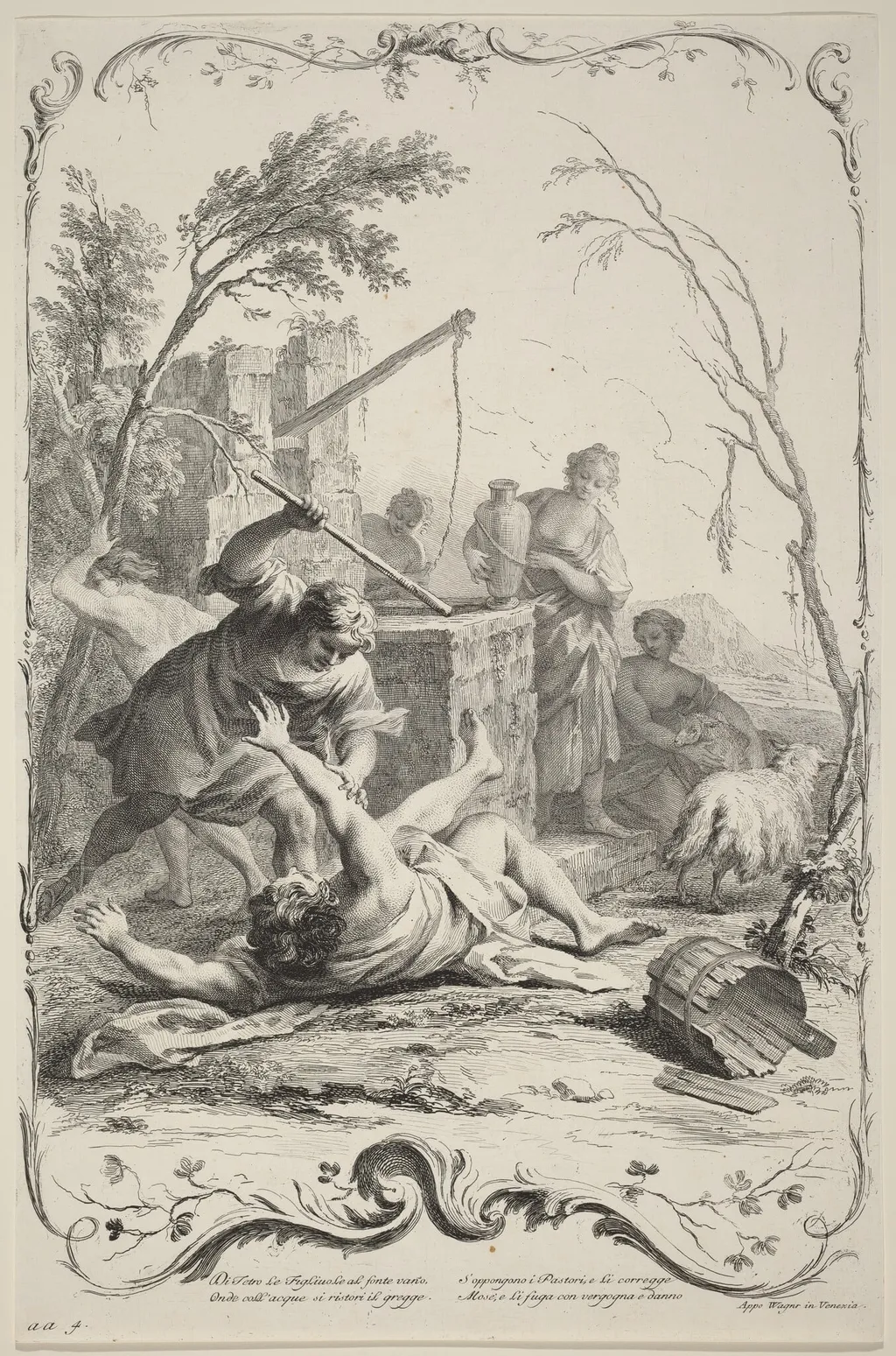
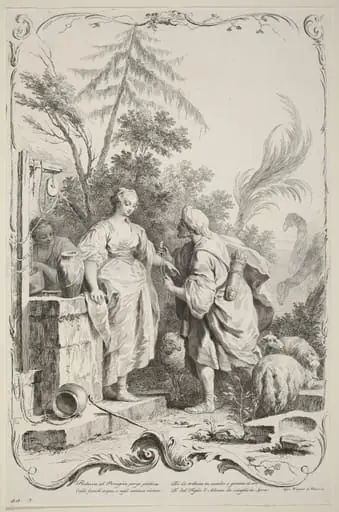
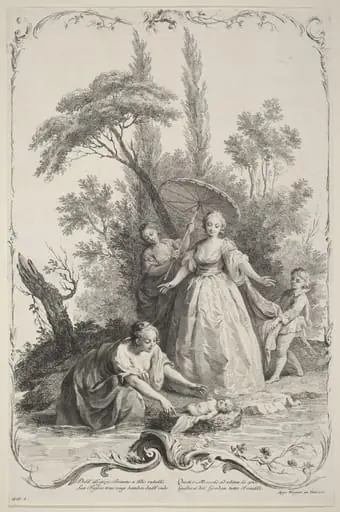
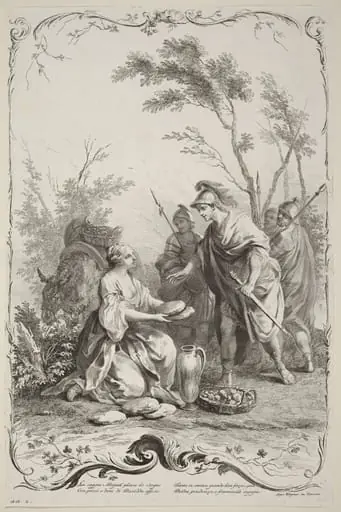
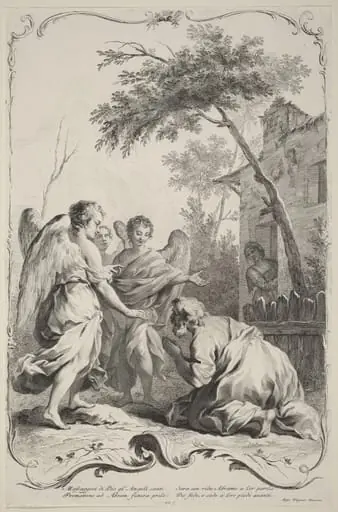
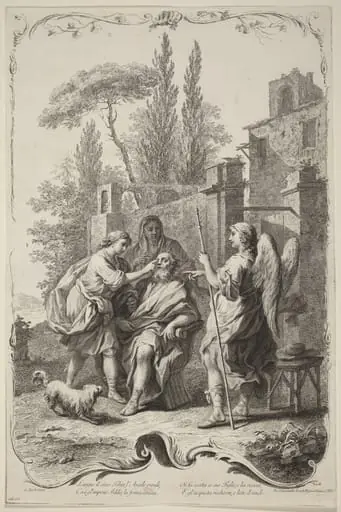
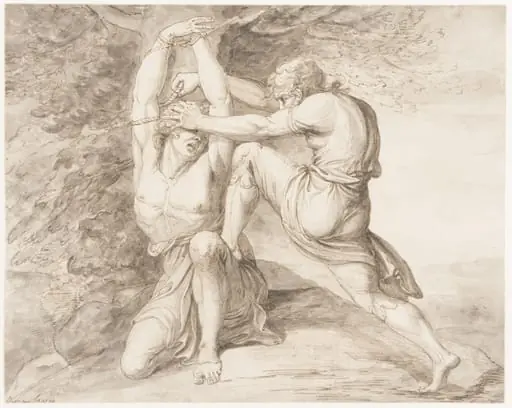
Moses Striking a Shepherd is an ink print by the Baroque artist Joseph Wagner. It dates from 1745 and is held in the collection of the National Gallery of Art.
About this work
Overview
Though often misidentified as a painting, it is a printed image, relying on incised lines and tonal contrasts to convey narrative and emotion.
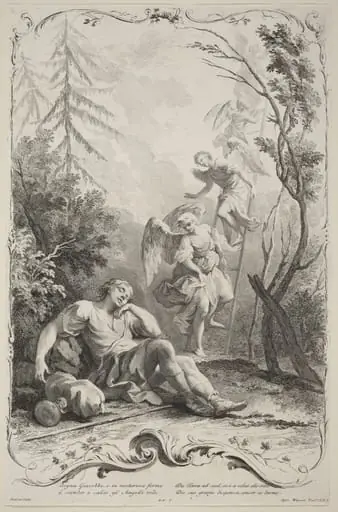
Moses Striking a Shepherd is an etching and engraving on laid paper, produced around 1745 by the German-born printmaker Joseph Wagner. The work belongs to a series of biblical scenes rendered in fine linear detail, typical of mid-18th-century reproductive prints. Though often misidentified as a painting, it is a printed image, relying on incised lines and tonal contrasts to convey narrative and emotion.
Subject & Meaning
The scene illustrates a moment from Exodus in which Moses intervenes in a conflict, striking a man who is oppressing another. The fallen shepherd represents the victim, while Moses, staff in hand, embodies divine authority. A woman near a well and a distant figure suggest a broader context of communal life, reinforcing the moral weight of the act as an assertion of justice under divine law.
Technique & Style
Wagner employed fine etched lines and engraved shading to model form and depth, mimicking the chiaroscuro of Baroque painting. The rocky terrain and sparse vegetation are rendered with precise cross-hatching, while the figures are defined by strong contours and dramatic contrasts. The composition directs focus to the central confrontation through directional lines and layered spatial recession.
History & Provenance
Created during Wagner’s time in London, the print was likely made for the growing market of religious imagery among middle-class collectors. It was part of a set of biblical engravings published by British print dealers, circulating widely in England and the Continent. No known original painting by Wagner survives; this print is the primary record of the composition.
Context
Wagner’s work reflects the 18th-century European interest in translating Old Testament narratives into accessible visual forms. His style draws from Dutch and Italian engraving traditions, filtered through the academic conventions of the time. Though not avant-garde, the print exemplifies how biblical stories were visually codified for devotional and educational use outside ecclesiastical settings.
Legacy
The print remains a documented example of reproductive printmaking in the mid-1700s, illustrating how religious themes were disseminated through print culture. Wagner’s version of this episode is not widely cited in major art-historical narratives, but it contributes to understanding the reach of biblical iconography beyond oil painting and into domestic collections.
Artist & collection