Artwork
Alpins en ambuscade
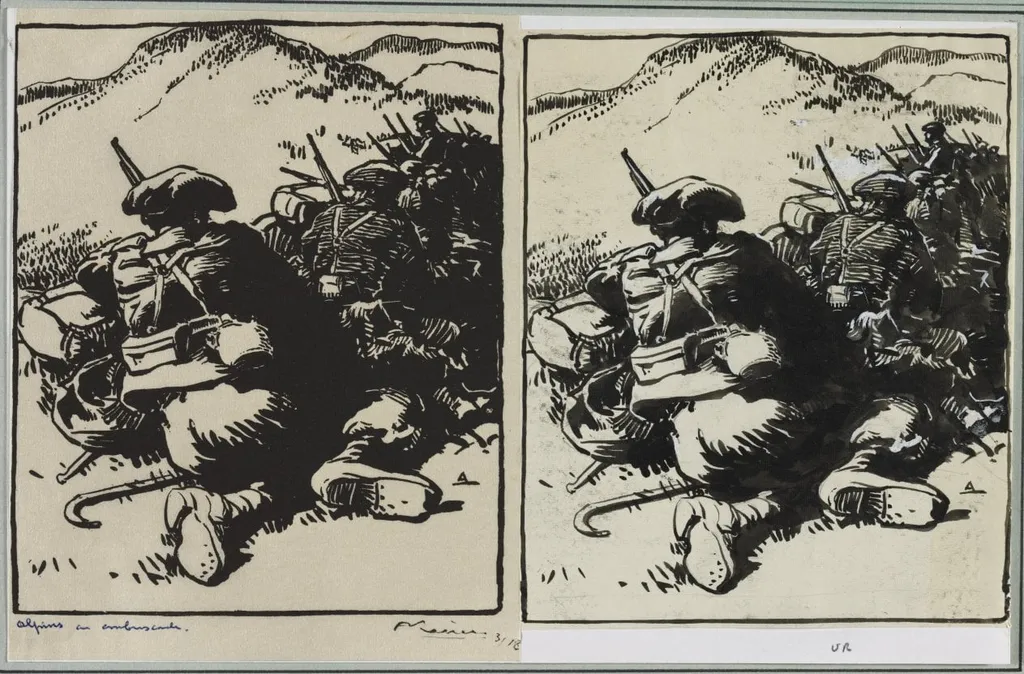
Alpins en ambuscade is a drawing by Auguste Lepère. It dates from 1914 and is held in the collection of the Cleveland Museum of Art.
About this work
Overview
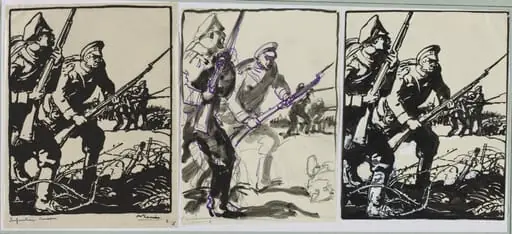
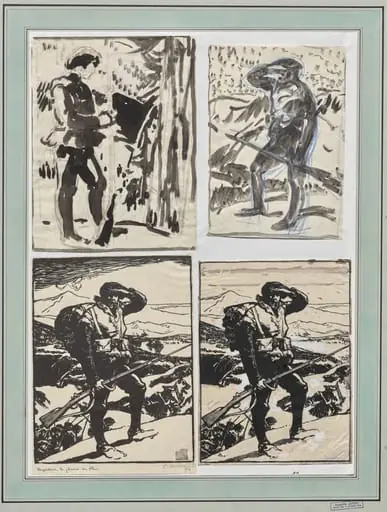
Created in 1914 by French artist Auguste Louis Lepère, *Alpins en ambuscade* is a wood engraving depicting two soldiers in a state of concealed readiness.
Created in 1914 by French artist Auguste Louis Lepère, *Alpins en ambuscade* is a wood engraving depicting two soldiers in a state of concealed readiness. Lepère, recognized for revitalizing wood engraving as an artistic medium in Europe, rendered this scene with precise, economical lines. The work is part of the permanent collection at The Cleveland Museum of Art, where it stands as a quiet testament to early 20th-century military observation in graphic form.
Subject & Meaning
The drawing portrays two Alpine troops crouched low in a natural landscape, their dark uniforms blending with shadows and terrain. Their rifles are held with tension, suggesting imminent action. The title, meaning 'Alpine troops in ambush,' frames the scene as a moment of strategic stillness rather than combat. Lepère captures the psychological weight of waiting, emphasizing vigilance over violence.
Technique & Style
Executed in wood engraving, the piece employs fine, incised lines to suggest texture and movement. The soldiers are rendered with sharp detail, while the rolling hills and scattered trees behind them are suggested through loose, rapid strokes. This contrast between precision and spontaneity enhances the sense of concealment and environmental immersion. Lepère’s technique reflects his mastery of the medium’s capacity for both clarity and atmospheric suggestion.
History & Provenance
Lepère completed this work in 1914, just as Europe edged toward war. Though not commissioned for propaganda, the image aligns with contemporary military preparations. It entered the collection of The Cleveland Museum of Art through documented acquisition, likely during the early 20th-century surge of interest in European graphic arts. Its preservation reflects institutional recognition of Lepère’s contribution to printmaking.
Context
In 1914, wood engraving was experiencing a revival across Europe, valued for its capacity to convey realism and emotional nuance. Lepère, a key figure in this movement, often focused on rural and military subjects. *Alpins en ambuscade* reflects both the technical resurgence of the medium and the growing cultural preoccupation with the looming conflict, capturing the quiet dread of soldiers poised on the brink of war.
Legacy
Though not widely exhibited, the work remains a representative example of Lepère’s commitment to elevating printmaking as a serious artistic form. Its restrained composition and technical discipline influenced later generations of printmakers interested in narrative economy. The Cleveland Museum of Art’s stewardship ensures its continued accessibility as a document of early modern graphic art and wartime anticipation.
Artist & collection
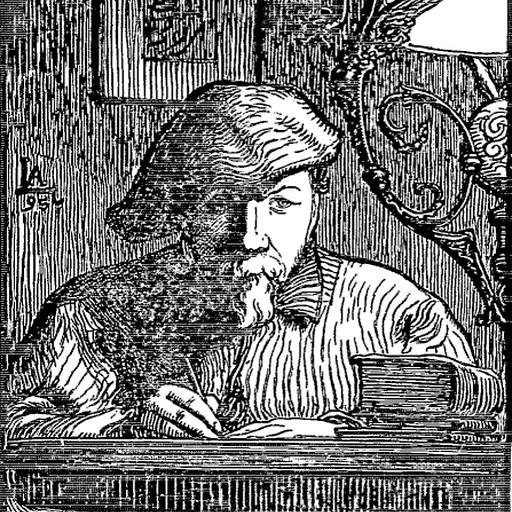
Artist
Louis-Auguste Lepère (30 November 1849 – 20 November 1918) was a French painter and etcher. Lepère is also considered a leader in the creative revival of wood engraving in Europe.