Artwork
Patrouilleurs
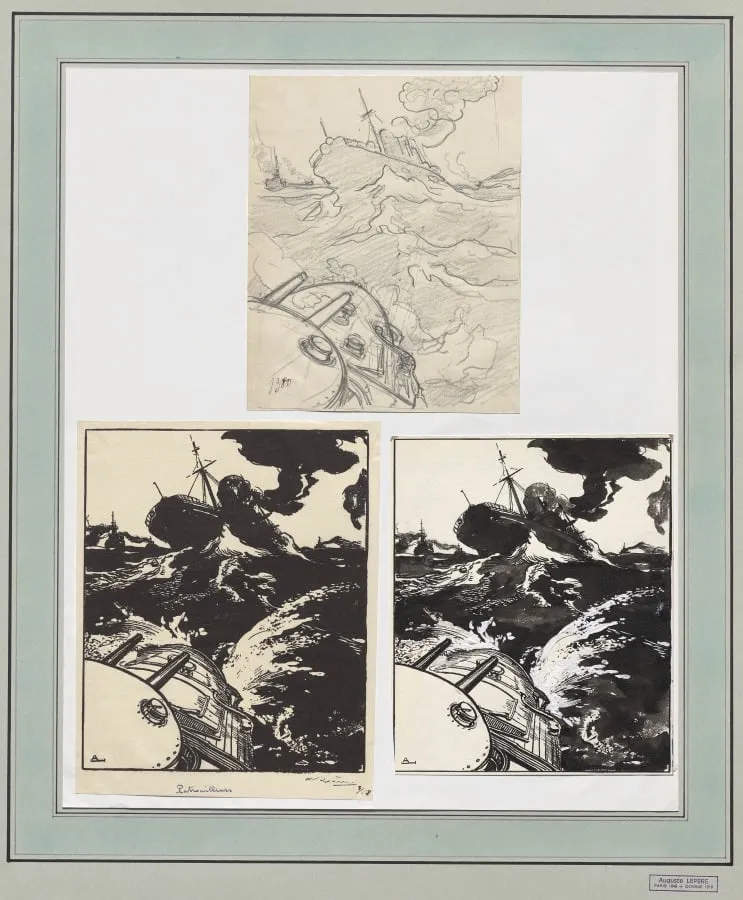
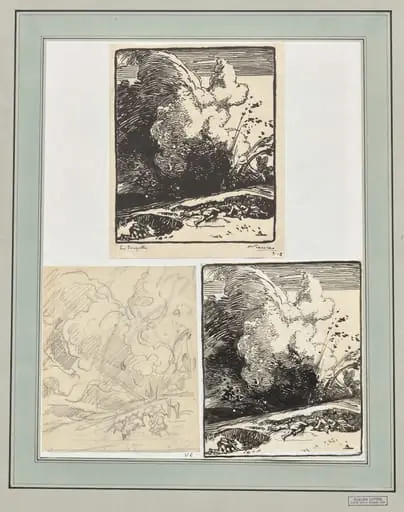
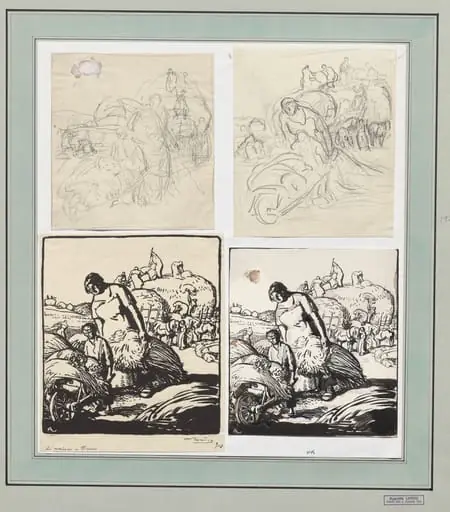
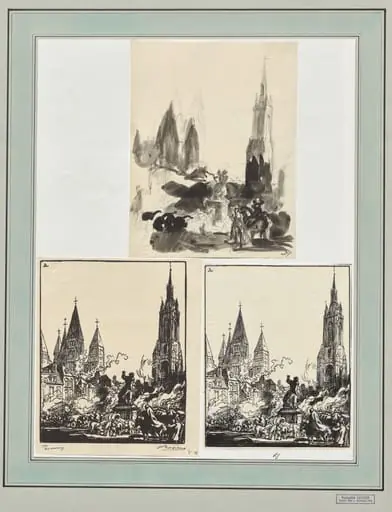
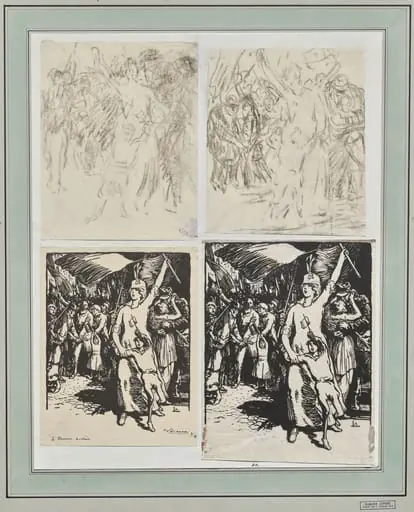
Patrouilleurs is a drawing by Auguste Lepère. It dates from 1914 and is held in the collection of the Cleveland Museum of Art.
About this work
Overview
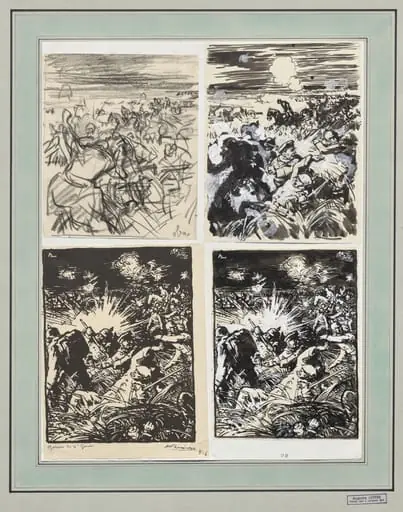
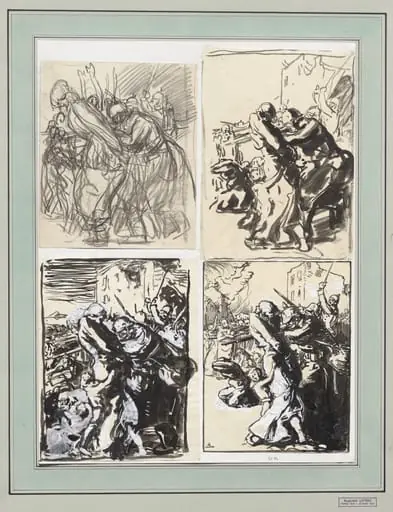
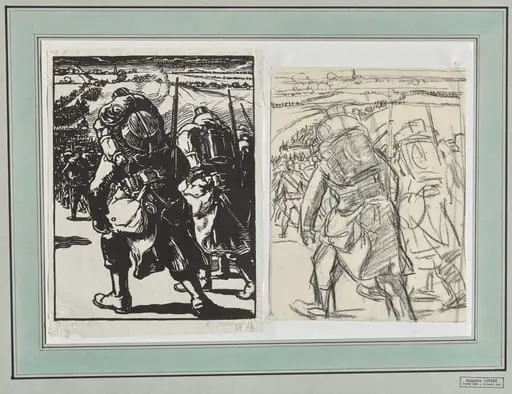
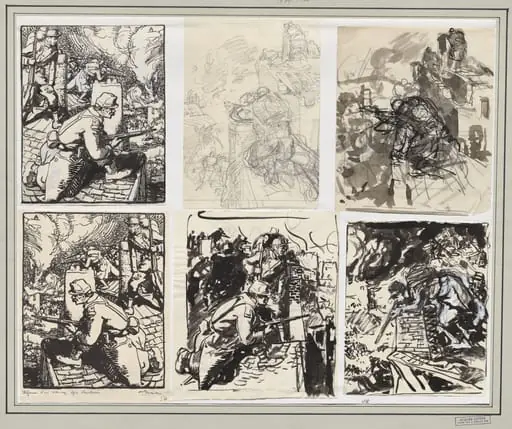
Created in 1914 by French artist Auguste Louis Lepère, *Patrouilleurs* is a charcoal and ink drawing that captures the turbulence of maritime life.
Created in 1914 by French artist Auguste Louis Lepère, *Patrouilleurs* is a charcoal and ink drawing that captures the turbulence of maritime life. Lepère, recognized for his role in revitalizing wood engraving, employed dynamic contrasts to convey the violence of the sea. The work resides in the collection of The Cleveland Museum of Art, reflecting his interest in natural forces and human vulnerability at sea.
Subject & Meaning
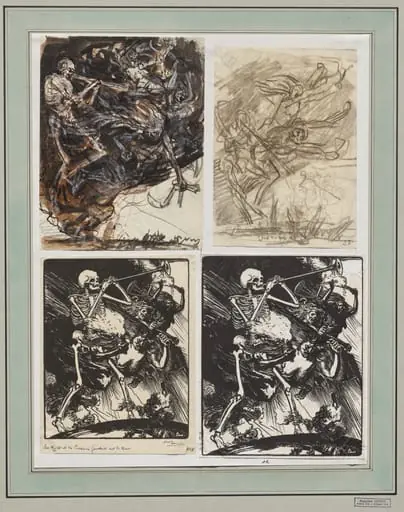
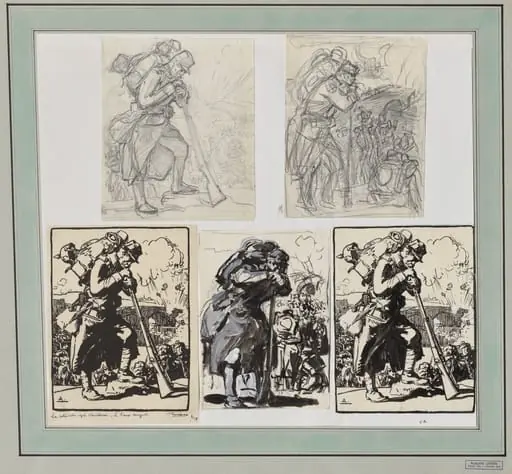
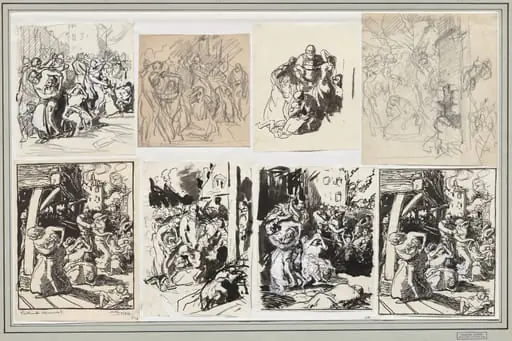
The drawing depicts three vessels in varying states of distress amid stormy waters. The upper sketch suggests fleeting observation, while the lower two illustrate violent shipwrecks—boats overturned, waves crashing, figures lost. The progression from light to dark implies a descent into chaos, evoking the fragility of human endeavor against nature’s power without overt narrative or moralizing.
Technique & Style
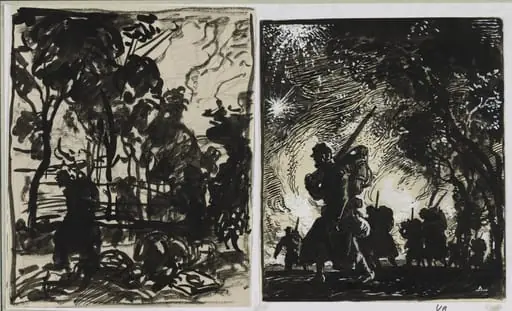
Lepère used rapid, fluid lines for the upper sketch, contrasting with dense, high-contrast black-and-white areas below. He employed chiaroscuro to model crashing waves and sinking hulls, deepening shadows to amplify tension. The shift from loose, atmospheric marks to sharply defined forms demonstrates his command of tonal gradation and his ability to convey motion through minimal, deliberate strokes.
History & Provenance
Lepère produced *Patrouilleurs* near the end of his career, during a period when he focused on expressive, monochromatic studies of the sea. The drawing entered The Cleveland Museum of Art’s collection through documented acquisition, likely as part of a broader effort to preserve works from the late 19th- and early 20th-century French graphic revival. Its preservation underscores its significance in the history of print and drawing.
Context
Created in 1914, the work emerged amid rising global tensions and a cultural fascination with nature’s indifference to human struggle. Lepère’s focus on maritime peril aligns with broader artistic trends in Europe that turned to elemental forces as metaphors for instability. His technique, rooted in traditional engraving, was adapted here into a spontaneous, emotionally charged drawing format.
Legacy
Though not widely exhibited, *Patrouilleurs* exemplifies Lepère’s contribution to modern graphic art through its emotional intensity and technical precision. It stands as a testament to his ability to translate the discipline of wood engraving into freehand drawing, influencing later artists who sought to merge realism with expressive abstraction in maritime themes.
Artist & collection
Artist
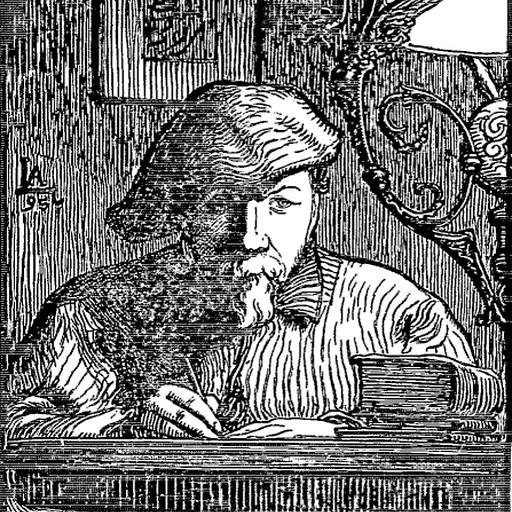
Louis-Auguste Lepère (30 November 1849 – 20 November 1918) was a French painter and etcher. Lepère is also considered a leader in the creative revival of wood engraving in Europe.