Artwork
Troupe en marche
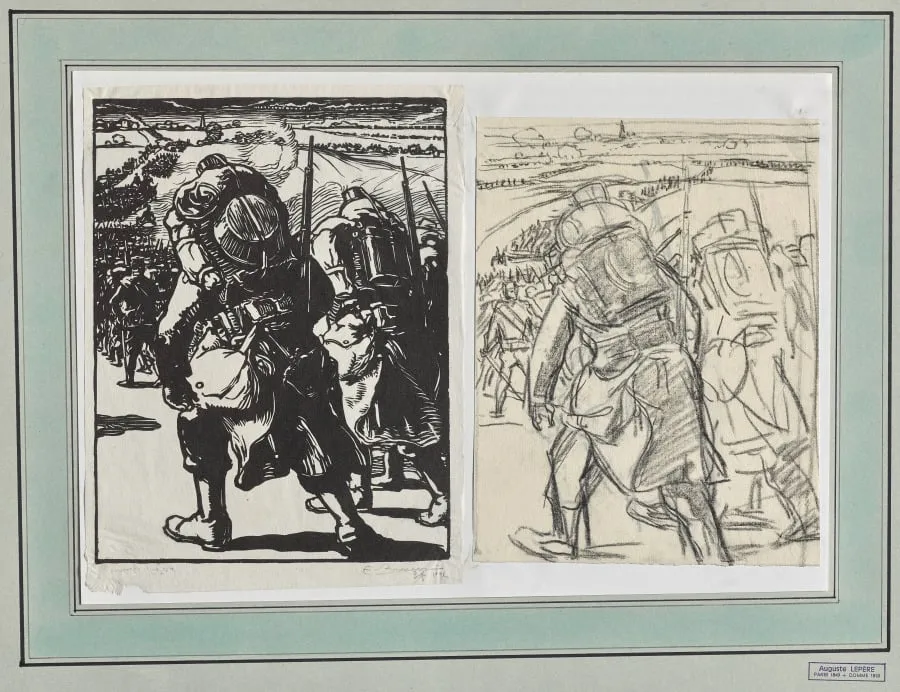
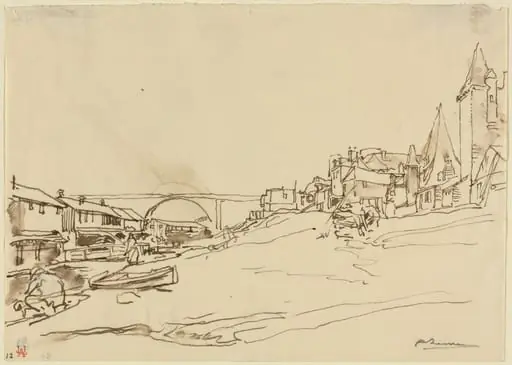
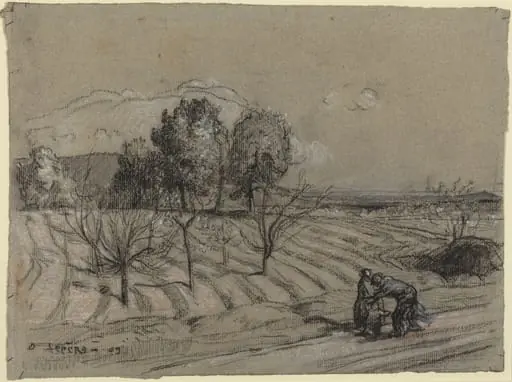
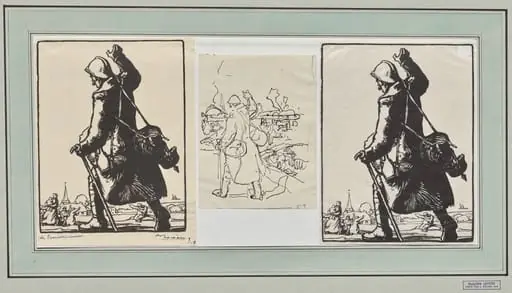
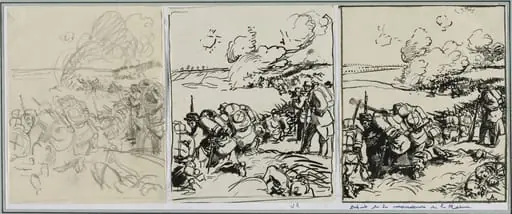
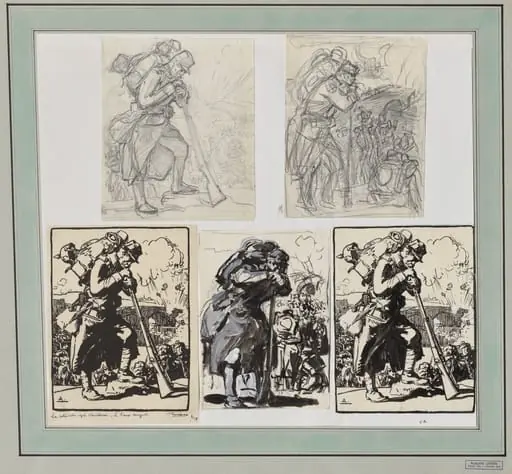
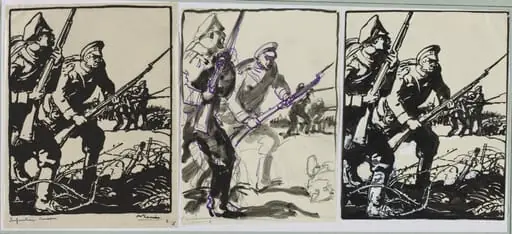
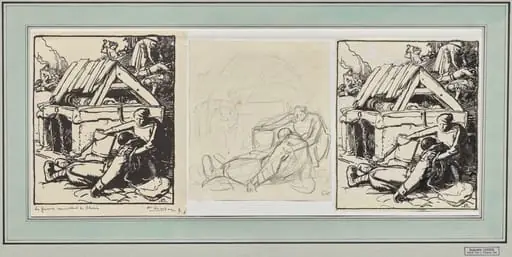
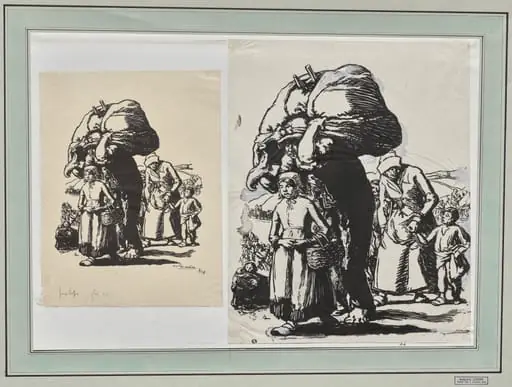
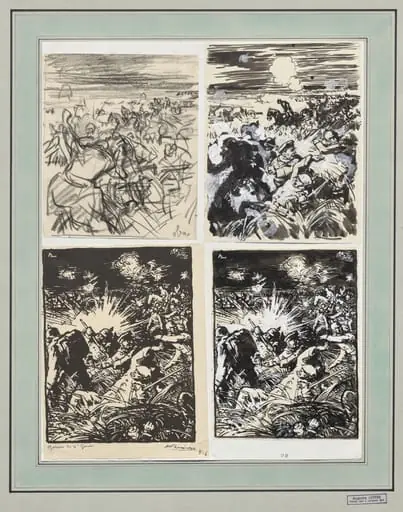
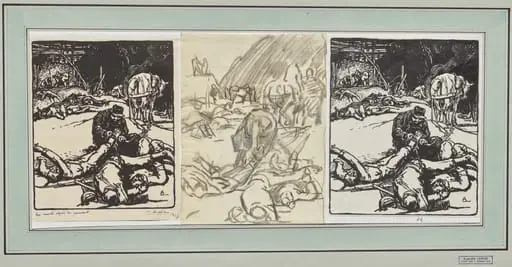
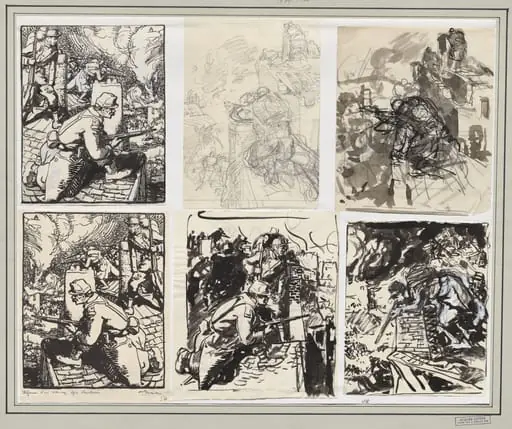
Troupe en marche is a drawing by Auguste Lepère. It dates from 1914 and is held in the collection of the Cleveland Museum of Art.
About this work
The right panel shows a sketch of a person wearing a backpack and hat, walking towards the right side of the image.
The image features a painting with two panels, each showcasing a different scene. The left panel depicts a group of people walking in a line, carrying various items such as backpacks and sticks. They are dressed in dark clothing and appear to be moving in a purposeful manner. The background of this panel is a light-colored landscape with rolling hills and trees.
The right panel shows a sketch of a person wearing a backpack and hat, walking towards the right side of the image. The background of this panel is a lighter color than the left panel, with some faint lines and shapes visible.
This painting is reminiscent of the work of artist Auguste Louis Lepère (French, 1849–1918).
Overview
Troupe en marche is a 1914 drawing by Auguste Louis Lepère, a French artist instrumental in the revival of wood engraving in Europe. The work consists of two distinct panels, each presenting a related but separate scene of figures in motion. Executed in ink and graphite, it reflects Lepère’s interest in narrative composition and everyday movement, blending observational detail with a restrained aesthetic.
Subject & Meaning
The left panel shows a line of individuals traversing a rural landscape, burdened with packs and staffs, suggesting travel, migration, or labor. Their uniform posture and somber attire imply collective purpose. The right panel isolates a single figure, echoing the group’s motion but emphasizing solitude. Together, the panels may reflect themes of endurance, displacement, or the quiet rhythm of rural life during a time of impending upheaval.
Technique & Style
Lepère employed fine ink lines and subtle graphite shading to define form and texture. The left panel’s detailed background of rolling hills contrasts with the right’s sparse, almost gestural sketching. The difference in rendering between the two panels suggests a deliberate shift from narrative to contemplation. His approach aligns with the precision of wood engraving, even in a freehand medium, revealing his mastery of line and tonal economy.
History & Provenance
Created in 1914, the year of Lepère’s death, Troupe en marche was acquired by The Cleveland Museum of Art as part of its collection of modern European drawings. Its provenance prior to museum acquisition is not publicly documented, but its survival in a major institution underscores its recognition within early 20th-century print and drawing circles in France.
Context
Made on the eve of World War I, the drawing quietly reflects a Europe in transition. Rural labor and migration were common themes in French art of the period, often tied to industrialization and social change. Lepère, though known for printmaking, here turns to drawing to capture movement and solitude—subjects resonant in a society bracing for conflict and upheaval.
Legacy
Though not widely exhibited, Troupe en marche exemplifies Lepère’s commitment to capturing the dignity of ordinary life through disciplined draftsmanship. It stands as a testament to his influence beyond printmaking, demonstrating how his attention to line and composition extended into independent drawings. The work remains a quiet but significant artifact of early modern French graphic art.
Artist & collection
Artist
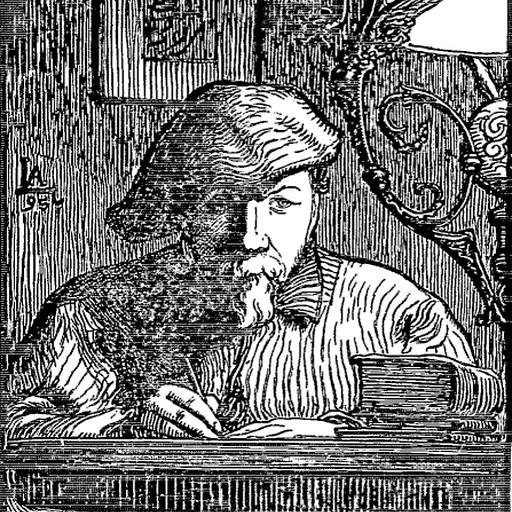
Louis-Auguste Lepère (30 November 1849 – 20 November 1918) was a French painter and etcher. Lepère is also considered a leader in the creative revival of wood engraving in Europe.