Artwork
Arracheurs de bruyères
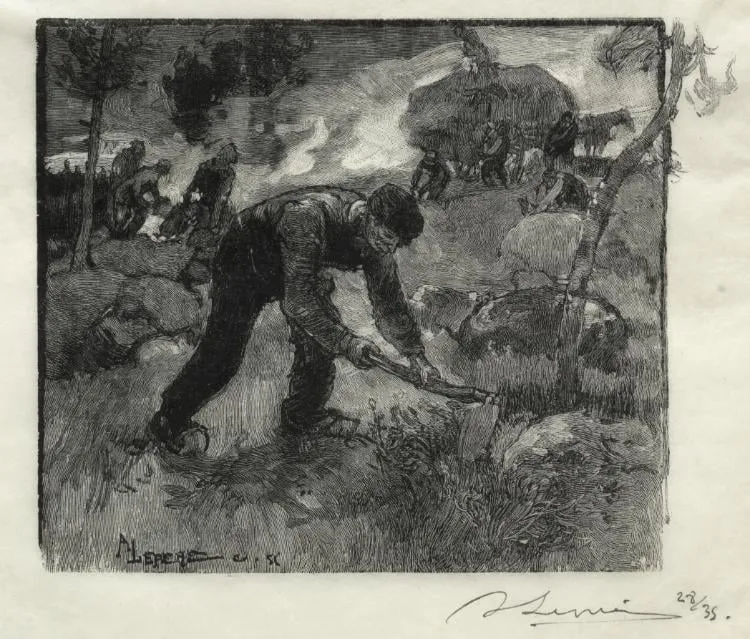
Arracheurs de bruyères is a print by the Impressionist artist Auguste Lepère. It dates from 1887 and is held in the collection of the Cleveland Museum of Art.
About this work
Overview
As a key figure in the revival of wood engraving as a fine art medium, Lepère used this technique to render detailed, tonal images with precision.
Auguste Louis Lepère’s 1887 wood engraving *Arracheurs de bruyères* captures a moment of rural labor in France. As a key figure in the revival of wood engraving as a fine art medium, Lepère used this technique to render detailed, tonal images with precision. The work reflects his interest in documenting everyday life, particularly the quiet persistence of agricultural workers in the French countryside.
Subject & Meaning
The print shows a single laborer bent over in a heathland, using a tool to uproot heather—a common practice to clear land for grazing or fuel. The solitary figure, framed by sparse vegetation and distant trees, conveys the physicality and isolation of rural toil. There is no idealization; the scene presents labor as an unremarkable, enduring part of seasonal existence.
Technique & Style
Lepère employed wood engraving, a method involving incising fine lines into the end grain of hardwood, allowing for intricate detail and subtle gradations of tone. His handling of light and shadow creates depth without reliance on color, emphasizing texture in the earth, foliage, and clothing. The composition is restrained, focusing attention on the figure’s posture and the rhythm of work.
History & Provenance
Created in 1887, the print emerged during a period when French artists were re-engaging with traditional printmaking techniques. Lepère was instrumental in elevating wood engraving beyond commercial illustration, aligning it with the broader Realist movement. The work was likely produced for private collectors and art societies interested in authentic depictions of rural France.
Context
In late 19th-century France, industrialization reshaped society, prompting artists to turn toward rural subjects as a counterpoint. Lepère’s focus on heather-pulling aligns with Realist concerns for unembellished portrayals of labor, echoing contemporaries like Jules Breton and Jean-François Millet. The scene reflects regional practices in western France, where heather was harvested for bedding and fuel.
Legacy
Lepère’s wood engravings, including this one, helped reestablish the medium as a legitimate artistic form in Europe. His technical rigor and commitment to depicting ordinary life influenced later printmakers and contributed to the broader recognition of printmaking as equal to painting in expressive potential. The work remains a quiet testament to the dignity of manual labor.
Artist & collection
Artist
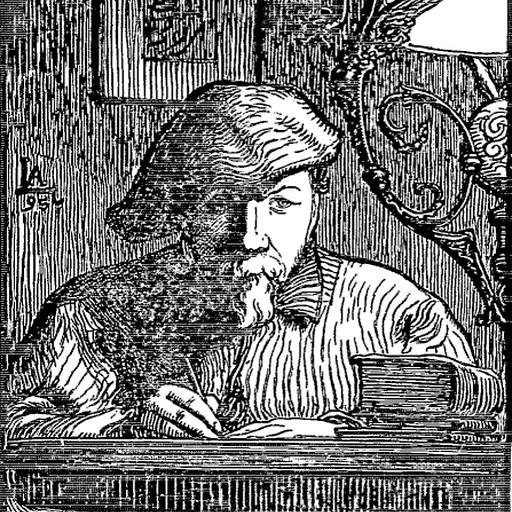
Louis-Auguste Lepère (30 November 1849 – 20 November 1918) was a French painter and etcher. Lepère is also considered a leader in the creative revival of wood engraving in Europe.

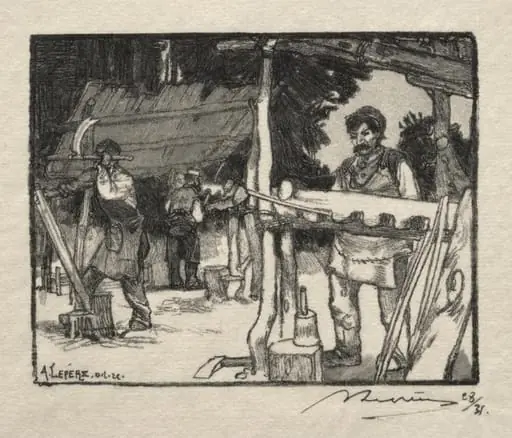 Le Fabricant de lattes
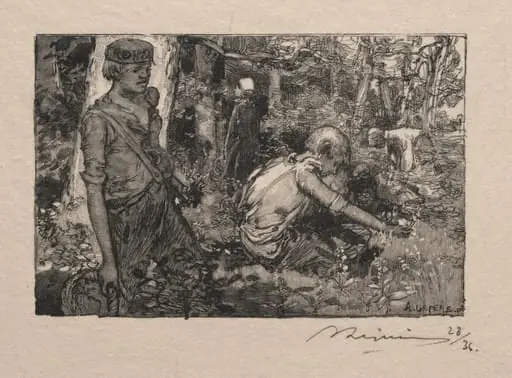 Cueillette du muguet
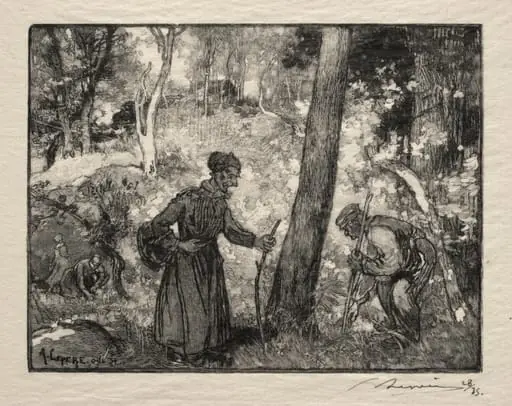 Au Rocher Bernard
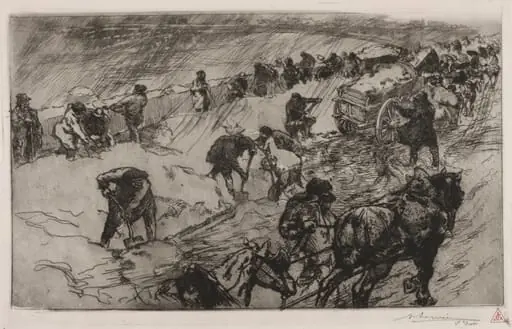 Combat contre la Neige, Quai aux Fleurs
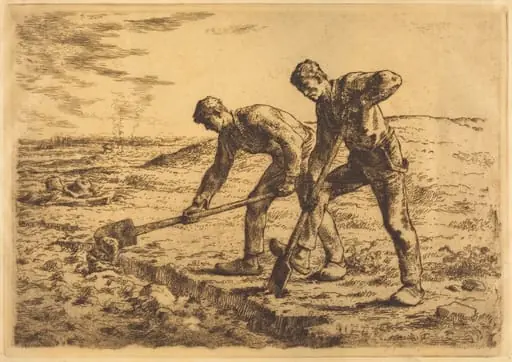 The Diggers (Les becheurs)
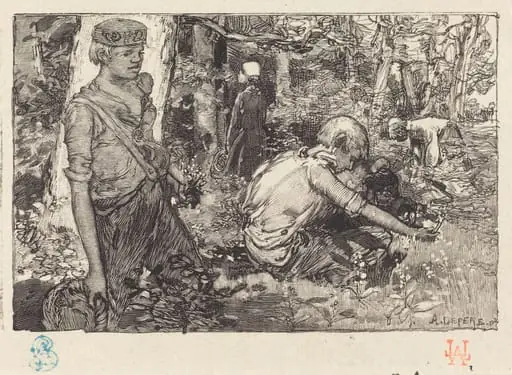 Gathering of May-lily (La cueillette du muguet)
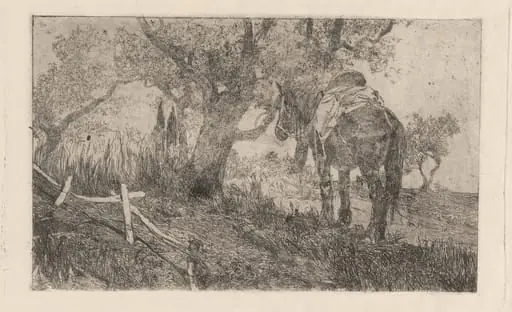 Horse at Midday (Cavallo a meriggio)
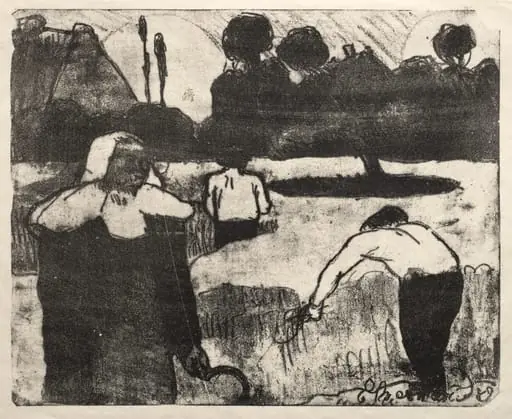 Les Bretonneries: The Harvesters (Les Moissonneurs)
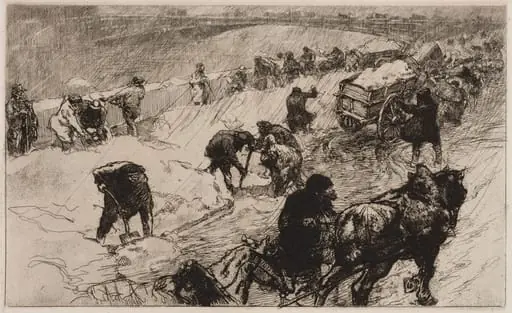 Snowball Fight: Quai aux Fleurs
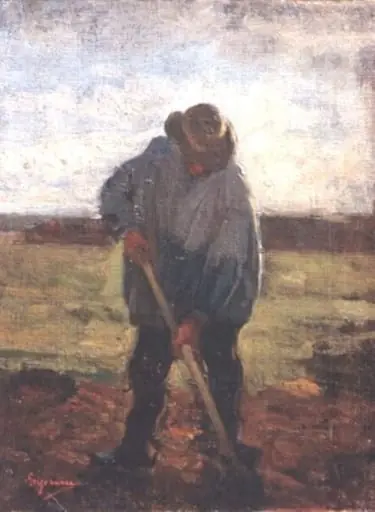 Țăran la câmp