Artwork
Le Fabricant de lattes
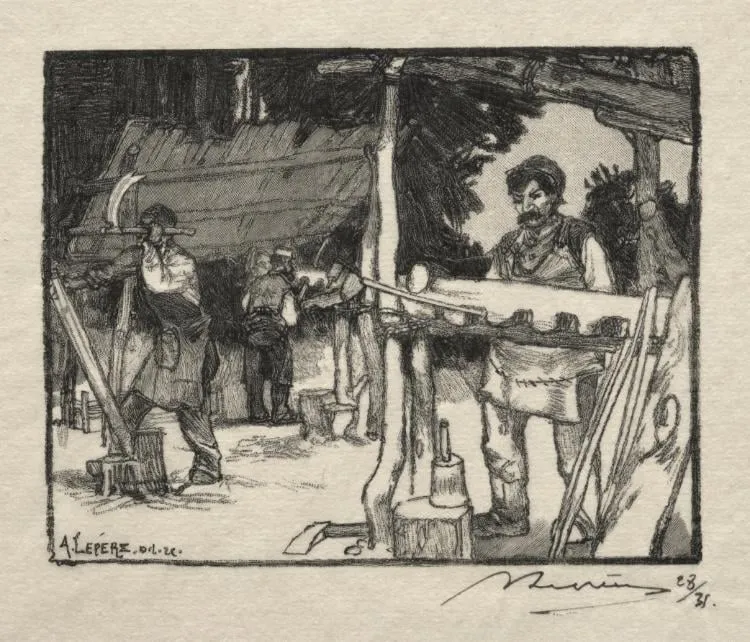
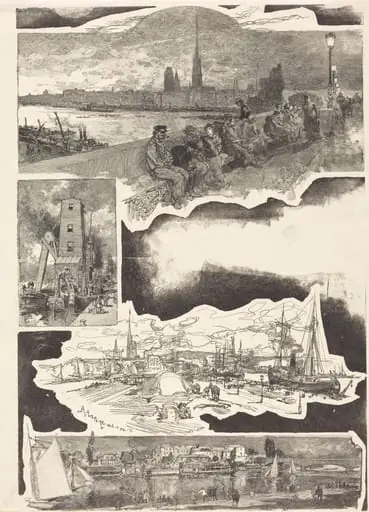
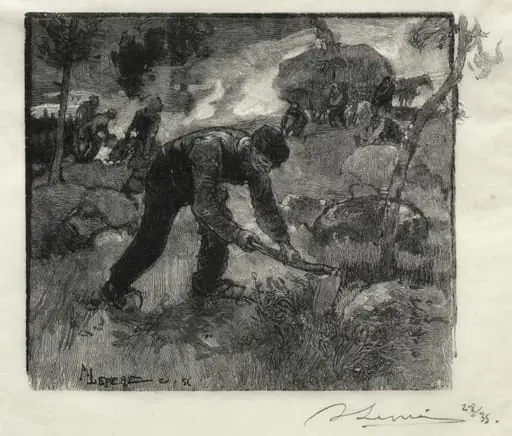
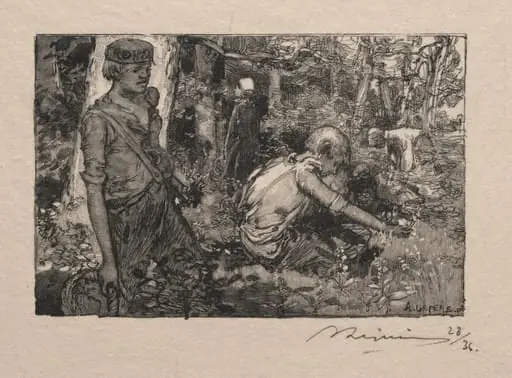
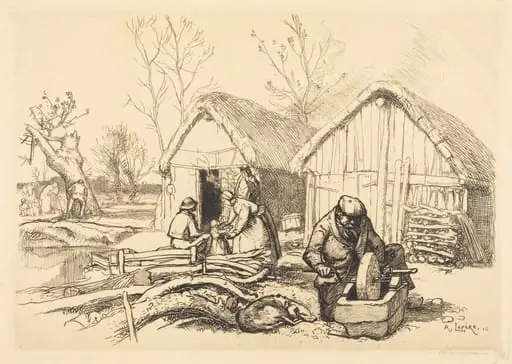
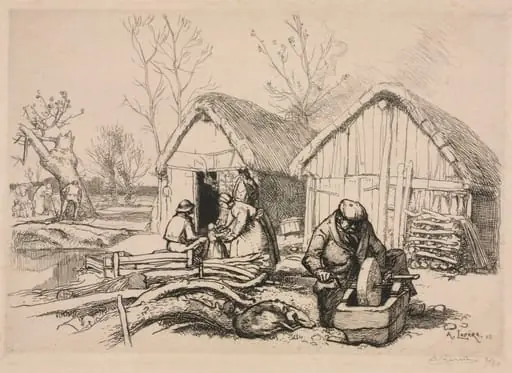
Le Fabricant de lattes is a print by the Impressionist artist Auguste Lepère. It dates from 1889 and is held in the collection of the Cleveland Museum of Art.
About this work
Overview
Created in 1889 by French artist Auguste Louis Lepère, *Le Fabricant de lattes* is a wood engraving that captures a moment of manual labor in a modest workshop.
Created in 1889 by French artist Auguste Louis Lepère, *Le Fabricant de lattes* is a wood engraving that captures a moment of manual labor in a modest workshop. Lepère, instrumental in the 19th-century revival of wood engraving as a fine art medium, chose to depict an unidealized scene of craftsmanship rather than a grand or romanticized subject. The work is part of the permanent collection at The Cleveland Museum of Art.
Subject & Meaning
The print portrays three laborers engaged in the production of wooden slats, likely for flooring or furniture. One man holds a curved piece, another strikes it against a stump, and a third inspects his work at a table. The absence of narrative drama or emotional expression emphasizes the quiet repetition of daily toil. The scene reflects a commitment to portraying working-class life with dignity and without embellishment.
Technique & Style
Lepère employed fine, dense lines and controlled tonal contrasts to render the dim interior and textured surfaces of wood, tools, and clothing. The heavy shading and sharp angular forms convey weight and materiality, while the composition’s tight framing enhances the sense of confinement and labor. His technique merges the precision of engraving with the atmospheric depth of observational drawing.
History & Provenance
The print was made during a period when Lepère was actively promoting wood engraving as a legitimate artistic medium in France, countering the dominance of etching and lithography. It entered the Cleveland Museum of Art’s collection in the 20th century, where it remains as part of a broader effort to document the evolution of printmaking and social realism in European art.
Context
Emerging in the late 19th century, the work aligns with the Realist movement’s focus on ordinary life, paralleling the themes of artists like Jean-François Millet and Jules Breton. Unlike academic art that idealized labor, Lepère’s engraving presents work as physical, unglamorous, and embedded in the rhythms of daily existence, reflecting broader societal interest in the conditions of the working class.
Legacy
Lepère’s dedication to wood engraving helped reestablish the technique as a vehicle for serious artistic expression in Europe. *Le Fabricant de lattes* stands as an example of how printmaking could convey social observation with technical rigor. His influence extended to later generations of printmakers who valued craftsmanship and truthful representation over spectacle.
Artist & collection
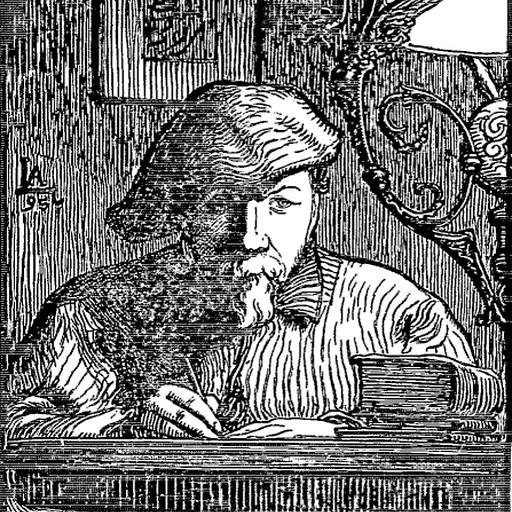
Artist
Louis-Auguste Lepère (30 November 1849 – 20 November 1918) was a French painter and etcher. Lepère is also considered a leader in the creative revival of wood engraving in Europe.