Artwork
Au Marais Inondé: Le Bergère
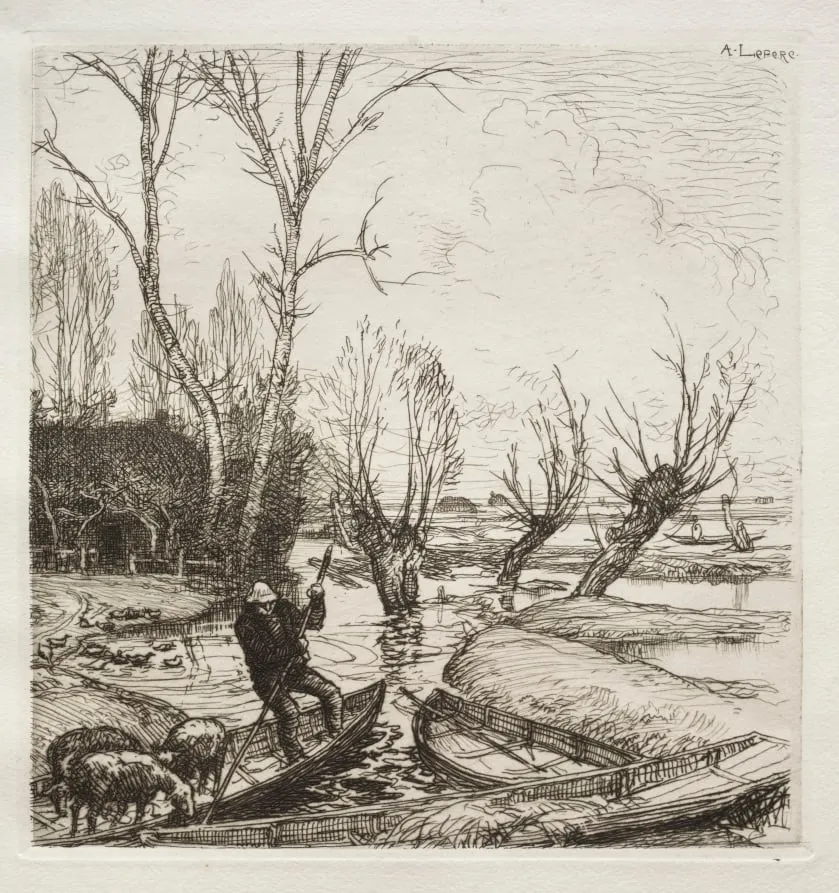
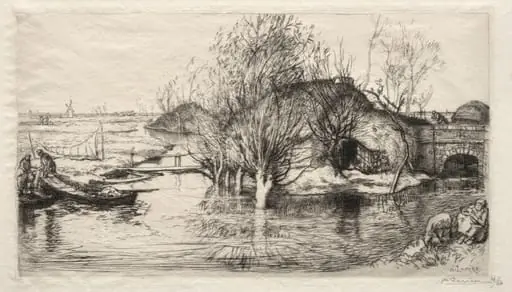
Au Marais Inondé: Le Bergère is a print by the Impressionist artist Auguste Lepère. It dates from 1894 and is held in the collection of the Cleveland Museum of Art. Auguste Louis Lepère created this 1894 etching as part of his broader engagement with landscape and rural life.
About this work
Overview
Auguste Louis Lepère created this 1894 etching as part of his broader engagement with landscape and rural life. Known for revitalizing wood engraving in late 19th-century Europe, he applied similar precision and tonal sensitivity to etching. The work captures a quiet moment in the flooded Marais region, blending observational detail with atmospheric restraint.
Subject & Meaning
A shepherdess, wrapped in dark clothing and wearing a broad hat, guides two sheep through shallow floodwaters toward a small boat.
A shepherdess, wrapped in dark clothing and wearing a broad hat, guides two sheep through shallow floodwaters toward a small boat. The scene suggests daily labor amid seasonal inundation, emphasizing endurance over drama. The absence of other figures and the stillness of the environment evoke solitude, grounding the image in the quiet rhythms of rural existence rather than romanticized pastoralism.
Technique & Style
Lepère employed fine, fluid etching lines to suggest water, bark, and fabric with minimal strokes. The reflections of bare trees in the floodwater are rendered with delicate, interrupted marks, enhancing the sense of surface stillness. The composition avoids heavy shading, relying instead on contrast and negative space to convey mood, aligning with a draftsmanship that values economy over elaboration.
History & Provenance
Created during a period when French printmakers were re-examining traditional techniques, this work reflects Lepère’s role in the revival of hand-printed imagery. Though not widely exhibited at the time, it entered private collections in France and later appeared in institutional holdings focused on 19th-century graphic arts, preserving its status as a quiet example of his technical refinement.
Context
Lepère worked alongside artists and publishers who sought to elevate printmaking beyond reproduction, treating it as an independent art form. His focus on rural France aligned with broader cultural interests in regional life, even as urbanization accelerated. The flooded Marais, a known wetland near Paris, offered a liminal landscape where nature and labor intersected subtly, a theme resonant in his oeuvre.
Legacy
Though not widely celebrated in popular memory, Lepère’s prints influenced later generations of printmakers interested in tonal nuance and naturalistic observation. His ability to convey atmosphere through restrained line work contributed to the recognition of etching as a medium capable of emotional depth without theatricality, leaving a modest but enduring mark on European graphic arts.
Artist & collection
Artist
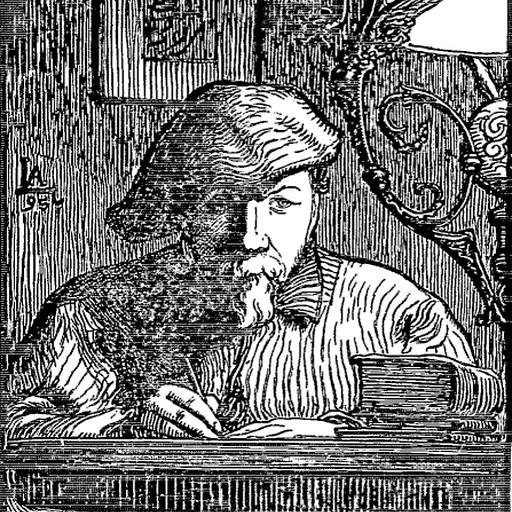
Louis-Auguste Lepère (30 November 1849 – 20 November 1918) was a French painter and etcher. Lepère is also considered a leader in the creative revival of wood engraving in Europe.

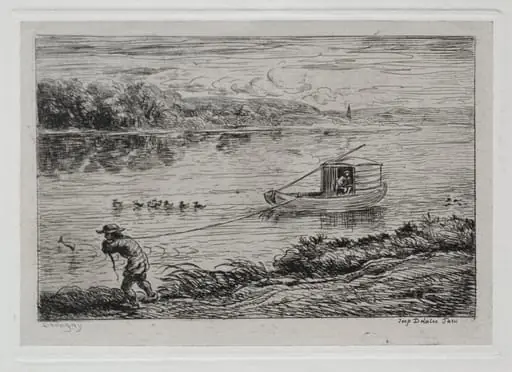 The Boat Trip: Cabin Boy Hauling the Tow-Rope or Hauling by Rope
![[Man in a Boat with Three Sheep], by Auguste Lepère](https://artifactworldgallery.com/img/auguste-lepere--man-in-a-boat-with-three-sheep--a2529b8e56054b53-w320.webp) [Man in a Boat with Three Sheep]
[Man in a Boat with Three Sheep]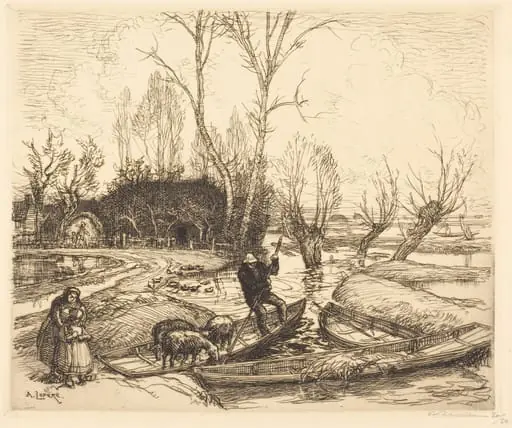 In the Deluged Marsh - The Shepherd (Au marais inonde - Le berger)
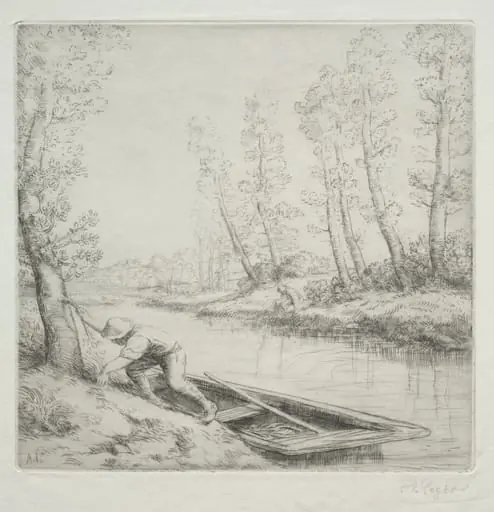 Morning on the River (Le Matin sur la rivière)
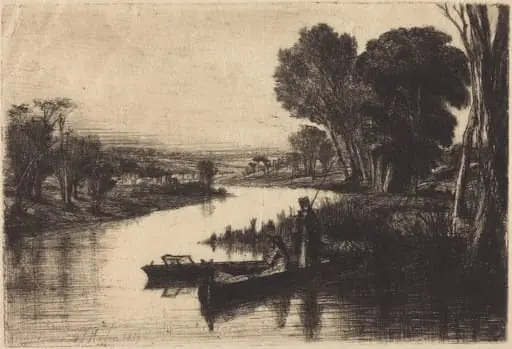 Thames Fishermen
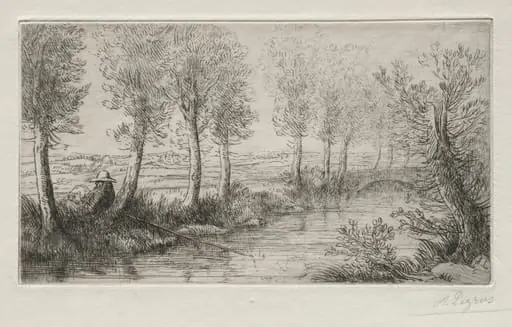 Near the Mill
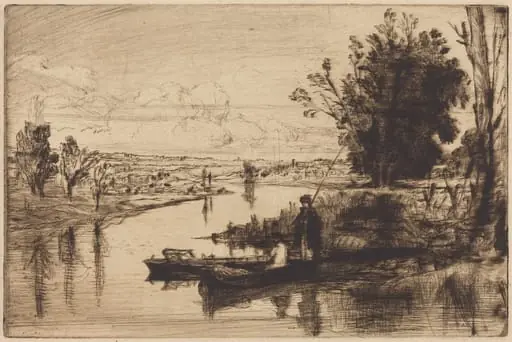 Thames Fishermen
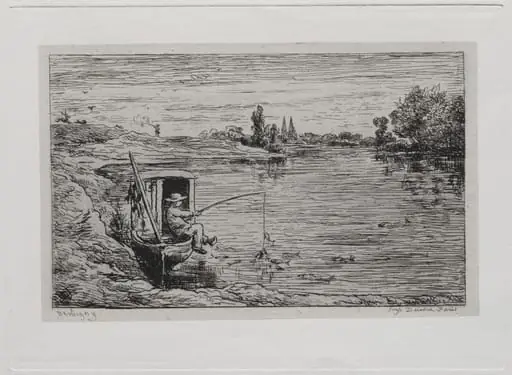 The Boat Trip: The Cabin Boy Fishing (Line Fishing)
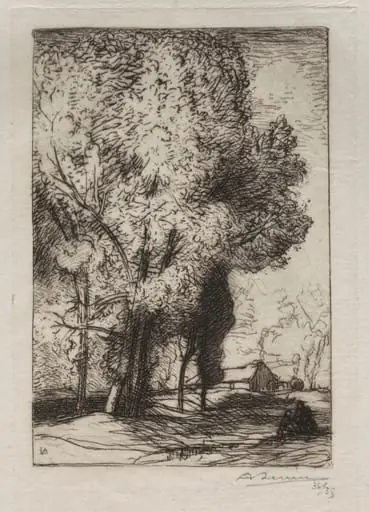 Bourrine dans les Peupliers
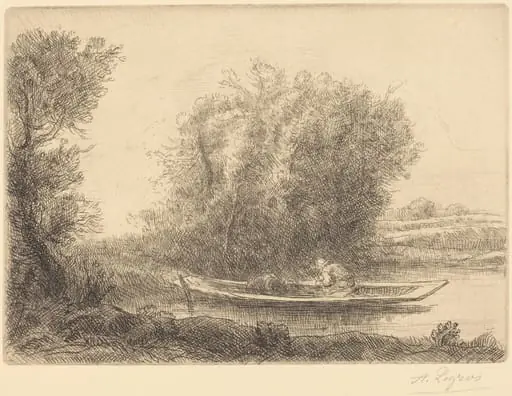 Bend in the River (Un coin de riviere)
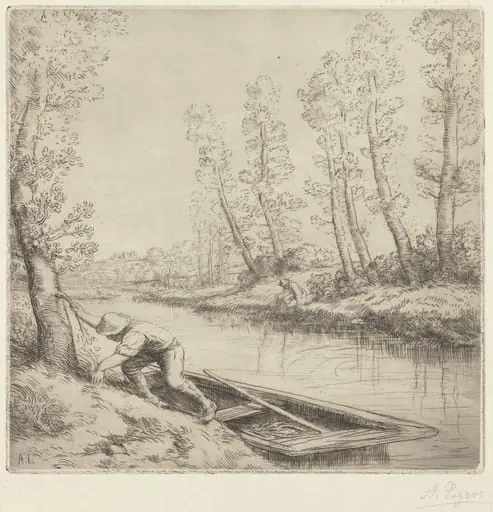 Morning along the River (La matin sur la riviere)
 La Masure Inondée