Artwork
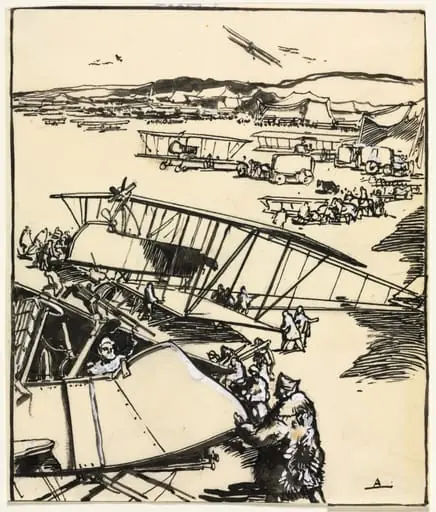
Avions reposant sur le terrain (recto and verso)
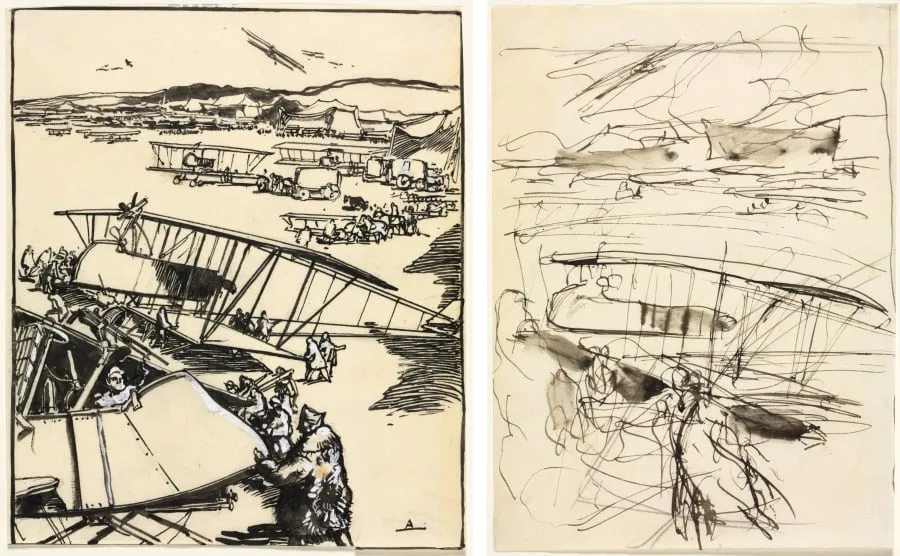
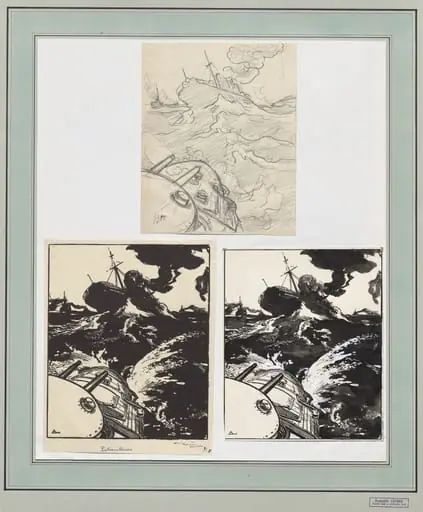
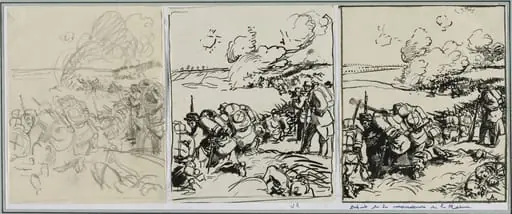
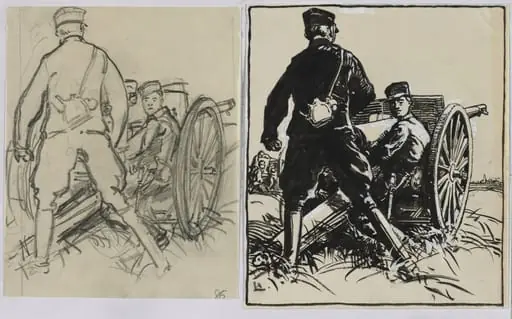
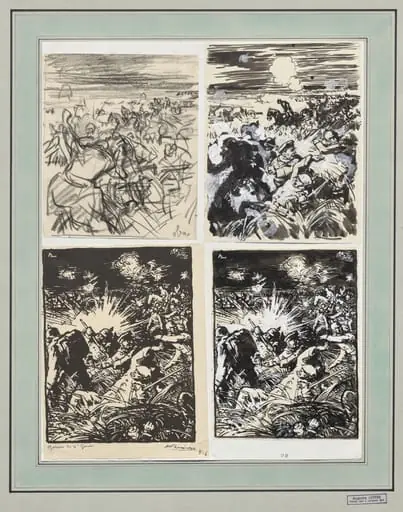
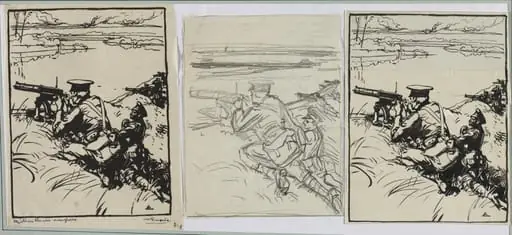
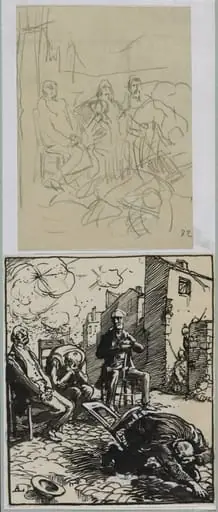
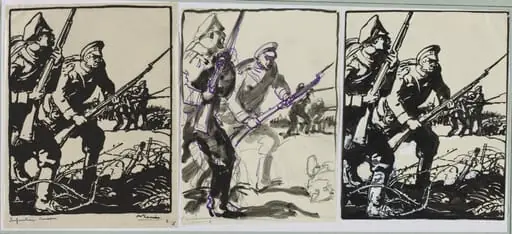
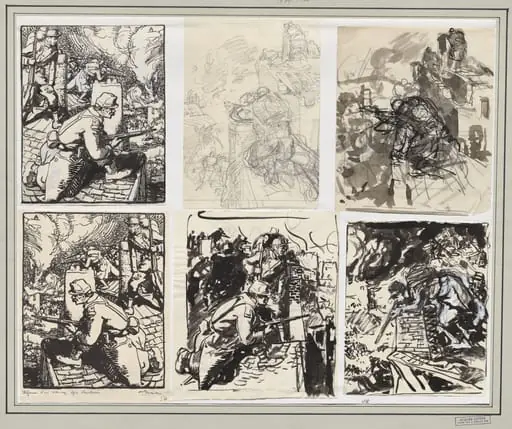
Avions reposant sur le terrain (recto and verso) is a drawing by Auguste Lepère. It dates from 1914 and is held in the collection of the Cleveland Museum of Art.
About this work
Overview
Executed in ink and watercolor, the work reflects Lepère’s interest in modern subjects and his refined approach to line and composition.
Created in 1914 by French artist Auguste Louis Lepère, *Avions reposant sur le terrain* is a dual-sided drawing that captures aircraft resting on a grassy field. Executed in ink and watercolor, the work reflects Lepère’s interest in modern subjects and his refined approach to line and composition. Though modest in scale, the piece balances simplicity with quiet observation, characteristic of his post-etching period.
Subject & Meaning
The drawing depicts several aircraft stationary on open ground, surrounded by sparse human figures and distant structures. The scene conveys a moment of pause—airplanes, symbols of emerging military and technological change, are rendered without motion or drama. The absence of conflict suggests a fleeting calm before the upheaval of World War I, grounding the image in quiet anticipation rather than action.
Technique & Style
Lepère employed loose, confident lines and restrained washes of blue, green, and brown to suggest form and atmosphere. Minimal shading and deliberate negative space emphasize clarity over detail. The style is uncluttered, favoring suggestion over precision, aligning with his broader shift from intricate etching toward more immediate, expressive drawing techniques in his later years.
History & Provenance
The drawing entered the Cleveland Museum of Art’s collection as part of a broader acquisition of Lepère’s graphic works. Its dual-sided format—recto and verso—indicates it was likely a study or private exercise, not a commissioned piece. The work’s survival and preservation reflect growing institutional interest in early 20th-century French draftsmanship beyond painting and printmaking.
Context
In 1914, aviation was rapidly evolving, with military applications becoming urgent. Lepère, though known for traditional printmaking, turned his attention to modern machinery, reflecting a broader artistic engagement with industrialization. His depiction of planes as passive objects, rather than weapons, reveals a personal, contemplative response to technological change amid rising European tensions.
Legacy
Lepère’s role in revitalizing wood engraving is better documented than his drawings, making this work a rare glimpse into his late-period experimentation. *Avions reposant sur le terrain* stands as a quiet testament to his adaptability and sensitivity to contemporary life. It contributes to understanding how artists of his generation absorbed modernity without overt spectacle.
Artist & collection
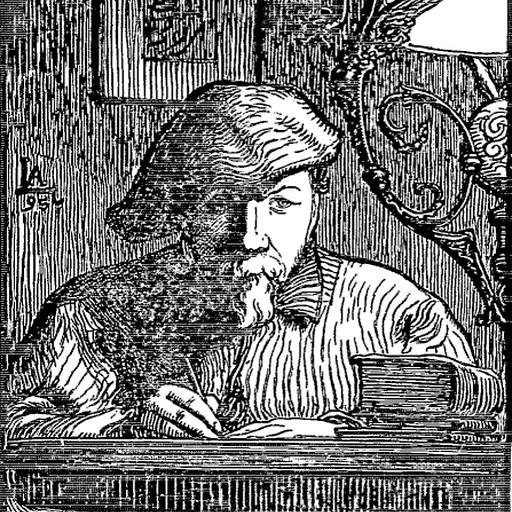
Artist
Louis-Auguste Lepère (30 November 1849 – 20 November 1918) was a French painter and etcher. Lepère is also considered a leader in the creative revival of wood engraving in Europe.