Artwork
Défense d'un village après Charleroi
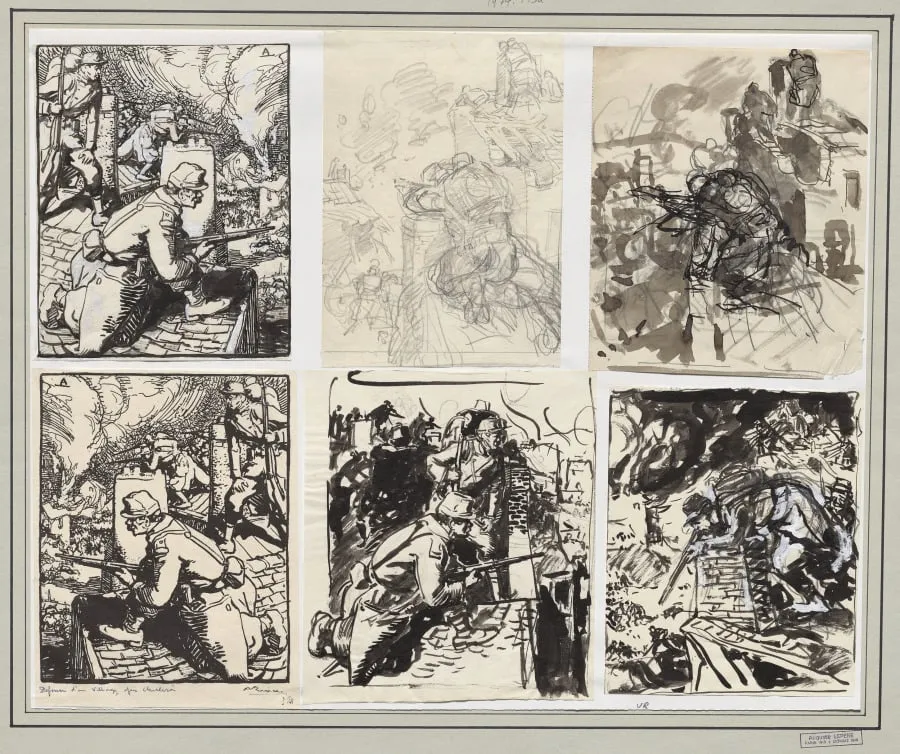
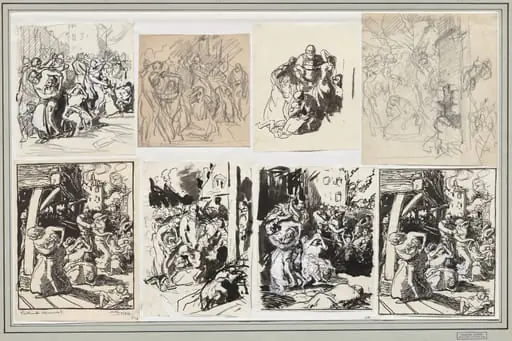
Défense d'un village après Charleroi is a drawing by Auguste Lepère. It dates from 1914 and is held in the collection of the Cleveland Museum of Art. Created in 1914 by French artist Auguste Louis Lepère, this drawing captures a moment of rural combat following the Battle of Charleroi.
About this work
Overview
Created in 1914 by French artist Auguste Louis Lepère, this drawing captures a moment of rural combat following the Battle of Charleroi.
Created in 1914 by French artist Auguste Louis Lepère, this drawing captures a moment of rural combat following the Battle of Charleroi. Executed in wood engraving, the work is composed of six distinct horizontal panels that together form a continuous narrative of defense. It resides in the collection of The Cleveland Museum of Art, reflecting Lepère’s role in revitalizing traditional print techniques during a period of rapid artistic change.
Subject & Meaning
The scene depicts French soldiers engaged in a desperate defense of a village, likely during the early weeks of World War I. Figures are arranged in dynamic poses—some crouching, others standing or fallen—suggesting chaos and urgency. The absence of clear hierarchy among the soldiers emphasizes collective struggle rather than individual heroism, conveying the grim reality of infantry combat in a besieged landscape.
Technique & Style
Lepère employed wood engraving with bold, incised lines and stark contrasts between light and dark. The composition is divided into two rows of six panels, each rendered with expressive, almost sketch-like energy. Colors are limited to monochrome tones—deep grays, browns, and muted blues—enhancing the somber mood. The loose handling of forms and rhythmic repetition of figures create a sense of motion and tension across the surface.
History & Provenance
Made in 1914, the work emerged during the first year of the Great War, a time when Lepère, though primarily known for earlier etchings, turned to printmaking to respond to contemporary events. It entered The Cleveland Museum of Art’s collection through documented acquisition, likely as part of a broader interest in European graphic arts of the early 20th century. Its preservation reflects institutional recognition of wartime print culture.
Context
Lepère’s work coincided with a revival of wood engraving in Europe, a medium once used for illustration but now reimagined as fine art. In 1914, as war reshaped European society, artists turned to print for its accessibility and immediacy. This piece aligns with a broader trend of documenting conflict through intimate, non-heroic imagery, contrasting with official propaganda and grand historical painting.
Legacy
Though less widely known than his etchings, this drawing exemplifies Lepère’s commitment to elevating printmaking as a vehicle for social observation. Its fragmented structure and emotional restraint influenced later generations of printmakers who sought to portray war without glorification. The work remains a quiet testament to the endurance of handcrafted imagery amid industrialized conflict.
Artist & collection
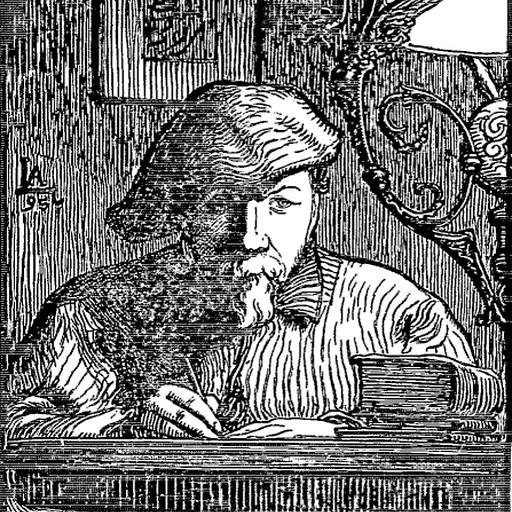
Artist
Louis-Auguste Lepère (30 November 1849 – 20 November 1918) was a French painter and etcher. Lepère is also considered a leader in the creative revival of wood engraving in Europe.

 Patrouilleurs
 Vaillants Allemands!!
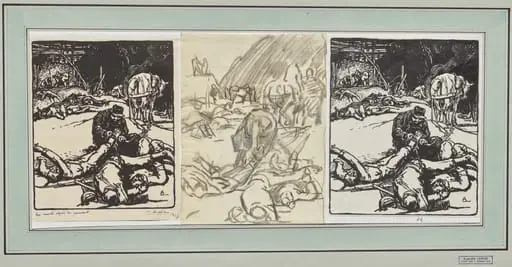 Les Morts après le combat
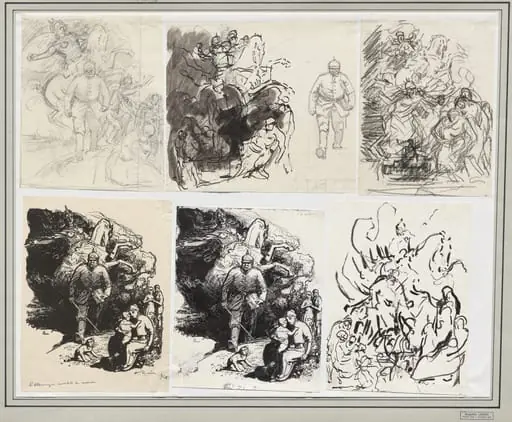 L'Allemagne envahit le monde
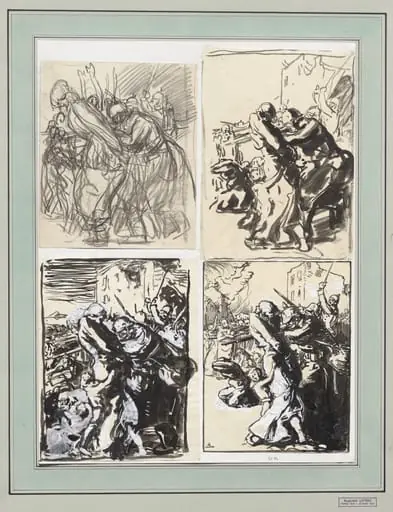 Fusilade dans une rue
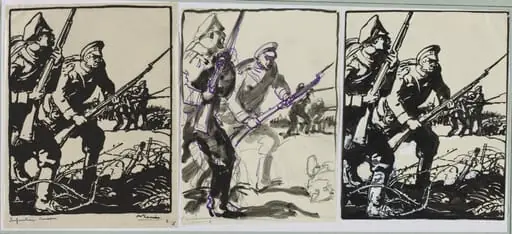 Infanterie russe
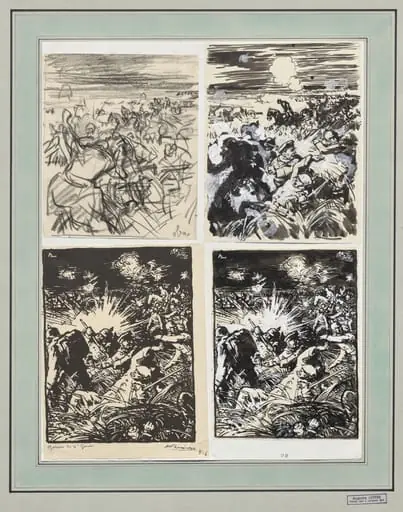 Marais de Saint-Gond
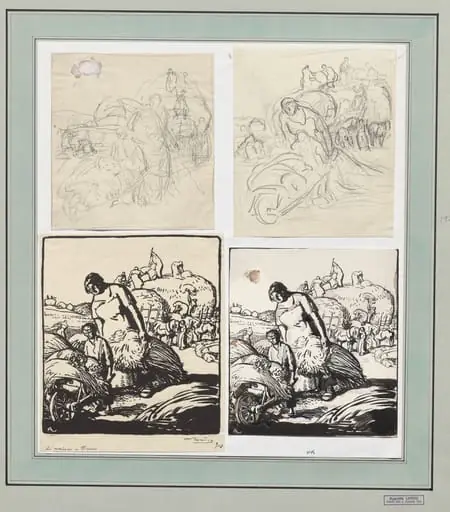 La Moisson en France
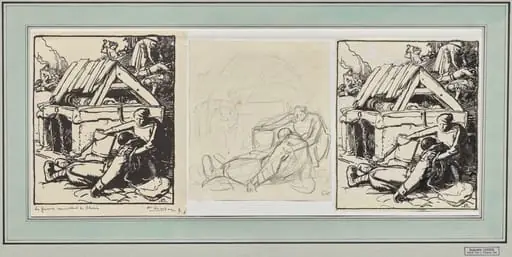 Les Femmes receuillant les blesses
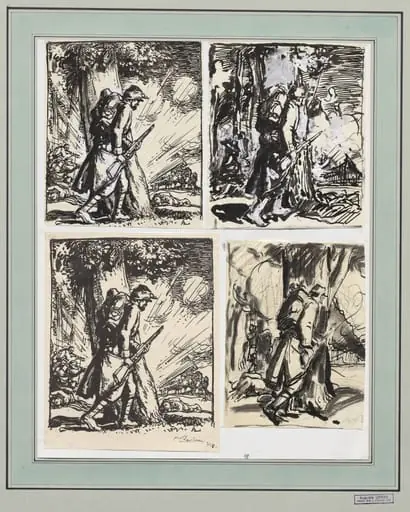 Fantassin à l'abri d'un arbre
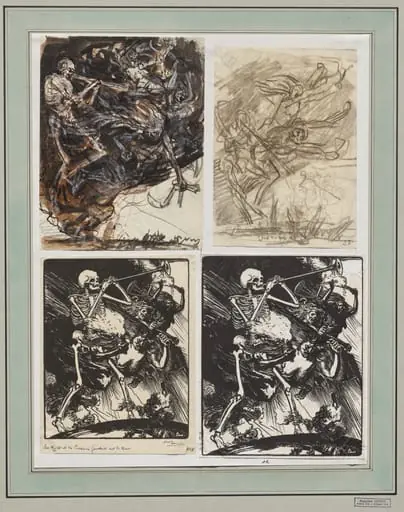 La Mort et les Passions fondant sur la terre
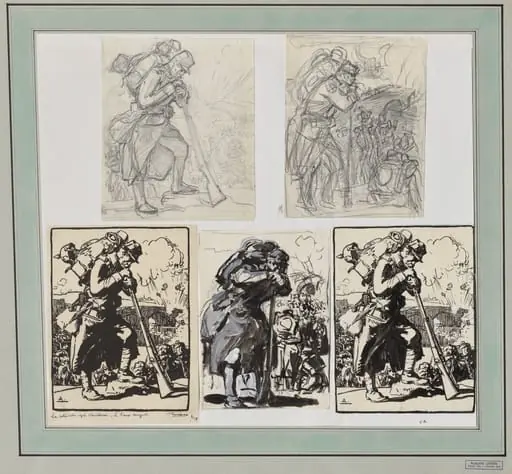 La Retraite après Charleroi...