Artwork
Bread-Sellers
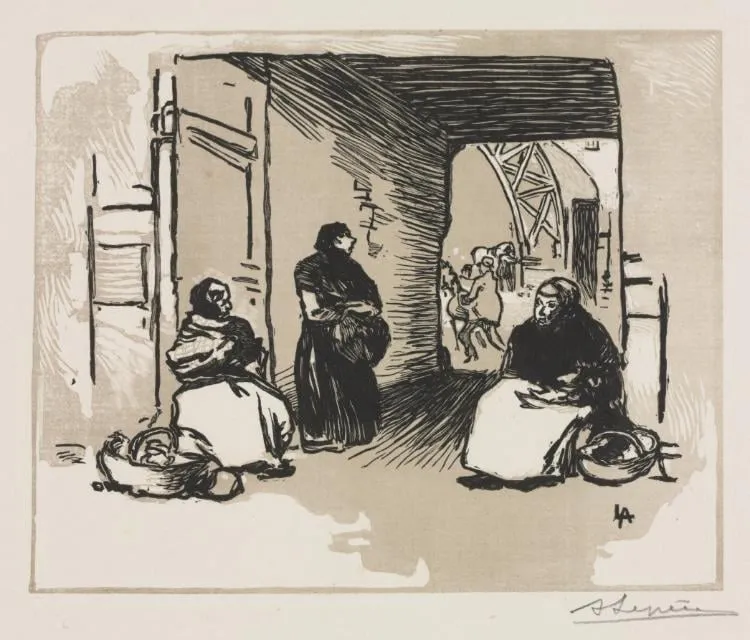
Bread-Sellers is a print by the Impressionist artist Auguste Lepère. It dates from 1889 and is held in the collection of the Cleveland Museum of Art.
About this work
Overview
Created in 1889 by French artist Auguste Louis Lepère, *Bread-Sellers* is a wood engraving that captures a quiet moment in urban daily life.
Created in 1889 by French artist Auguste Louis Lepère, *Bread-Sellers* is a wood engraving that captures a quiet moment in urban daily life. Lepère, instrumental in the 19th-century revival of wood engraving as a fine art medium, chose this technique for its capacity to render subtle tonal contrasts and intricate detail. The scene presents a group of women in a modest interior, their activity centered on bread, a staple of working-class existence.
Subject & Meaning
The image portrays women gathered around a table laden with bread, engaged in quiet conversation. One stands while others sit, their postures suggesting routine and familiarity. The basket of bread, central to the composition, anchors the scene in the economic and domestic rhythms of the time. No grand narrative is present—instead, the work elevates ordinary labor and communal exchange, honoring the unremarkable dignity of everyday life.
Technique & Style
Lepère employed wood engraving with meticulous care, using fine lines and controlled chiaroscuro to model form and depth. The dim interior is rendered through gradations of black and gray, with light falling selectively on faces and the bread basket. The high ceiling and arched doorway suggest spatial depth without perspective exaggeration. Clothing and textures are suggested through delicate hatchwork, avoiding overt detail while preserving atmospheric cohesion.
History & Provenance
Executed in 1889, *Bread-Sellers* emerged during a period when French artists were re-engaging with printmaking as an autonomous art form. Lepère’s work was exhibited in Parisian salons and collected by institutions interested in the revival of traditional techniques. The print’s survival in museum collections reflects its recognition as a significant example of late 19th-century graphic art, though it never achieved widespread popular fame.
Context
In late 19th-century France, bread was both a literal necessity and a symbol of social stability. Urban vendors, often women, played vital roles in food distribution, especially among the working poor. Lepère’s focus on this scene aligns with broader artistic trends that sought to depict ordinary life with empathy, contrasting with the grand historical or mythological subjects favored by academic circles.
Legacy
Lepère’s *Bread-Sellers* contributed to the revalidation of wood engraving as a medium capable of expressive nuance. While not widely reproduced, the work influenced later printmakers who valued intimate, socially grounded subjects. Its preservation in public collections ensures its place as a quiet but deliberate record of labor, gender, and material culture in fin-de-siècle France.
Artist & collection
Artist
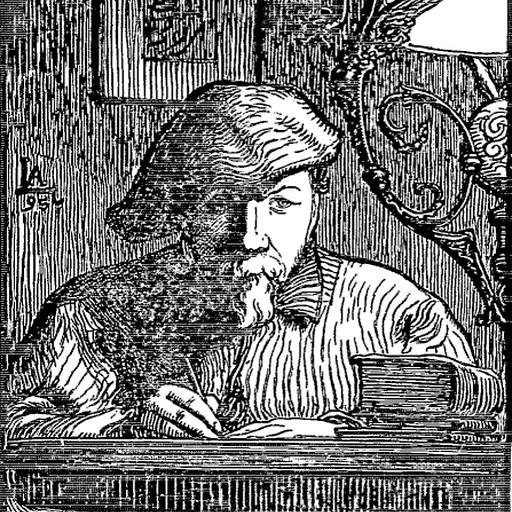
Louis-Auguste Lepère (30 November 1849 – 20 November 1918) was a French painter and etcher. Lepère is also considered a leader in the creative revival of wood engraving in Europe.

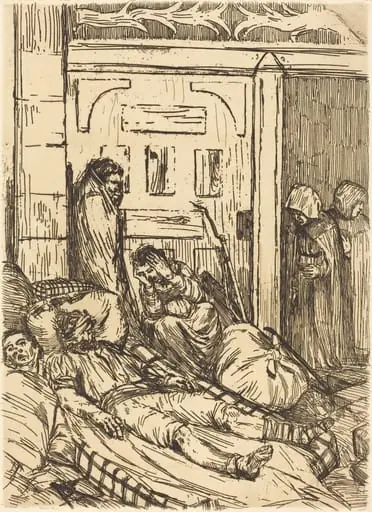 Field Hospital (L'ambulance)
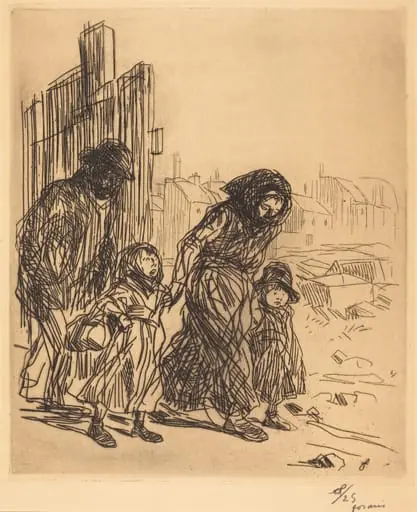 Après la saisie (After the Seizure)
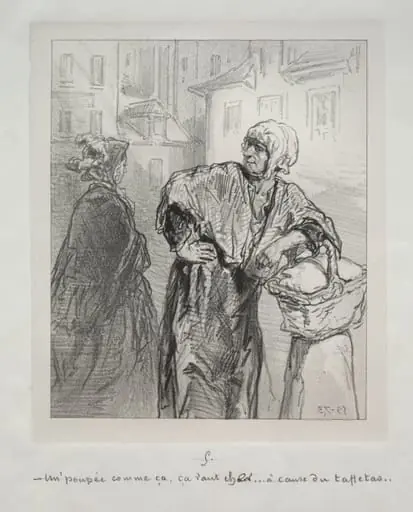 Les Petite Mordont
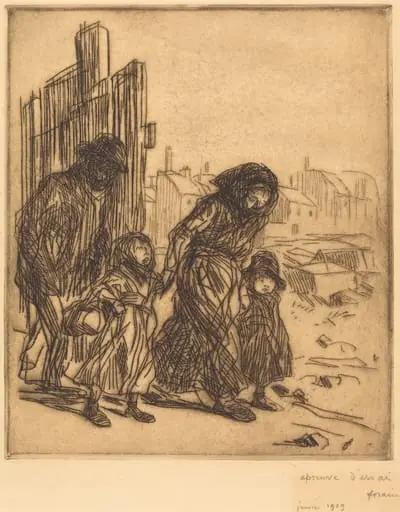 Après la saisie (After the Seizure)
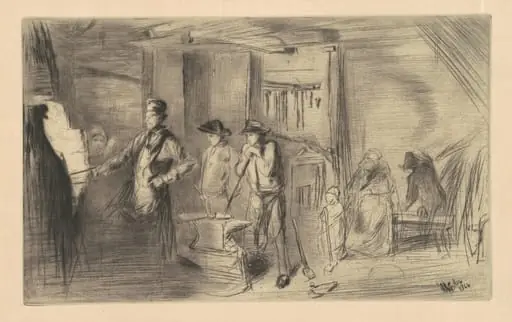 The Forge
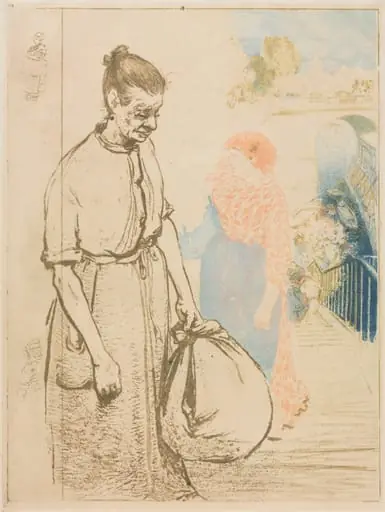 Washerwomen (Les Laveuses)
 The Beggars
 The Forge
 The Beggars
 "Voyons! Mme Majeste..."
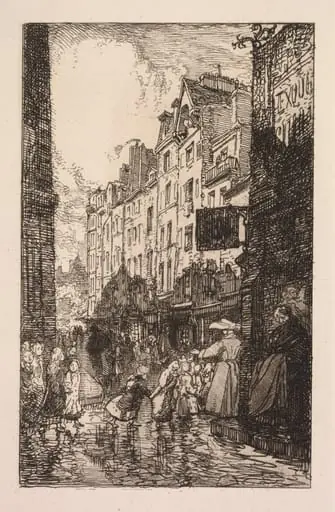 La Biévre, Les Gobelins, Saint-Séverin: Le Quartier Saint-Séverin: La Rue des Prêtres Saint-Séverin
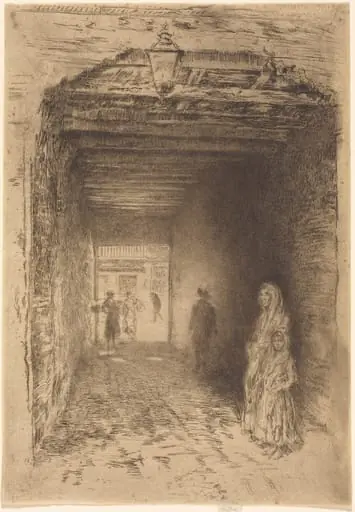 The Beggars