Artwork
Washerwomen (Les Laveuses)
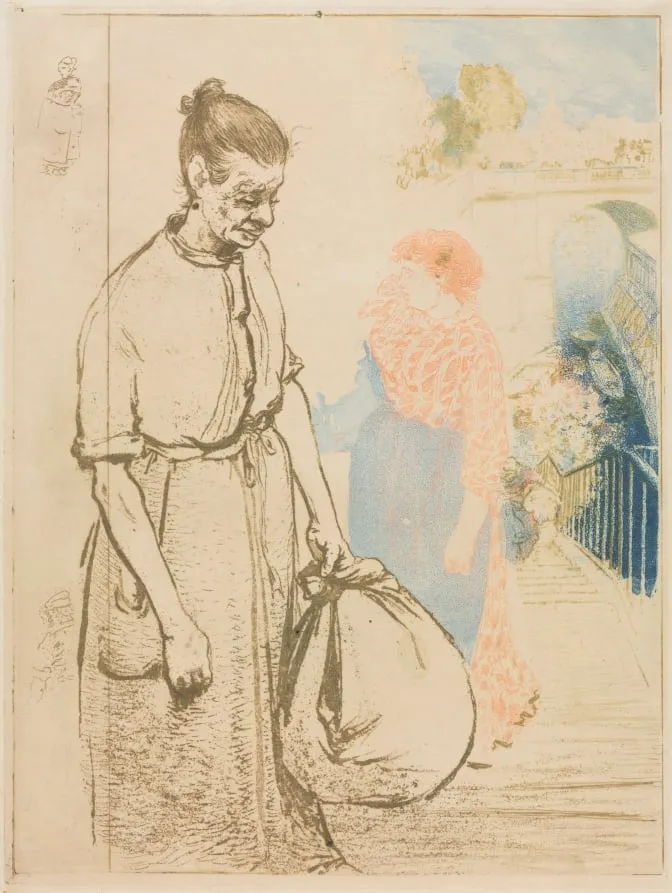
Washerwomen (Les Laveuses) is a print by the Impressionist artist Auguste Lepère. It dates from 1894 and is held in the collection of the Cleveland Museum of Art.
About this work
This painting shows three women bent over a river, scrubbing clothes in wooden tubs.
This painting shows three women bent over a river, scrubbing clothes in wooden tubs. Their dresses are dark, their aprons light. A few flat stones and a narrow boat sit nearby.
Lepère worked fast. He used drypoint, scratching lines into a metal plate. Then he inked it and printed it. The rough lines make the scene feel real and immediate.
Check out how the light hits the water. It’s like you’re standing right there. Look up Auguste Louis Lepère (French, 1849–1918).
Overview
Auguste Louis Lepère, a French artist active in the late 19th century, produced *Washerwomen (Les Laveuses)* in 1894 as a drypoint etching. The work is part of the Cleveland Museum of Art’s collection and reflects his dedication to reviving wood engraving and printmaking techniques. Lepère’s focus on everyday labor aligns with broader artistic interests in rural and working-class life during this period.
Subject & Meaning
The scene depicts three women engaged in the physical task of washing clothes by a river, their postures bent with effort. The arrangement suggests routine, not spectacle—emphasizing the unglamorous reality of domestic labor. Nearby objects—a boat, stones—anchor the action in a specific, unidealized environment, reinforcing the dignity of manual work without romanticizing it.
Technique & Style
Lepère employed drypoint, scratching directly into a metal plate to create dense, textured lines. The resulting print captures the immediacy of motion and light, particularly in the shimmering reflections on water. The contrast between dark garments and pale aprons adds visual rhythm, while the rough, spontaneous marks convey a sense of presence, as if the moment was recorded in real time.
History & Provenance
Created in 1894, the print emerged during Lepère’s most active period in printmaking, when he championed handcrafted techniques over industrial reproduction. It entered the Cleveland Museum of Art’s collection through established acquisition channels, likely as part of a broader interest in European graphic arts during the early 20th century. Its preservation reflects its significance in the revival of etching as a fine art medium.
Context
In the 1890s, French artists increasingly turned to scenes of labor as a counterpoint to urban modernity. Lepère’s focus on washerwomen aligns with contemporaries like Degas and Millet, who depicted domestic and rural toil with quiet realism. His choice of printmaking—accessible and reproducible—allowed these images to reach wider audiences, reinforcing social observation through art.
Legacy
Lepère’s work contributed to the renewed appreciation of etching and wood engraving in Europe, influencing later printmakers to value handcrafted processes. *Washerwomen* remains a quiet testament to his technical precision and empathetic portrayal of labor. Though not widely known today, his prints are studied for their role in bridging 19th-century realism and early modern print revival.
Artist & collection
Artist
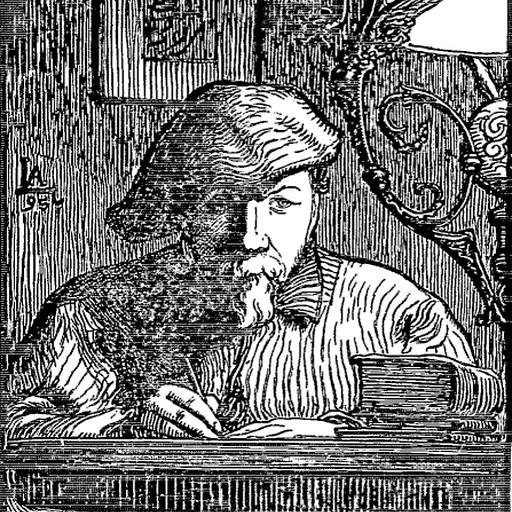
Louis-Auguste Lepère (30 November 1849 – 20 November 1918) was a French painter and etcher. Lepère is also considered a leader in the creative revival of wood engraving in Europe.