Artwork
Les Petite Mordont
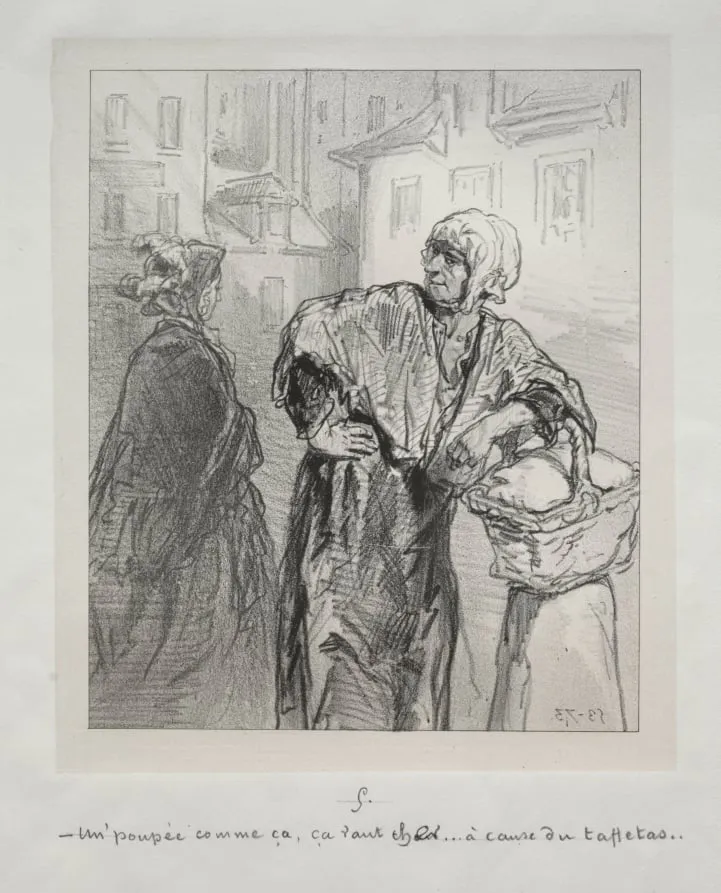
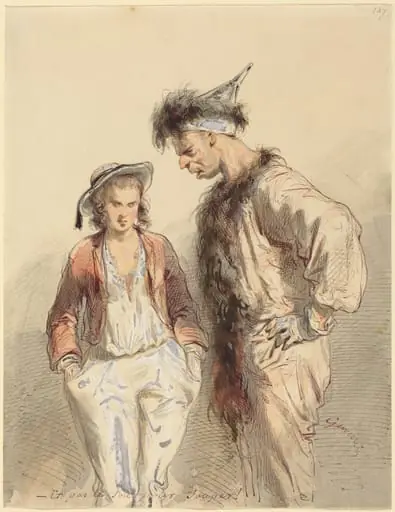
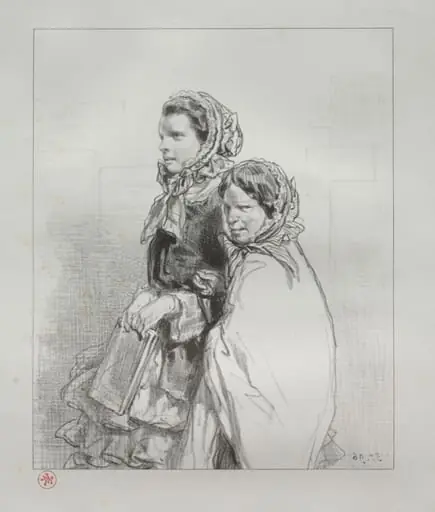
Les Petite Mordont is a print by the Impressionist artist Paul Gavarni. It dates from 1853 and is held in the collection of the Cleveland Museum of Art.
About this work
Overview
Created in 1853 by Paul Gavarni, Les Petite Mordont is a lithographic print depicting two women in modest, period attire. The work is part of the collection at The Cleveland Museum of Art. Rendered with bold linework and concentrated shadows, it captures a quiet, unadorned moment in urban life, avoiding theatricality in favor of observational realism.
Subject & Meaning
The two figures, one carrying a basket and the other leaning on her arm, suggest a familiar, perhaps weary, companionship. Their plain clothing and unremarkable setting imply working-class status. The scene resists idealization, presenting ordinary women in a moment of rest, hinting at the rhythms of daily existence rather than narrative drama.
Technique & Style
Gavarni employs strong, expressive lines and dense chiaroscuro to define form and space. The figures emerge from a dimly lit street scene through contrast, with heavy shadows anchoring their presence. Background elements like buildings and a shop window are suggested rather than detailed, focusing attention on the interaction between the two women.
History & Provenance
The print was produced during Gavarni’s active years as a social commentator in mid-19th-century France. It entered the Cleveland Museum of Art’s collection through established acquisition channels, likely as part of a broader interest in French graphic art from the period. Its preservation reflects its value as a document of everyday life.
Context
In 1850s Paris, lithography flourished as a medium for capturing urban scenes and social types. Gavarni was known for his keen eye for detail and subtle satire. Les Petite Mordont aligns with this tradition, portraying ordinary citizens without sentimentality, reflecting a growing cultural interest in the lives of the non-elite.
Legacy
The work contributes to a broader corpus of 19th-century graphic art that elevated everyday observation over grand historical themes. While not widely reproduced, it remains a representative example of Gavarni’s ability to convey human presence through minimal, evocative means, influencing later realist illustrators.
Artist & collection

Artist
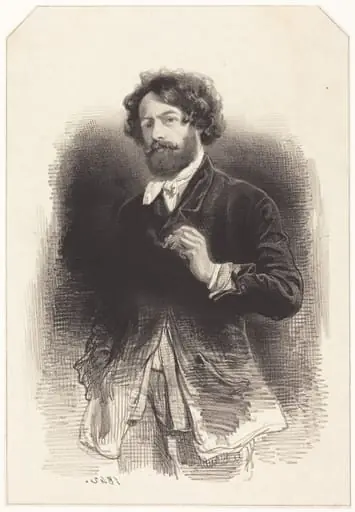
Paul Gavarni was the pen name of Sulpice Guillaume Chevalier (13 January 1804 – 24 November 1866), a French illustrator, born in Paris.

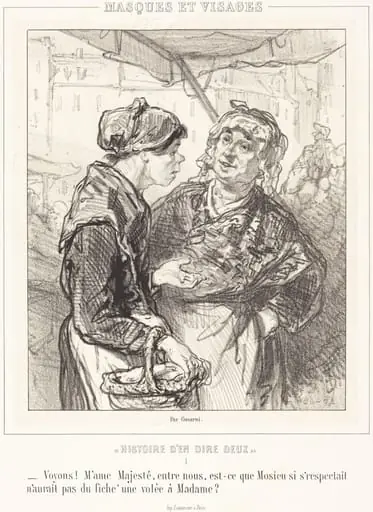 "Voyons! Mme Majeste..."
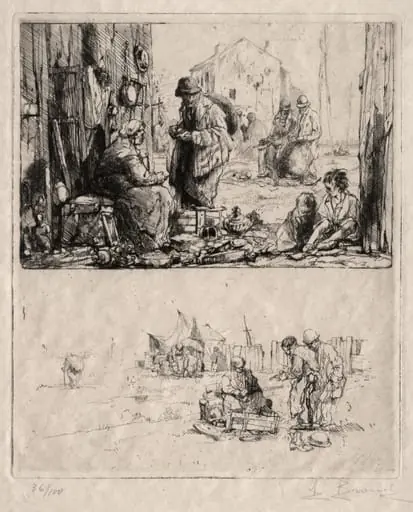 On the Fortifications at Saint-Ouen
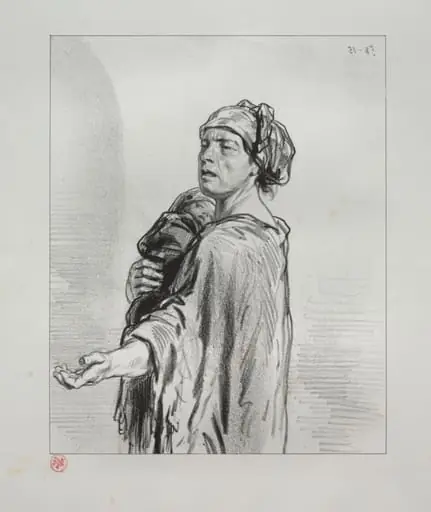 End of a Romance
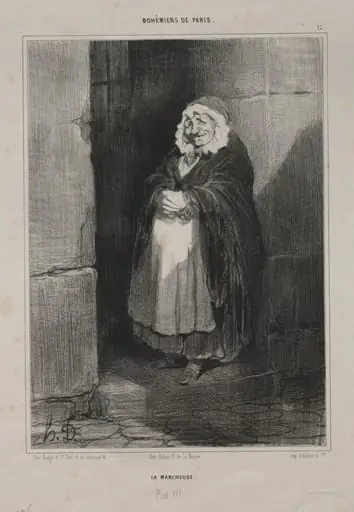 The Pedestrian
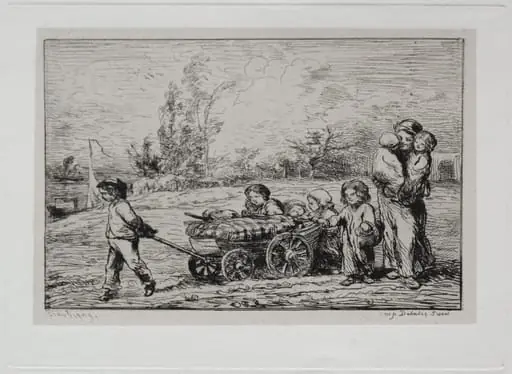 The Boat Trip: Moving into "Le Botin" (The Ship's Furnishings) or Moving to the Boat
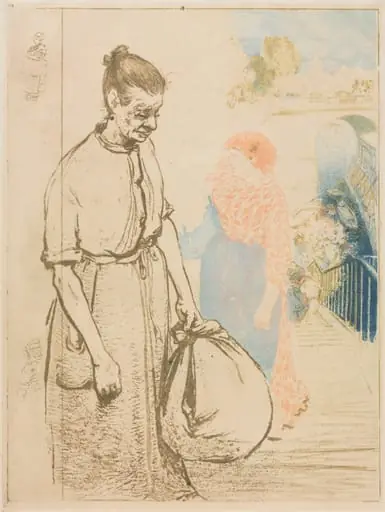 Washerwomen (Les Laveuses)
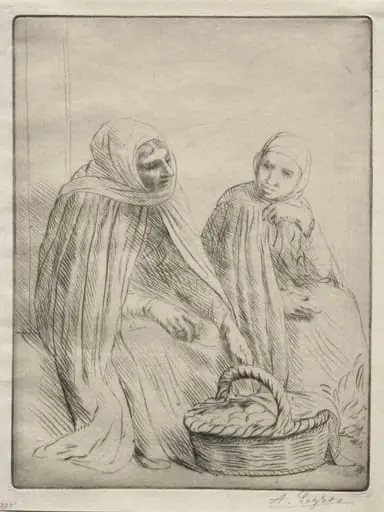 The Egg Merchants (1st Plate)
 Reverie
 C'est pesque toujours a la halle ...
 Bread-Sellers
 La Fille et la mère
 Par-ci, par-lá: My Daughter has sung