Artwork
Le Pont de Poissy
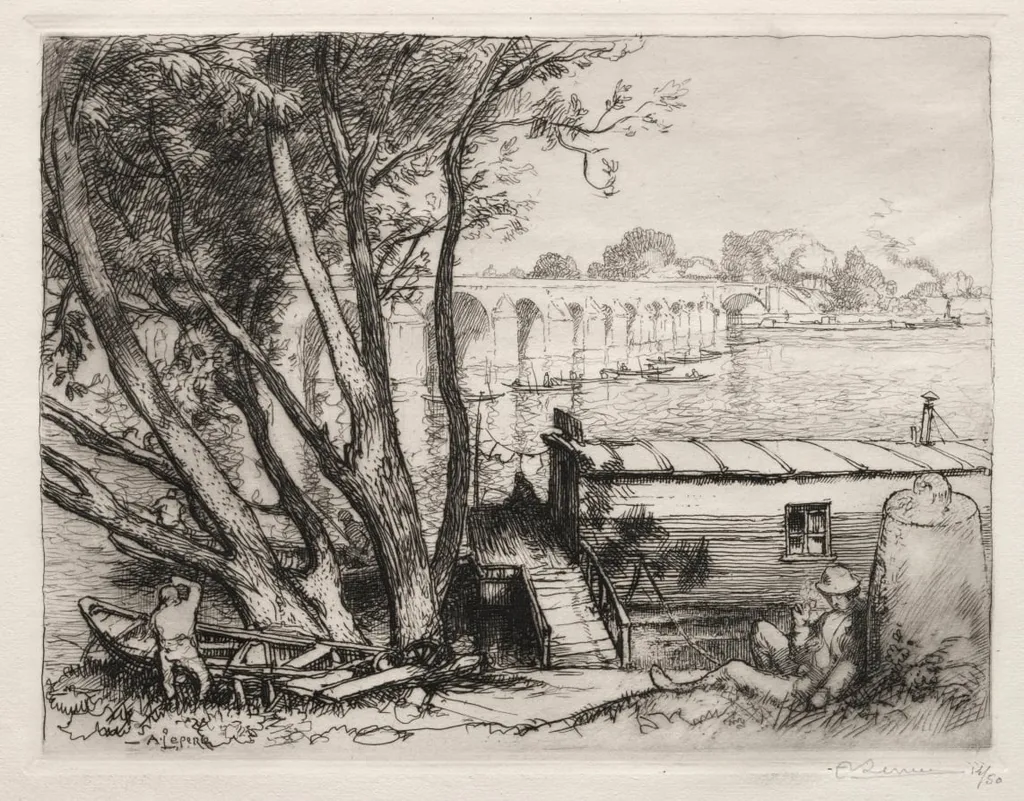
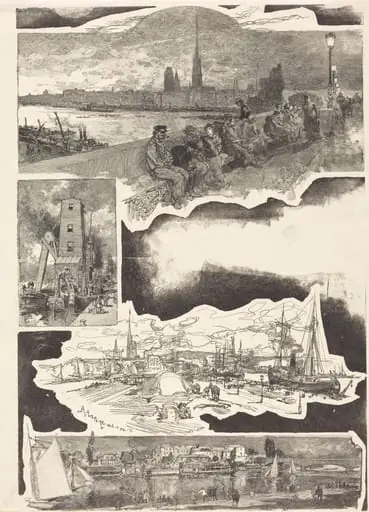
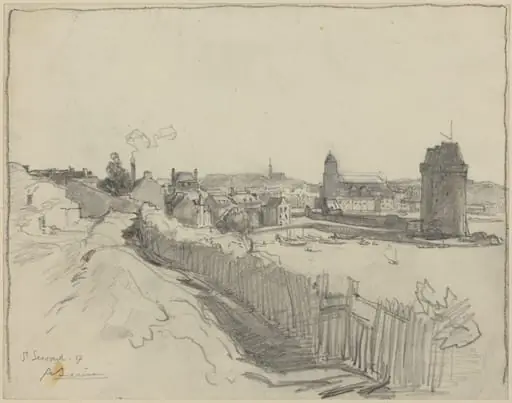
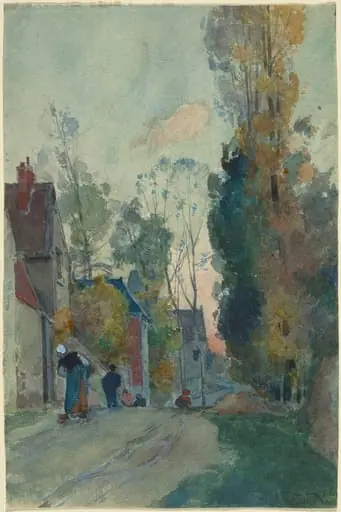
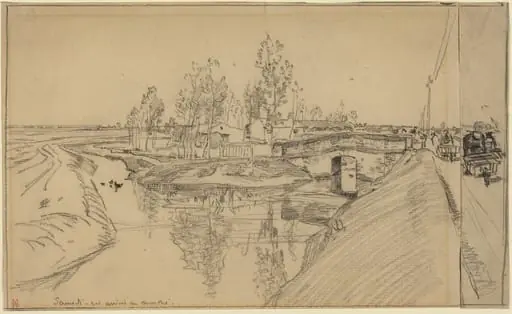
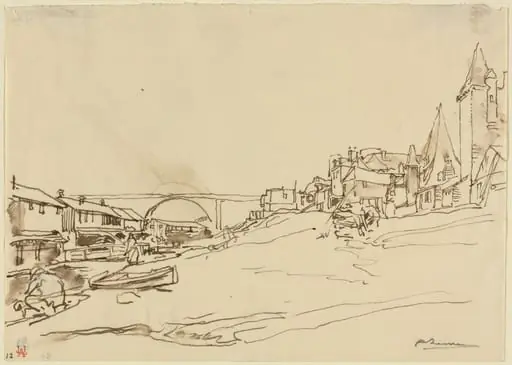
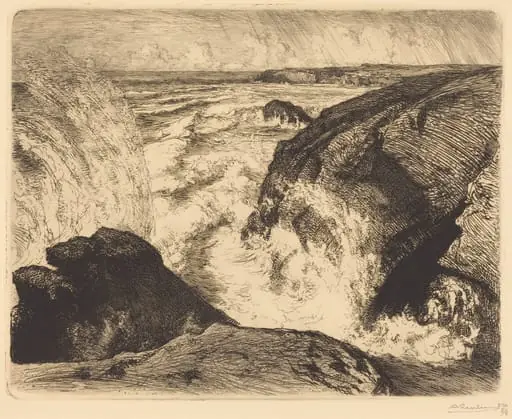
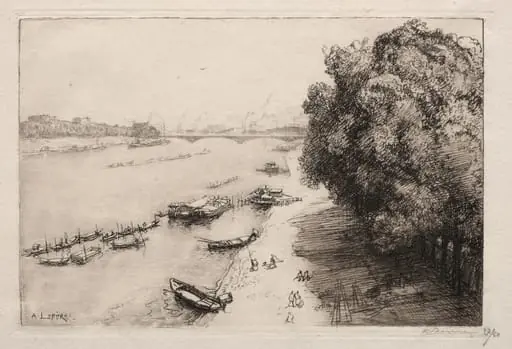
Le Pont de Poissy is a print by Auguste Lepère. It dates from 1917 and is held in the collection of the Cleveland Museum of Art.
About this work
Overview
Lepère, instrumental in revitalizing wood engraving as a fine art medium in Europe, employed fine, deliberate lines to render a quiet landscape.
Created in 1917 by French artist Auguste Louis Lepère, *Le Pont de Poissy* is a wood engraving that captures a tranquil riverside moment near the town of Poissy. Lepère, instrumental in revitalizing wood engraving as a fine art medium in Europe, employed fine, deliberate lines to render a quiet landscape. The work is held in the collection of the Cleveland Museum of Art, reflecting its significance in early 20th-century printmaking.
Subject & Meaning
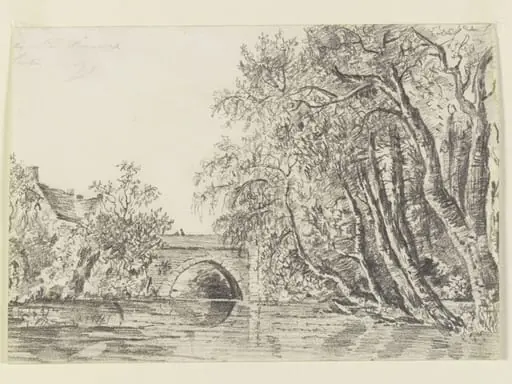
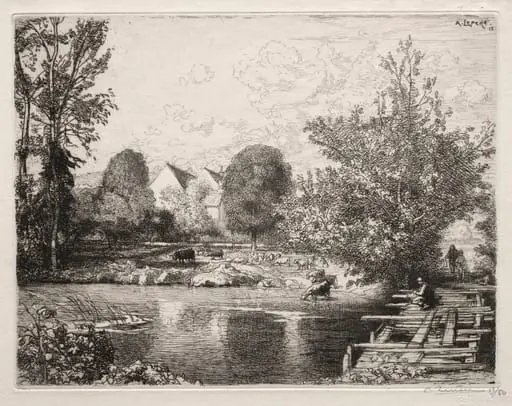
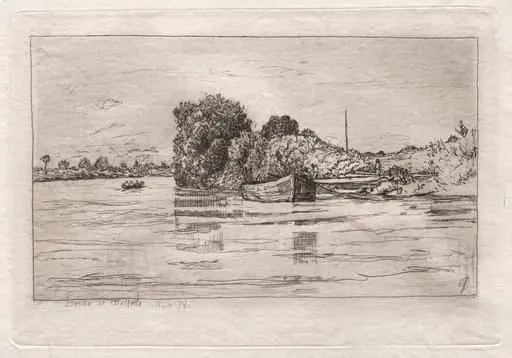
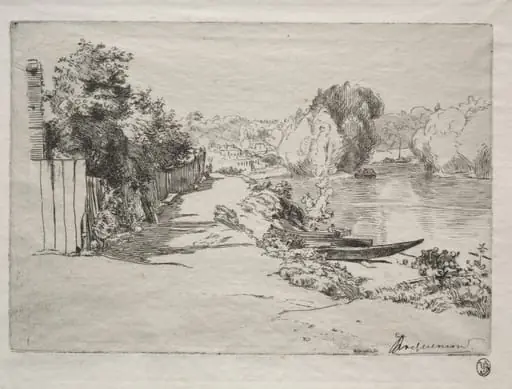
The scene depicts a solitary figure seated on the riverbank beneath a large, gnarled tree, with a wooden house nearby and a bridge arching across the water. Boats drift lazily beneath the span, suggesting a pause in daily life. The composition conveys stillness and introspection, emphasizing the harmony between human presence and the natural environment, without narrative or dramatic tension.
Technique & Style
Lepère used wood engraving to achieve fine detail through incised lines, exploiting the medium’s capacity for tonal contrast. The bark of the tree and the roof of the house are rendered with textured strokes that suggest light falling across uneven surfaces. Ripples in the water are suggested by delicate, parallel lines, while the overall composition balances simplicity with intricate observation, characteristic of his revivalist approach.
History & Provenance
The print was made in 1917, near the end of Lepère’s career, during a period when wood engraving was being reevaluated as an artistic form rather than merely a reproductive technique. It entered the Cleveland Museum of Art’s collection through established acquisition channels, likely as part of broader efforts to document European printmaking traditions in the early 20th century.
Context
In early 20th-century France, artists like Lepère sought to elevate wood engraving beyond commercial illustration, aligning it with the aesthetic values of the Art Nouveau and Symbolist movements. While industrial processes dominated printing, Lepère’s hand-crafted approach emphasized craftsmanship and direct engagement with nature, offering a counterpoint to modernization.
Legacy
Lepère’s work, including *Le Pont de Poissy*, influenced later generations of printmakers who valued the tactile qualities of hand-carved wood. His dedication to the medium helped secure its place in modern art collections. Though not widely known today, his prints remain studied for their technical precision and quiet poetic sensibility.
Artist & collection
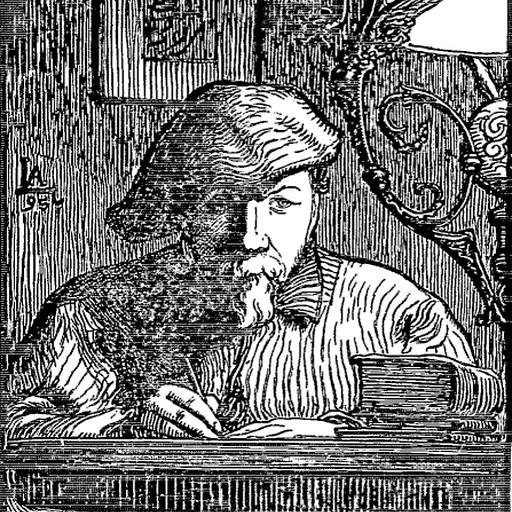
Artist
Louis-Auguste Lepère (30 November 1849 – 20 November 1918) was a French painter and etcher. Lepère is also considered a leader in the creative revival of wood engraving in Europe.