Artwork
Paris Almanac, 1897: Decorative Border, Spring
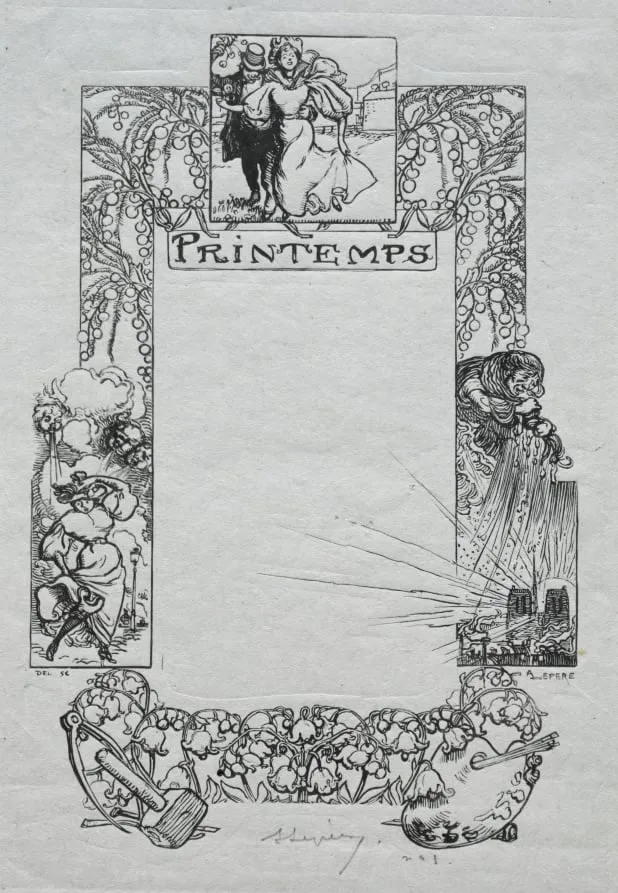
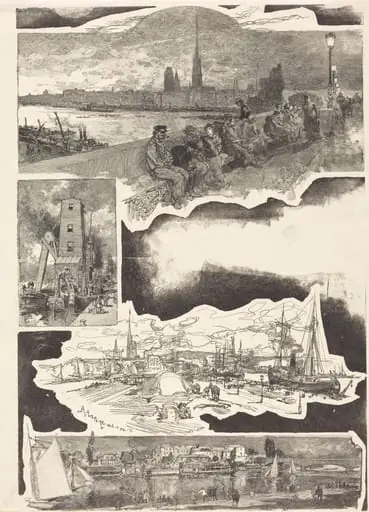
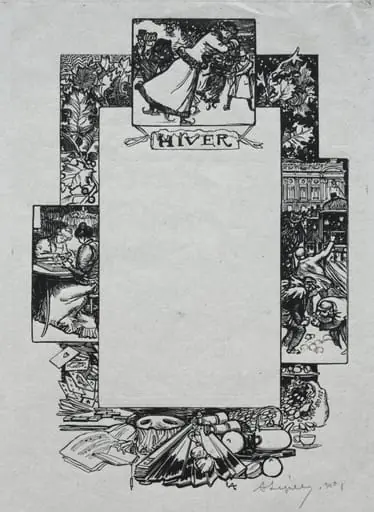
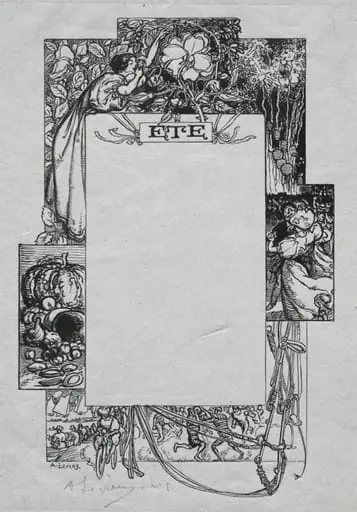
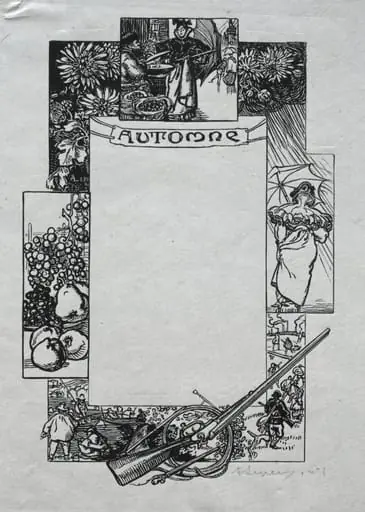
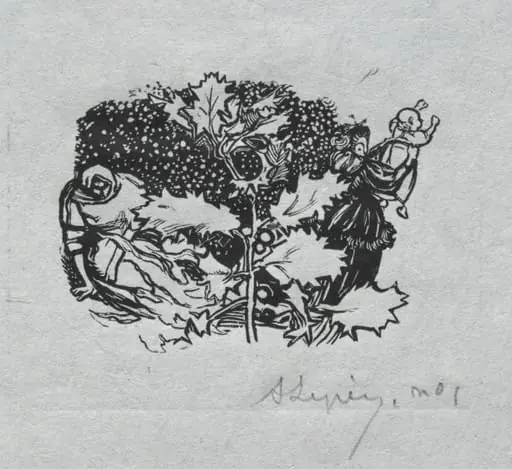
Paris Almanac, 1897: Decorative Border, Spring is a print by the Impressionist artist Auguste Lepère. It dates from 1897 and is held in the collection of the Cleveland Museum of Art. Created in 1897 by Auguste Louis Lepère, this print is one of four seasonal borders commissioned for the Paris Almanac.
About this work
Overview
Created in 1897 by Auguste Louis Lepère, this print is one of four seasonal borders commissioned for the Paris Almanac. Lepère, a key figure in the European revival of wood engraving, used the technique to produce finely detailed decorative elements. The work exemplifies the late 19th-century interest in integrating fine art into everyday publications, blending craftsmanship with design.
Subject & Meaning
The border depicts floral and vegetal motifs associated with spring, rendered in a stylized, rhythmic pattern. Rather than narrating a scene, it evokes seasonal renewal through abstracted leaves, blossoms, and tendrils. Its function was ornamental—to frame the almanac’s textual content—yet it reflects broader Symbolist and Art Nouveau tendencies toward organic forms and harmonious composition.
Technique & Style
Executed in wood engraving, the piece relies on precise, hand-carved lines to achieve fine gradations of tone and texture. Lepère’s technique emphasizes clarity and control, with delicate cross-hatching and fine stippling creating depth without shading. The style is restrained yet intricate, favoring linear elegance over dramatic contrast, characteristic of his revivalist approach to the medium.
History & Provenance
The print was produced as part of a limited annual series for the Paris Almanac, a publication that featured contributions from leading artists of the time.
The print was produced as part of a limited annual series for the Paris Almanac, a publication that featured contributions from leading artists of the time. Lepère’s involvement underscored his reputation as a technical innovator in printmaking. Original impressions were distributed with the almanac’s 1897 edition; surviving examples are held in museum collections, including the Bibliothèque nationale de France.
Context
In the 1890s, French artists sought to elevate printmaking beyond reproduction, treating it as an independent art form. Lepère’s work aligned with this movement, alongside contemporaries like Whistler and Beardsley. The Paris Almanac series reflected a cultural moment when design, literature, and fine art converged, and decorative prints became vehicles for artistic expression in domestic and public spheres.
Legacy
Lepère’s contributions helped reestablish wood engraving as a respected medium in fine art circles. His seasonal borders for the Paris Almanac remain studied for their technical precision and integration of natural forms. Though not widely exhibited today, they continue to inform discussions on the role of craft in modern printmaking and the aesthetic value of utilitarian art.
Artist & collection
Artist
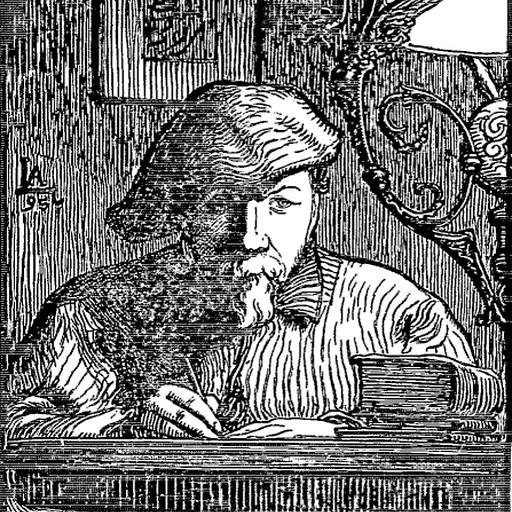
Louis-Auguste Lepère (30 November 1849 – 20 November 1918) was a French painter and etcher. Lepère is also considered a leader in the creative revival of wood engraving in Europe.