Artwork
Repas des Bûcherons
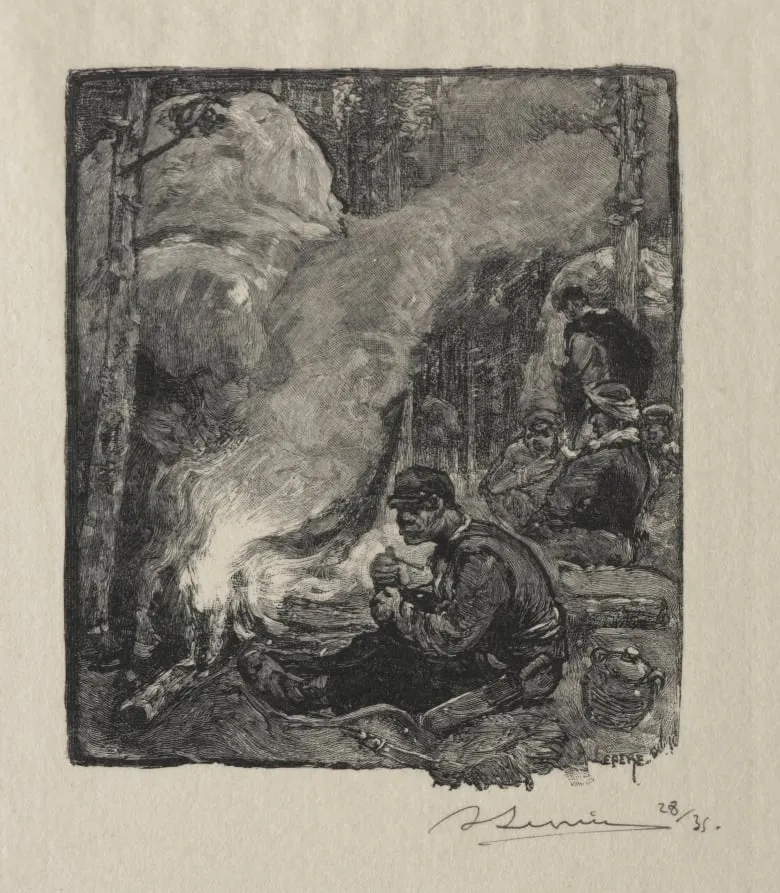
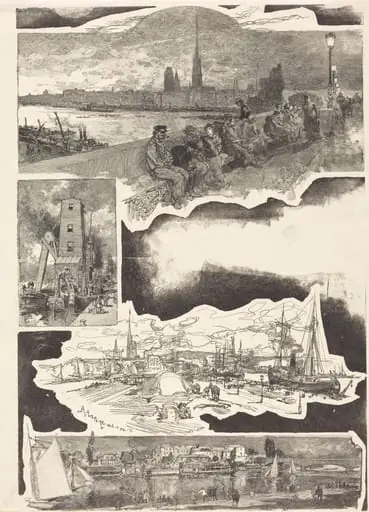
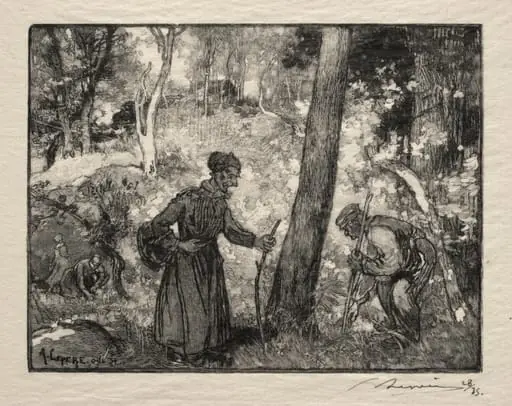
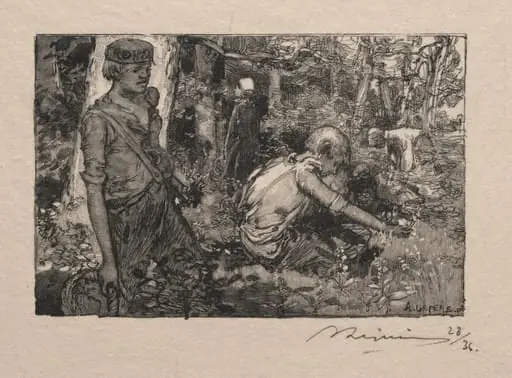
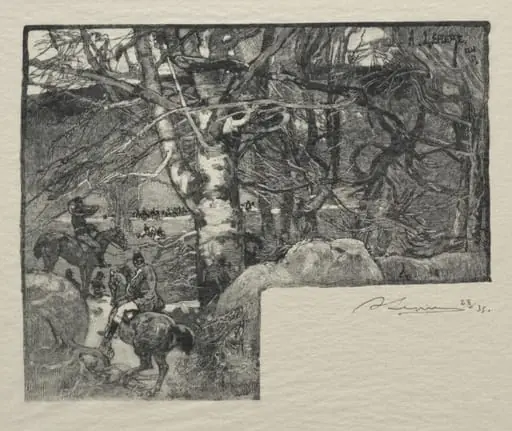
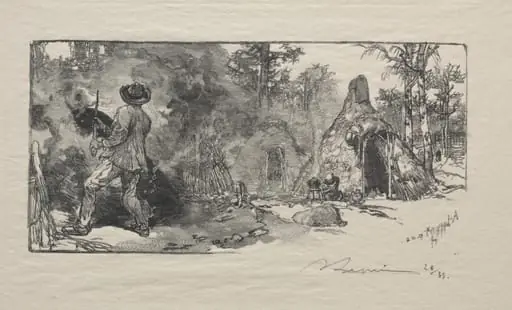
Repas des Bûcherons is a print by the Impressionist artist Auguste Lepère. It dates from 1887 and is held in the collection of the Cleveland Museum of Art.
About this work
Overview
Auguste Louis Lepère, a French artist active in the late 19th century, produced the wood engraving *Repas des Bûcherons* in 1887.
Auguste Louis Lepère, a French artist active in the late 19th century, produced the wood engraving *Repas des Bûcherons* in 1887. Recognized for his role in revitalizing wood engraving as a fine art medium in Europe, Lepère focused on rural laborers, capturing their daily routines with quiet dignity. This print, now in The Cleveland Museum of Art’s collection, portrays a moment of rest among lumberjacks in winter.
Subject & Meaning
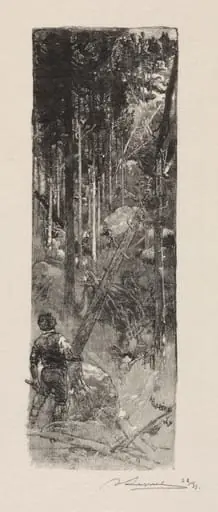
The scene depicts a group of exhausted woodcutters taking a meal beside a smoldering fire in a snow-laden forest. One figure, seated in the foreground, leans over his food, while others recline nearby, their postures conveying fatigue. The absence of narrative drama emphasizes the unvarnished reality of their existence — labor, cold, and brief respite are presented without sentimentality, underscoring the physical toll of their work.
Technique & Style
Lepère employed wood engraving with sharp, incised lines to create stark contrasts between light and dark. The dense, smoky textures of the trees and the flickering glow of the fire are rendered through dense hatching and abrupt tonal shifts. The rough, tactile quality of the lines mimics the harshness of the environment, enhancing the sense of immediacy and material truth in the scene.
History & Provenance
Created in 1887, the print emerged during a period when Lepère was instrumental in elevating wood engraving beyond commercial reproduction to a respected artistic form. It entered The Cleveland Museum of Art’s collection through established acquisition channels, likely as part of broader efforts in the early 20th century to preserve significant European graphic works of the period.
Context
In late 19th-century France, interest in rural life and laborers grew among artists responding to industrialization. Lepère’s work aligns with this trend, offering a sober depiction of forestry workers, a subject less romanticized than peasant scenes in painting. His choice of wood engraving — a medium historically tied to illustration — reflected a deliberate effort to reclaim it for expressive, non-commercial ends.
Legacy
Lepère’s technical rigor and commitment to depicting working-class subjects influenced later generations of printmakers in Europe. *Repas des Bûcherons* stands as a testament to his belief in the expressive potential of wood engraving. While not widely exhibited, the work remains a key example of how graphic art could convey social observation with emotional restraint and formal precision.
Artist & collection
Artist
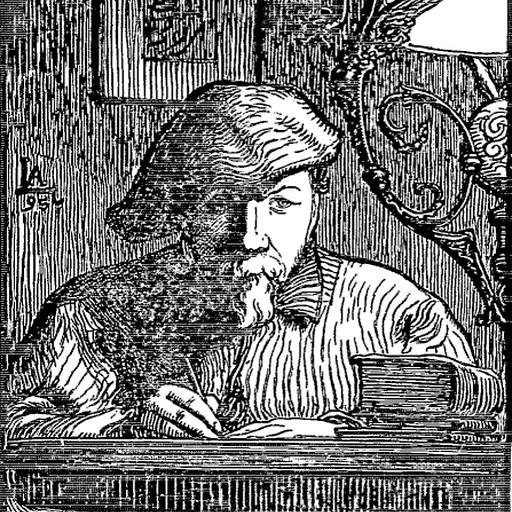
Louis-Auguste Lepère (30 November 1849 – 20 November 1918) was a French painter and etcher. Lepère is also considered a leader in the creative revival of wood engraving in Europe.