Artwork
The Festival of 14 July, Illumination of the Place of the Republic (after H. Scott)
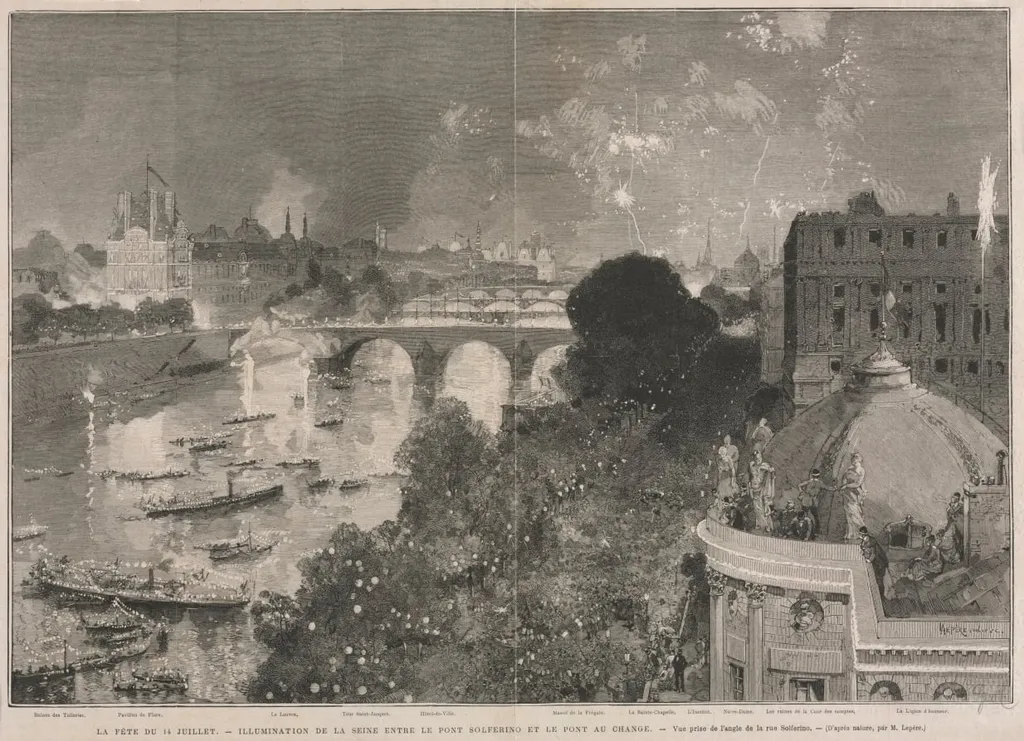
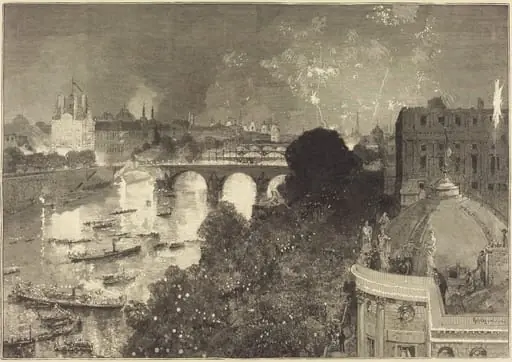
The Festival of 14 July, Illumination of the Place of the Republic (after H. Scott) is a print by the Impressionist artist Auguste Lepère. It dates from 1880 and is held in the collection of the Cleveland Museum of Art. This print captures a nocturnal celebration in Paris on July 14, commemorating the founding of the French Republic.
About this work
Overview
The composition emphasizes collective joy rather than individual figures, focusing on the atmosphere of communal festivity.
This print captures a nocturnal celebration in Paris on July 14, commemorating the founding of the French Republic. The scene is animated by countless lanterns and bursts of fireworks, illuminating rooftops, bridges, and river vessels. Crowds gather in elevated positions, suggesting a city-wide participation in the annual observance. The composition emphasizes collective joy rather than individual figures, focusing on the atmosphere of communal festivity.
Subject & Meaning
The image depicts the public celebration of Bastille Day, marking the 1789 storming of the Bastille and the subsequent rise of republican ideals. The elevated vantage points—rooftops, balconies, ships—reflect the inclusive nature of the event, where citizens from all walks of life claim space to witness and participate. The lighting and density of figures convey unity and civic pride, reinforcing the day’s symbolic role in French national identity.
Technique & Style
The print employs fine linear detail and controlled contrasts to render the interplay of artificial light and shadow. Lanterns and fireworks are rendered with precision, their glow subtly diffused against the dark urban fabric. While not using sfumato in the Renaissance sense, the artist achieves a soft atmospheric effect through layered ink tones and delicate gradations, enhancing the sense of night’s enveloping warmth.
History & Provenance
Created after a design by H. Scott, this print was likely produced in the late 19th or early 20th century as part of a series documenting French national events. It was probably intended for public distribution, serving both as documentation and commemoration. The work reflects the era’s interest in visualizing civic rituals, aligning with broader trends in illustrated periodicals and patriotic imagery of the time.
Context
Bastille Day celebrations in this period were increasingly formalized as state-sponsored events, blending popular revelry with republican symbolism. The inclusion of ships on the Seine reflects Paris’s urban geography and the river’s role as a public thoroughfare. While the tradition of presidential pardons exists, it is not visually referenced here; the focus remains on collective spectacle rather than political ceremony.
Legacy
This print contributes to a visual archive of 19th- and early 20th-century French civic life. It preserves the character of public celebrations before mass media reshaped national rituals. Its detailed depiction of urban space and communal behavior offers insight into how citizens engaged with state symbolism, making it a quiet but valuable record of everyday patriotism in the modern era.
Artist & collection

Artist
Louis-Auguste Lepère (30 November 1849 – 20 November 1918) was a French painter and etcher. Lepère is also considered a leader in the creative revival of wood engraving in Europe.

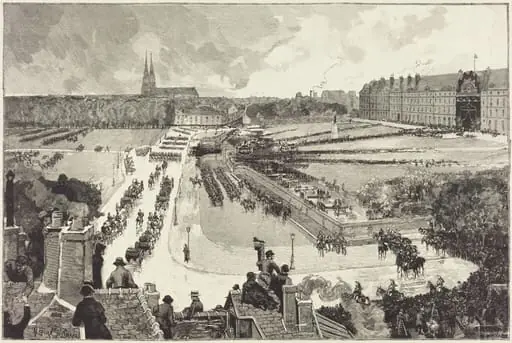 Les Honneurs militaires rendus à la Depouille mortelle de L'Amiral Courbet
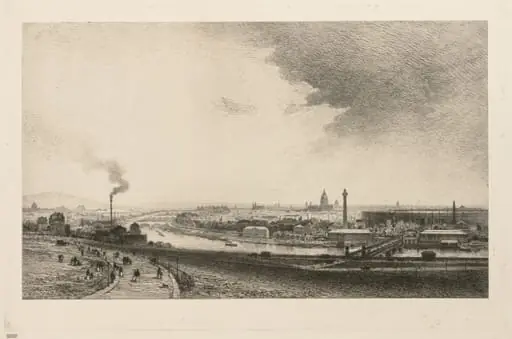
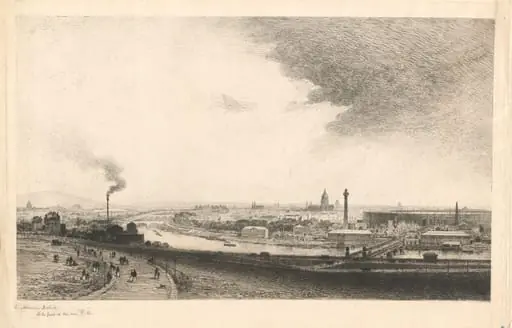 Paris in 1867: View from the Trocadéro
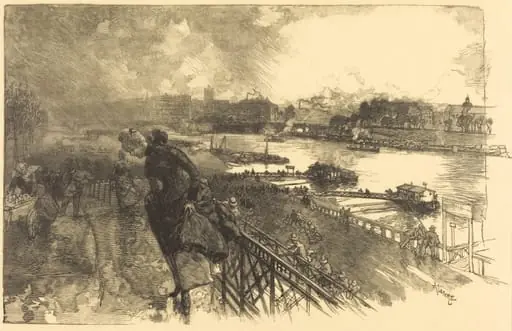 The Seine near the Austerlitz Bridge
 On the Seine
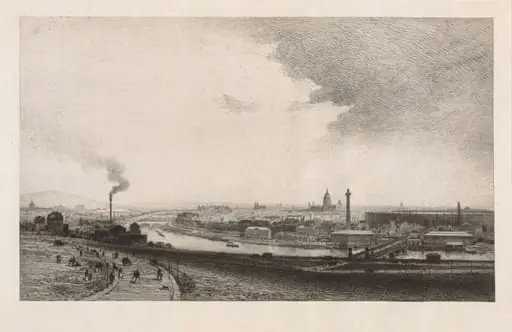 Paris in 1867, View from the Trocadero
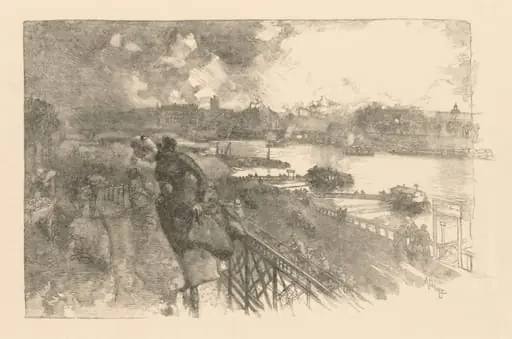 La Seine au Pont d'Austerlitz
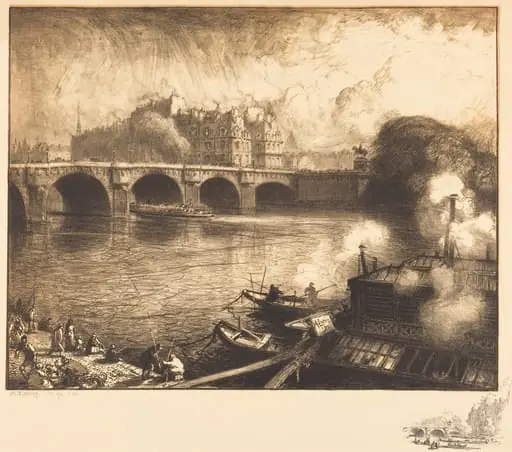 Le Pont Neuf
 Leaving the 1889 Exhibition
 Shot Tower between the Bridges
 Le Pont de Pierres
 Vue du Bas Meudon, Bords de la Seine
 Le 14 Juillet. Illumination de la Seine du Pont Neuf au Pont au Change