Artwork
Van Hasler
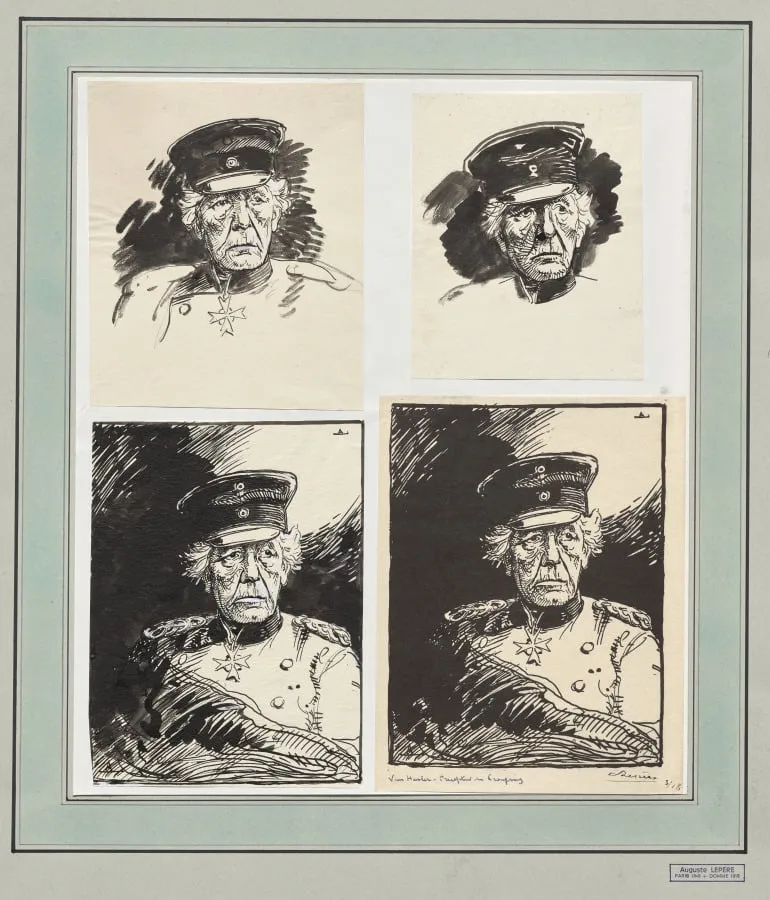
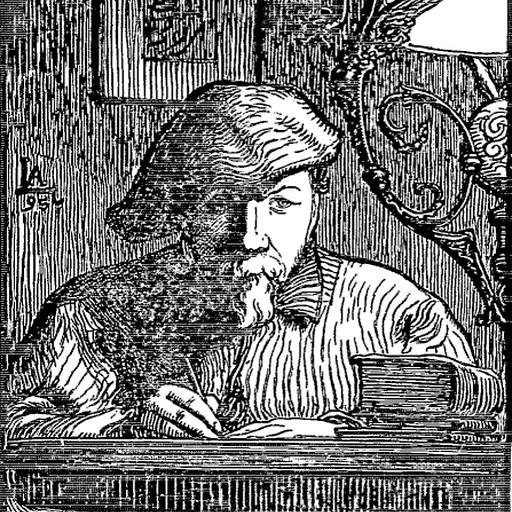
Van Hasler is a drawing by Auguste Lepère. It dates from 1914 and is held in the collection of the Cleveland Museum of Art.
About this work
Overview
Lepère, known for revitalizing wood engraving, employed drawing as a means to explore form and expression.
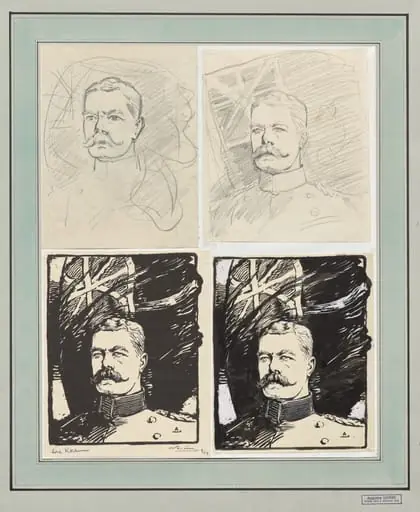
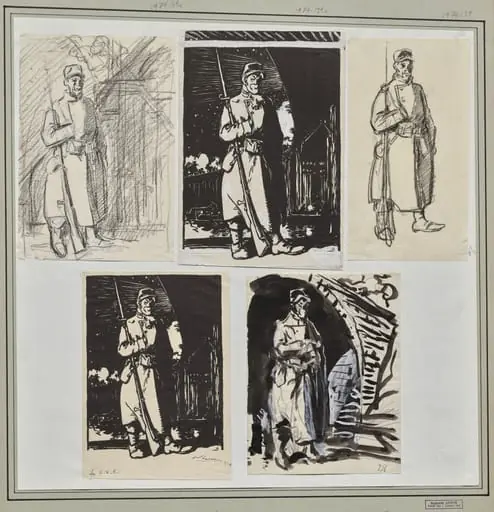
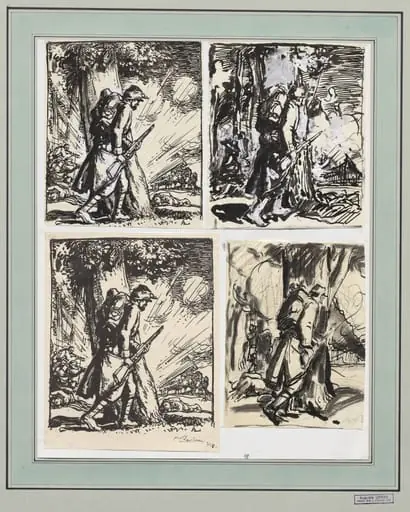
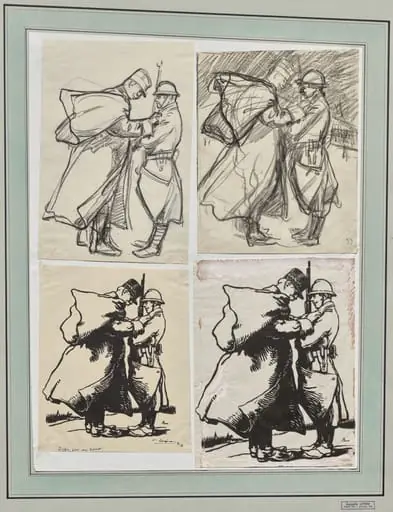
Created in 1914 by French artist Auguste Louis Lepère, *Van Hasler* is a sheet of four rapid charcoal sketches depicting a single elderly man in military attire. Lepère, known for revitalizing wood engraving, employed drawing as a means to explore form and expression. The work resides in The Cleveland Museum of Art’s collection, reflecting his sustained interest in portraiture and the tactile qualities of print media during the early 20th century.
Subject & Meaning
The figure, identified as Van Hasler, appears as a veteran, rendered with solemnity through his rigid posture, medals, and furrowed brow. The repetition of his image across four panels suggests an investigation into character and presence rather than a single portrait. The absence of context or narrative cues directs focus to the man’s physicality and the weight of experience etched into his face and uniform.
Technique & Style
Lepère used loose, energetic charcoal strokes to build volume and texture, emphasizing the folds of fabric and the creases of skin. Varied pressure creates tonal contrasts, with darker areas anchoring the figure against a neutral background. The technique approximates chiaroscuro, using gradations of light and shadow to suggest three-dimensionality without modeling, aligning with the immediacy of observational drawing.
History & Provenance
The drawing entered The Cleveland Museum of Art’s collection as part of its broader acquisition of works by late 19th- and early 20th-century printmakers. Lepère’s role in the revival of wood engraving lent his drawings particular interest to institutions seeking to document the evolution of graphic arts. Its provenance remains tied to the artist’s studio and later collectors who valued his technical precision and expressive economy.
Context
Made during the onset of World War I, *Van Hasler* reflects a broader European preoccupation with military identity and aging. While not overtly political, the drawing resonates with a cultural moment in which veterans and wartime experience became visible subjects in art. Lepère’s focus on individual character aligns with contemporary shifts toward psychological realism in graphic media.
Legacy
Lepère’s *Van Hasler* exemplifies the expressive potential of drawing as a standalone practice, distinct from reproductive printmaking. Its preservation in a major museum underscores its role in documenting how artists used sketching to probe human presence. The work continues to inform studies of early modern portraiture and the interplay between line, texture, and emotional resonance in graphic art.
Artist & collection
Artist
Louis-Auguste Lepère (30 November 1849 – 20 November 1918) was a French painter and etcher. Lepère is also considered a leader in the creative revival of wood engraving in Europe.